Hodgkin lymphoma (HL) Treatment in Thailand
- Top Accredited Hospitals
- Global Medical Standards
- Cutting-Edge Technology
- Proven Treatment Options
- High Success Rate
- Trusted by Millions

What is Hodgkin lymphoma (HL)?
Hodgkin lymphoma is a lymphatic malignancy. The lymphatic system is part of the body's immune system, which fights germs and diseases. Hodgkin lymphoma develops when healthy cells in the lymphatic system mutate and expand out of control.
The lymphatic system contains lymph nodes. They are located throughout the body. Most lymph nodes are in the abdomen, groin, pelvis, chest, underarms, and neck.
The lymphatic system contains the spleen, thymus, tonsils, and bone marrow. Hodgkin lymphoma can affect all these locations and other organs in the body.
Hodgkin lymphoma, formerly known as Hodgkin disease, is one of two primary forms of lymphomas. The other is non-Hodgkin's lymphoma.
What is the Importance of Timely Treatment?
- Timely treatment of Hodgkin Lymphoma (HL) is essential for improving outcomes and increasing the likelihood of a cure. Early detection and action considerably boost the possibility of complete remission, as HL responds favourably to early-stage treatments such as chemotherapy and radiation.
- Delaying treatment can allow cancer to spread, resulting in serious problems such as organ damage and an increased chance of subsequent cancers. As a result, beginning treatment early increases survival chances and reduces long-term health risks.
What are the Common Symptoms of Hodgkin lymphoma (HL)?
The most frequent initial symptom of Hodgkin lymphoma is painless enlarged lymph nodes in the neck, underarm, or groin. Additional symptoms include:
- Persistent fatigue: This refers to feeling substantially more fatigued than usual for numerous days.
- Unexplained fever: A high temperature that persists for two or more hours after home therapy or lasts more than two days may indicate a dangerous condition.
- Drenching night sweats: Occurrence of excessive sweating
- Unexplained weight loss: This refers to losing body weight without trying. Losing 10% or more of your body weight in six months indicates unexplained weight loss.
- Itchy skin (pruritis): Some persons with Hodgkin lymphoma experience extremely itchy skin
- Abdominal discomfort or edema: Not every abdominal pain indicates a serious illness. Contact a healthcare specialist if you are experiencing significant discomfort that is not going away.
- Chest discomfort: It could be a symptom of Hodgkin lymphoma in your lung tissues or lymph nodes within your chest.
- Shortness of breath: This could indicate Hodgkin lymphoma in your lungs or a massive lump in your chest.
Types of Hodgkin Lymphoma
There are four classical Hodgkin lymphoma subtypes:
- Nodular Sclerosis Hodgkin lymphoma: This is the most prevalent classical Hodgkin lymphoma subtype. It frequently affects young adults. It often affects lymph nodes in the centre of the chest.
- Mixed cellularity Hodgkin lymphoma: This subtype primarily affects persons in their sixties. It can sometimes develop in your abdomen.
- Lymphocyte-rich, classic Hodgkin lymphoma: This subtype affects around 6% of all Hodgkin lymphoma patients.
- Lymphocyte-depleted Hodgkin lymphoma: This subtype affects around 1% of Hodgkin lymphoma patients. It is particularly common among those over the age of 60 and those living with HIV/AIDS.
Stages of Hodgkin Lymphoma
Disease staging assists healthcare providers in determining how advanced the disease is, how quickly it may spread, and which treatments may be most effective. Here are the phases of Hodgkin lymphoma.
- Stage I: Cancer cells are present in a single lymph node or lymphoid organ. Alternatively, lymphoma can develop in a specific location of an organ other than your lymph system.
- Stage II: Cancer cells are found in two or more groups of lymph nodes on the same side of the diaphragm (additional lymph nodes nearby may also be affected).
- Stage III: Lymph node sections on both sides of your diaphragm contain lymphoma cells, or cancer cells are found in lymph nodes above your diaphragm and Spleen.
- Stage IV: There is lymphoma in at least one organ other than your lymph system, such as your liver, lung, or bone marrow.
Causes, Risk Factors and Complications of Hodgkin lymphoma (HL)
Causes
- Healthcare professionals are unsure what causes Hodgkin lymphoma. It starts with modifications to the DNA of a lymphocyte, a type of disease-fighting blood cell. A cell's DNA includes instructions that teach it what to do.
- The DNA modifications instruct the cells to grow rapidly and survive when other cells usually die. Hodgkin lymphoma cells attract many healthy immune system cells, safeguarding and assisting them to grow. Extra cells flock into lymph nodes, causing swelling and other symptoms.
Risk Factors
The following factors can raise the risk of Hodgkin lymphoma:
- Your age: Hodgkin lymphoma is most commonly diagnosed in persons in their 20s and 30s, as well as those over the age of 65.
- Family history of Hodgkin lymphoma: Having a blood relative with Hodgkin lymphoma enhances one's risk of developing the disease.
- Being male: Men are somewhat more likely than women to get Hodgkin lymphoma.
- People who have previously been infected with the Epstein-Barr virus are more likely to develop Hodgkin lymphoma than those who have not. One example is contagious mononucleosis.
- HIV infection: People with HIV are more likely to develop Hodgkin lymphoma.
Complications
Complications of Hodgkin lymphoma (HL) can include:
- Infections
- Infertility
- Cardiac complications
- Pulmonary complications
- Thyroid dysfunction
- Second cancers
- Blood abnormalities
Connect with our advisor for a PRIORITY response
Latest Research and Technologies in the Treatment of Hodgkin lymphoma (HL) in Thailand
- Thailand has tremendously advanced in treating Hodgkin Lymphoma (HL) by incorporating cutting-edge technology such as precision chemotherapy, targeted treatments, and immunotherapy.
- Researchers are also looking into new therapy regimens to minimise adverse effects and improve long-term outcomes.
- Furthermore, stem cell transplants and tailored therapy are becoming more common in treating HL, with promising patient outcomes.
Hodgkin lymphoma (HL) Prevention Tips
Here are some preventative tips for Hodgkin Lymphoma (HL):
- Avoid Infections: To avoid infections, practice proper cleanliness and limit exposure to Epstein-Barr virus (EBV).
- Healthy Lifestyle: A healthy lifestyle includes eating a balanced diet, exercising regularly, and managing stress.
- Limit Your Tobacco and Alcohol Consumption: Avoid smoking and drinking excessively.
- Early Detection: Regular check-ups and awareness of uncommon symptoms will help in early diagnosis.
While these strategies may not ensure prevention, they promote general health and early intervention.
Treatment options for Hodgkin lymphoma (HL)
Chemotherapy: This typical Hodgkin lymphoma treatment employs one or more medications to kill or prevent cancer cells from growing. Providers may utilise one or more types of chemotherapies.
Cost Start From USD 1000 - USD 6800Explore Options
Radiation therapy: This therapy employs high-powered laser beams to kill cancer cells in afflicted lymph nodes or areas of malignant dissemination. It is frequently used with chemotherapy for early-stage Hodgkin lymphoma treatment.
Immunotherapy: This treatment strengthens your immune system, making it more effective in identifying and eliminating cancer cells. Checkpoint inhibitors are a key immunotherapy treatment for Hodgkin lymphoma.
Cost Start From USD 3000 - USD 13578Explore Options
Targeted therapy: It is the employment of medications or other substances to attack cancer cells. This treatment employs laboratory-created antibodies that are linked to chemotherapeutic medicines. They identify and eliminate cancer cells.
Cost Start From USD 3500Explore Options
Bone Marrow Transplant: A bone marrow transplant, also known as a bone marrow stem cell transplant, involves introducing healthy bone marrow stem cells into the body. These cells restore damaged cells caused by chemotherapy and other treatments. If Hodgkin's lymphoma reappears or does not respond to conventional therapies, a bone marrow transplant may be a viable alternative.
Cost Start From USD 50000 - USD 80000Explore Options
- Complete blood count (CBC): This test detects low blood cell counts, which may indicate lymphoma in your blood or bone marrow.
- Blood chemical analysis: This test analyses your electrolyte levels as well as the function of your liver and kidneys. It examines the compounds that your organs and tissues release into your bloodstream, which may indicate tissue damage.
- Erythrocyte sedimentation rate (ESR): This test evaluates inflammation. In Hodgkin lymphoma, sedimentation rates are high.
- Lactate dehydrogenase (LDH) assay: This test detects a protein that cells release when damaged. Lymphoma can occasionally cause a high LDH rate.
- Tests for viruses: These tests can detect current or prior diseases associated with Hodgkin lymphoma, such as HIV, hepatitis B, and hepatitis C.
- Imaging tests: Your doctor may offer imaging tests to look for symptoms of lymphoma in other parts of your body. Chest X-rays, CT scans, MRIs, and positron emission tomography (PET) scans are all possible tests.
- Bone marrow aspiration and biopsy: There are methods for obtaining cells from the bone marrow. The cells are sent for testing. Tests can detect Hodgkin lymphoma cells.
Rehabilitation for Hodgkin Lymphoma (HL) focuses on assisting patients in recovering physically, emotionally, and cognitively during and after therapy. Key rehabilitation options include:
- Physical rehabilitation involves tailored exercise regimens that help rebuild strength, enhance mobility, and manage exhaustion caused by chemotherapy or radiation.
- Lymphatic Drainage: In some circumstances, physical therapy approaches can help with swelling or lymphedema.
- Dietary Management: Eating a well-balanced diet helps to maintain strength, manage medication side effects, and promote general health.
- Psychosocial support: Therapy or joining a support group can help cancer patients deal with the emotional and mental challenges of their treatment.
MediGence can assist and guide you in selecting the best physician and medical facility for your care.
Depending on the circumstances, your doctor may prescribe medication to assist you in managing your symptoms and support your treatment plan.
Treatment regimens are adapted to the patient's specific cancer stage and location.
Instantly Connect with our Specialists


Hospitals for Hodgkin lymphoma (HL) in Thailand

Bangpakok 9 International Hospital
Bangkok, Thailand
Bangpakok 9 International Hospital located in Bangkok, Thailand is accredited by JCI. Also listed below are some of the most prominent infrastructural details:
- It would be prudent to summarise the Medical Services provided at the Bangpakok 9 International Hospital (BPK 9), Bangkok, Thailand:
- Cosmetic Dentistry
- Dental Implants
- Electrocardiogram (EKG or ECG)
- Exercise Stress Test
- Health Screening
- Laser Vagina Firming
- Pediatric Physical Therapy
- Perfect Slim by Vela II
- Physical Therapy for Musculoskeletal
- Prosthodontics
- The Medical Services are also inclusive of the International Patient Services such as the ones listed here:
- Thai, English, French, Arabic, Chinese, Myanmar, Cambodia, Bangladeshi, Bahasa and Tagalog are the languages in which there are Translation services available for International Patients.
- Visa extension related assistance
- International health insurance related assistance
- Embassy and international organizations related assistance
- A variety of meals of choice for International Patients
- Email consultation services
- Transfer to either airport and/or hotels
- Prayer room
- Four different types of rooms are available such as Deluxe room, two kinds of suites, and a VIP suite.
- Hospital facilities like The Coffee shop, Food Hall, Cafe and Medical Spa.
- Complete health and safety protocols are maintained in the various Medical Centers some of whom are as follows:
- Aesthetic Center
- 24 Hour Emergency Center
- Allergy Center
- Breast Center
- bSmart Center
- Checkup Center
- Dental Center,
- Happy Long Life Center
- Medical Fitness Center
- Psychiatric Center
- Rehabilitation Center
- Sleep Disorders Center
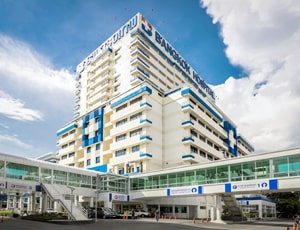
Bangkok Hospital
Bangkok, Thailand
Bangkok Hospital located in Bangkok, Thailand is accredited by JCI. Also listed below are some of the most prominent infrastructural details:
- It is recognised for the application of the newest healthcare technology.
- Blood analysis center that is not just the best in Thailand but in Asia Pacific as well.
- Biomolecule center that is the seed of healthcare equipment for Thailand and overseas.
- International affiliations and collaborations with universities and hospitals in Japan and the United States of America.
- 11 hospitals are recognised as Centers of Excellence.
- Known excellence in Trauma, Orthopedics, Cardiovascular, Neurology as well as Cancer Care.
- There is a proper streamlined patient services process followed in Bangkok Dusit Medical Services, Bangkok, Thailand.
- A well developed research center showcases the intent of the organisation to provide research based treatment opportunities to the patients.
- The group has several Medical industry partnerships as well to ensure healthcare solutions.
Our Services to better your experience
Opinion & Option
We submit the most accurate opinion and options from one or more countries for your review
Consult Privately
Consult with a certified specialist privately on our telemedicine platform even before you decide to travel
Logistics
We handle flights, visas, transfers, and accommodation—so you can focus on your health.
Recovery
Our In-house rehabilitation service packages to better your recovery and treatment outcome
Why Choose Thailand for Hodgkin Lymphoma (HL) Treatment?
Here are some of the reasons for choosing Thailand:
- Expert Oncologists: Thailand offers highly trained oncologists who specialise in Hodgkin Lymphoma (HL) and are familiar with the most recent treatments and therapies.
- Advanced Treatment Options: Thailand provides advanced therapies such as chemotherapy, immunotherapy, and stem cell transplants, ensuring tailored care.
- Cost-Effective Care: Treatment in Thailand is less expensive than in many Western countries while keeping high medical standards.
- International Patient Services: Thailand's hospitals offer seamless treatment to international patients, including bilingual support and specialised services.
- Accredited Healthcare Facilities: Many Thai hospitals are JCI-accredited, which ensures good medical care and patient safety.
Frequently Asked Questions
Yes, Hodgkin lymphoma is highly treatable and often cured, mainly if found early. Treatments typically include chemotherapy, radiation therapy, or a combination of the two. Thailand's survival rates are comparable to global averages, especially for early-stage disorders.
Treatments typically include chemotherapy, radiation therapy, or a combination of the two. The most common chemotherapy treatment. Stem cell transplants may be considered in the advanced stages or following a recurrence.
Survival rates for Hodgkin lymphoma (HL) in Thailand are very promising, particularly with early discovery and treatment. The 5-year survival rate for HL in Thailand is around 85-90%, comparable to global standards.
With modern therapies like chemotherapy and immunotherapy, most patients respond well to first treatments, increasing their chances of complete remission. Individual outcomes may differ depending on the stage and overall health of the patient.
While lymphoma is a rare disease in Thailand when compared to global standards, Hodgkin lymphoma (HL) is less common than Non-Hodgkin lymphoma. Although HL instances are rare, the prognosis for patients in Thailand can be good due to early detection and sophisticated treatment options.
Standard treatment side effects include nausea, hair loss, exhaustion, infections, and organ damage caused by chemotherapy or radiation. Long-term follow-up is required to monitor for any residual effects.
In Thailand, the treatment of Hodgkin lymphoma (HL) is highly successful, with many patients reaching complete remission. With early detection and modern therapies such as chemotherapy and radiation, Thailand's 5-year survival rate for HL is equivalent to global standards, typically ranging between 80 and 90 per cent.
Yes, there is ongoing research and clinical trials for Hodgkin lymphoma in Thailand, including collaborations with international institutes and an emphasis on early-phase oncology drug trials and cancer genomics.

Reviewer

Dr. Mohit Agarwal
Medical Oncologist
14 Years of Experience
One of the finest Oncologist in New Delhi, India, Dr. Mohit Agarwal has worked with several world class multidisciplinary hospitals over the years. Dr. Mohit Agarwal has over 14+ years of experience in his field. The doctor treats and manages a wide range of conditions such as Stomach Cancer, Rectal Cancer, Breast Cancer, Brain Cancer View More
Last Reviewed - January 2026