Degenerative Disc Disease Treatment in Malaysia
- Top Accredited Hospitals
- Global Medical Standards
- Cutting-Edge Technology
- Proven Treatment Options
- High Success Rate
- Trusted by Millions

What is Degenerative Disc Disease?
Degenerative disk diseases cause pain due to typical changes in your disks. This condition, despite its name, is not a disease. A degenerative disk is a problem that develops over time due to sports, injuries, daily activities, or the drying up and shrinking of a spinal disk.
What is the Importance of Timely Treatment?
Degenerative disc disease must be treated early to reduce pain and discomfort in the early stages and stop the problem from getting worse. Degeneration can cause more serious symptoms such as nerve compression, numbness, weakness, or chronic pain if treatment is not received.
These symptoms impair everyday activities and quality of life. Early intervention, including physical therapy, medication, and other interventions, can enhance overall function and reduce the course of the disease, allowing people to live healthier and more active lives.
What are the Common Symptoms of Degenerative Disc Disease?
The symptoms of Degenerative disc disease typically develop gradually and worsen over time. Signs and symptoms of degenerative disc disease include:
- Pain: Your joints may hurt during or after the activity.
- Stiffness: Your joints may feel stiffer when you first get up or after sitting for a long time.
- Tenderness: Light pressure on or near your joint may be painful.
- Loss of flexibility: You may be unable to move your joint through its full range of motion.
- A grating feeling: When you use the joint, you can have severe feelings and hear cracking or popping.
- Bone spurs: These additional bone pieces that feel like hard lumps grow around the joint.
- Swelling: This can be due to soft tissue inflammation around the joint.
Causes and Risk Factors of Degenerative Disc Disease
Causes
- Ageing: The intervertebral discs compress and lose their cushioning capacity as we age because they lose water content and become less flexible.
- Wear and tear of the disc: The discs may deteriorate with time because of repeated motion and pressure on the spine. The disc may expand or rupture due to the annulus, its outer layer, becoming cracked or torn by this repeated motion.
- Trauma or Injury: A history of trauma resulting from sports, falls, or auto accidents could damage spinal discs, leading to the vulnerability of disc degeneration.
- Genetics: Some individuals might inherit a tendency toward disc degeneration. Genetic factors can influence the strength and durability of the discs, which may lead to early or severe degradation.
Risk Factors
- Previous Spinal Injury
- Genetics
- Age
- Occupation
- Sedentary Lifestyle
Connect with our advisor for a PRIORITY response
Latest Research and Technologies in the Treatment of Degenerative Disc Disease in Malaysia
Recent advances in treating degenerative disc disease (DDD) in Malaysia have introduced new approaches to improve patient outcomes. The introduction of OSSO 3d Spinal Decompression Therapy, a non-invasive treatment designed to alleviate pain and improve mobility in DDD patients, is a notable development. This treatment elevates the height and width of the damaged disc. It accelerates the healing process of harmed tissues by generating a pumping action to restore them to their regular shape and functioning. Additionally, stem cell therapy has emerged as a promising treatment choice for DDD. According to clinical evidence, stem cell injections of the intervertebral disc are reported to lessen pain and improve function notably.
Treatment options for Degenerative Disc Disease
(Transforaminal Lumbar Interbody Fusion) TLIF: is a type of spinal fusion. TLIF is an interbody lumbar fusion that involves removing and replacing intervertebral disks in the lower back. It is most commonly referred to as the lumbar spine.
Cost Start From USD 5000 - USD 10000Explore Options
Disc Replacement: disc replacement in degenerative disc disease aims to alleviate pain and restore spinal motion by surgically excising the degenerated disc and substituting it with an artificial one. It is usually considered when conservative treatment fails and the degeneration causes significant pain or disability.
Cost Start From USD 13000 - USD 19000Explore Options
Laminectomy: For degenerative disc disease, a laminectomy is done to take out a part of the vertebra (lamina) to relieve the pressure on the spinal cord or nerves. It helps relieve pain, numbness, and weakness due to the compression of nerves.
Cost Start From USD 10000 - USD 16000Explore Options
Spinal Fusion: To stabilise the spine and alleviate pain, spinal fusion for degenerative disc disease involves permanently attaching two or more vertebrae. When disc degeneration creates unbearable pain or instability that does not respond to conservative therapy, this procedure is used.
Cost Start From USD 12000 - USD 17000Explore Options
- Clinical assessment:
- Physical examination: Look for indications of discomfort, weakened muscles, or unusual posture.
- Range of Motion Tests: Evaluating the spine's range of motion while searching for limitations or pain.
- Flexion/extension tests are frequently used to assess spinal stability.
- Imaging Tests:
- X-rays: to check for spinal abnormalities, bone spurs, and disc space constriction.
- MRI offers fine-grained images of soft tissues, nerve involvement, and discs.
- Other diagnostic:
- Weight-bearing evaluation is used to evaluate mobility or discomfort while walking or standing.
- Balance Tests are used to look for problems with neuromuscular function and coordination.
MediRehab (chain of Rehab centres - Part of MediGence) provides comprehensive rehabilitation services to support patients through Teleconsultations and online therapy sessions.
- Personalised Therapy Plans: Improved mobility, pain management, improvement in strength, and reduction in inflammation.
- Post-operative rehabilitation: Physical therapy sessions aimed at regaining joint strength and function.
- Depending on the situation, your healthcare professional may prescribe medicine to help control your symptoms and support the treatment plan.
Instantly Connect with our Specialists


Hospitals for Degenerative Disc Disease in Malaysia
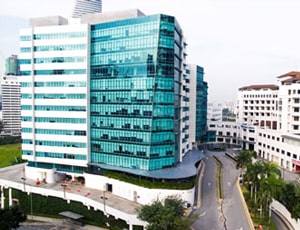
Parkway Pantai
Kuala Lumpur, Malaysia
Parkway Pantai located in Kuala Lumpur, Malaysia is accredited by JCI. Also listed below are some of the most prominent infrastructural details:
- Capacity of 335 beds
- 200+ specialist Doctors
- Critical Care Unit
- Neonatal Intensive Care Unit
- Operating Theatre
- International Patient Care Center
- Types of rooms available- Premier Suite, Supreme Suite, Deluxe Single Room, 2-bedded room, 4-bedded room, Deluxe Suite, Premier Single room, and Supreme Single room

Sunway Medical Centre
Kuala Lumpur, Malaysia
Sunway Medical Centre has initiated a comprehensive expansion plan close to its current hospital facility to enhance its ability to provide services to the global market. The new Cancer Radiosurgery Center and Nuclear Medicine Center, which will also house additional Centers of Excellence like the Digestive Health Center and Dialysis Center, marked the completion of Tower C's first phase in October 2016.

Ara Damansara Medical Centre
Kuala Lumpur, Malaysia
Situated at the junction of Petaling Jaya and Shah Alam, close to the Oasis Ara, Ara Damansara Medical Centre boasts a serene, luxurious ambiance.
The Centre has been awarded several prestigious awards such as the Global Health Asia Pacific Awards 2023, Newsweek Best Specialized Hospital APAC 2023, Healthcare Asia Awards 2023, and Malaysian Healthcare Wellness Excellence.
Our Services to better your experience
Opinion & Option
We submit the most accurate opinion and options from one or more countries for your review
Consult Privately
Consult with a certified specialist privately on our telemedicine platform even before you decide to travel
Logistics
We handle flights, visas, transfers, and accommodation—so you can focus on your health.
Recovery
Our In-house rehabilitation service packages to better your recovery and treatment outcome
Why Choose Malaysia for Degenerative Disc Disease Treatment?
Malaysia is ideal for treating degenerative disc disease due to its state-of-the-art medical technology, well-trained medical professionals, and affordable solutions. With the help of excellent medical and research centres, the country offers the latest treatments, such as stem cell therapy, minimally invasive surgery, and new spinal procedures.
Frequently Asked Questions
Degenerative disc disease is a regular aspect of ageing and cannot be cured. The spine's discs gradually lose their cushioning and flexibility as they undergo natural wear and tear. However, many medications effectively reduce symptoms such as pain and discomfort. These can include lifestyle changes, spinal injections and physiotherapy. In some instances, surgery may be necessary, such as disc replacement or spinal fusion, to remove pain and enhance function if alternative treatments fail.
The goals of degenerative disc disease treatment are to control symptoms, increase the range of motion, and prevent further harm. They include:
Non-Surgical Treatment:
- Physical therapy: Activities that enhance muscular strength, improve range of motion, and reduce spinal strain.
- Medication: Take muscle relaxants, nerve pain medicines, and pain relievers to relieve the pain and inflammation.
- Lifestyle Changes: Maintaining a healthy weight, adopting proper posture, and avoiding activities that strain the spine.
- Applying heat or cold packs to alleviate pain and inflammation is called "heat or cold therapy."
Surgical Treatment:
If conservative approaches have been ineffective, surgical treatments may become necessary.
- Spinal Fusion: Two or more vertebrae may be fused to stabilise the spine.
- Artificial Disc Replacement: The disc is replaced by a new artificial disc to retain the movement of the spine.
- Discectomy: A part of the diseased disc is excised to alleviate nerve compression.
- Laminectomy: Removing part of the vertebra to release pressure on the nerves.
In Malaysia, the recovery time after surgery for degenerative disc disease depends on the type of procedure. People undergoing minimally invasive procedures can recover within 4–5 weeks, and most can return to light activities in 2–3 weeks. Physical therapy is often required to regain strength and mobility following more complex procedures, like spinal fusion, that may take three to five months to recover from. The patient's health, the surgery, and how well they adhere to post-operative care instructions all affect the exact schedule.
Degenerative disc disease can impact daily functioning, mainly if it results in severe pain, stiffness, or loss of mobility. In this case, performing activities such as lifting, bending, or prolonged sitting may be difficult. In addition, it can lead to chronic neck or back pain that can affect one at work, even during exercise or recreation.
Sometimes, nerve compression leads to weakness, tingling, or numbness in the arms or legs, making daily activities even more difficult. However, with proper care, many people can control their symptoms and continue their regular activities.
Lifestyle changes, including regular low-impact exercise, healthy weight, proper posture, and avoiding prolonged periods of sitting, can control degenerative disc disease. Adequate lifting of objects, strengthening and extending muscles, and sleeping in good support positions reduce the stress on the spine. Quitting smoking and taking breaks during the day also relieves symptoms and stops further degeneration.
Degenerative disc disease may have a genetic component. If you have a family history of the condition, you may be at a higher risk of developing disc degeneration or back problems. Genetics can influence how the spine discs degenerate and age over time. However, lifestyle factors such as weight, posture, exercise level, and past injuries play a significant role in how degenerative disc disease develops and progresses.
Degenerative disc disease can cause tingling or numbness, especially if the discs exert pressure on the surrounding nerves. This pressure may compress nerves in areas such as the arms, legs, or lower back, potentially causing symptoms like tingling, numbness, or weakness.
The above symptoms are termed "nerve pain" or "radiculopathy." It usually occurs when disc degeneration leads to the irritation or compression of nerves.

Reviewer

Dr Sonal Gupta
Neurosurgeon
29 Years of Experience
Dr. Sonal Gupta has an experienced neurosurgeon with more than 29+ years of clinical expertise. She is currently the Director, Neuro & Spine Surgery at Fortis Hospital, Shalimar Bagh. Before joining Fortis, she has been associated with various organizations such as Maharaja Agrasen Hospital, Action Balaji Hospital, and Max Hospital. View More
Last Reviewed - January 2026