Chronic Spine and Back Pain Treatment in Thailand
- Top Accredited Hospitals
- Global Medical Standards
- Cutting-Edge Technology
- Proven Treatment Options
- High Success Rate
- Trusted by Millions

What is Chronic Spin and Back Pain?
Chronic Spin and Back Pain occurs as a structural defect of the brain where part of it, namely the cerebellum, extends into the space surrounding the lower part of the spinal canal. Normal brain and spinal cord functions are then impeded, and one develops neurological symptoms. Several types of Chronic Spin and Back pain exist, with variable severity of their symptoms, depending on which type and how much cerebellum continues to herniate into the spinal canal.
What is the Importance of Timely Treatment?
Compression of the brain and spinal cord could worsen without proper treatment; Chronic Spin and Back Pain will, therefore, cause headaches, imbalance, muscle weakness, etc., to appear and intensify with time. It can even help avoid some complications, hence early treatment.
- Prevents further damage: It prevents the condition from worsening and reduces the chances of permanent damage.
- Manages pain: Helps control pain early so it does not become chronic or severe.
- Improvingqualityoflife: Recovery is faster, and the patient can return to daily activities with less emotional strain.
- Avoids complications: The need for surgery is reduced, and long-term disability is prevented.
- Better treatment outcomes: Early diagnosis leads to more effective and successful treatment.
- Avoids secondary conditions: It avoids the effect on other body parts because of compensatory injuries.
What are the Common Symptoms of Chronic Spin and Back Pain?
- Persistent Pain
- Stiffness
- Sharp or Dull Pain
- Radiating Pain
- Tingling or Numbness
- Weakness
- Pain with Movement
- Difficulty Sleeping
- Reduced Range of Motion
Causes and Risk Factors of Chronic Spin and Back Pain
Causes
- Muscle or Ligament Strain
- Herniated or Bulging Discs
- Degenerative Disc Disease
- Arthritis
- Spinal Stenosis
- Spondylolisthesis
- Sciatica
- Infections or Tumors
- Postural Issues
- Spinal Injuries
Risk Factors
- Age
- Sedentary Lifestyle
- Poor Posture
- Obesity
- Occupation
- Genetics
- Smoking
- Previous Injuries
- Mental Health
- Physical Condition
Connect with our advisor for a PRIORITY response
Latest Research and Technologies in the Treatment of Chronic Spin and Back Pains in Thailand
Minimally Invasive Surgery
In these techniques, hospitals in Thailand use minimally invasive screws, cement augmentation in pedicle technique (MIS CAPT) and oblique lateral interbody fusion (OLIF). It would result in less blood loss, less damage to soft tissue, and recovery speed.
Advanced Imaging
High-resolution MRI and CT are used highly worldwide for accurate diagnosis and treatment planning related to pain. This will cause more precise assessments and lead to more effective and targeted treatments for pain in the spine and back.
Innovative pain management
Thailand has many medical centres using nerve ablation (radio-frequency ablation) to manage patients with chronic back pain. It is a minimally invasive technique that interrupts pain signals to treat conditions such as lower back pain for very long periods.
Chronic Spin and Back Pain Prevention Tips
The risk of Chronic Spin and Back pain is reducible through lifestyle modifications and preventive practices despite unalterable risk variables such as age and gender.
Maintain good posture by sitting and standing with proper alignment, decreasing strain on the spine. Utilise ergonomic furniture and avoid slouching.
Exercise regularly by strengthening core muscles and improving flexibility with exercises like yoga, Pilates, or strength training that will support your back.
Lift properly: Lifting heavy objects should be done by bending at the knees instead of at the waist. Instead of lifting with your back, use your legs.
Maintain a Healthy Weight: Extra weight, particularly around the abdominal area, stresses your spine and back muscles.
Sleep on a Supportive Mattress: A mattress that supports the natural curve of your spine can help prevent back pain.
Take Frequent Breaks: If you have a desk job or spend long hours sitting, get up, stretch, and move around every 30-60 minutes.
Wear Supportive Shoes: Avoid high heels and wear shoes that provide good arch support so your spine does not go out of position.
Avoid Smoking: Smoking affects blood flow to the spine, which can lead to disc degeneration and higher back pain.
Stay Hydrated: Proper hydration of spinal discs through an adequate water supply keeps your spine healthy.
Treatment options for Chronic Spine and Back Pain
The medical treatment for Chronic spine and Back pain requires evaluating the fracture severity, neural involvement, and patient medical condition. The treatment approaches consist of the following elements:
Spinal fusion surgery connects two or more vertebrae through bone attachment to block bone movement, thus treating spinal instability with degenerative disc disease and controlling pain from abnormal motion while creating spinal stability.
Cost Start From USD 12000 - USD 17000Explore Options
A laminectomy procedure consists of the partial removal of vertebrae (the lamina) to decrease spinal cord or nerve pressure, which treats spinal stenosis along with other conditions. The medical procedure reduces nerve-associated pain and eliminates numbness and weakness in patients.
Cost Start From USD 9500 - USD 12500Explore Options
A disc replacement procedure begins with eliminating the broken spinal disc while replacing it with a synthetic implant to reestablish mobility and eliminate discomfort. The surgical procedure applies to degenerative or herniated discs that place pressure on the neighbouring nerves.
Cost Start From USD 15000 - USD 20000Explore Options
These are the standard diagnostic methods for diagnosing Chronic Spin and Back Pains:
Clinical Evaluation
- History and Symptoms: During the assessment, the physician needs to complete information about the injury and evaluate symptoms of back pain, numbness, and weakness to determine spinal cord involvement.
- Physical Examination: Physical check-ups examine spinal nerves and nerve compression and evaluate the spine tenderness levels.
Imaging Studies
- X-rays (Radiographs): These tests provide vital information about vertebral bone fractures, displacement of bones, and difficulties with spinal position.
- CT Scan (Computed Tomography): The technique displays original bone structures in a three-dimensional format to calculate the extent of vertebrae compression and fracture.
- MRI (Magnetic Resonance Imaging): This method shows providers detailed pictures of soft tissues to investigate compression or swelling.
- Bone Scintigraphy (Bone Scan): a diagnostic tool that reveals infections, tumours, and fractures that traditional X-ray images cannot show.
- Electromyography (EMG): Electromyography enables medical staff to detect injuries to nerves and evaluate compression conditions because it measures muscle and nerve electrical activity.
Blood Tests
Directed blood analysis helps doctors identify or eliminate inflammation (rheumatoid arthritis) and other disease sources, such as ankylosing spondylitis or osteoporosis.
Diagnostic Injections
Various treatments utilise nerve blocks alongside facet joint injections because these methods assist in identifying specific pain origins and provide therapeutic relief during the diagnosis of nerve compression or joint inflammation.
MediRehab (a chain of Rehab centres, part of MediGence) provides comprehensive rehabilitation services to support patients through Teleconsulations and online therapy sessions.
Physical Therapy and Core Strengthening exercises
They target the core muscles for spine support through strength and flexibility exercises that enhance physical health. Patients learn yoga, Pilates techniques, and ergonomic adjustments for spine alignment development, which helps prevent pain and improves posture.
Aquatic Therapy
The treatment combination of chiropractic care and aquatic therapy includes spinal adjustments with water-based exercises for pressure relief and mobility enhancement. The treatment consists of specific manipulations that ease muscle tension, boost blood circulation, and relieve pain.
The psychological system of Cognitive Behavioral Therapy (CBT)
It enables patients to learn coping techniques, pain perception management, and relaxation methods.
An individual with Chronic Spin and Back Pain requires medication therapy, including analgesics. Supplements with calcium and vitamin D help healing processes through medical support.
Instantly Connect with our Specialists


Hospitals for Chronic Spine and Back Pain in Thailand

Krabi Nakharin International Hospital
Krabi, Thailand
Krabi Nakharin International Hospital located in Krabi, Thailand is accredited by JCI. Also listed below are some of the most prominent infrastructural details:
- Capacity of Imported electronically adjustable 100 beds
- Housing Facility in VIP Rooms, Deluxe Rooms, Superior Rooms, 2-Beds room, 9-Beds room
- All rooms are fully equipped with Smart TV, Refrigerator with soft drinks, Wi-fi, sofacumbed, personal nurse call system, telephone for local & international calls, Microwave,
- Main meals and snacks are also included
- Medical Technology includes- 64-slice CT scan, MRI, Fluoroscopy Examination, Digital Mammogram, Computed Radiography and 4D-Ultrasound
- 14 Treatment Centers and Clinics
- 24*7 Intensive Care Unit (ICU)
- Outpatient Department (OPD)
- Emergency Department
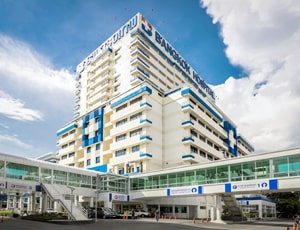
Bangkok Hospital
Bangkok, Thailand
Bangkok Hospital located in Bangkok, Thailand is accredited by JCI. Also listed below are some of the most prominent infrastructural details:
- It is recognised for the application of the newest healthcare technology.
- Blood analysis center that is not just the best in Thailand but in Asia Pacific as well.
- Biomolecule center that is the seed of healthcare equipment for Thailand and overseas.
- International affiliations and collaborations with universities and hospitals in Japan and the United States of America.
- 11 hospitals are recognised as Centers of Excellence.
- Known excellence in Trauma, Orthopedics, Cardiovascular, Neurology as well as Cancer Care.
- There is a proper streamlined patient services process followed in Bangkok Dusit Medical Services, Bangkok, Thailand.
- A well developed research center showcases the intent of the organisation to provide research based treatment opportunities to the patients.
- The group has several Medical industry partnerships as well to ensure healthcare solutions.

Sikarin Hospital
Bangkok, Thailand
Apart from in-detail treatment procedures available, Sikarin Hospital located in Bangkok, Thailand has a wide variety of facilities available for International Patients. Some of the facilities which are provided by them are Airport Transfer, Choice of Meals, Interpreter, SIM, TV inside room. Also listed below are some of the most prominent infrastructural details:
- Sikarin Hospital has a 258-bed capacity.
- The hospital caters to the healthcare needs of both local and international patients.
- Dedicated and skilled, experienced healthcare professionals are the strength of the organization.
It has also received many awards and certifications and some of them are:
- APSIC CSSD Center of Excellence Award (2017-18)
- Accreditation by the Joint Commission International
- HA-Hospital/Healthcare Accreditation
- HACCP Certificate of Registration
- The Best Under a Billion Award
- ISO 14001 Environment Management System
- ISO 9001 Quality Management System
The various clinics and centers of Sikarin Hospital are as follows:
- Pediatric Institute
- Orthopedic Institute
- Dental Center
- Health Check-up Center
- Heart Disease Center
- Cerebral and Nervous System Center
- Internal Medicine Clinic
- Diagnostic Radiology Center
- Diagnostic Laboratory
- Endoscopic Surgery Center
- International Medical Center
- Emergency Medical Center
- Sikarin Beauty Center
- Eye Center
- Rehabilitation Center
- Women’s Health Center
- Ear, Nose and Throat Center
- Specialized Internal Medicine Center
- Center for Gastrointestinal and Liver Diseases
The medical technology present in Sikarin Hospital is outlined here:
- MRI (Magnetic Resonance Imaging) magnetic resonance imaging
- Hybrid Operating Room
- Endoscopic Surgery - Gastrointestinal medical technology with tiny capsules
- S.R. Laboratory
- Cardiac Catheterization Lab
- Dental Operating Microscope, an innovative endoscopic root canal treatment
- 128-Slice CT Scan
- ORTHOPANTOMOGRAPH OP 3D oral X-ray machine
- Digital Mammogram
- Optical Coherence Tomography
- INFRARED (IR) IMAGING Surgical Technology “Cure Cancer” – Direct, Accurate, Fast
- 3D endoscopic surgery technology
- Laparoscopic Surgery
- Dental Aerosol Suction Dental Intraoral Aerosol Remover
- Comprehensive Dental Center
- iTeroElement 5D
Our Services to better your experience
Opinion & Option
We submit the most accurate opinion and options from one or more countries for your review
Consult Privately
Consult with a certified specialist privately on our telemedicine platform even before you decide to travel
Logistics
We handle flights, visas, transfers, and accommodation—so you can focus on your health.
Recovery
Our In-house rehabilitation service packages to better your recovery and treatment outcome
Why Choose Thailand for Chronic Spin and Back Pain Treatment?
Several advantages exist for choosing Thailand for Chronic Spin and Back Pain treatment.
World-Class Medical Facilities
Thailand has world-accredited hospitals with highly updated technology and advanced treatments for chronic spine and back pain diseases.
Highly Skilled Specialists
Experienced orthopaedic doctors provide top-tier care in personalised treatment plans with international training from neurosurgeons and pain management doctors.
Minimally Invasive Techniques
Such modern techniques include endoscopic spine surgery, radiofrequency ablation, and laser therapy offered by hospitals in Thailand to promote earlier recovery and ensure lesser discomfort.
Affordable Treatment
Thai medical care is excellent and comparatively lower than Western countries, so it is a much cheaper option.
Comprehensive Rehabilitation Facilities
Excellent physiotherapy and rehabilitation centres guarantee long-term pain relief and mobility benefits through individualised recovery programs.
Frequently Asked Questions
Pain classified as acute presents symptoms for less than half a year and develops because of injuries or strains. Customers endure chronic pain which exceeds a 3-month term and extends through the healing of the initial medical issue.
Chronic back pain remains treatable even when it cannot be eliminated because patients can control their condition through lifestyle adjustments, therapies and prescribed medications and medical interventions.
Doctors recommend surgery only under three conditions: when other therapies are ineffective, and nerves experience severe compression, when instability becomes evident, or when severe pain prevents patients from performing regular daily activities..
Muscle tension with accompanying poor posture and pain appears in the neck, shoulders, and lower back areas when stress occurs.
Low-impact exercise activities such as swimming or yoga combined with walking exercises develop muscle strength and increase spine health, thus relieving pain gradually.
Most people with chronic back pain maintain their ability to work by making workplace improvements, taking rest periods and sticking to their treatment program to control their pain.
People who carry excess weight feel pain throughout their spine since abdominal fat puts mounting stress on the spine, primarily in the lower back region.
Unhealthy posture tends to produce more significant stresses on the spine and muscle tissues, thus creating pain when operating in positions of sitting or standing for lengthy durations.
Yes, orthopaedic surgeons and neurosurgeons in Thailand are well-trained internationally and are experts in several new techniques in pain management.
Yes, all hospitals that provide endoscopic spine surgery offer laser therapy as well as non-surgical options for a quicker recovery with minimal discomfort.
The recovery time depends on the procedure; however, some minimally invasive treatments allow patients to resume all activities within weeks.

Reviewer

Dr Sonal Gupta
Neurosurgeon
29 Years of Experience
Dr. Sonal Gupta has an experienced neurosurgeon with more than 29+ years of clinical expertise. She is currently the Director, Neuro & Spine Surgery at Fortis Hospital, Shalimar Bagh. Before joining Fortis, she has been associated with various organizations such as Maharaja Agrasen Hospital, Action Balaji Hospital, and Max Hospital. View More
Last Reviewed - January 2026