Cholangiocarcinoma (Bile Duct Cancer) Treatment in Thailand
- Top Accredited Hospitals
- Global Medical Standards
- Cutting-Edge Technology
- Proven Treatment Options
- High Success Rate
- Trusted by Millions

What is Cholangiocarcinoma (Bile Duct Cancer)?
Cholangiocarcinoma is a rare cancer that develops in the bile ducts. Bile ducts are narrow tubes that transport bile (a fluid used to break down fats) from the liver and gallbladder to the small intestine.
It is an aggressive cancer, meaning it spreads quickly. Cholangiocarcinoma is usually diagnosed after it has progressed outside of the bile ducts. Cholangiocarcinoma, often known as bile duct cancer, most commonly affects persons over the age of 50, but it can occur at any age.
What is the Importance of Timely Treatment?
- Early therapy is crucial for improving outcomes and raising survival rates in cholangiocarcinoma.
- It prevents cancer from spreading to other organs, increasing therapy effectiveness.
- Surgery may be an option if identified early, giving the best chance of long-term survival.
- Delays in treatment can cause cancer to spread, resulting in problems such as jaundice, liver damage, and infection.
- Targeted therapies, such as chemotherapy, can help with disease control and symptom management.
- Timely intervention improves prognosis, reduces complications, and enhances the quality of life for patients.
What are the Common Symptoms of Cholangiocarcinoma (Bile Duct Cancer)?
Signs and symptoms of cholangiocarcinoma include:
- Yellowing of your skin and the whites of your eyes (jaundice)
- Intensely itching skin
- White-coloured stools
- Fatigue
- Abdominal pain on the right side, just below the ribs
- Losing weight without trying
- Fever
- Night sweats
- Dark urine
Types of Bile Duct Cancer
Cholangiocarcinoma is categorised into three types:
- Intrahepatic Cholangiocarcinoma: It's bile duct carcinoma in your liver.
- Perihilar (Hilar) Cholangiocarcinoma: It is bile duct carcinoma in the hilum. The hilum is the area right outside your liver where the smaller bile ducts from within your liver join to form the common hepatic duct. It is the most frequent type of cholangiocarcinoma. Perihilar cholangiocarcinoma is also known as Klatskin tumour.
- Distal cholangiocarcinoma: It is Bile duct cancer that begins outside the liver, in the ducts closest to the small intestine.
Causes, Risk Factors and Complications of cholangiocarcinoma (Bile Duct Cancer)
Causes
Cholangiocarcinoma develops when cells in the bile ducts change their DNA. A cell's DNA includes instructions that teach it what to do. The modifications cause the cells to proliferate out of control, resulting in a mass of cells (tumor) that can infiltrate and kill healthy bodily tissue.
Risk Factors
The following factors may raise your risk of developing cholangiocarcinoma:
- Primary sclerosing cholangitis: This condition hardens and scars the bile ducts.
- Chronic liver illness: A history of chronic liver disease raises the likelihood of developing cholangiocarcinoma by scarring the liver.
- Bile duct issues are evident at birth: People born with a choledochal cyst, which produces dilated and uneven bile ducts, are at a higher risk for cholangiocarcinoma.
- A liver parasite. In Southeast Asia, cholangiocarcinoma is linked to liver fluke infection, which can result from eating raw or undercooked seafood.
- Older age: Cholangiocarcinoma most commonly affects adults over the age of 50.
- Smoking: Smoking is linked to an increased risk of cholangiocarcinoma.
- Diabetes: People with type 1 or 2 diabetes may be at a higher risk for cholangiocarcinoma.
Complications
If cholangiocarcinoma is not treated or discovered immediately, it can cause significant complications:
- Bile duct obstruction: This can cause jaundice, infection, or liver failure.
- An infection of the bile ducts (Cholangitis)
- Cancer-related liver failure.
- Metastasis: Treatment becomes more complicated when cancer spreads to surrounding organs or distant bodily parts.
- Blood clots: Cancer increases the risk of deep vein thrombosis and pulmonary embolism.
Connect with our advisor for a PRIORITY response
Latest Research and Technologies in the Treatment of Cholangiocarcinoma (Bile Duct Cancer) in Thailand
- Thailand has achieved tremendous progress in the treatment of hepatocellular carcinoma (HCC) with the use of targeted therapies, immunotherapy, and transarterial chemoembolisation.
- Advanced procedures such as radiofrequency ablation (RFA) and liver transplants are also being used.
- Ongoing research aims to improve early detection, tailored treatment strategies, and treatment outcomes for patients with HCC.
Cholangiocarcinoma (Bile Duct Cancer) Prevention Tips
While it is not always possible to prevent cholangiocarcinoma, specific lifestyle changes and preventive measures can reduce the risk:
- Avoid liver fluke infections by eating well-cooked fish and avoiding contaminated water in endemic areas.
- Protecting oneself against infections, including hepatitis B, C, and HIV.
- Hepatitis B vaccination can lower the chance of developing hepatitis-related liver cancer.
- Maintain a healthy weight to lower your risk of obesity-related liver disorders, which are associated with cholangiocarcinoma.
- Quit smoking to minimise your risk of developing liver cancer.
- Limit your alcohol usage to lower your risk of developing cirrhosis and other liver problems.
Treatment options for Cholangiocarcinoma (Bile Duct Cancer)
Surgery: This involves removing all or part of your bile duct or damaged organs. Surgery can also treat a blocked duct that is generating symptoms. Your doctor may insert a stent (a short, hollow tube) to drain it or redirect the passage of bile around the obstruction.
Liver transplant: A liver transplant replaces your liver with a donor liver. A transplant is one possible treatment option for early-stage perihilar cholangiocarcinoma.
Radiation therapy: The use of radiation to kill cancer cells or shrink tumours. You may require external beam radiation therapy (EBRT), which directs radiation toward the cancer using a machine located outside your body.
Cost Start From USD 45000 - USD 60000Explore Options
Chemotherapy(chemo): Chemotherapy is a medication-based treatment that kills cancer cells or shrinks tumours. Systemic chemotherapy delivers the medication throughout your entire body. Transarterial chemoembolisation (TACE) involves inserting microscopic chemo beads into blood vessels near your tumour to reduce it. Hepatic artery chemo-infusion (HAI) involves injecting chemotherapy into the artery that pumps blood to your liver.
Cost Start From USD 1000 - USD 6800Explore Options
Targeted therapy: Targeted medicines inhibit the abnormal proteins that promote cancer growth.
Cost Start From USD 3500Explore Options
Immunotherapy: Enhances your immune system's ability to fight cancer. Some bile duct cancer cells possess a protein that stops immune cells from attacking. Immunotherapy inhibits this protein, allowing immune cells to target the malignancy.
Cost Start From USD 3000 - USD 13578Explore Options
- Liver function tests: These tests look for excessive substances in your blood, such as increased liver enzymes, which may suggest your liver isn't functioning correctly. High levels may indicate a bile duct blockage.
- Tumour marker testing: These tests examine your blood or urine for tumour markers, which are compounds that may indicate malignancy. High levels of CA 19-9 or CEA may indicate bile duct cancer.
- Imaging tests: An abdominal ultrasound is usually the first imaging test required if your doctor suspects bile duct cancer. You may also need a CT scan or an MRI, including a specific magnetic resonance cholangiopancreatography (MRCP).
- Endoscopic tests: These evaluate your bile ducts with an endoscope, a thin, flexible tube with a camera attached. EUS (endoscopic ultrasound) and ERCP (endoscopic retrograde cholangiopancreatography) are two types of tests.
- Percutaneous transhepatic cholangiography (PTC): It is a method for viewing and draining bile duct obstructions caused by cholangiocarcinoma.
Rehabilitation for Cholangiocarcinoma (Bile Duct Cancer) focuses on enhancing the quality of life and assisting with recovery after treatment. Here are some main rehabilitation options:
- Physical therapy: This can help patients regain strength, mobility, and function after surgery, chemotherapy, or radiation. It helps to manage fatigue and boosts general physical well-being.
- Psychosocial Support: Counseling and support groups assist patients in dealing with emotional and psychological difficulties associated with their diagnosis and treatment, such as anxiety, depression, or stress.
- Occupational therapy: This aims to assist patients in regaining independence in daily tasks, especially if surgery or treatment results in physical limits.
Depending on the circumstances, your doctor may prescribe medication to assist you in managing your symptoms and support your treatment plan.
Treatment regimens are adapted to the patient's specific cancer stage and location.
Instantly Connect with our Specialists


Hospitals for Cholangiocarcinoma (Bile Duct Cancer) in Thailand

Piyavate Hospital
Bangkok, Thailand
Piyavate Hospital located in Bangkok, Thailand is accredited by JCI. Also listed below are some of the most prominent infrastructural details:
Medicine Centre: Piyavate Hospital provides advanced holistic treatment for their patients. They offer a complete range of services and physicians that specialize in various fields like the endocrine system, the nervous system, kidney function, cardiovascular care, respiratory and digestive system. They pride themselves for the familial care that they provide to their patients.
Fertility and In-Vitro Fertilization Centre: Helping the couples who walk into the Piyavate Hospital to achieve their dream of having a family. They have a medical team that specializes in male and female fertility. They offer consultation services, fertility check-up for both men and women and complete IVF services. They have advanced IVF cycle treatment facilities that offer a high rate of success.
Bone and Joint Institute: Piyavate Hospital houses one of the frontrunners in Orthopaedic health care in all of SouthEast Asia. They offer a wide range of services and surgeries in their bone and joint institute that include hand surgery, hip and knee replacement surgery, spinal cord surgery, upper extremity surgery, arthroscopic surgery and sports medicine.
Eye and Lasik Centre: Piyavate Hospital is fully equipped with the latest and most advanced technology for eye care and houses highly skilled ophthalmologists, sub-specialists and qualified nurses.
Physical Therapy and Rehabilitation Centre: One of the first hospitals to be equipped with the Hybrid Assistive Limb technology that will help a neurologically challenged patient to control the rehabilitation robot limb with a signal from their brain. The Physical Therapy and Rehabilitation Centre at Piyavate Hospital uses this system encourage patients to regain muscle memory to walk and function normally.
Amenities for Patient’s Family:
Piyavate Hospital also offers additional apartment facilities to house the kin of the patients who come to visit them from distant places. A restaurant, a flower shop and a café are a few of the other amenities provided by the hospital.
These are the most popular services offered by the Piyavate Hospital in Bangkok, Thailand. They also provide a plethora of other medical services that are listed below:
Diabetic Foot Centre
Check-up centre
Urology Centre
Heart Institute
Paediatric Centre
Obstetrics and Gynaecology Centre
Surgery Centre
Ear Nose Throat Centre
Haemodialysis Centre
Dental Centre
X-Ray Centre
Gastroenterology Centre
Cancer Centre
Neonatal Intensive Care Unit (NICU)
Emergency Services and Centre
Tele-medicine

Phyathai 2 International Hospital
Bangkok, Thailand
Phyathai 2 International Hospital located in Bangkok, Thailand is accredited by JCI. Also listed below are some of the most prominent infrastructural details:
- Fully equipped rooms are available for convenience of the patients- Gold B Room, Gold A Room, Pediatric Gold A, Platinum room, and Prestige ward
- Nearby accommodations are also available- Abloom Service Apartments, Bangkok Patio, VIB Best Western Sanam Pao, VIC3 Hotel
- Operating room
- International Patient Medical Center to assist overseas patients
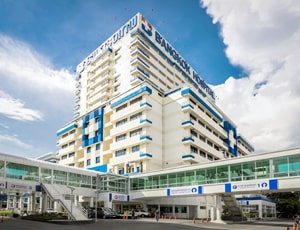
Bangkok Hospital
Bangkok, Thailand
Bangkok Hospital located in Bangkok, Thailand is accredited by JCI. Also listed below are some of the most prominent infrastructural details:
- It is recognised for the application of the newest healthcare technology.
- Blood analysis center that is not just the best in Thailand but in Asia Pacific as well.
- Biomolecule center that is the seed of healthcare equipment for Thailand and overseas.
- International affiliations and collaborations with universities and hospitals in Japan and the United States of America.
- 11 hospitals are recognised as Centers of Excellence.
- Known excellence in Trauma, Orthopedics, Cardiovascular, Neurology as well as Cancer Care.
- There is a proper streamlined patient services process followed in Bangkok Dusit Medical Services, Bangkok, Thailand.
- A well developed research center showcases the intent of the organisation to provide research based treatment opportunities to the patients.
- The group has several Medical industry partnerships as well to ensure healthcare solutions.
Our Services to better your experience
Opinion & Option
We submit the most accurate opinion and options from one or more countries for your review
Consult Privately
Consult with a certified specialist privately on our telemedicine platform even before you decide to travel
Logistics
We handle flights, visas, transfers, and accommodation—so you can focus on your health.
Recovery
Our In-house rehabilitation service packages to better your recovery and treatment outcome
Why Choose Thailand for Cholangiocarcinoma (Bile Duct Cancer) Treatment?
Here are some of the reasons for choosing Thailand:
- Oncology expertise: Thailand has highly trained oncologists and specialised cancer centres that have treated cholangiocarcinoma before.
- Advanced Treatment Options: Surgery, chemotherapy, radiotherapy, and targeted therapies are among the advanced treatment options available, along with cutting-edge technology.
- Cost-Effective Care: Treatment in Thailand is less expensive than in many Western countries while maintaining high quality.
- International Patient Services: Thai hospitals offer seamless treatment to international patients, including multilingual support and personalised services.
- Accredited Healthcare Facilities: Thailand's leading hospitals are JCI accredited, providing high medical treatment standards.
Frequently Asked Questions
The stage of disease mainly determines the survival rate of cholangiocarcinoma in Thailand at diagnosis and the treatment method.
Early-stage cholangiocarcinoma can frequently be successfully treated with surgery and adjuvant therapies, resulting in higher survival rates.
However, survival rates for advanced stages may differ. Thailand's specialised institutes, which use cutting-edge technology and expert oncologists, considerably improve patients' chances of achieving better outcomes and living longer.
Standard chemotherapy side effects include nausea, vomiting, exhaustion, hair loss, and weakened immunity. These effects vary according to the medications used but are manageable with supportive care.
Clinical trials are essential in treating cholangiocarcinoma in Thailand, providing patients access to breakthrough therapies and cutting-edge treatments that are not yet generally available.
These studies allow researchers to investigate novel medicine combinations, targeted treatments, and immunotherapies that may enhance results. They also advance medical knowledge by enabling practitioners to design more effective, tailored treatment approaches for cholangiocarcinoma in the future.
Treatment in Thailand is frequently less expensive than in Western countries while keeping good medical standards.
Surgical excision can benefit early-stage cholangiocarcinoma, with modern technologies and expert surgeons boosting the likelihood of success.
Cholangiocarcinoma is frequently discovered in its later stages due to mild signs in the early stages. Regular monitoring of those at higher risk (such as people with chronic liver problems) may aid in early diagnosis.
Treatment time varies according to the stage and type of treatment. Surgery may necessitate a few weeks of rehabilitation, whereas chemotherapy or radiation can take many months, with continued follow-up care.
Yes, cholangiocarcinoma can spread to neighbouring organs such as the liver, pancreas, lymph nodes and other body regions. Early identification and treatment can reduce metastases and increase survival chances.
The chance of recurrence is determined by several factors, including the stage of the cancer at diagnosis, the type of treatment employed, and the patient's reaction to treatment. Regular follow-up treatment and surveillance are critical for spotting recurrences early.

Reviewer

Dr. Mohit Agarwal
Medical Oncologist
14 Years of Experience
One of the finest Oncologist in New Delhi, India, Dr. Mohit Agarwal has worked with several world class multidisciplinary hospitals over the years. Dr. Mohit Agarwal has over 14+ years of experience in his field. The doctor treats and manages a wide range of conditions such as Stomach Cancer, Rectal Cancer, Breast Cancer, Brain Cancer View More
Last Reviewed - January 2026