Brain and Spine Injuries Treatment in Thailand
- Top Accredited Hospitals
- Global Medical Standards
- Cutting-Edge Technology
- Proven Treatment Options
- High Success Rate
- Trusted by Millions

What are Brain and Spine Injuries?
Brain and spine injuries can have a variety of effects on individuals, including altered behaviour, personality, physical and cognitive abilities, and sensory perception, in addition to increased mental and physical exhaustion. Paraplegia or quadriplegia can be the outcome of a severe spinal cord injury.
What are the Common Symptoms of Brain and Spine Injuries?
The following symptoms may result from spinal cord injuries:
- Loss of mobility
- Shift in the senses of touch, heat, and cold
- Loss of control over the bladder or bowels
- Excessive spasms or reflex actions
- Alterations in fertility, sexual sensitivity, and sexual function
- Damage to the spinal cord's nerve fibers can result in pain or a sharp stinging sensation
- Difficulty coughing, breathing, or removing secretions from the lungs.
Causes, Risk Factors and Complications of Brain and Spine Injuries
Causes
- Road traffic accidents (RTA)
- Falls
- Sports injuries
- Violence (assault, gunshot, stab wounds)
- Industrial/workplace accidents
- Birth trauma
- Explosions/blasts
Risk Factors
- Risky behaviours (speeding, not wearing helmets/seatbelts)
- Contact sports
- Age (young adults, elderly)
- Alcohol or drug use
- Occupation (construction, military, heavy machinery)
- Pre-existing medical conditions (osteoporosis, seizures)
Complications
- Paralysis
- Memory loss
- Speech and language problems
- Chronic pain
- Seizures
- Cognitive impairments
- Loss of sensation
- Breathing difficulties
- Infections (pneumonia, meningitis)
- Psychological issues (depression, anxiety)
Connect with our advisor for a PRIORITY response
Latest Research and Technologies in Treating Brain and Spine Injuries in Thailand
In Thailand, treating with stem cells has been the focus. Stem cells, regarded as a cutting-edge method, can be extracted from the patient or donors and injected close to the damaged spinal cord to promote neural regeneration. By implanting a device that sends electrical impulses straight to the spinal cord, epidural stimulation may help restore some motor and sensory function.
Spine Injuries Prevention Tips
- Exercise for back: For long-term effectiveness in managing and reducing spine pain, motivated individuals frequently stick to a consistent routine of focused stretching and strengthening exercises
- Keep your weight in check: Being overweight might put the spine under unnecessary physical strain. Additionally, being overweight can frequently lead to other illnesses or physical disorders that could worsen pre-existing conditions or further damage the spine.
- Avoid Smoking: As a vasoconstrictor, nicotine narrows blood vessels, decreasing blood flow and restricting the amount of oxygen and nutrients that reach the spine. Vasoconstriction can hasten deterioration and inflammation in the body, including the spine.
- Cut back on or avoid foods that cause inflammation: Steer clear of red meats, dairy products that cause inflammation, refined sugar, and other processed foods. Instead, choose wholesome anti-inflammatory foods, such as plant-based foods, which are naturally low in calories and can help prevent excessive weight gain.
- Exercise caution when lifting big objects: The spine is severely strained when bending to lift a heavy object. When lifting, use proper form by keeping your back straight, bending your knees, and using your legs' strength to finish the move
- Continue to move: Long periods of time spent in one position can be taxing on the spine. To maintain your back supple and limber, walk, move around, and sometimes stretch or exercise.
Treatment options for Brain and Spine Injuries
Spinal Fusion Surgery: Spinal fusion is the treatment option for brain and spinal cord injury. Surgery to join two or more vertebrae in your spine is called spinal fusion. Our body is held upright by the interlocking column of these ring-shaped bones. Combining them can strengthen the structure of our back. A variety of surgeon types performs spinal fusion surgery. Depending on the patient's particular demands and the underlying problem, both neurosurgeons and orthopaedic surgeons can do these. Alternative therapies are sometimes safer or more successful than surgery. However, spinal fusion might be the best option for specific individuals.
Cost Start From USD 12000 - USD 17000Explore Options
Imaging Studies
- X-rays: X-rays can reveal damage to the bone surrounding the spinal cord, known as the vertebrae. They also can find tumours, fractures or changes in the spine.
- CT scan: A CT scan can produce a crisper image compared to an X-ray. Computers are used in this scan to create several cross-sectional pictures that can identify disk, bone, and other alterations.
- MRI: MRI creates computer-generated pictures using radio waves and a powerful magnetic field. This test helps examine the spinal cord to search for masses that could compress it, such as blood clots or herniated disks.
MediRehab (a chain of Rehab centres, part of MediGence) provides comprehensive rehabilitation services to support patients through Teleconsulations and online therapy sessions.
- Physical therapists, occupational therapists, rehabilitation nurses, rehabilitation psychologists, social workers, physiatrists (physicians specialising in physical medicine and rehabilitation) or specialists in spinal cord injuries may be on your rehabilitation team, and you may also work with a dietitian and a recreation therapist.
- During the early phases of rehabilitation, therapists work on preserving and strengthening muscle function, redeveloping fine motor skills, and teaching you how to adapt to perform daily tasks.
- You're taught many new abilities, frequently utilising equipment and technologies to help you live independently as much as possible. You can learn to enjoy your favourite pastimes, participate in social and fitness activities, and return to school or employment.
Some of the side effects of spinal cord injury can be controlled with medication. These include pain and muscular spasticity medications. Additionally, medications can enhance sexual performance, bowel control, and bladder control.
Instantly Connect with our Specialists


Hospitals for Brain and Spine Injuries in Thailand
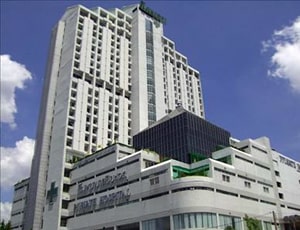
Piyavate Hospital
Bangkok, Thailand
Piyavate Hospital located in Bangkok, Thailand is accredited by JCI. Also listed below are some of the most prominent infrastructural details:
Medicine Centre: Piyavate Hospital provides advanced holistic treatment for their patients. They offer a complete range of services and physicians that specialize in various fields like the endocrine system, the nervous system, kidney function, cardiovascular care, respiratory and digestive system. They pride themselves for the familial care that they provide to their patients.
Fertility and In-Vitro Fertilization Centre: Helping the couples who walk into the Piyavate Hospital to achieve their dream of having a family. They have a medical team that specializes in male and female fertility. They offer consultation services, fertility check-up for both men and women and complete IVF services. They have advanced IVF cycle treatment facilities that offer a high rate of success.
Bone and Joint Institute: Piyavate Hospital houses one of the frontrunners in Orthopaedic health care in all of SouthEast Asia. They offer a wide range of services and surgeries in their bone and joint institute that include hand surgery, hip and knee replacement surgery, spinal cord surgery, upper extremity surgery, arthroscopic surgery and sports medicine.
Eye and Lasik Centre: Piyavate Hospital is fully equipped with the latest and most advanced technology for eye care and houses highly skilled ophthalmologists, sub-specialists and qualified nurses.
Physical Therapy and Rehabilitation Centre: One of the first hospitals to be equipped with the Hybrid Assistive Limb technology that will help a neurologically challenged patient to control the rehabilitation robot limb with a signal from their brain. The Physical Therapy and Rehabilitation Centre at Piyavate Hospital uses this system encourage patients to regain muscle memory to walk and function normally.
Amenities for Patient’s Family:
Piyavate Hospital also offers additional apartment facilities to house the kin of the patients who come to visit them from distant places. A restaurant, a flower shop and a café are a few of the other amenities provided by the hospital.
These are the most popular services offered by the Piyavate Hospital in Bangkok, Thailand. They also provide a plethora of other medical services that are listed below:
Diabetic Foot Centre
Check-up centre
Urology Centre
Heart Institute
Paediatric Centre
Obstetrics and Gynaecology Centre
Surgery Centre
Ear Nose Throat Centre
Haemodialysis Centre
Dental Centre
X-Ray Centre
Gastroenterology Centre
Cancer Centre
Neonatal Intensive Care Unit (NICU)
Emergency Services and Centre
Tele-medicine

Phyathai 2 International Hospital
Bangkok, Thailand
Phyathai 2 International Hospital located in Bangkok, Thailand is accredited by JCI. Also listed below are some of the most prominent infrastructural details:
- Fully equipped rooms are available for convenience of the patients- Gold B Room, Gold A Room, Pediatric Gold A, Platinum room, and Prestige ward
- Nearby accommodations are also available- Abloom Service Apartments, Bangkok Patio, VIB Best Western Sanam Pao, VIC3 Hotel
- Operating room
- International Patient Medical Center to assist overseas patients

Kasemrad Ramkhamhaeng Hospital
Bangkok, Thailand
Apart from in-detail treatment procedures available, Kasemrad Ramkhamhaeng Hospital located in Bangkok, Thailand has a wide variety of facilities available for International Patients. Some of the facilities which are provided by them are Accommodation, Airport Transfer, Choice of Meals, Interpreter, SIM, TV inside room. Also listed below are some of the most prominent infrastructural details:
- Initially started with 1.5 acres of land and expanded to 3.5 acres
- 139 beds, 39 Examination Rooms
- 13 Specialties Departments/Centers
- 24*7 Emergency Department
- Accommodation facilities are available- VIP rooms, Single special room, 6-bed dormitory, baby room
Our Services to better your experience
Opinion & Option
We submit the most accurate opinion and options from one or more countries for your review
Consult Privately
Consult with a certified specialist privately on our telemedicine platform even before you decide to travel
Logistics
We handle flights, visas, transfers, and accommodation—so you can focus on your health.
Recovery
Our In-house rehabilitation service packages to better your recovery and treatment outcome
Why Choose Thailand for Brain and Spine Injuries Treatment?
Here are some of the reasons for choosing Thailand:
Due to advancements in medical facilities, such as minimally invasive surgical techniques.
- World-class experts include highly experienced doctors, JCI, and NABH-accredited healthcare institutions.
- Compared to other countries, treatment in Thai hospitals is cost-effective.
- Thai hospitals provide international patient services, including a multilingual support system
- Improved treatment methods and biological therapies
Frequently Asked Questions
There is no treatment for Brain and Spine Injuries. However, the symptoms can be lessened or controlled to a certain extent depending on which part of the spinal cord has been injured. In some instances, spinal cord fusion surgery helps.
As there is currently no permanent cure for Brain and Spine Injuries, spinal cord fusion surgery may be helpful in some instances. Treatment plans will depend on the severity of the injury and the underlying cause, with a strong emphasis on rehabilitation and assistive technology to maximise functionality. In Thailand, Brain and Spine Injury treatment primarily focuses on managing symptoms and improving quality of life through medication, physical therapy, spinal cord fusion surgery in some instances, and managing secondary complications like bladder and bowel issues.
Yes, many Thai hospitals offer the following for brain and spine injuries treatment:
- Advanced diagnostic tools like MRI, CT scan, electromyography, and PET scan for accurate neurofibroma diagnosis.
- Skilled neurologist orthopaedic surgeon for brain and spine injuries.
- Advanced spinal cord fusion procedures.
- Comprehensive post-surgery care and rehabilitation for long-term health benefits.
Always consider the following factors when selecting Thai hospitals:
- Hospitals that are accredited (authorised by JCI and NABH).
- Patient reviews and success rates.
- Hospitals that provide seamless care to patients from abroad.
In general, brain and spine injury treatment has improved in Thailand. Our research demonstrates that multilevel contiguous spinal involvement is more common than noncontagious multilevel spinal involvement and that cervical spine injuries are more common. Incidents of SCIWORA (spinal cord injury without radiological abnormality) were comparable to those reported in the literature. The death rate was relatively low. Eight surgical cases and four instances with conservative treatment showed neurological improvement.
You should look for symptoms such as loss of consciousness, a severe headache, confusion, nausea or vomiting, difficulty walking or talking, weakness or numbness in limbs, unusual drowsiness, changes in vision or hearing, neck or back pain, difficulty controlling bladder or bowel movements, clear fluid leaking from the ears or nose, and any abnormal behaviour or responses following a head injury.
The following are examples of long-term effects:
- Circulatory problems: Changes in circulation can result in unstable blood pressure, abnormal heart rhythms and blood clots that may appear days after injury.
- Breathing problems: About one-third of people with SCI will require temporary or permanent help with breathing and may require a breathing tube; any injury to the spinal cord between the C1-C4 segments can stop breathing because the nerves in this region cause the diaphragm to move and the lungs to expand; pneumonia. The injured person will need careful monitoring for these common issues after an SCI.
- Muscular tone changes and stiffness: Over time, excessive reflexes might result in muscle stiffness and an increase in tone that may call for special care.
- Autonomic dysfunction: Autonomic dysreflexia is a potentially fatal reflex activity that mainly affects those who have had upper back or neck injuries. Flushing or perspiration, a throbbing headache, anxiousness, a sharp rise in blood pressure, changes in eyesight, or goose bumps on the arms and legs are some of the symptoms. To maintain blood flow to the legs and feet, which lowers blood pressure, the person should remain seated if at all feasible.
- Pressure ulcers: They are another name for pressure sores. Areas of skin that have degenerated due to constant pressure on the skin and decreased blood flow to the area are known as pressure sores.
- Pain: Neurogenic pain is a severe burning or stinging feeling that some persons with SCI experience. This pain could be ongoing or intermittent. A variety of factors can bring it on, and some people may even experience pain in areas of their bodies where they would not usually feel it. Chronic pain can be treated with medications, electrical stimulation of the brain or spine, and surgery. However, none of these therapies can fully alleviate neurogenic pain in the long run.
- Intestinal and bladder issues: To empty their bladder, people would need to utilize a catheter and learn new techniques to empty their bowels.
- Sexual activity: A person's sexual function and fertility may be impacted by the extent and location of their injury as well as how well they recover from it.
Depression. Due to changes in lifestyle following the injury, depression can strike many people with SCI.
Follow a thorough rehabilitation plan with your son's medical team, which may include occupational therapy, speech therapy, physical therapy, and cognitive rehabilitation, depending on his individual needs.
- Environment of Support: Maintaining a routine with predictable meals, activities, and sleep times will help your son feel safe.
- Communication: Give visual clues, speak simply and clearly, and be understanding when there are communication difficulties.
- Emotional Support: Encourage candid dialogue, validate his emotions, and provide emotional support.
- For already diagnosed paraplegic patients, one has to prioritise preventing bed sores by changing the parent's position frequently, keeping them clean, helping them with everyday tasks like eating, dressing, and using the restroom, making sure the catheter is correctly cared for if necessary, making the home accessible, promoting wheelchair mobility, and offering emotional support while keeping a close eye on their health and seeking medical help when needed.
The body lying in an awkward, unnatural position is one of the signs and symptoms of spinal injury. Skin that feels chilly and clammy. Reporting a lack of sensation, including pain or strange limb tingling.
Author

Alvina Hasan
Alvina Hasan is a dedicated medical researcher and scientific writer with a strong foundation in pharmaceutical sciences. She holds a B.Pharm from Jamia Hamdard University and an M.Pharm in Quality Assurance from DIPSAR University.
With deep medical expertise and a strong interest in healthcare communication, she focuses on transforming complex clinical and scientific information into clear, engaging, and easy-to-understand narratives. She develops insightful healthcare articles and research-driven content designed to support both medical professionals and patients, helping bridge the gap between advanced medical knowledge and practical understanding.
Readers can explore her published research and articles here:
https://carcinogenesis.com/index.php/JOC/article/view/868
https://carcinogenesis.com/index.php/JOC/article/view/870
View MoreReviewer

Dr Sonal Gupta
Neurosurgeon
29 Years of Experience
Dr. Sonal Gupta has an experienced neurosurgeon with more than 29+ years of clinical expertise. She is currently the Director, Neuro & Spine Surgery at Fortis Hospital, Shalimar Bagh. Before joining Fortis, she has been associated with various organizations such as Maharaja Agrasen Hospital, Action Balaji Hospital, and Max Hospital. View More
Last Reviewed - January 2026