Baastrup's Disease (Kissing Spine) Treatment in Thailand
- Top Accredited Hospitals
- Global Medical Standards
- Cutting-Edge Technology
- Proven Treatment Options
- High Success Rate
- Trusted by Millions

What is Baastrup's Disease (Kissing Spine)?
Baastrup's Disease is more popularly known as Kissing Spine, which is a condition wherein two adjacent spinous processes (the bony protrusions at the back of the vertebrae) in the spine contact each other or "kiss" because of degenerative changes in the vertebrae.
It is commonly seen in the lower back (lumbar spine) but may also occur at other levels. It often manifests in the lumbar spine or lower back but may also be formed at different locations.
What is the Importance of Timely Treatment?
Prevention of Disease Progression
Early treatment can prevent the disease from further deterioration and additional degeneration. Early intervention would reduce complications, thus improving long-term outcomes.
Chronic Pain Reduction
Treating any spine-related problem early will decrease the chances of chronic pain developing. If symptoms are managed early, this will prevent long-term pain and enhance mobility.
Better Treatment Outcomes
Early treatment almost always results in better recovery and more effective management. It will prevent the need for more invasive and complex surgeries at a later stage.
Higher Quality of Life
The sooner the treatment is started, the longer patients can maintain an active lifestyle and lessen the interference with daily activities. In addition, reducing the stress of chronic pain enhances mental health.
Cost-Effective Care
Early intervention will minimise years of costly treatment options. There will be less risk of complications and the need for invasive options.
What are the Common Symptoms of Baastrup's Disease (Kissing Spine)?
- Localised Back Pain
- Pain When Pressing on the Spine
- Stiffness and Limited Range of Motion
- Radiating Pain (Radiculopathy)
- Muscle Spasms
Causes and Risk Factors of Baastrup's Disease (Kissing Spine)
Causes
- Degenerative Changes in the Spine
- Abnormal Spine Alignment
- Facet Joint Osteoarthritis
- Repetitive Stress or Overuse
- Post-Surgical Changes
Risk Factors
- Age
- Gender
- Spinal Deformities
- Occupation and Physical Activity
- Genetic Factors
- Previous Spinal Injury
Connect with our advisor for a PRIORITY response
Latest Research and Technologies in the Treatment of Baastrup's Disease (Kissing Spine) in Thailand
Regenerative Medicine
The newest trend in research in the country now is the Platelet-Rich Plasma (PRP) treatment and stem cell therapy. Such biologics are indicated for inflammatory conditions, tissue healing, and delaying surgical indication, if not circumventing it.
Multidisciplinary Comprehensive Pain Management
A hospital can provide complete rehabilitation programs for an individual with physiotherapy, postural correction exercises, nonsteroidal anti-inflammatory drugs, and spine stabilising exercises. These noninvasive treatment options significantly improve mobility and substantially improve chronic pain symptomatology.
Baastrup's Disease (Kissing Spine) Prevention Tips
Keep Good Posture
Sitting, standing, and walking in the correct body position relieves the vertebrae from unnecessary stress. Use proper ergonomic furniture and avoid slumping to keep the lower back healthy.
Building Core and Back Muscles
Exercising the previous day makes today worth it. You have to target your abs and back through regular exercise, as these are the keys to stability and prevention against the misalignment possibilities of the spine.
Avoid Sitting or Standing for Long
It is advisable to break up and take some stretching or changing activity to completely relieve pressure on your spine by remaining in a static position for a long time without any positional changes.
Control Weight
Controlling healthy weight helps reduce the excess load on the spine and lower back. Proper diet and exercise reduce the stress placed along the line of vertebral structures.
Proper Lifting Techniques
When lifting a heavy object, bend with your knees rather than your waist to easily lift it. Wearing supportive shoes and lifting correctly can help reduce the stress on your spine.
Treatment options for Baastrup's Disease (Kissing Spine)
The medical treatment for Baastrup's Disease (Kissing Spine) requires evaluating the severity, neural involvement, and patient medical condition. The following are the treatment options:
Radiofrequency ablation is when radio waves pass through the skin into nerve tissues adjacent to the spine to relieve pain. It may be undertaken in those who suffer from chronic pain unrelieved by other treatment modalities.
Spinal Fusion Surgery may be performed in severe cases of decompression for the removal of spinous processes causing pain or impinging on a nerve with the aim of long-term relief. Spinal fusion may occur in conditions significantly destabilising the spine by fusing the affected vertebrae.
Cost Start From USD 12000 - USD 17000Explore Options
Laminectomy : A surgical procedure where a portion of the targeted bone is excised to relieve pressure on either the spinal cord or the surrounding nerves
Cost Start From USD 9500 - USD 12500Explore Options
These are the standard diagnostic methods for diagnosing Baastrup's Disease (Kissing Spine):
Clinical Evaluation
- History and Symptoms: During the assessment, the physician needs information about the previous surgical procedure and symptoms of back pain, numbness, and weakness to determine spinal cord involvement.
- Physical exam: The doctor will ask about the patient's medical history and symptoms, and the physical examination will show them. Tenderness and pain along the spinous processes can be key indicators.
Imaging Studies
- Plain Radiographs: X-rays are the first imaging modality to evaluate any evidence of Baastrup's Disease. The X-ray can show the closeness of the spinous processes and, to some extent, vertebral degenerative changes, such as disc degeneration or bony growth.
- Detailed Imaging for Soft Tissues: The MRI gives better images of soft tissue structures such as discs, ligaments, and muscles. It can also show any inflammatory condition of the interspinous ligaments, disc degeneration, or nerve compression by kissing spinous processes.
- A CT Scan provides detailed bone and spine views. The CT SCAN also produces three-dimensional images of vertebralspinal structures. This may help identify particular changes in vertebrae orientation and disclose relevant fractures or structural abnormalities.
- FDG PET/CT Advanced imaging: This imaging technique can detect scarring for inflammatory lesions in places where the kissing spinous processes occur. It can be helpful in complex cases that otherwise do not get sufficient information from conventional X-ray or MRI techniques.
- Bone Scintigraphy (Bone Scan) for Inflammation: Sometimes, a bone scan indicates inflammation in the spinous process. This is usually when other imaging techniques fail to demonstrate conclusively.
MediRehab (a chain of Rehab centres, part of MediGence) provides comprehensive rehabilitation services to support patients through Teleconsulations and online therapy sessions.
Physical Therapy
Training on posture, manual therapy, and stretching will enhance mobility and reduce pain. The exercises targeted will help to reduce stiffness and improve spinal flexibility.
Strengthening Exercises
The muscles surrounding the spine are strengthened through core and spinal stabilisation exercises. Swimming is a low-impact activity that builds strength without stressing the spine.
Management of Pain Techniques
Various treatments include heat or cold therapy, TENS, and massage therapy. These complementary therapies are fundamental in alleviating pain and improving the quality of life for the patient.
Occupational Physiotherapy Ergonomics
Adopting proper posture with workplace ergonomics reduces strain on the spine. An ergonomic chair and correct lifting techniques will help eliminate further stress on the spine.
Lifestyle and Activity Modification
Low-impact exercises, weight control, and avoiding protracted sitting or standing are vital for relieving the stress on the spine. Aquatic therapy offers a gentle exercise method while minimising stress on the lower back.
Instantly Connect with our Specialists


Hospitals for Baastrup's Disease (Kissing Spine) in Thailand
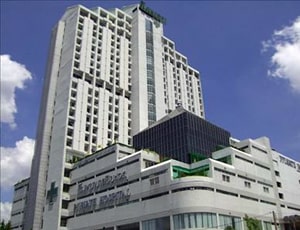
Piyavate Hospital
Bangkok, Thailand
Piyavate Hospital located in Bangkok, Thailand is accredited by JCI. Also listed below are some of the most prominent infrastructural details:
Medicine Centre: Piyavate Hospital provides advanced holistic treatment for their patients. They offer a complete range of services and physicians that specialize in various fields like the endocrine system, the nervous system, kidney function, cardiovascular care, respiratory and digestive system. They pride themselves for the familial care that they provide to their patients.
Fertility and In-Vitro Fertilization Centre: Helping the couples who walk into the Piyavate Hospital to achieve their dream of having a family. They have a medical team that specializes in male and female fertility. They offer consultation services, fertility check-up for both men and women and complete IVF services. They have advanced IVF cycle treatment facilities that offer a high rate of success.
Bone and Joint Institute: Piyavate Hospital houses one of the frontrunners in Orthopaedic health care in all of SouthEast Asia. They offer a wide range of services and surgeries in their bone and joint institute that include hand surgery, hip and knee replacement surgery, spinal cord surgery, upper extremity surgery, arthroscopic surgery and sports medicine.
Eye and Lasik Centre: Piyavate Hospital is fully equipped with the latest and most advanced technology for eye care and houses highly skilled ophthalmologists, sub-specialists and qualified nurses.
Physical Therapy and Rehabilitation Centre: One of the first hospitals to be equipped with the Hybrid Assistive Limb technology that will help a neurologically challenged patient to control the rehabilitation robot limb with a signal from their brain. The Physical Therapy and Rehabilitation Centre at Piyavate Hospital uses this system encourage patients to regain muscle memory to walk and function normally.
Amenities for Patient’s Family:
Piyavate Hospital also offers additional apartment facilities to house the kin of the patients who come to visit them from distant places. A restaurant, a flower shop and a café are a few of the other amenities provided by the hospital.
These are the most popular services offered by the Piyavate Hospital in Bangkok, Thailand. They also provide a plethora of other medical services that are listed below:
Diabetic Foot Centre
Check-up centre
Urology Centre
Heart Institute
Paediatric Centre
Obstetrics and Gynaecology Centre
Surgery Centre
Ear Nose Throat Centre
Haemodialysis Centre
Dental Centre
X-Ray Centre
Gastroenterology Centre
Cancer Centre
Neonatal Intensive Care Unit (NICU)
Emergency Services and Centre
Tele-medicine

Phyathai 2 International Hospital
Bangkok, Thailand
Phyathai 2 International Hospital located in Bangkok, Thailand is accredited by JCI. Also listed below are some of the most prominent infrastructural details:
- Fully equipped rooms are available for convenience of the patients- Gold B Room, Gold A Room, Pediatric Gold A, Platinum room, and Prestige ward
- Nearby accommodations are also available- Abloom Service Apartments, Bangkok Patio, VIB Best Western Sanam Pao, VIC3 Hotel
- Operating room
- International Patient Medical Center to assist overseas patients

Kasemrad Ramkhamhaeng Hospital
Bangkok, Thailand
Apart from in-detail treatment procedures available, Kasemrad Ramkhamhaeng Hospital located in Bangkok, Thailand has a wide variety of facilities available for International Patients. Some of the facilities which are provided by them are Accommodation, Airport Transfer, Choice of Meals, Interpreter, SIM, TV inside room. Also listed below are some of the most prominent infrastructural details:
- Initially started with 1.5 acres of land and expanded to 3.5 acres
- 139 beds, 39 Examination Rooms
- 13 Specialties Departments/Centers
- 24*7 Emergency Department
- Accommodation facilities are available- VIP rooms, Single special room, 6-bed dormitory, baby room
Our Services to better your experience
Opinion & Option
We submit the most accurate opinion and options from one or more countries for your review
Consult Privately
Consult with a certified specialist privately on our telemedicine platform even before you decide to travel
Logistics
We handle flights, visas, transfers, and accommodation—so you can focus on your health.
Recovery
Our In-house rehabilitation service packages to better your recovery and treatment outcome
Why Choose Thailand for Baastrup's Disease (Kissing Spine) Treatment?
World-Class Spine Specialists
Orthopedic and neurosurgeons have been trained and qualified internationally and have experience caring for complex spinal conditions like Baastrup's disease through appropriate techniques.
Advanced Minimally Invasive Treatments
Top hospitals in Thailand offer minimally invasive treatment options, including interspinous process decompression and radiofrequency ablation (RFA). Faster recovery and fewer complications are ensured.
Access to Regenerative Therapies
In Thailand, PRP (Platelet-Rich Plasma) and stem cell therapies are cutting-edge for non-surgical treatment to help heal damaged spinal tissues.
Affordability
Patients find affordable spine care that is world-class in quality by international standards and has precise costing and all-inclusive treatment packages.
Frequently Asked Questions
Surgery is not indicated in all cases. Most cases respond well to conservative treatment, given good medical therapy and physiotherapy. Surgery is usually reserved for severe, persistent pain as well as neurologic compression or instability.
Furthermore, Baastrup's Disease untreated would mean a significant loss of mobility and quality of life due to pain and discomfort caused by this condition. Most cases can succeed with good treatment, including physical therapy and pain management, in managing symptoms and avoiding permanent disability.
Yes, with all the experienced ones, internationally trained orthopedic spine surgeons and neurosurgeons specialise in finding and treating Baastrup's Disease through advanced techniques.
Thailand's leading hospitals and rehab centres provide physiotherapy and rehabilitation programs to assist recovery and improve spinal function after treatment.
The Baastrup's Disease treatment in Thailand claims a success rate between 60-80% with the non-surgical options of therapy and injections, 75-90% with minimally invasive procedures for pain relief, and 85-95% success rate with open surgery in leading hospitals.
A healthy weight, good standing and sitting posture, and participation in low-impact activities like swimming or walking reduce strain on the spine and benefit symptoms.
Baastrup's Disease may not be entirely preventable. Still, risk reduction includes good posture, minimisation of repetitive stress on the spine, development of strong core muscles, and ergonomic furniture for back support.
Yes, physical therapy is a viable treatment approach. Its intervention includes improving flexibility, reinforcing core and back muscles, and teaching proper posture to lessen the burden on the spine; all these shorten the duration of pain relief and prevent further deterioration.
Sometimes, Baastrup's Disease symptoms recur. This is mainly because the patient has been unable to correct the medically established causes of degenerative changes or faulty posture. Regular exercise and good posture combined with good weight management will prevent reoccurrence.
Should Baastrup's disease go untreated, it may eventually progress into chronic pain, possible nerve compression, and the tasting of spinal instability. In extreme cases, walking or using body movements becomes almost impossible; all these changes severely affect the quality of life.

Reviewer
Dr Sonal Gupta
Neurosurgeon
29 Years of Experience
Dr. Sonal Gupta has an experienced neurosurgeon with more than 29+ years of clinical expertise. She is currently the Director, Neuro & Spine Surgery at Fortis Hospital, Shalimar Bagh. Before joining Fortis, she has been associated with various organizations such as Maharaja Agrasen Hospital, Action Balaji Hospital, and Max Hospital. View More
Last Reviewed - January 2026