4 Hospitals

- Best Hospital in Haryana, 2020 - The Asian Institute of Medical Sciences was named the Best Hospital in Haryana by the National Healthcare Excellence Awards in 2020.
- Best Multi-Specialty Hospital in Delhi/NCR, 2019 - The hospital was recognized as the Best Multi-Specialty Hospital in Delhi/NCR by the Global Health and Travel Awards in 2019.
- Best Hospital for Medical Tourism in India, 2018 - The Asian Institute of Medical Sciences was awarded the Best Hospital for Medical Tourism in India by the Indian Healthcare Awards in 2018.
- Best Hospital in Faridabad, 2017 - In 2017, the hospital was named the Best Hospital in Faridabad by the Times of India Healthcare Awards.
- Best Hospital for Patient Safety, 2016 - The hospital received the award for the Best Hospital for Patient Safety by the Federation of Indian Chambers of Commerce and Industry (FICCI) in 2016.
- Accreditation


Please Enquire

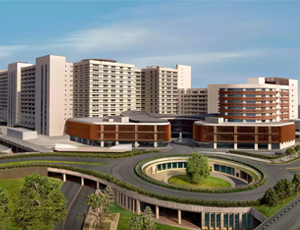
The Sarvodaya Hospital and Research Centre's spine center is outfitted with the most cutting-edge technology and apparatus to guarantee exact therapy for spinal conditions like vertebral decompression. The hospital has diagnostic tools like CT scans, MRI scans, ultra-modern Digital X-Rays, etc. (for excellent imaging and radiology support), a Neuronavigation system to diagnose and direct minimally invasive procedures, Standing scanogram for whole spine x-rays, ultra-modern drill, advanced microscope, neural monitoring (NIM), MIS retractor system, etc.
The hospital has an endoscopic spine unit to accurately perform minimally invasive spine surgeries such as a laminectomy. The decompressions are relieved by the surgeon by shaving the extra growth (bone spurs) from the vertebral column. Dr. Ashish Tomar is the senior consultant at the orthopedics department at Sarvodaya Hospital and Research Centre.
Best doctors for Laminectomy at Sarvodaya Hospital and Research Centre:
- Dr. Pankaj Dawar, Head of Department, 19 Years of Experience
- Accreditation
- Accreditation

- Best Emerging Critical Care Hospital in Delhi NCR – Times Health Survey 2018 (recognised for excellence in critical care services).
- Best Multi-Specialty Hospital in Gurgaon & Faridabad – Times Health Survey 2021 (acknowledging overall quality of multispecialty care).
- Accreditation
Ask your healthcare adviser for the best multiple options and choose the one that meets your expectations
Request for an Expert Opinion

Outcomes of Laminectomy
| Speciality | Neurology |
| Procedure | Laminectomy |
| Success Rate | 85-95% |
| Recovery Time | 3-4 weeks |
| Treatment Time | 1-3 hours |
| Chances of Recurrence | 10-20% |
What is a Laminectomy and how does it work?
A laminectomy, also known as decompression surgery, is a surgical procedure performed to relieve pressure on the spinal cord or nerves by removing a portion of the vertebral bone called the lamina. The lamina is located at the back of the vertebra and forms the "roof" of the spinal canal. By removing a section of the lamina, the surgeon creates more space in the spinal canal, reducing compression and alleviating symptoms.
What medical conditions can be treated through Laminectomy?
Laminectomy is commonly used to treat spinal conditions that cause compression of the spinal cord or nerves. This includes spinal stenosis, herniated discs, bone spurs, and tumors in the spinal canal. These conditions can result in symptoms such as pain, numbness, weakness, and difficulty with motor function.
What is the recovery process after a Laminectomy?
The recovery process after a laminectomy varies depending on the extent of the procedure and individual factors. In general, patients can expect to stay in the hospital for a few days following the surgery. Pain medications and physical therapy may be prescribed. Full recovery may take several weeks to months, during which time the surgical site heals and the body adjusts to the changes in the spinal canal. Regular follow-up visits are scheduled to monitor the healing process.
Frequently Asked Questions
The ranking of hospitals according to the procedure is based on a number of elements. Some of the major factors for ranking the hospitals for Laminectomy in Faridabad are Availability of the Procedure, Popularity of the procedure & hospital, Infrastructure, Pricing structure, Experienced Medical Professionals, Technology Employed, Facilities Available for the Patients & Visitors, Success Rate of the Hospital.
MediGence provides you with a combination of cost-savings, convenience, and quality healthcare. By using our unmatched care services, you can have the best and hassle-free medical experience abroad. Our value-based services include airport transfers, accommodation, 24/7 assistance, Virtual consultation, case manager, and prenegotiated treatment packages with upto a 30% discount. Many more benefits are available with MediGence your treatment abroad.
Absolutely! Yes. Before you plan medical travel to Faridabad, you can benefit from an efficient & helpful online consultation with the chosen specialist there. You can place your request to our patient advisors for scheduling your online consultation with the specialist. Our expert will cross-check with the specialist about his/her availability and send you a payment link for the confirmation of the appointment.
Many people have started traveling to Faridabad for Laminectomy due to the country’s modern healthcare infrastructure and high success rate. Many other factors make Faridabad the preferred choice for Laminectomy. These include:
- Experienced and certified specialists
- Affordable treatment plans
- Transparency and data privacy
- Accredited hospitals
- Latest medical technologies
The recovery time for a procedure varies based on the condition of the patient and the complexity of the surgery. Other than that, rehabilitation post-treatment also plays a crucial role in reducing the healing time and aiding in proper recovery. It is recommended that the patient maintain regular contact with their surgeon for a few months after surgery to speed up recovery.