Browse verified doctors or let our care team help you find the doctor best suited to your condition, treatment goals, and budget.

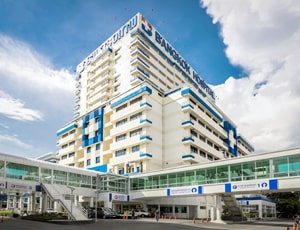
At Bangkok Hospital, Cervical Disc Replacement Surgery is performed using advanced cervical spine techniques and individualized surgical planning. Established in 1972, the JCI accredited hospital in Bangkok, Thailand has 580 beds and provides comprehensive neurosurgical, orthopedic, and rehabilitation services.
Cervical Disc Replacement Surgery may be recommended for patients with symptomatic cervical disc disease causing neck pain, arm pain, numbness, or weakness due to nerve compression. During surgery, the affected disc and any compressive material are removed, creating space for the nerve roots and spinal cord. An artificial disc is then inserted to maintain disc height and allow controlled movement at the treated level. Imaging such as MRI or X-rays is used to assess the affected disc and determine whether replacement is appropriate.
Bangpakok 9 International Hospital offers dedicated Cervical Disc Replacement Surgery supported by experienced spine surgeons, advanced imaging, and modern artificial disc technology. Established in 2003, the JCI, GHA accredited hospital is situated in Bangkok, Thailand and has 300 beds supporting specialized cervical spine care.
Cervical Disc Replacement Surgery is designed to treat selected cervical disc problems while avoiding intentional fusion of the treated vertebrae. The surgeon accesses the cervical spine through a small incision in the front of the neck, removes the damaged disc, and decompresses the affected neural structures when necessary. A prosthetic disc is placed into the prepared disc space to restore appropriate height and preserve motion. Postoperative care may include activity modification, pain management, physiotherapy, and follow-up imaging.
Choosing Phyathai 2 International Hospital for Cervical Disc Replacement Surgery gives patients access to specialist-led cervical disc surgery, advanced motion-preserving implants, and coordinated postoperative care. Established in 1987, the JCI accredited hospital is located in Bangkok, Thailand and operates 550 beds with advanced spine surgery infrastructure.
Cervical Disc Replacement Surgery may be considered when a damaged or degenerated cervical disc causes persistent neurological symptoms or pain that does not improve sufficiently with conservative management. The procedure involves removing the diseased disc and relieving pressure on the spinal cord or nerve roots before placing an artificial disc. Unlike cervical fusion, the replacement is designed to maintain movement at the treated spinal level. Patient selection depends on factors such as disc condition, spinal alignment, instability, and the presence of other cervical spine problems.
At Krabi Nakharin International Hospital, Cervical Disc Replacement Surgery is performed using advanced cervical spine techniques and individualized surgical planning. Established in 1997, the JCI accredited hospital in Krabi, Thailand has 150 beds and provides comprehensive neurosurgical, orthopedic, and rehabilitation services.
Cervical Disc Replacement Surgery may be recommended for patients with symptomatic cervical disc disease causing neck pain, arm pain, numbness, or weakness due to nerve compression. During surgery, the affected disc and any compressive material are removed, creating space for the nerve roots and spinal cord. An artificial disc is then inserted to maintain disc height and allow controlled movement at the treated level. Imaging such as MRI or X-rays is used to assess the affected disc and determine whether replacement is appropriate.
Choosing Kasemrad Ramkhamhaeng Hospital for Cervical Disc Replacement Surgery gives patients access to specialist-led cervical disc surgery, advanced motion-preserving implants, and coordinated postoperative care. Established in 1992, the JCI accredited hospital is located in Bangkok, Thailand and operates 120 beds with advanced spine surgery infrastructure.
Cervical Disc Replacement Surgery may be considered when a damaged or degenerated cervical disc causes persistent neurological symptoms or pain that does not improve sufficiently with conservative management. The procedure involves removing the diseased disc and relieving pressure on the spinal cord or nerve roots before placing an artificial disc. Unlike cervical fusion, the replacement is designed to maintain movement at the treated spinal level. Patient selection depends on factors such as disc condition, spinal alignment, instability, and the presence of other cervical spine problems.

Ms Patience from Uganda travelled to India for cosmetic surgery in May 2017. She got her treatment done in Asian Institute of Medical Sciences in…

Lobna (from Sudan) was diagnosed with meningioma, a form of non-cancerous brain tumor. Her family members decided to take her to one of the most…

