Browse verified doctors or let our care team help you find the doctor best suited to your condition, treatment goals, and budget.

Mount Elizabeth Novena Hospital provides specialized Cervical Corpectomy with a focus on decompressing the spinal cord, relieving nerve pressure, and restoring cervical spine stability. Established in 2012, the JCI accredited hospital is located in Novena, Singapore and operates 313 beds with modern neurosurgical and orthopedic spine facilities.
Cervical Corpectomy is a surgical procedure used to remove part or all of a cervical vertebral body and the adjacent discs when they are causing significant compression of the spinal cord or nerve roots. The surgeon typically approaches the spine from the front of the neck, removes the compressive structures, and reconstructs the space using a cage, bone graft, or other implant. Plates and screws may be added to provide stability while fusion develops.
Choosing Mount Elizabeth Hospital for Cervical Corpectomy gives patients access to specialist-led cervical spine decompression, modern reconstruction technology, and coordinated postoperative rehabilitation. Established in 1979, the JCI accredited hospital is located in Singapore, Singapore and operates 345 beds with advanced spinal surgery infrastructure.
Cervical Corpectomy may be considered for significant cervical spinal cord compression caused by disease or damage involving the vertebral body. The surgeon removes the affected vertebral body and adjacent discs through an incision at the front of the neck, allowing direct decompression of the spinal cord. The removed bone is replaced with a cage, graft, or reconstructive implant, while plates and screws may stabilize the treated levels. MRI and CT imaging are commonly used to assess the spinal anatomy and plan surgery.
Gleneagles Hospital provides specialized Cervical Corpectomy with an emphasis on precise spinal cord decompression, reconstruction of the cervical spine, and personalized postoperative care. Established in 1959, the JCI accredited hospital is based in Singapore, Singapore and has 258 beds supported by modern neurosurgical and orthopedic facilities.
Cervical Corpectomy involves removing a damaged or diseased cervical vertebral body, along with adjacent disc material when necessary, to relieve pressure on the spinal cord or nerve roots. After decompression, the surgeon reconstructs the spinal column using an interbody cage, bone graft, or other suitable implant. Instrumentation such as a cervical plate and screws can provide additional stability and support fusion. Recovery includes monitoring neurological function, swallowing, neck discomfort, and spinal stability during follow-up.
Parkway East Hospital provides specialized Cervical Corpectomy with an emphasis on precise spinal cord decompression, reconstruction of the cervical spine, and personalized postoperative care. Established in 1942, the JCI accredited hospital is based in Singapore, Singapore and has 143 beds supported by modern neurosurgical and orthopedic facilities.
Cervical Corpectomy involves removing a damaged or diseased cervical vertebral body, along with adjacent disc material when necessary, to relieve pressure on the spinal cord or nerve roots. After decompression, the surgeon reconstructs the spinal column using an interbody cage, bone graft, or other suitable implant. Instrumentation such as a cervical plate and screws can provide additional stability and support fusion. Recovery includes monitoring neurological function, swallowing, neck discomfort, and spinal stability during follow-up.
Farrer Park Hospital provides specialized Cervical Corpectomy with an emphasis on precise spinal cord decompression, reconstruction of the cervical spine, and personalized postoperative care. Established in 2016, the accredited hospital is based in Singapore, Singapore and has 220 beds supported by modern neurosurgical and orthopedic facilities.
Cervical Corpectomy involves removing a damaged or diseased cervical vertebral body, along with adjacent disc material when necessary, to relieve pressure on the spinal cord or nerve roots. After decompression, the surgeon reconstructs the spinal column using an interbody cage, bone graft, or other suitable implant. Instrumentation such as a cervical plate and screws can provide additional stability and support fusion. Recovery includes monitoring neurological function, swallowing, neck discomfort, and spinal stability during follow-up.

Ms Patience from Uganda travelled to India for cosmetic surgery in May 2017. She got her treatment done in Asian Institute of Medical Sciences in…

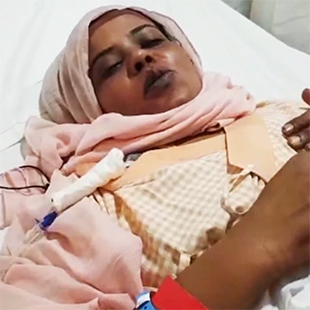
Lobna (from Sudan) was diagnosed with meningioma, a form of non-cancerous brain tumor. Her family members decided to take her to one of the most…