Browse verified doctors or let our care team help you find the doctor best suited to your condition, treatment goals, and budget.

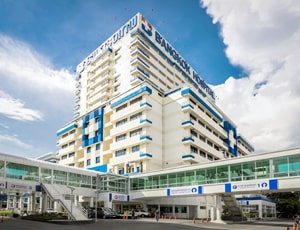
Choosing Bangkok Hospital for Carotid Endarterectomy (CEA) gives patients access to specialist-led carotid surgery, advanced vascular imaging, and coordinated postoperative monitoring. Established in 1972, the JCI accredited hospital is located in Bangkok, Thailand and operates 580 beds with modern vascular care infrastructure.
Carotid Endarterectomy (CEA) can help reduce the risk of stroke in appropriately selected patients with significant carotid artery disease. The procedure involves opening the affected carotid artery and carefully removing the plaque responsible for the narrowing. The vessel is then repaired to allow blood to flow more freely toward the brain. Before surgery, specialists assess carotid stenosis using imaging and review factors such as previous transient ischemic attacks, stroke symptoms, cardiovascular health, and surgical risk.
At Vejthani Hospital, Carotid Endarterectomy (CEA) is performed using established vascular surgical techniques and personalized treatment planning. Established in 1994, the JCI accredited hospital in Bangkok, Thailand has 263 beds and provides comprehensive vascular and cardiovascular care.
Carotid Endarterectomy (CEA) may be recommended when plaque buildup significantly narrows a carotid artery and increases the risk of stroke. The surgeon makes an incision in the neck, exposes the affected carotid artery, temporarily controls blood flow, and removes the obstructive plaque from inside the vessel. The artery is then closed to restore normal blood flow. Doppler ultrasound, CT angiography, or other vascular imaging may be used before surgery to evaluate the carotid arteries.
Bangpakok 9 International Hospital provides specialized Carotid Endarterectomy (CEA) with an emphasis on precise plaque removal, cerebral blood-flow protection, and comprehensive vascular care. Established in 2003, the JCI, GHA accredited hospital is based in Bangkok, Thailand and has 300 beds supported by modern vascular surgery and diagnostic facilities.
Carotid Endarterectomy (CEA) is performed to remove atherosclerotic plaque that has accumulated inside a carotid artery and is restricting blood flow. The surgeon accesses the artery through an incision in the neck, opens the vessel, removes the plaque, and closes the artery after completing the procedure. The decision to perform CEA depends on the severity of stenosis, whether the patient has experienced recent neurological symptoms, and the expected balance between surgical benefit and risk. Follow-up focuses on neurological status, wound healing, cardiovascular risk management, and prevention of further vascular disease.
Phyathai 2 International Hospital offers dedicated Carotid Endarterectomy (CEA) supported by experienced vascular surgeons, advanced imaging technology, and modern operating facilities. Established in 1987, the JCI accredited hospital is situated in Bangkok, Thailand and has 550 beds supporting specialized vascular treatment.
Carotid Endarterectomy (CEA) is designed to improve blood flow through a narrowed carotid artery by surgically removing accumulated atherosclerotic plaque. It may be considered in patients with substantial carotid stenosis based on the degree of narrowing, symptoms, and overall stroke risk. During surgery, a temporary shunt may sometimes be used to maintain blood flow to the brain while the artery is opened. After the procedure, patients are monitored for neurological changes, blood pressure fluctuations, bleeding, and other potential complications.
Krabi Nakharin International Hospital offers dedicated Carotid Endarterectomy (CEA) supported by experienced vascular surgeons, advanced imaging technology, and modern operating facilities. Established in 1997, the JCI accredited hospital is situated in Krabi, Thailand and has 150 beds supporting specialized vascular treatment.
Carotid Endarterectomy (CEA) is designed to improve blood flow through a narrowed carotid artery by surgically removing accumulated atherosclerotic plaque. It may be considered in patients with substantial carotid stenosis based on the degree of narrowing, symptoms, and overall stroke risk. During surgery, a temporary shunt may sometimes be used to maintain blood flow to the brain while the artery is opened. After the procedure, patients are monitored for neurological changes, blood pressure fluctuations, bleeding, and other potential complications.
At Yanhee International Hospital, Carotid Endarterectomy (CEA) is performed using established vascular surgical techniques and personalized treatment planning. Established in 1984, the ISO, JCI accredited hospital in Bangkok, Thailand has 400 beds and provides comprehensive vascular and cardiovascular care.
Carotid Endarterectomy (CEA) may be recommended when plaque buildup significantly narrows a carotid artery and increases the risk of stroke. The surgeon makes an incision in the neck, exposes the affected carotid artery, temporarily controls blood flow, and removes the obstructive plaque from inside the vessel. The artery is then closed to restore normal blood flow. Doppler ultrasound, CT angiography, or other vascular imaging may be used before surgery to evaluate the carotid arteries.
Sikarin Hospital provides specialized Carotid Endarterectomy (CEA) with a focus on reducing stroke risk, restoring blood flow, and providing individualized vascular care. Established in 1979, the JCI accredited hospital is located in Bangkok, Thailand and operates 354 beds with modern vascular surgery and diagnostic facilities.
Carotid Endarterectomy (CEA) is a surgical procedure used to remove plaque buildup from the inner lining of a carotid artery. It is generally considered for selected patients with significant carotid artery narrowing, particularly when symptoms or stroke risk indicate that intervention may provide benefit. During the procedure, the surgeon temporarily opens the affected artery and removes the plaque before closing the vessel. Preoperative imaging helps determine the degree and location of narrowing and guide treatment planning.
Kasemrad Ramkhamhaeng Hospital provides specialized Carotid Endarterectomy (CEA) with an emphasis on precise plaque removal, cerebral blood-flow protection, and comprehensive vascular care. Established in 1992, the JCI accredited hospital is based in Bangkok, Thailand and has 120 beds supported by modern vascular surgery and diagnostic facilities.
Carotid Endarterectomy (CEA) is performed to remove atherosclerotic plaque that has accumulated inside a carotid artery and is restricting blood flow. The surgeon accesses the artery through an incision in the neck, opens the vessel, removes the plaque, and closes the artery after completing the procedure. The decision to perform CEA depends on the severity of stenosis, whether the patient has experienced recent neurological symptoms, and the expected balance between surgical benefit and risk. Follow-up focuses on neurological status, wound healing, cardiovascular risk management, and prevention of further vascular disease.
HE Clinic provides specialized Carotid Endarterectomy (CEA) with a focus on reducing stroke risk, restoring blood flow, and providing individualized vascular care. Established in 2013, the NABH accredited hospital is located in Bangkok, Thailand and operates beds with modern vascular surgery and diagnostic facilities.
Carotid Endarterectomy (CEA) is a surgical procedure used to remove plaque buildup from the inner lining of a carotid artery. It is generally considered for selected patients with significant carotid artery narrowing, particularly when symptoms or stroke risk indicate that intervention may provide benefit. During the procedure, the surgeon temporarily opens the affected artery and removes the plaque before closing the vessel. Preoperative imaging helps determine the degree and location of narrowing and guide treatment planning.

Ms Patience from Uganda travelled to India for cosmetic surgery in May 2017. She got her treatment done in Asian Institute of Medical Sciences in…

Lobna (from Sudan) was diagnosed with meningioma, a form of non-cancerous brain tumor. Her family members decided to take her to one of the most…