5 Hospitals
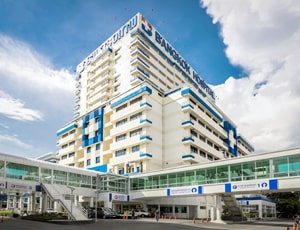
- The Best Hospital in Thailand Award (2020): This award recognizes Bangkok Dusit Medical Services (BDMS) as the best hospital in Thailand, based on patient satisfaction, clinical care, and advanced medical technology.
- The Joint Commission International Accreditation (2019): This accreditation recognizes BDMS's high standards of patient care, safety, and quality management.
- The Best Hospital Group in Thailand Award (2018): This award acknowledges BDMS as the top hospital group in Thailand, based on patient satisfaction, clinical care, and advanced medical technology.
- The Best Cardiac Services Hospital in Asia Award (2017): This award recognizes BDMS's Bangkok Heart Hospital as the top cardiac services hospital in Asia, based on patient satisfaction, clinical care, and advanced medical technology.
- The Best International Hospital in Thailand Award (2016): This award acknowledges BDMS's exceptional care and facilities for international patients, making it a top medical tourism destination in Thailand.
- Accreditation

Please Enquire

The Heart Center at Bangpakok 9 International Hospital is among the top facilities in Thailand. The hospital has a team of experienced surgeons who use the latest techniques to perform atrial septal defect closure. The hospital offers thorough pre-operative, post-operative, and rehabilitation services to guarantee the patient receives the best results. Patients in the cardiac department of the hospital have access to a variety of diagnostic tests, including the electrocardiogram (ECG), chest X-ray, blood tests, dopplers, cardiac tomography, and cardiovascular magnetic resonance imaging (CMR).
Surgeons first determine the size of the hole in the atria before finalizing a treatment approach. Medications are prescribed to control the heartbeat and reduce the risk of blood clot formation. However, medications cannot correct this condition. Surgery is performed to correct the atrial septal defect. The doctors may suggest minimally invasive treatment approaches or open heart surgery. During the procedure, medium- to large-sized atrial septal defects are treated by patching the heart wall. The hospital also has a cath lab for catheter-based repairs. Heart muscles begin to grow to close the hole once the defect is fully repaired. Dr. Aramwong Thaveelap and Dr. Supreecha Tanamai are cardiac specialists at the hospital.
- Accreditation


The Cardiology Department at Phyathai 2 International Hospital is a premier facility for comprehensive cardiac care, committed to offering patients cutting-edge therapies and procedures. The hospital offers cutting-edge diagnostic methods to ensure precise evaluations and diagnoses with a focus on providing exceptional care. The hospital's cardiac department offers a variety of diagnostic procedures, such as an ECG, chest X-rays, blood tests, dopplers (an ultrasound of the blood vessels), cardiac computed tomography, cardiovascular magnetic resonance imaging (CMR), etc.
A team of surgeons develops the best treatment strategy after determining the size of the hole in the atria. While it may be possible to control heartbeat and lower the risk of blood clots with medication, surgery is typically necessary to treat the condition. Medium-sized to large atrial septal defects are treated at Phyathai Hospital by patching the heart wall during open heart surgery. Robotic surgery and minimally invasive surgery are both options available to surgeons. Catheter-based repairs are carried out in the hospital's cath lab. The defect is completely sealed, and heart muscles start growing to fill in the gap. Assoc. Prof. Dr. Kittichai Luengtaviboon and Assist. Prof. Dr. Boonlawat Homvises are some of the cardiac specialists at the hospital.
- Accreditation

Yanhee Hospital is Thailand's premier medical destination and healthcare facility. The hospital provides outstanding medical care. Yanhee has a capacity of 400 beds and is JCI and ISO accredited. Yanhee Hospital has a stellar reputation for providing high-quality healthcare to both domestic and international patients. Yanhee Hospital provides translation and interpreter services for international patients. Patients in the cardiac department of the hospital have access to a variety of diagnostic tests, including the electrocardiogram (ECG), chest X-ray, blood tests, dopplers, cardiac tomography, and cardiovascular magnetic resonance imaging (CMR).
After determining the size of the hole in the atria, a team of surgeons decides on the best course of action. Surgery is frequently required to treat the condition, even though medication may be able to control the heartbeat and reduce the risk of blood clots. At Yanhee International Hospital, medium- to large-sized atrial septal defects are treated by patching the heart wall during open heart surgery. The hospital also offers minimally invasive surgery. Catheter-based repairs are carried out in the hospital's cath lab. Heart muscles begin to grow to close the hole once the defect is fully repaired. Dr. Suthon Pisuttinusart, Dr. Chanchai Silpipat, and Dr. Amnat Chotechuen are cardiologists at Yanhee International Hospital.
- Accreditation


The Heart Center at Sikarin Hospital provides comprehensive services dedicated to maintaining optimal heart health. With round-the-clock operations, the center offers diagnosis, treatment, and surgical interventions for both adults and children. Accredited by the prestigious JCI (Joint Commission International), Sikarin Hospital upholds international standards of care. The state-of-the-art Cardiology Center is equipped with advanced facilities, including cardiac catheterization operating rooms and specialized cardiac surgery rooms. The hospital takes pride in its team of highly skilled specialists, experienced in performing ASD repair procedures.
Within the cardiac department, patients have access to a wide range of diagnostic tests, such as electrocardiograms (ECG), chest X-rays, blood tests, dopplers, cardiac tomography, and cardiovascular magnetic resonance imaging (CMR). While medications can help regulate the heartbeat and reduce blood clot risks, they cannot correct atrial septal defects (ASD) entirely. Surgical intervention becomes necessary to address this condition. The skilled doctors at Sikarin Hospital may recommend either minimally invasive treatment approaches or open-heart surgery based. During the procedure, medium to large-sized atrial septal defects are rectified by patching the affected area of the heart wall. Moreover, the hospital boasts a dedicated cath lab for catheter-based repairs, further enhancing treatment options for patients. Dr. Teerasak Srichalerm is a cardiovascular surgeon at the hospital.
- Accreditation
Ask your healthcare adviser for the best multiple options and choose the one that meets your expectations
Request for an Expert Opinion

Outcomes of Atrial Septal Defect (ASD) Repair
| Speciality | Cardiac Sciences |
| Procedure | Atrial Septal Defect (ASD) Repair |
| Success Rate | 90-95% |
| Recovery Time | 2 to 4 weeks |
| Treatment Time | 2 - 2.5 hours |
| Chances of Recurrence | 4 - 6% |
What is an Atrial Septal Defect (ASD) Repair and how does it work?
ASD Repair is a surgical procedure used to repair a hole in the atrial septum, the wall that separates the upper chambers of the heart. The defect is closed with sutures or a patch during the procedure. It can be done with open-heart surgery or with minimally invasive techniques like cardiac catheterization.
What medical conditions can be treated through Atrial Septal Defect (ASD) Repair?
Atrial Septal Defect (ASD) Repair is primarily used to treat atrial septal defects, which are congenital heart conditions characterized by abnormal openings between the atria. These defects can lead to the mixing of oxygenated and deoxygenated blood, potentially causing strain on the heart and lungs. The procedure helps restore proper blood flow and relieves related symptoms by fixing the defect.
What is the recovery process after an Atrial Septal Defect (ASD) Repair?
After Atrial Septal Defect (ASD) Repair, the recovery period varies based on the surgical technique used and the patient in question. Patients should typically anticipate spending a few days in the hospital following the procedure. Medication may be prescribed to manage pain and prevent infection. Physical activity and strenuous exercise should be limited for several weeks, and follow-up appointments will be scheduled to monitor healing and overall cardiac health. With proper care and adherence to the recommended recovery guidelines, most patients can resume normal activities within a few months.
Frequently Asked Questions
A number of determining factors can be used to rank hospitals for your suitable procedure. When it comes to Bangkok, the following measures can be used to rank hospitals for Atrial Septal Defect (ASD) Repair- Infrastructure, Availability of the Procedure, Popularity for the procedure, Technology Used, Qualified & Experienced Specialists, Cost, Facilities provided, Success Rate
MediGence offers a blend of high-quality medical care, convenience, and cost-savings for patients across the world. We make sure that your healthcare journey should be easy and hassle-free while receiving treatment overseas. Some of the top caregiving services available include Hotel stays, Dedicated Case Coordinator, Recovery packages, Online Consultation, round-the-clock assistance, and customized packages with discounts of up to a 30%. Many more benefits are available with MediGence your treatment abroad.
Yes. You can avail a video consultation with a specialist before you plan your medical travel. You can place your request to our patient advisors for scheduling your online consultation with the specialist. They will finalize your appointment after confirming the doctor's availability and sending the payment link.
Many people around the world consider Atrial Septal Defect (ASD) Repair in Bangkok to be trustworthy due to the high success rate and excellent hospital infrastructure. There are many additional factors making Bangkok the preferred choice for Atrial Septal Defect (ASD) Repair including:
- Budget-friendly treatment options
- Board- certified specialists
- Internationally Accredited hospitals
- Modern healthcare technologies
- Data privacy and transparency
The recovery time of the patients can be determined based on the patient’s overall health and the criticality of the procedure undergone. The length of the patient's recovery is also greatly influenced by other variables, such as their continued participation in rehabilitation sessions and postoperative care appointments. Patients must also visit for follow-ups post-surgery to ensure proper healing and speed up the recovery process.