7 Hospitals
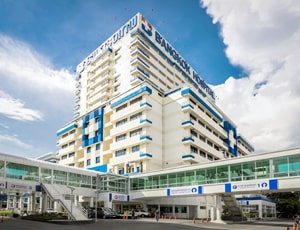
- The Best Hospital in Thailand Award (2020): This award recognizes Bangkok Dusit Medical Services (BDMS) as the best hospital in Thailand, based on patient satisfaction, clinical care, and advanced medical technology.
- The Joint Commission International Accreditation (2019): This accreditation recognizes BDMS's high standards of patient care, safety, and quality management.
- The Best Hospital Group in Thailand Award (2018): This award acknowledges BDMS as the top hospital group in Thailand, based on patient satisfaction, clinical care, and advanced medical technology.
- The Best Cardiac Services Hospital in Asia Award (2017): This award recognizes BDMS's Bangkok Heart Hospital as the top cardiac services hospital in Asia, based on patient satisfaction, clinical care, and advanced medical technology.
- The Best International Hospital in Thailand Award (2016): This award acknowledges BDMS's exceptional care and facilities for international patients, making it a top medical tourism destination in Thailand.
- Accreditation

Please Enquire

- Best Hospital in Bangkok in 2020 - Awarded by Global Health & Travel Awards for the hospital's excellence in patient care, technology, and facilities.
- Excellence in Patient Service Award in 2019 - Awarded by Healthcare Asia for the hospital's exceptional patient service, commitment to quality care, and innovative medical services.
- Hospital Accreditation in 2018 - Received accreditation from the Healthcare Accreditation Institute (HAI) for the hospital's high standards in patient safety, quality care, and medical services.
- Best Medical Tourism Hospital in 2017 - Awarded by the Thailand Tourism Awards for the hospital's focus on providing international patients with world-class medical treatments and personalized care.
- Outstanding Medical Institution in 2016 - Awarded by the Association of Southeast Asian Nations (ASEAN) for the hospital's exceptional contribution to the healthcare industry in the region.
- Accreditation


- Best Private Hospital in Thailand, 2020 - Phyathai 2 International Hospital was named the Best Private Hospital in Thailand at the Global Health and Travel Awards in 2020.
- Best Hospital for Medical Tourism in Asia, 2019 - Phyathai 2 International Hospital was named the Best Hospital for Medical Tourism in Asia at the Asia Pacific Healthcare and Medical Tourism Awards in 2019.
- Best Hospital in Thailand, 2018 - Phyathai 2 International Hospital was named the Best Hospital in Thailand at the Global Health and Travel Awards in 2018.
- Best Hospital in Bangkok, 2017 - Phyathai 2 International Hospital was named the Best Hospital in Bangkok at the Global Health and Travel Awards in 2017
- Accreditation

- Best Cosmetic Surgery Hospital in Thailand, 2021, Global Health & Pharma: Yanhee International Hospital was recognized for its exceptional cosmetic surgery services in Thailand.
- Best Aesthetic Clinic in Bangkok, 2020, International Medical Travel Journal Awards: This award recognized Yanhee International Hospital for its outstanding aesthetic clinic services in Bangkok.
- Best Hospital for Medical Tourism in Thailand, 2019, International Healthcare Commission: Yanhee International Hospital was awarded for its exceptional medical tourism services in Thailand.
- Best Hospital in Asia for Plastic Surgery, 2018, International Medical Travel Journal Awards: This award recognized Yanhee International Hospital for its outstanding plastic surgery services in Asia.
- Best Hospital for Dermatology in Thailand, 2017, International Medical Travel Journal Awards: Yanhee International Hospital received this award for its exceptional dermatology services in Thailand.
- Accreditation


- HA Accreditation - Recognized for meeting the highest standard of medical care and patient safety in Thailand
- Best Hospital for Medical Tourism 2018 - Awarded by the Thailand Ministry of Public Health for providing outstanding medical care to international patients
- Thailand Hospital Accreditation (HA) - Recognized for providing high-quality medical care, patient safety and excellent services
- Top Brand Awards Thailand 2019 - Recognized for its excellent performance in medical services and facilities
- Joint Commission International (JCI) accreditation - Awarded for meeting the highest international healthcare standards for patient care and safety
- Accreditation
Please Enquire

- Best Hospital in Thailand 2021 - Piyavate Hospital was named the best hospital in Thailand by the Global Health & Pharma Awards.
- Best Hospital for Medical Tourism 2020 - The hospital received this award from the Thai Ministry of Public Health for its excellence in medical tourism services.
- Best Private Hospital in Thailand 2019 - Piyavate Hospital was named the best private hospital in Thailand by the International Medical Travel Journal.
- Excellence in Healthcare Service Award 2018 - The hospital received this award from the Thailand Business Excellence Awards for its exceptional healthcare services.
- Best Hospital for Health Promotion 2017 - Piyavate Hospital was recognized for its health promotion efforts by the Bangkok Metropolitan Administration.
- Accreditation

- Best Private Hospital in Turkey for Cardiovascular Surgery, 2019, Stevie Awards: This award recognized Mali Interdisciplinary Hospital for its exceptional cardiovascular surgery services.
- Best Private Hospital in Turkey for Orthopedics, 2019, Stevie Awards: This award recognized Mali Interdisciplinary Hospital for its outstanding orthopedics services.
- Best Private Hospital in Turkey for Plastic Surgery, 2020, Stevie Awards: Mali Interdisciplinary Hospital received this award for its exceptional plastic surgery services.
- Best Private Hospital in Turkey for General Surgery, 2020, Stevie Awards: This award recognized Mali Interdisciplinary Hospital for its outstanding general surgery services.
- Best Private Hospital in Turkey for Obstetrics and Gynecology, 2020, Stevie Awards: This award recognized Mali Interdisciplinary Hospital for its exceptional obstetrics and gynecology services.
- Accreditation

Ask your healthcare adviser for the best multiple options and choose the one that meets your expectations
Request for an Expert Opinion

Outcomes of Angioplasty
| Speciality | Cardiac Sciences |
| Procedure | Angioplasty |
| Success Rate | 90-95% |
| Recovery Time | 1 Day |
| Treatment Time | 30 mins - 2 hours |
| Chances of Recurrence | 10-15% |
What is an Angioplasty, and how does it work?
Angioplasty, also known as percutaneous intervention, is a procedure that is used to open blocked arteries. Angioplasty involves inserting a tiny balloon catheter into a narrowed blood vessel to help widen it and improve blood flow to the heart. Angioplasty is frequently combined with the implantation of a small wire mesh tube known as a stent. The stent keeps the artery open, reducing the likelihood of it narrowing again. The majority of stents are drug-coated to help keep the artery open.
What medical conditions can be treated through Angioplasty?
Angioplasty is the most common procedure performed to open blockages in the coronary arteries; however, it might also be performed to open narrowed or blocked arteries in other parts of the body, including the neck, arms, legs, kidney, and pelvis. The procedure is performed to treat medical conditions that might occur due to blockages in the blood supply of one or more arteries. This procedure can improve symptoms like chest pain and shortness of breath and may be used as an emergency procedure in the case of a heart attack to save the heart from damage due to reduced blood flow. Angioplasty is commonly performed to treat the following conditions:
- Coronary artery disease
- Atherosclerosis
- Peripheral artery disease
- Carotid artery disease
- Chronic kidney disease
What is the recovery process after an Angioplasty?
The recovery process after the procedure usually takes a few days. Your care provider will remove the catheter and apply bandages to the opening on the skin. The site may be sore or bruised for a few days afterward. The patient can feel a little discomfort for several hours following the procedure. Your doctor will prescribe medications and adequate guidelines for rest. Follow-up sessions are recommended to ensure proper recovery and healing. The first 24 hours after the procedure require the most care. Overall, a complete recovery may take 2-6 days.
Frequently Asked Questions
Numerous factors can be considered to rank the hospitals on the basis of the procedure. While categorizing hospitals for Angioplasty in Bangkok, some of the important factors are Popularity for the Procedure, Infrastructure, Accessibility of the treatment, Qualified Medical Personnel, Technology Used, Price, Amenities provided, and Success Rate.
MediGence provides you with a combination of cost-savings, convenience, and quality healthcare. All of this is made possible by the exceptional services we offer you, which make your healthcare experience comfortable, hassle-free, and budget-friendly. Some of our notable services include Hotel stays or accommodation, Video consultation, dedicated case manager, round-the-clock help, airport transfers, and customized prebundled treatment packages with discount of up to a 30%. Many more benefits are available with MediGence your treatment abroad.
Absolutely! Yes. Before you plan medical travel to Bangkok, you can benefit from an efficient & helpful online consultation with the chosen specialist there. To schedule the consultation, please get in touch with our patient advisory team. Upon your request, our experts will check the doctor's availability, and send you the payment link to finalize the appointment.
Numerous people have started traveling to Bangkok for Angioplasty because of the nation's state-of-the-art healthcare system and high success rate. There are many additional factors making Bangkok the preferred choice for Angioplasty including:
- Budget-friendly treatment options
- Modern healthcare technologies
- Board- certified specialists
- Data privacy and transparency
- Internationally Accredited hospitals
The severity of the treatment and the patient's general health both influence how long recovery takes after treatment. Other factors, such as the patient's continued participation in rehabilitation sessions and postoperative care appointments, have a significant impact on the length of their recovery. Patient must keep in touch with their surgeon for a few months after surgery in order to speed up recovery.