Vestibular Schwannoma Treatment in India
- Top Accredited Hospitals
- Global Medical Standards
- Cutting-Edge Technology
- Proven Treatment Options
- High Success Rate
- Trusted by Millions

What is Vestibular Schwannoma?
A noncancerous tumour called an Vestibular Schwannoma forms on the major nerve that connects the inner ear to the brain. The vestibular nerve is the name of this nerve. Hearing and balance are directly impacted by the nerve's branches. Hearing loss, ringing in the ears, and balance issues can all be symptoms of pressure from an Vestibular Schwannoma. The Schwann cells that cover the vestibular nerve give rise to an auditory neuroma. Vestibular Schwannomas often grow slowly. On rare occasions, it could spread out rapidly and get big enough to put pressure on the brain and interfere with essential processes.
What is the Importance of Timely Treatment?
Timely treatment is important because Vestibular Schwannomas can exacerbate hearing loss and balance function even if they are not growing. Untreated Vestibular Schwannomas can result in a potentially fatal accumulation of fluid in the brain or in the compression of the brain stem and cerebellum.
What are the symptoms of Vestibular Schwannoma
Vestibular Schwannoma symptoms can take years to manifest and are frequently overlooked. The tumor's impact on the hearing and balance nerves may result in symptoms. Additionally, the tumour may exert pressure on the facial nerve, which controls face muscles, and the trigeminal nerve, which controls sensation. Vestibular Schwannomas can potentially impact brain structures or blood vessels. The likelihood of more obvious or severe symptoms may increase as the tumour grows.
The following are typical signs of an Vestibular Schwannoma:
- Loss of hearing, typically occurring gradually over months to years. Rarely, hearing loss may occur suddenly. Usually, one side experiences hearing loss, or it is more severe on one side
- Tinnitus in the afflicted ear (ringing in the ear)
- Loss of equilibrium or unsteadiness
- Lightheadedness
- Numbness in the face and, in rare cases, loss of muscle mobility or paralysis.
Causes and Risk Factors of Tethered Vestibular Schwannoma
Causes
An issue with a gene on chromosome 22 may occasionally be the cause of auditory neuromas. The tumour suppressor protein that is normally produced by this gene aids in regulating the proliferation of the Schwann cells that coat the nerves. The reason of this gene issue is unknown to experts. Vestibular Schwannomas frequently have no recognised cause. People who have neurofibromatosis type 2, an uncommon condition, inherit this gene mutation. Tumours typically form on the hearing and balance nerves on both sides of the head in people with neurofibromatosis type 2. Bilateral vestibular schwannomas are the name given to these tumours.
Risk Factors
Having a parent with neurofibromatosis type 2, a rare genetic condition, is the sole known risk factor for auditory neuromas. However, only around 5% of occurrences of auditory neuromas are caused by neurofibromatosis type 2. Noncancerous tumours on both sides of the head's balancing nerves are a defining feature of neurofibromatosis type 2. Other nerves may also develop tumours. The term "autosomal dominant disorder" refers to neurofibromatosis type 2. This indicates that a child may get the disorder's gene from just one parent. Affected parents have a 50/50 probability of passing it on to their offspring.
Permanent side effects from an auditory neuroma could include:
- Loss of hearing
- Weakness and numbness in the face
- Balance issues
- Ear ringing
- Sometimes the passage of cerebrospinal fluid between the brain and spinal cord is blocked by large tumours pressing on the brainstem. Hydrocephalus is the accumulation of fluid in the brain. The pressure inside the skull rises as a result.
Connect with our advisor for a PRIORITY response
Vestibular Schwannoma Prevention Tips
There are presently no proven preventative methods for vestibular schwannomas because the actual cause is unknown, but early detection through routine doctor's visits is essential, particularly if you have a family history of neurofibromatosis type 2.
Treatment options for Vestibular Schwannoma
Options for treatment include
Gamma Knife Radiosurgery: One non-invasive treatment option for vestibular schwannomas (also called Vestibular Schwannomas) is Gamma Knife radiosurgery, which is considered a first-line treatment for many patients with vestibular schwannomas. It is especially effective for small to medium-sized tumours and aims to stop tumour growth by delivering a focused dose of radiation without requiring a surgical incision. This procedure often preserves hearing function while managing symptoms like dizziness and hearing loss associated with the tumour
Cost Start From USD 4000 - USD 7000Explore Options
Microsurgery: Neurosurgeons can do surgery on extremely small body parts thanks to specialised tools. Vestibular Schwannomas can only be removed with this procedure
Chemotherapy: In rare instances, medical professionals may prescribe bevacizumab (Alymsys, Avastin, MVASI, Zirabeva). Children with Vestibular Schwannomas may be able to hear for longer thanks to this medication's potential to decrease tumours. The medication is also used to treat radiation necrosis, a side effect of radiation therapy
Cost Start From USD 600 - USD 700Explore Options
Vestibular Rehabilitation Therapy: Parts of the nerves that regulate balance may occasionally be removed during surgery. Therapy called vestibular rehabilitation helps you make up for the loss of those nerves and the functions they control.
Audiometry: A test of hearing. An audiologist, a specialist in hearing, performs this exam. One ear at a time is exposed to noises during the test. A variety of sounds with different tones are presented by the audiologist. Every time you hear the sound, you indicate. To determine whether a tone is scarcely audible, it is repeated at progressively lower levels. To test THE patient’s hearing, the audiologist could also show you different words.
MRI. To diagnose vestibular schwannoma, magnetic resonance imaging with contrast dye is typically utilized. Tumours as tiny as 1 to 2 millimetres in diameter can be found using this imaging examination. Computerised tomography (CT) can be utilised if MRI is unavailable.
MediRehab (chain of Rehab center - part of MediGence provides comprehensive rehabilitation services designed to support arthritis patients in <India>. These services include:
- Personalized Therapy Plans: A specialised type of treatment called vestibular rehabilitation (VR) aims to address the fundamental and secondary issues brought on by vestibular diseases. The main goals of this exercise-based program are to lessen vertigo and dizziness, gaze instability, imbalance, and fall risk, as well as to address any secondary impairments brought on by vestibular disorders
- Rehabilitation post Surgery: physiotherapy sessions focused on restoring hearing and balancing function
- Nutrition Guidance: Consuming lean meats, avoiding red meat, and only eating chicken after the skin has been removed are all recommended for those with vestibular disorders. When it comes to milk kinds, people with vestibular disorders should go for skim milk because it is better for their health.
Instantly Connect with our Specialists


Hospitals for Vestibular Schwannoma in India
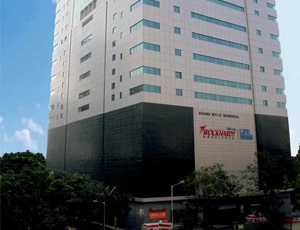
Wockhardt Hospital - A new Age Hospital
Mumbai, India
Wockhardt Hospital - A New Age Hospital located in Mumbai, India is accredited by NABH. Also listed below are some of the most prominent infrastructural details:
- 20-storeyed building at Mumbai Central (South Mumbai)
- Capacity of 350-beds
- Two highly-advanced cath labs with ultra-modern technologies to perform high risk coronary procedures and neurological surgeries
- 8 Operation Theatres- Cardiac, Joint Replacement, Neurology, Oncology, MAS and Organ Transplantation
- 100 beds dedicated to Critical Care, which are connected to IntelliSpace Critical Care & Anaesthesia (ICCA) system
- Largest Paediatric Cardiac Unit
- It has the largest Intelligent ICCA System
- Possess Hi-tech GPS-enabled Ambulances and largest state-of-the-art Accident & Emergency unit in South Mumbai
- As far as accommodation facility is considered, the Hospital makes it easily accessible for the patients in nearby hotels/lodges

Seven Hills Hospital
Mumbai, India
Seven Hills Hospital located in Mumbai, India is accredited by JCI, NABH, NABL. Also listed below are some of the most prominent infrastructural details:
- It is spread over an area of 17 acres.
- There is also an academic institute with research facilities.
- SevenHills Hospital has excellent diagnostic services including a laboratory and a provision for various tests.
- Given that their are specific departments for various kinds of diagnostsic. Tests like PET Scan, MRI, CT scan and biopsies are completed regularly.
- Biochemistry, Hematology, Microbiology are some of the important diagnostic departments.
- Endoscopies as well as non-invasive procedures are done through their respective departments.
- Day care specialty services are available for those kinds of requirements.
- Health Check up packages are also present as are the collaborations with many insurance organisations.
- There are professionally managed in-patient and out-patient facilities.
- There are more than 30 super specialties in Seven Hills Hospital Mumbai.
- There are also Centres of Excellence in Cardiac Care, Neurosciences, Bone & Joint Care, Cancer Care, Nephrology and Cosmetic Dermatology.
- International patient care services are also implemented for the best assistance to overseas patients.

Sri Ramachandra Medical Centre
Chennai, India
Sri Ramachandra Medical Centre located in Chennai, India is accredited by ISO, JCI, NABH, NABL. Also listed below are some of the most prominent infrastructural details:
- The best minds in healthcare including specialists, and other healthcare professionals work together to treat patients with simple to complex and critical conditions.
- The number of inpatients and outpatients (annually) are 35,000 and 2,50,000 respectively.
- A wide range of surgical specialties, sub specialties are available in Sri Ramachandra Medical Centre Chennai.
- The bed capacity of the hospital is 800 which is inclusive of 200 Intensive Care Unit beds.
- Blood Bank and Eye Bank are available on a 24/7 basis.
Our Services to better your experience
Opinion & Option
We submit the most accurate opinion and options from one or more countries for your review
Consult Privately
Consult with a certified specialist privately on our telemedicine platform even before you decide to travel
Logistics
We handle flights, visas, transfers, and accommodation—so you can focus on your health.
Recovery
Our In-house rehabilitation service packages to better your recovery and treatment outcome
Why Choose India for Vestibular Schwannoma Treatment?
Here are some of the reasons for choosing India:
- Due to advancements in medical facilities, such as minimally invasive surgical techniques and gamma knife radiotherapy procedures.
- World-class experts include highly experienced doctors, JCI, and NABH-accredited healthcare institutions.
- Compared to other countries, treatment in Indian hospitals is cost-effective.
- Indian hospitals provide international patient services, including a multilingual support system.
- Improved treatment methods and biological therapies.
Frequently Asked Questions
Acoustic neuromas or vestibular schwannomas are rarely life threatening. When treated effectively, patients are expected to have a relatively normal life span.
The nation's healthcare institutions offer top-notch treatment alternatives, guaranteeing successful outcomes for many patients. Vestibular Schwannoma is effectively treated in India. Hearing loss that has already occurred from the tumor cannot be reversed, but the remaining hearing can be preserved in some cases. Surgical tumor removal and gamma knife radiotherapy can often address balance problems, facial numbness and other symptoms.
Yes, many Indian hospitals offer the following for Vestibular Schwannoma treatment:
- Advanced diagnostic tools like MRI, CT scan, electromyography, and PET scan for accurate diagnoses of Vestibular Schwannoma.
- Skilled neurologist, surgeons and therapist performing surgery and Gamma Knife radiotherapy to treat Vestibular Schwannoma.
- Comprehensive post-surgery care and rehabilitation for long-term health benefit
Always consider the following factors when selecting Indian hospitals:
- Hospitals that are accredited (authorised by JCI and NABH).
- Patient reviews and success rates.
- Hospitals that provide seamless care to patients from abroad.
However, chronic, long-lasting symptoms like unsteadiness, dizziness, or spatial disorientation develop in around half of all individuals with the illness. In severe situations, a person may suffer irreversible inner ear damage or hearing loss.
Treatments options for Vestibular Schwannoma differs based on variables such as:
- The location and size of the tumour
- How hearing and balance are affected by the tumour
- General health and age

Reviewer

Dr. Mohit Agarwal
Medical Oncologist
14 Years of Experience
One of the finest Oncologist in New Delhi, India, Dr. Mohit Agarwal has worked with several world class multidisciplinary hospitals over the years. Dr. Mohit Agarwal has over 14+ years of experience in his field. The doctor treats and manages a wide range of conditions such as Stomach Cancer, Rectal Cancer, Breast Cancer, Brain Cancer View More
Last Reviewed - January 2026