Urothelial Carcinoma Treatment in Thailand
- Top Accredited Hospitals
- Global Medical Standards
- Cutting-Edge Technology
- Proven Treatment Options
- High Success Rate
- Trusted by Millions

What is Urothelial Carcinoma?
Carcinoma of the bladder, which is also known as transitional cell carcinoma, affects the urothelial cells that line the urinary tract- the bladder, the ureters, and a portion of the kidneys. Thus, it becomes the form most commonly associated with the bladder; however, it may also affect other urinary system structures.
What is the Importance of Timely Treatment?
Better Outcomes
One of the significant outcomes of early diagnosis and intervention of urothelial carcinoma is an increase in the chances of survival and the potential for recovery, especially in non-muscle-invasive cancers.
Prevention of metastasis
Timely intervention at this point can avoid the spread of cancer in another organ and subsequently prune less aggressive manipulation. Delayed treatments lead to greater chances of metastasis and increased risk of complications.
Complications Reduced
An early stage of treatment decreases the risk of developing more severe urinary and kidney problems, subsequently avoiding more complex surgical interventions. The saving grace is that timely treatment also reduces the probability of bladder dysfunction and cases of infection.
Better Treatment Options
The discovery of cancer in its early stages will often lead to less invasive treatments through either surgery and/or immunotherapy, thus temporarily preserving bladder function.
What are the Common Symptoms of Urothelial Carcinoma?
- Hematuria (Blood in Urine)
- Painful Urination (Dysuria)
- Frequent Urination
- Urgency
- Lower Back Pain or Pelvic Pain
Causes and Risk Factors of Urothelial Carcinoma
Causes
Risk Factors
- Smoking
- Occupational Exposure
- Chronic Bladder Inflammation or Infection
- Age
- Gender
- Family History and Genetics
- Previous Cancer Treatments
- Diet and Hydration
- Chronic Catheter Use
Connect with our advisor for a PRIORITY response
Latest Research and Technologies in the Treatment of Urothelial Carcinoma in Thailand
Advanced technologies to treat urothelial carcinoma exist in Thailand, starting from high-resolution imaging and urine-based biomarkers for early detection and accurate staging. TURBT and robotic cystectomy, among minimally invasive and robotic-assisted surgeries, reduce the chances of complications and recovery time. Immunotherapy comprises checkpoints and inhibitors and is widely used for advanced cases. Personalised medicine and genomic profiling allow for treatment based on tumour mutations toward better outcomes. These advances make Thailand a known destination for the treatment of urothelial carcinoma.
Urothelial Carcinoma Prevention Tip:
Stop smoking
The highest risk factor for urothelial carcinoma is smoking, and quitting smoking dramatically reduces the risk of bladder cancer.
Hydration
Adequate liquid intake must include a lot of water, as this flushes potential carcinogens out of the bladder, diminishing cancer risk.
Limit Exposure to Nitrogen Compounds
Personal protective equipment is advised while working in industries where chemicals like aromatic amines (used in dyes, rubber, etc.) are present.
Eat Healthy
Balanced nutrition with plenty of fruits, vegetables, and fibre but low fats are helpful in possibly reducing the risks of bladder cancer.
Regular Screening
Regular screenings with urine tests and cystoscopy can pick early signs of urothelial carcinoma and, hence, timely treatment in high-risk categories (e.g., smokers or those with a family history).
Treatment options for Urothelial Carcinoma
The medical treatment for Urothelial Carcinoma requires evaluating the patient's severity and medical condition. The following are the treatment options:
Transurethral Resection of Bladder Tumor (TURBT): minimally invasive surgery for surgically removing superficial tumours from the bladder.
Chemotherapy : It is intravesical for superficial tumours, while systemic (e.g., Gemcitabine and cisplatin) for tumours that have grown into muscle or metastasised.
Cost Start From USD 1000 - USD 6800Explore Options
Immunotherapy : Checkpoint inhibitors stimulate the immune system to attack cancer cells and are used mainly in advanced or resistant cases of chemotherapy.
Cost Start From USD 3000 - USD 13578Explore Options
Radiation Therapy: Advanced palliative care based on external beam radiation can involve using this radiation either alone or following surgery. The advanced disease can also be treated because symptoms such as bleeding and obstruction require palliative care.
Targeted Therapy and BCG: Targeted medications that aim at specific genetic mutations. However, BCG activates the immune system against non-muscle-invasive bladder cancer, improving outcomes.
Cost Start From USD 3500Explore Options
These are the standard diagnostic methods for diagnosing Urothelial Carcinoma:
Imaging Studies
- Cystoscopy: A cystoscope allows the introduction of a thin tube with a camera into the bladder through the urethra. It directly helps view the lining of the bladder. Importantly, in detecting tumours and performing biopsies.
- CT Urography: CT Urography is the procedure through which pictures of the urinary system are generated from different angles using a CT scan for tumour visualisation in the bladder, kidneys, and ureters.
- MRI: MRI is used in a few select cases to check for muscular wall invasion and assess the bladder wall and adjacent tissues.
- Ultrasound: An imaging technique for the evaluation of kidneys and bladder and checking for abnormality; it is less precise than CT and MRI.
Biopsy
- Tissue sampling is conducted at the suspected sites, usually during cystoscopy, to confirm cancer detection. A biopsy assists in determining the tumour's grade and stage and contributes to further management.
Urine and Blood Tests
- Urine Cytology: A test that puts urine under a microscope to look for cancer cells. It will detect high-grade urothelial carcinomas, but low-grade ones may escape detection.
MediRehab (a chain of Rehab centres, part of MediGence) provides comprehensive rehabilitation services to support patients through Teleconsulations and online therapy sessions.
- Physical Rehabilitation: Post-surgery rehab mainly helps the patients regain strength and mobility after surgeries such as cystectomy. Strengthening exercises will, thus, concentrate on the core and pelvic floor functionalities to hike fitness standards.
- Pelvic Floor Therapy: Pelvic floor rehabilitation works with bladder control and incontinence after surgery, which patients experience through exercises targeting pelvic muscles for improved functioning.
- Psychosocial Support: Mental health counselling and support groups provide an essential mental well-being aspect and emotional adjustment in recovery from emotional challenges that come from the treatment of cancer.
- Lifestyle Modifications: The dietitian assists the patient in having a balanced diet while in recovery so that the patient attains maximum nutrition and hydration in the healing process. Diet advice also focuses on weight management and general well-being.
- Management of lymphedema: Swelling can occur after removing lymph nodes, which is treated with compression therapy, massage, and exercises to keep swelling down and help movement.
Instantly Connect with our Specialists


Hospitals for Urothelial Carcinoma in Thailand
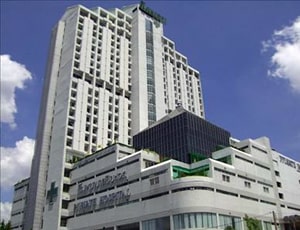
Piyavate Hospital
Bangkok, Thailand
Piyavate Hospital located in Bangkok, Thailand is accredited by JCI. Also listed below are some of the most prominent infrastructural details:
Medicine Centre: Piyavate Hospital provides advanced holistic treatment for their patients. They offer a complete range of services and physicians that specialize in various fields like the endocrine system, the nervous system, kidney function, cardiovascular care, respiratory and digestive system. They pride themselves for the familial care that they provide to their patients.
Fertility and In-Vitro Fertilization Centre: Helping the couples who walk into the Piyavate Hospital to achieve their dream of having a family. They have a medical team that specializes in male and female fertility. They offer consultation services, fertility check-up for both men and women and complete IVF services. They have advanced IVF cycle treatment facilities that offer a high rate of success.
Bone and Joint Institute: Piyavate Hospital houses one of the frontrunners in Orthopaedic health care in all of SouthEast Asia. They offer a wide range of services and surgeries in their bone and joint institute that include hand surgery, hip and knee replacement surgery, spinal cord surgery, upper extremity surgery, arthroscopic surgery and sports medicine.
Eye and Lasik Centre: Piyavate Hospital is fully equipped with the latest and most advanced technology for eye care and houses highly skilled ophthalmologists, sub-specialists and qualified nurses.
Physical Therapy and Rehabilitation Centre: One of the first hospitals to be equipped with the Hybrid Assistive Limb technology that will help a neurologically challenged patient to control the rehabilitation robot limb with a signal from their brain. The Physical Therapy and Rehabilitation Centre at Piyavate Hospital uses this system encourage patients to regain muscle memory to walk and function normally.
Amenities for Patient’s Family:
Piyavate Hospital also offers additional apartment facilities to house the kin of the patients who come to visit them from distant places. A restaurant, a flower shop and a café are a few of the other amenities provided by the hospital.
These are the most popular services offered by the Piyavate Hospital in Bangkok, Thailand. They also provide a plethora of other medical services that are listed below:
Diabetic Foot Centre
Check-up centre
Urology Centre
Heart Institute
Paediatric Centre
Obstetrics and Gynaecology Centre
Surgery Centre
Ear Nose Throat Centre
Haemodialysis Centre
Dental Centre
X-Ray Centre
Gastroenterology Centre
Cancer Centre
Neonatal Intensive Care Unit (NICU)
Emergency Services and Centre
Tele-medicine

Phyathai 2 International Hospital
Bangkok, Thailand
Phyathai 2 International Hospital located in Bangkok, Thailand is accredited by JCI. Also listed below are some of the most prominent infrastructural details:
- Fully equipped rooms are available for convenience of the patients- Gold B Room, Gold A Room, Pediatric Gold A, Platinum room, and Prestige ward
- Nearby accommodations are also available- Abloom Service Apartments, Bangkok Patio, VIB Best Western Sanam Pao, VIC3 Hotel
- Operating room
- International Patient Medical Center to assist overseas patients
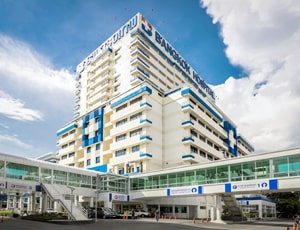
Bangkok Hospital
Bangkok, Thailand
Bangkok Hospital located in Bangkok, Thailand is accredited by JCI. Also listed below are some of the most prominent infrastructural details:
- It is recognised for the application of the newest healthcare technology.
- Blood analysis center that is not just the best in Thailand but in Asia Pacific as well.
- Biomolecule center that is the seed of healthcare equipment for Thailand and overseas.
- International affiliations and collaborations with universities and hospitals in Japan and the United States of America.
- 11 hospitals are recognised as Centers of Excellence.
- Known excellence in Trauma, Orthopedics, Cardiovascular, Neurology as well as Cancer Care.
- There is a proper streamlined patient services process followed in Bangkok Dusit Medical Services, Bangkok, Thailand.
- A well developed research center showcases the intent of the organisation to provide research based treatment opportunities to the patients.
- The group has several Medical industry partnerships as well to ensure healthcare solutions.
Our Services to better your experience
Opinion & Option
We submit the most accurate opinion and options from one or more countries for your review
Consult Privately
Consult with a certified specialist privately on our telemedicine platform even before you decide to travel
Logistics
We handle flights, visas, transfers, and accommodation—so you can focus on your health.
Recovery
Our In-house rehabilitation service packages to better your recovery and treatment outcome
Why Choose Thailand for Urothelial Carcinoma Treatment?
The following are the much-growing reasons for Thailand being frequented for Urothelial Carcinoma treatment:
Advanced Medical Facilities
Internationally accredited hospitals in Thailand provide advanced cancer care technologies, robotic-assisted surgeries, and cutting-edge medical equipment.
Experienced Oncologists & Urologists
With their international training and experience, the highly skilled specialists deliver expert care, ensuring an accurate diagnosis and a personalised treatment plan.
Comprehensive Treatment Options
From minimally invasive surgery to immunotherapy to chemotherapy and bladder-sparing techniques, advanced treatments are offered in Thai hospitals.
Affordable Cancer Care
The high-quality treatment offered in Thailand is available at relatively low prices compared to treatment in Western countries, encouraging medical tourism.
Holistic Patient Support
The facilities extend complete support services for rehabilitation, nutrition counselling, and psychological care to enhance recovery and quality of life.
Frequently Asked Questions
Although one cannot prevent the disease, risk factor reduction- for example, quitting smoking, eating good food, staying hydrated, and avoiding chemicals can reduce the possibility of urothelial carcinoma development.
The prognosis is determined by the stage at which the cancer was diagnosed. Late-stage tumours are considered aggressive and associated with a poor prognosis, while early-stage non-muscle-invasive bladder cancer is associated with a reasonable survival rate.
PCPs and immune checkpoint inhibitors support a patient's immune system in recognising and destroying cancer cells in advanced or metastatic urothelial carcinoma cases.
Yes, urothelial carcinoma can recur, particularly in the setting of non-muscle invasive cancers. Follow-up through cystoscopies and urine tests can help detect recurrences as early as possible.
The side effects may change from treatment to treatment. They include fatigue, nausea, hair loss, urinary problems, infections, and immune-mediated side effects (in the case of immunotherapy). Managing side effects is the most critical part of the treatment journey.
The duration of the stay would depend on the stage and the type of treatment, i.e., for one or more weeks following surgery, while chemotherapy or immunotherapy may require multiple cycles over a certain period.
Yes, many specialists in Thailand offer and recommend bladder-sparing treatments, like TURBT combined with chemotherapy or immunotherapy when it is appropriate.
Regular check-ups by cystoscopy, imaging, and blood tests are recommended for monitoring recurrence or metastasis and are personalised by Thai hospitals.
Most hospitals in Thailand allow patients abroad to get second opinions and offer their oncology teams online consultations.

Reviewer

Dr. Mohit Agarwal
Medical Oncologist
14 Years of Experience
One of the finest Oncologist in New Delhi, India, Dr. Mohit Agarwal has worked with several world class multidisciplinary hospitals over the years. Dr. Mohit Agarwal has over 14+ years of experience in his field. The doctor treats and manages a wide range of conditions such as Stomach Cancer, Rectal Cancer, Breast Cancer, Brain Cancer View More
Last Reviewed - January 2026