Urothelial Carcinoma Treatment in India
- Top Accredited Hospitals
- Global Medical Standards
- Cutting-Edge Technology
- Proven Treatment Options
- High Success Rate
- Trusted by Millions

What is Urothelial Carcinoma?
Carcinoma of the bladder, which is also known as transitional cell carcinoma, affects the urothelial cells that line the urinary tract- the bladder, the ureters, and a portion of the kidneys. Thus, it becomes the form most commonly associated with the bladder; however, it may also affect other urinary system structures.
What is the Importance of Timely Treatment?
- Better Outcomes: One of the significant outcomes of early diagnosis and intervention of urothelial carcinoma is an increase in the chances of survival and the potential for recovery, especially in non-muscle-invasive cancers. Such treatment at the earliest stage will allow more effective therapy with more significant objectives.
- Prevention of metastasis: Timely intervention at this point can avoid the spread of cancer in another organ and subsequently prune less aggressive manipulation. Delayed treatments lead to greater chances of metastasis and increased risk of complications.
- Complications Reduced: An early stage of treatment decreases the risk of developing more severe urinary and kidney problems, subsequently avoiding more complex surgical interventions. The saving grace is that timely treatment also reduces the probability of bladder dysfunction and cases of infection.
- Better Treatment Options: The discovery of cancer in its early stages will often lead to less invasive treatments through either surgery and/or immunotherapy, thus temporarily preserving bladder function. Typically, those patients diagnosed with advanced cancer present with the need for aggressive treatments with significant and sometimes life-threatening side effects, such as chemotherapy.
What are the Common Symptoms of Urothelial Carcinoma?
- Hematuria (Blood in Urine)
- Painful Urination (Dysuria)
- Frequent Urination
- Urgency
- Lower Back Pain or Pelvic Pain
Causes and Risk Factors of Urothelial Carcinoma
Risk Factors:
- Smoking
- Occupational Exposure
- Chronic Bladder Inflammation or Infection
- Age
- Gender
- Family History and Genetics
- Previous Cancer Treatments
- Diet and Hydration
- Chronic Catheter Use
Connect with our advisor for a PRIORITY response
Latest Research and Technologies in the Treatment of Urothelial Carcinoma in India
The medical treatment of carcinoid tumours in India has adopted the newest research and technologies to meet worldwide clinical standards and healthcare capabilities.
- Targeted Therapies: Targeting specific genetic lesions medications should permit more effective and less toxic treatment of advanced urothelial carcinomas.
- Immunotherapy: Inhibitors effective in treating advanced urothelial carcinoma with particular benefit among patients with high PD-L1 expression and better survival.
- Combination Chemotherapy Regimens: New chemotherapy combinations are being explored as first-line treatments for advanced urinary bladder carcinoma to provide alternatives to historic combinations and improve patient outcomes.
- Maintenance Therapies: Medications have been newly established as an effective maintenance treatment after first-line chemotherapy, leading to a relative gain in progression-free survival among patients with advanced disease.
- Personalised Medicine: Genetic profiling and gene alteration identification resulting from FGFR changes permit individualised treatment options, thus ensuring more targeted approaches and higher chances of patient success.
Urothelial Carcinoma Prevention Tip:
- Stop smoking: The highest risk factor for urothelial carcinoma is smoking, and quitting smoking dramatically reduces the risk of bladder cancer.
- Hydration: Adequate liquid intake must include a lot of water, as this flushes potential carcinogens out of the bladder, diminishing the risk of cancer.
- Limit Exposure to Nitrogen Compounds: Personal protective equipment is advised while working in industries where chemicals like aromatic amines (used in dyes, rubber, etc.) are present.
- Eat Healthy: Balanced nutrition with plenty of fruits, vegetables, and fibre but low fats are helpful in possibly reducing the risks of bladder cancer.
- Regular Screening: Regular screenings with urine tests and cystoscopy can pick early signs of urothelial carcinoma and, hence, timely treatment in high-risk categories (e.g., smokers or those with a family history).
Treatment options for Urothelial Carcinoma
The medical treatment for Urothelial Carcinoma requires evaluating the patient's severity and medical condition. The following are the treatment options:
Transurethral Resection of Bladder Tumor (TURBT): minimally invasive surgery for surgically removing superficial tumours from the bladder.
Chemotherapy : It is intravesical for superficial tumours, while systemic (e.g., Gemcitabine and cisplatin) for tumours that have grown into muscle or metastasised.
Cost Start From USD 600 - USD 700Explore Options
Immunotherapy : Checkpoint inhibitors stimulate the immune system to attack cancer cells and are used mainly in advanced or resistant cases to chemotherapy.
Cost Start From USD 3000 - USD 5000Explore Options
Radiation Therapy: Advanced palliative care based on external beam radiation can involve using this radiation either alone or following surgery. The advanced disease can also be treated because symptoms such as bleeding and obstruction require palliative care.
Targeted Therapy and BCG: Targeted medications that aim at specific genetic mutations. However, BCG activates the immune system against non-muscle-invasive bladder cancer, improving outcomes.
Cost Start From USD 8000 - USD 12000Explore Options
These are the standard diagnostic methods for diagnosing Urothelial Carcinoma:
- Imaging Studies:
- Cystoscopy: A cystoscope allows the introduction of a thin tube with a camera into the bladder through the urethra. It directly helps view the lining of the bladder. Importantly, in detecting tumours and performing biopsies.
- CT Urography: CT Urography is the procedure through which pictures of the urinary system are generated from different angles using a CT scan for tumour visualisation in the bladder, kidneys, and ureters.
- MRI: MRI is used in a few select cases to check for muscular wall invasion and assess the bladder wall and adjacent tissues.
- Ultrasound: An imaging technique for the evaluation of kidneys and bladder and checking for abnormality; it is less precise than CT and MRI.
- Biopsy:
- Tissue sampling is conducted at the suspected sites, usually during cystoscopy, to confirm cancer detection. A biopsy assists in determining the tumour's grade and stage and contributes to further management.
- Urine and Blood Tests:
- Urine Cytology: A test that puts urine under a microscope to look for cancer cells. It will detect high-grade urothelial carcinomas, but low-grade ones may escape detection.
MediRehab (chain of Rehab centres - part of MediGence provides comprehensive rehabilitation services designed to support patients in India. Additional services are as per the patient's requirement. These services include:
- Physical Rehabilitation: Post-surgery rehab mainly helps the patients regain strength and mobility after surgeries such as cystectomy. Strengthening exercises will, thus, concentrate on the core and pelvic floor functionalities to hike fitness standards.
- Pelvic Floor Therapy: Pelvic floor rehabilitation works with bladder control and incontinence after surgery, which patients experience through exercises targeting pelvic muscles for improved functioning.
- Psychosocial Support: Mental health counselling and support groups provide an essential mental well-being aspect and emotional adjustment in recovery from emotional challenges that come from the treatment of cancer.
- Lifestyle Modifications: The dietitian assists the patient in having a balanced diet while in recovery so that the patient attains maximum nutrition and hydration in the healing process. Diet advice also focuses on weight management and general well-being.
- Management of lymphedema: Swelling can occur after removing lymph nodes, which is treated with compression therapy, massage, and exercises to keep swelling down and help movement.
Instantly Connect with our Specialists


Hospitals for Urothelial Carcinoma in India

Srikara Hospital, RTC Cross Roads
Hyderabad, India
Srikara Group of Hospitals is an 850-Bedded Tertiary Care healthcare facility, spread over 7 branches and two states in Southern India. 6 out of these 7 branches are situated in the twin city of Hyderabad- Secunderabad and 1 branch is at Vijayawada, Andhra Pradesh. As the ultimate combination of benefits a hospital can provide, Srikara Ortho & Multi-Specialty Hospitals represents the infusion of quality, knowledge, technical proficiency, international standards, compassion, and reasonably priced care. Srikara Hospital is known for its excellence in Orthopedic as well as Neuro-Spine Surgeries. With top-of-the-chart technical proficiency, quality, and skills; Srikara is the destination of choice for patients from not only India but across the globe. Srikara Hospitals are the pioneers in doing Robotics-assisted Joint Replacements in Southern India. These hospitals have been using technologies like Computer Navigation and I-Suite theaters since their inception. Three of its 7 branches offer minimally Invasive Spine surgeries done with the use of top quality Operating microscopes. For patients from other countries seeking treatment at its facilities, Srikara has established a separate unit. By partnering with hospitals and institutions that share its commitment to and passion for ‘Patient Care’, it now hopes to expand its surgical expertise throughout the country and the world.
International quality care at affordable prices is what the Srikara Group of Hospitals strives for. The quality & compassion in care can be bought in only by the human skills behind world-class technology. Rich in human skills & experience, the team of doctors at Srikara Hospitals is decorated with a collective experience of more than 23000 Knee Replacement Surgeries over a period of two decades. 5000+ of these Knee Replacements were Robotic-assisted Knee Replacement surgeries. The team of surgeons and the Sports Medicine Unit at SRIKARA Group of Hospitals hold experience in doing more than 5500 Knee Ligament surgeries. The team of Neuro-spine surgeons holds a collective experience of 11+ years and offers various surgical remedies with and without the assistance of an Operating Microscope. Srikara Group of Hospitals offers a wide array of specialties like Orthopaedics, Neuro-spine, Urology, Laparoscopy, Cardiology, Cosmetic Surgery, etc. with the help of nationally and internationally acclaimed doctors.
To expand their healthcare services globally and for the ease of their patients, the doctors at Srikara Group of Hospitals are also providing Online Consultations to individuals who are unable to visit in person but are in need of medical attention. Srikara Group of Hospitals looks forward to continuing to cater to its domestic as well as overseas patients with compassion and evidence-based healthcare services. All the hospitals of Srikara Group are built in accordance to provide relaxing, serene surroundings, greenery, and a hygienic setting to the patients & visitors. With a large influx of people seeking the best care and facilities in Hyderabad, it is well renowned for its dedication to providing unique and evidence-based healthcare services.
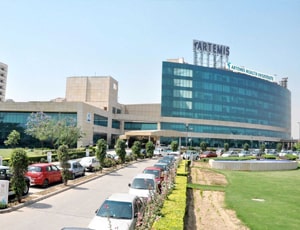
Artemis Health Institute
Gurgaon, India
Artemis Hospital, established in 2007 in Gurgaon, India, is a 750+ bed, state-of-the-art multi-speciality hospital and the first in Gurgaon accredited by JCI and NABH. A flagship of the Apollo Tyres Group, it offers advanced care across cardiology, oncology, orthopaedics, neurology, and transplant medicine, supported by modern infrastructure and 60+ world-class operating theatres. Its Centres of Excellence span critical areas like heart, cancer, neurosciences, orthopaedics, and women & child care. Guided by values of Service, Compassion, and Integrity, Artemis combines innovation, technology, and affordability, making it a trusted international healthcare destination for comprehensive and compassionate patient care.
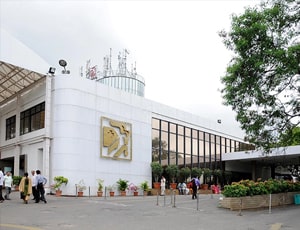
Apollo Hospitals
Hyderabad, India
Apollo Hospitals located in Hyderabad, India is accredited by JCI, NABH. Also listed below are some of the most prominent infrastructural details:
- A premier multi-specialty hospital with 477-bed capacity
- More than 50 specialties, super-specialties
- 12 Centers of Excellence
- The Institutes for Heart Diseases, Neurosciences, Cancer, Emergency, Orthopaedics, Renal Diseases, and Transplants
- Centers of Excellence are known for patient care, training and research
- Doctors with years of truly global experience in healthcare delivery
Our Services to better your experience
Opinion & Option
We submit the most accurate opinion and options from one or more countries for your review
Consult Privately
Consult with a certified specialist privately on our telemedicine platform even before you decide to travel
Logistics
We handle flights, visas, transfers, and accommodation—so you can focus on your health.
Recovery
Our In-house rehabilitation service packages to better your recovery and treatment outcome
Why Choose India for Urothelial Carcinoma Treatment?
The following are the much-growing reasons for India being frequented for Urothelial Carcinoma treatment:
- World-Class Health Services at Affordable Costs: The nation is proficient in advanced medical technologies and treatments, including high-quality care at often dissimilar cost ratios of Western countries.
- Most Qualified Professionals: Patients will find internationally trained, renowned hepatologists, surgeons, and specialists. Medical and individualised treatment options will complement the value of the care provided by the best experts in India.
- Complete Medical Services: From advanced diagnostic tools such as elastography and imaging to liver transplants, India has gone the extra mile to provide patients with cutting-edge facilities for total Urothelial Carcinoma treatment.
- Easy Medical Tourism: India is becoming a central international hub for medical tourism. Many accredited hospitals provide excellent service to international patients, including easy accessibility, visa assistance, and organised packages.
- Holistic Treatment: Most hospitals in India work towards a mainstream plus traditional treatment regime, including even Ayurvedic treatments, for complete liver health recovery and wellness, thus attending to emotional and physical wellness.
Frequently Asked Questions
Although one cannot prevent the disease, risk factor reduction- for example, quitting smoking, eating good food, staying hydrated, and avoiding chemicals can reduce the possibility of urothelial carcinoma development.
The prognosis is determined by the stage at which the cancer was diagnosed. Late-stage tumours are considered aggressive and associated with a poor prognosis, while early-stage non-muscle-invasive bladder cancer is associated with a reasonable survival rate.
PCPs and immune checkpoint inhibitors support a patient's immune system in recognising and destroying cancer cells in advanced or metastatic urothelial carcinoma cases.
Yes, urothelial carcinoma can recur, particularly in the setting of non-muscle invasive cancers. Follow-up through cystoscopies and urine tests can help detect recurrences as early as possible.
The side effects may change from treatment to treatment. They include fatigue, nausea, hair loss, urinary problems, infections, and immune-mediated side effects (in the case of immunotherapy). Managing side effects is the most critical part of the treatment journey.
Bladder cancer, specifically urothelial carcinoma, is relatively common in India, and there is an increasing incidence mainly because of clearly defined risk factors such as smoking and exposure to environmental toxins. It's among the commonly recorded malignancies of the urinary tract in India.
The probability of survival of patients with urothelial carcinoma correlates with the stage of cancer at diagnosis. Early recognition significantly augments the chances of survival, especially concerning non-muscle invasive bladder cancer. At the same time, advanced stages may confer a lesser survival probability because of being detected late and getting access to advanced treatment facilities in some regions.
In India, it is more common in men than in women. Men aged 50 years and above, especially those with a history of smoking and occupational exposure to chemicals, are at greater risk. However, bladder cancer in women is also on the rise.
Treatment is usually stage-dependent but may vary somewhat based on tumour location. Surgery, chemotherapy, immunotherapy, and sometimes radiation are often used in combinations. These combinations may enhance response to treatment, particularly amongst the advanced cases.

Reviewer

Dr. Mohit Agarwal
Medical Oncologist
14 Years of Experience
One of the finest Oncologist in New Delhi, India, Dr. Mohit Agarwal has worked with several world class multidisciplinary hospitals over the years. Dr. Mohit Agarwal has over 14+ years of experience in his field. The doctor treats and manages a wide range of conditions such as Stomach Cancer, Rectal Cancer, Breast Cancer, Brain Cancer View More
Last Reviewed - January 2026