Trigeminal Neuralgia Treatment in India
- Top Accredited Hospitals
- Global Medical Standards
- Cutting-Edge Technology
- Proven Treatment Options
- High Success Rate
- Trusted by Millions

What is Trigeminal Neuralgia?
Trigeminal neuralgia is a disorder that causes one side of the face to hurt like an electric shock. The trigeminal nerve, which transmits impulses from the face to the brain, is impacted. Pain can be triggered by even slight contact, such as when you wash your teeth or apply makeup. Trigeminal neuralgia may persist for a long time. It is referred to as a chronic pain disorder.
What is the Importance of Timely Treatment?
Timely treatment is important because Trigeminal neuralgia might become more difficult to manage later on if left untreated since it can cause more frequent and severe pain attacks with shorter pain-free intervals in between. Significant psychological suffering, such as worry and depression, can result from the excruciating pain of trigeminal neuralgia, and treatment delays may make the condition worse. While advanced cases may require more intrusive operations like surgery, early detection opens up a larger choice of treatment options, including medication management, which may be enough in the early stages.
What are the symptoms of Trigeminal Neuralgia
One or more of the following patterns may be present in symptoms of trigeminal neuralgia:
- Episodes of sharp pain, often like an electric shock, that shoot or jab
- Pain that comes on suddenly or that is brought on by speaking, chewing, brushing your teeth, or touching your face
- Pain episodes that range in duration from a few seconds to a few minutes.
Discomfort brought on by facial spasms - Pain episodes can linger for several days, weeks, months, or more. There are times when some people don't feel any pain
- Discomfort in regions that the trigeminal nerve supplies; these regions consist of the lips, gums, teeth, cheek, and jaw. The forehead and eye may be impacted less frequently
- One side of the face is hurting at a time
- Pain concentrated in one area. Alternatively, the discomfort might be distributed more widely
- Rarely, pain happens when you're asleep
- Pain episodes that increase in frequency and severity over time.
Causes and Risk Factors of Tethered Trigeminal Neuralgia
Causes
- In Trigeminal Neuralgia, the pain is frequently brought on by contact between a blood vessel and the trigeminal nerve at the base of the brain. The blood vessel could be a vein or an artery. The nerve is compressed by this touch, impairing its normal function
- Although blood vessel compression is a frequent cause, there are numerous additional possible reasons. Trigeminal neuralgia can be brought on by multiple sclerosis or a comparable disorder that weakens the myelin sheath that surrounds certain nerves. The disorder may also be brought on by a tumour pressing against the trigeminal nerve
- Trigeminal neuralgia can be brought on by a stroke or face trauma in certain patients. Trigeminal neuralgia can also result from a surgical nerve damage.
Triggers Trigeminal neuralgia pain can be triggered by a number of factors, such as:
- Shaving
- Putting a hand to your face
- Eating
- Consuming alcohol
- Cleaning your teeth
- Speaking
- Applying cosmetics
- Your face is being blown by a slight breeze
- Grinning
- Cleaning your face.
Risk Factors
According to research, the following factors increase a person's likelihood of developing trigeminal neuralgia:
- Gender: Trigeminal neuralgia is more common in women than in men
- Age: People over 50 are more likely to experience trigeminal neuralgia
- Specific Circumstances: For instance, one risk factor for trigeminal neuralgia is high blood pressure. Additionally, trigeminal neuralgia is more common in patients with multiple sclerosis.
Connect with our advisor for a PRIORITY response
Trigeminal Neuralgia Prevention Tips
Although there is no way to avoid trigeminal neuralgia, you can avoid excruciating attacks by:
- Avoiding crunchy and hard foods and consuming soft ones instead
- Avoiding beverages that are too hot or cold
- Using cotton pads to wipe and lukewarm water to wash the face
- Steer clear of using a mobile phone for extended periods of time as it can heat up and emit Radiation, which can exacerbate pain
- Avoiding or reducing recognised triggers.
Treatment options for Trigeminal Neuralgia
Gamma Knife Radiosurgery: This is a type of noninvasive radiation therapy that uses computer-guided planning to treat conditions and tumours of the brain and upper spine. The Gamma Knife delivers beams of highly focused energy to a specific treatment area, minimising harm to the surrounding tissue. Despite its name, this procedure is not a surgery and does not involve any knives. Gamma Knife surgery is a type of stereotactic radiosurgery, also known as Gamma Knife radiosurgery and Gamma Knife radiation.
Cost Start From USD 4000 - USD 7000Explore Options
Microvascular Compression: To prevent the trigeminal nerve from malfunctioning, this technique entails repositioning or excising blood veins that come into contact with it. On the side of your ear where you experience pain, an incision is made. Your surgeon will then move any arteries that are in contact with the trigeminal nerve through a tiny hole in your skull. A gentle cushion is also positioned by the surgeon between the arteries and the nerve
- A neurological examination. You can pinpoint the precise location of the pain by touching and studying different areas of your face. The examination might assist in determining which trigeminal nerve branches may be impacted if you seem to have trigeminal neuralgia. To find out if your symptoms are due to a compressed nerve or anything else, reflex testing can be helpful
- MRI: To check for potential causes of trigeminal neuralgia, you might require an MRI. Signs of a tumour or multiple sclerosis may be seen on an MRI. In order to visualise the arteries and veins and demonstrate blood flow, a dye may occasionally be injected into a blood vessel.
MediRehab (chain of Rehab center - part of MediGence provides comprehensive rehabilitation services designed to support arthritis patients in <India>. These services include:
- Nutritional Counseling: Diet plans for trigeminal neuralgia is presumably a diet reduced in saturated fat
- Therapy Plans: Electrical Stimulation (TENS) is the most popular and successful technique in the effective physiotherapy treatment of trigemTN patients
- Rehabilitation post-Surgery: physiotherapy sessions focused on restoring function and strength
- Depending on the situation, your healthcare professional may prescribe medicine to help control your symptoms and support the treatment plan.
Instantly Connect with our Specialists


Hospitals for Trigeminal Neuralgia in India

The Madras Institute of Orthopedics and Traumatology
Chennai, India
MIOT started its journey with only 70 beds and focusing on Orthopedics and Trauma care. However, we grew into a multi-specialty hospital with time. MIOT is now a 1000-bedded hospital and can offer an extensive range of services across 63 specialties. The state of art laboratory of our hospital is ranked 8th internationally. We have 21 super-specialty operation theaters equipped with cutting-edge technology to help our doctors with complex procedures.
We take great care to make our patient rooms comfortable enough. The patient rooms get plenty of fresh air as well as natural light. The soothing views from the rooms do not let the patients feel cut off from the outside world. We use separate entrances for emergency patients, out-patients, in-patients, and their attendants. We put our patients’ safety first which is why we use a superior air system to ensure a near-zero infection healthy environment.
Apart from that, MIOT’s 24 hours blood bank provides all kinds of blood work related services which include blood collection to component separation. This state-of-art blood bank alone handles more than 30,000 units of blood over the course of a year. Every month around 600 blood transfusions are managed by this blood bank.
MIOT’s SIGNA Pioneer 3T MRI machine is made with noise reduction technology. This silent MRI machine can deliver superior quality neuroimages without wasting any time. The department of Radiology and Imaging Sciences can give tough competition to any international hospital with its advanced technology and accuracy.
The PET CT service at MIOT International is the first of its kind in South India enabling better and more accurate diagnosis than earlier. The superior diagnosis is also possible for the two digital cath labs at MIOT Heart Revive center.
We also have a physiotherapy team where a team of highly efficient physiotherapists deals with the mobility and functional disability issues of our patients. They listen to the patients carefully to identify the root of the pain and use therapeutic exercises to reduce their pain.
The CCU of MIOT is something to be proud of. The specially-trained staff of this unit is dedicated to ensuring top-quality medical support to serious patients. This unit along with the MIOT International Laboratory is the backbone of our facility.
Furthermore, what makes MIOT unique is our Telemedicine service. In the new normal, we are trying everything to reach our patients. Our one of its kind Telemedicine service connects our patients to our 250 full-time doctors over email, phone, chat and video consultations.

Fortis Hospital, Shalimar Bagh
Delhi, India
- Fortis Hospital, Shalimar Bagh, New Delhi, is a leading multi-super-speciality hospital established in 2010, known for advanced medical technology and compassionate patient care.
- The hospital has 375 beds, including 166 ICU beds, and features 10 modular operating theatres along with specialised ICUs and Level III NICU/PICU. Fortis Shalimar Bagh offers care across Cardiology, Neurosciences, Oncology, Orthopaedics, Transplants, Urology, and Mother & Child Health, supported by NABH and NABL accreditation.
- Equipped with cutting-edge technology like the Da Vinci Surgical Robot, PET-CT Scanner, and CORI Robotic System, the hospital is recognised for excellence in treatment outcomes, patient comfort, and multidisciplinary care, making it a trusted destination for both domestic and international patients.
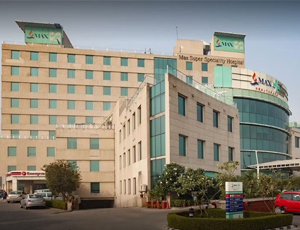
Max Super Specialty Hospital, Shalimar Bagh
Delhi, India
- Max Super Speciality Hospital, Shalimar Bagh, is a 402-bed quaternary-care hospital in New Delhi, offering advanced treatment across 37+ specialities, including Cancer, Cardiac, Neurosciences, Gastroenterology, Orthopaedics, and Renal Transplant.
- Equipped with state-of-the-art technology and a team of highly skilled doctors and nurses, the hospital provides complex procedures, minimally invasive surgeries, and targeted cancer treatments, making it one of India’s leading healthcare destinations.
Our Services to better your experience
Opinion & Option
We submit the most accurate opinion and options from one or more countries for your review
Consult Privately
Consult with a certified specialist privately on our telemedicine platform even before you decide to travel
Logistics
We handle flights, visas, transfers, and accommodation—so you can focus on your health.
Recovery
Our In-house rehabilitation service packages to better your recovery and treatment outcome
Why Choose India for Trigeminal Neuralgia Treatment?
Here are some of the reasons for choosing India:
- Due to advancements in medical facilities, such as minimally invasive surgical techniques and Gamma Radio Frequency.
- World-class experts include highly experienced doctors, JCI, and NABH-accredited healthcare institutions.
- Compared to other countries, treatment in Indian hospitals is cost-effective.
- Indian hospitals provide international patient services, including a multilingual support system.
- Improved treatment methods and biological therapies.
Frequently Asked Questions
Trigeminal neuralgia may start out moderate and brief, but if treatment is not received, it may gradually get worse. Treatments exist to lessen the incapacitating pain, even if trigeminal neuralgia is not always curable. Anticonvulsive drugs are typically the initial line of treatment.
In India, treatment for trigeminal neuralgia is thought to be generally successful, with the majority of patients reporting notable pain alleviation from pharmaceutical management, especially with first-line medications like carbamazepine and, where required, Gamma Knife Radiation Therapy.
Yes, many Indian hospitals offer the following for Trigeminal Neuralgia treatment:
- Advanced diagnostic tools like MRI, CT scan, electromyography, and PET scan for accurate diagnoses of Trigeminal Neuralgia.
- Skilled neurologist, surgeons and therapist performing Gamma Knife Radiation therapy to treat Trigeminal Neuralgia.
- Comprehensive post-surgery care and rehabilitation for long-term health benefit
Always consider the following factors when selecting Indian hospitals:
- Hospitals that are accredited (authorised by JCI and NABH).
- Patient reviews and success rates.
- Hospitals that provide seamless care to patients from abroad.
Although living with trigeminal neuralgia can be challenging, most individuals can find relief with the right care.
It can be challenging to live with trigeminal neuralgia. Your relationships with friends and family, your level of productivity at work, and your general quality of life may all be impacted by the disease.

Reviewer

Dr. Mohit Agarwal
Medical Oncologist
14 Years of Experience
One of the finest Oncologist in New Delhi, India, Dr. Mohit Agarwal has worked with several world class multidisciplinary hospitals over the years. Dr. Mohit Agarwal has over 14+ years of experience in his field. The doctor treats and manages a wide range of conditions such as Stomach Cancer, Rectal Cancer, Breast Cancer, Brain Cancer View More
Last Reviewed - January 2026