Syringomyelia Treatment in India
- Top Accredited Hospitals
- Global Medical Standards
- Cutting-Edge Technology
- Proven Treatment Options
- High Success Rate
- Trusted by Millions

What is Syringomyelia?
The formation of a fluid-filled cyst in the spinal cord is known as syringomyelia. Over time, the cyst—also referred to as a syrinx—may enlarge. When it does, pain, weakness, and stiffness may result from spinal cord damage.
Multiple potential causes of syringomyelia exist. Numerous cases have been linked to a Chiari malformation, in which brain tissue presses into the spinal canal.
What is the Importance of Timely Treatment?
Early treatment of syringomyelia is necessary to prevent nerve damage, reduce chronic pain, and maintain mobility. Avoiding complications such as paralysis, scoliosis, and loss of sensation improves the overall quality of life and prevents permanent disability.
What are the Common Symptoms of Syringomyelia?
There are some common symptoms of syringomyelia, including:
- Pain
- Muscle Weakness
- Loss of Sensation
- Impaired Coordination
- Spinal Deformities
- Headaches
Causes and Risk Factors of Syringomyelia
Causes
Chiari Malformation: A condition in which the cerebellum (brain part) extends into the spinal canal, often leading to syringomyelia.
Spinal Cord Injury: A syrinx can be a secondary consequence of spinal cord injury.
Spinal Tumours: Growth in or near the spinal cord can cause syringomyelia by obstructing the flow of cerebrospinal fluid.
Meningitis: Cyst formation can result from infections that impair brain or spinal cord fluid flow.
Genetic Conditions: Some genetic conditions include Marfan syndrome or Ehlers-Danlos syndrome, among others.
Risk Factors
There are some Risk factors for syringomyelia, including:
- Age: Syringomyelia is more common in people between 20 and 40, but it can affect people of any age.
- Gender: The illness occurs more commonly in men than in women.
- Injury: You are more prone to developing the disorder if you have a spinal cord injury.
Connect with our advisor for a PRIORITY response
Latest Research and Technologies in the Treatment of Syringomyelia in India
Recent NIH study findings indicate that the primary surgical treatments for syringomyelia establish normal CSF flow around the spinal cord and drain the syrinx directly. When Chiari malformation is involved, surgical decompression relieves pressure at the base of the skull and upper neck, which generally allows for regular CSF flow and may further reduce the syrinx. Other procedures include expansive duraplasty to prevent the onset or enlargement of a syrinx following injury to the spinal cord.
Syringomyelia Prevention Tips
Early detection of conditions such as Chiari malformation, taking safety precautions for the spine, proper posture, avoiding high-risk activities, managing underlying conditions such as spinal tumours or infections, and proper post-surgical care after spinal surgeries are significant ways to prevent syringomyelia.
Treatment options for Syringomyelia
VP Shunt: When syringomyelia is caused by hydrocephalus or disturbed cerebrospinal fluid (CSF) flow, a ventriculoperitoneal (VP) shunt may be used. This device relieves pressure on the spinal cord by diverting extra CSF from the brain to the abdomen.
Cost Start From USD 4500 - USD 5500Explore Options
- Clinical assessment:
- Physical Examination: Your physician looks for any indications of pain, muscle weakness, or unusual posture, especially in the neck.
- Imaging Tests:
- MRI is the best method for diagnosing syringomyelia. It gives an apparent image of the spinal cord and helps detect syrinx development.
- CT Scan: Although CT scans are less sensitive than MRIs in detecting syringomyelia, they are still used when more imaging is required.
- X-rays help identify spinal abnormalities such as scoliosis, which may be associated with syringomyelia.
- Myelography: A contrast dye is administered into the spinal canal to examine the flow of cerebrospinal fluid and any blockage. X-rays or CT scans follow this.
MediRehab (chain of Rehab centres - Part of MediGence) provides comprehensive rehabilitation services designed to support syringomyelia patients in India. These services include:
- Personalised therapy plans: Physical therapy will help to manage weakness and improve function. Exercises will focus on reducing inflammation and promoting better spinal health.
- Post-Operative Rehabilitation: After surgery for syringomyelia or related conditions, physical therapy is crucial to regain joint strength, flexibility and overall spinal function. This will improve recovery and decrease the risk of complications.
- Depending on the condition, your healthcare professional may prescribe medicine to help control your symptoms and support the treatment plan.
Instantly Connect with our Specialists


Hospitals for Syringomyelia in India
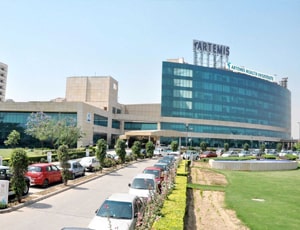
Artemis Health Institute
Gurgaon, India
Artemis Hospital, established in 2007 in Gurgaon, India, is a 750+ bed, state-of-the-art multi-speciality hospital and the first in Gurgaon accredited by JCI and NABH. A flagship of the Apollo Tyres Group, it offers advanced care across cardiology, oncology, orthopaedics, neurology, and transplant medicine, supported by modern infrastructure and 60+ world-class operating theatres. Its Centres of Excellence span critical areas like heart, cancer, neurosciences, orthopaedics, and women & child care. Guided by values of Service, Compassion, and Integrity, Artemis combines innovation, technology, and affordability, making it a trusted international healthcare destination for comprehensive and compassionate patient care.

Primus Super Speciality Hospital
Delhi, India
Primus Super Speciality Hospital located in New Delhi, India is accredited by NABH. Also listed below are some of the most prominent infrastructural details:
- There are as many as 130 hospital beds.
- The total number of hospital beds is inclusive of the 18 ICU Beds in Primus Hospital.
- Operation theatres in the hospital have been equipped with the latest technologies.
- There is 24/7 hour emergency and trauma response and care.
- 64 slice spirals as well as Cardiac CT Scan are present.
- International patient care facilities are available such as accommodation, flight booking, airport transfer, and interpreters.

Medanta - The Medicity
Gurgaon, India
Medanta – The Medicity, Gurugram, founded by renowned cardiac surgeon Dr. Naresh Trehan, is a leading multi-super speciality hospital offering advanced yet affordable healthcare. Spread across a 43-acre campus, it houses 1,391 beds, 270 ICU beds, 40 operation theatres, and 900+ doctors across 30+ specialities. Accredited by JCI, NABH, and NABL, Medanta is designed per American Institute of Architects’ healthcare guidelines. Recognised as the Best Private Hospital in India (2020–2025) and among the World’s Top 250 Hospitals (Newsweek 2024), it excels in Cardiac Care, Cancer, Neurosciences, Gastro, Orthopaedics, and Renal Care, ensuring world-class, collaborative, and compassionate treatment.
Our Services to better your experience
Opinion & Option
We submit the most accurate opinion and options from one or more countries for your review
Consult Privately
Consult with a certified specialist privately on our telemedicine platform even before you decide to travel
Logistics
We handle flights, visas, transfers, and accommodation—so you can focus on your health.
Recovery
Our In-house rehabilitation service packages to better your recovery and treatment outcome
Why Choose India for Syringomyelia Treatment?
India's excellent medical facilities, skilled surgeons, and modern technologies make it a popular destination for syringomyelia therapy. The nation provides individualised care programs and reasonably priced therapy without sacrificing quality. India is desirable for foreign patients looking for fast and affordable treatment since it offers access to advanced research, clinical trials, and post-operative rehabilitation.
Frequently Asked Questions
The two conditions are related because Chiari malformation can lead to syringomyelia. During a Chiari malformation, a portion of the brain bulging into the spinal canal disrupts cerebrospinal fluid (CSF) flow. Because of the obstruction, fluid may accumulate within the spinal cord, creating a syrinx that causes syringomyelia. Therefore, an individual with a Chiari malformation is likely to acquire syringomyelia.
Syringomyelia is rarely inherited. However, specific genetic disorders and familial patterns may elevate the risk. For example, people with the hereditary Chiari malformation are more likely to develop syringomyelia.
Yes, if left untreated or significantly worsening, syringomyelia can cause paralysis. If the syrinx damages the fluid-filled cyst within the cord, motor function may be lost. This commonly begins in the arms and legs, leading to weakness or paralysis. Paralysis typically depends on the location, size, and degree of compression the syrinx is causing within the spinal cord. Early detection and treatment are, therefore, essential to avoid irreversible paralysis.
The goals of syringomyelia treatment are to manage the underlying causes, stop additional harm, and alleviate symptoms. Options for treatment include:
Surgical Decompression: If the Chiari malformation is the source of the syringomyelia, surgery to remove pressure on the spinal cord (decompression) may be necessary to restore normal cerebrospinal fluid (CSF) flow.
A syringotomy is a technique in which the syrinx is drained to lower pressure and stop more spinal cord injury.
Spinal Fusion: Spinal fusion may be used in severe spinal abnormalities (such as scoliosis) to stabilise the spine and stop additional curvature.
Physical therapy enhances strength, mobility, and pain management, mainly when muscle weakness or loss of function occurs.
Pain management: Syringomyelia-related persistent pain may be reduced with medication.
Though syringomyelia mainly affects the spinal cord, it can indirectly impact the brain when associated with Chiari malformation. In Chiari malformation, a portion of the brain extends into the spinal canal, affecting the flow of CSF and causing a syrinx to form in the spinal cord. Although syringomyelia does not directly affect the brain, the underlying disorder can cause symptoms such as headaches, loss of balance, or elevated cerebral pressure.
Syringomyelia-related complications include:
- Immobility
- Persistent Pain
- Absence of Sensation
- Spinal abnormalities
- Problems with the Respiratory System
- Atrophy of Muscles
Chronic pain, loss of mobility, and muscle weakness from syringomyelia can disrupt the ability to walk, lift, and manage items. The inability to feel sensations in the hands and arms may impair dexterity. Tiredness and impaired balance can limit physical activity and increase the risk of falls. These challenges require early diagnosis and intervention because they can compromise independence and overall quality of life.
Syringomyelia can cause chronic pain, reduced mobility, and muscle weakness, interfering with daily activities such as walking, lifting, and handling goods. Loss of feeling in the hands and arms may also impair fine motor skills. Physical activity may be restricted, and weariness and balance problems may affect the risk of falling. Early identification and treatment are crucial since these difficulties can impair independence and general quality of life.
Yes, scoliosis and other spine anomalies may be caused by syringomyelia. The syrinx, a fluid-filled cyst within the spinal cord, may lead to proper spinal curvature through scoliosis. Syringomyelia is particularly prevalent in children and teenagers. The imbalance of the individual and a lack of muscular strength may further result in the anomaly of curvature.

Reviewer

Dr Sonal Gupta
Neurosurgeon
29 Years of Experience
Dr. Sonal Gupta has an experienced neurosurgeon with more than 29+ years of clinical expertise. She is currently the Director, Neuro & Spine Surgery at Fortis Hospital, Shalimar Bagh. Before joining Fortis, she has been associated with various organizations such as Maharaja Agrasen Hospital, Action Balaji Hospital, and Max Hospital. View More
Last Reviewed - January 2026