Sinusitis Treatment in India
- Top Accredited Hospitals
- Global Medical Standards
- Cutting-Edge Technology
- Proven Treatment Options
- High Success Rate
- Trusted by Millions

What is Sinusitis?
Sinusitis is an inflammation of the tissue lining sinuses - the hollow spaces in forehead, cheeks, and nose typically filled with air. It can cause symptoms like facial pain, nasal congestion or a runny nose, and occasionally fever, among others. While it's often triggered by the common cold, other culprits such as viruses, bacteria, fungi, and allergies can also lead to sinusitis.
What is the Importance of Timely Treatment?
Timely treatment of sinusitis is crucial for several reasons:
- Preventing Chronic Sinusitis: Untreated acute sinusitis can progress to chronic sinusitis, where symptoms persist for more than 12 weeks. Chronic sinusitis can be more difficult to treat and may require more intensive medical interventions.
- Reducing Complications: While rare, untreated sinusitis can lead to serious complications such as meningitis (inflammation of the membranes surrounding the brain and spinal cord), abscesses (pockets of infection), or bone infections. Early treatment helps reduce these risks
- Alleviating Symptoms: Prompt treatment helps relieve uncomfortable symptoms like facial pain, nasal congestion, and headaches, improving your overall quality of life
- Preventing Spread of Infection: If the sinusitis is caused by a bacterial infection, timely use of antibiotics can prevent the infection from spreading to other parts of the body
- Improving Breathing and Sleep: Effective treatment can help clear nasal passages, improving your ability to breathe through your nose and enabling better sleep
- Protecting Your Sense of Smell and Taste: Prolonged sinusitis can lead to a reduced sense of smell and taste. Addressing the condition early can help preserve these senses.
What are the symptoms of Sinusitis
Common symptoms of a sinus infection include:
- Postnasal drip (mucus dripping down your throat)
- Runny nose with thick yellow or green mucus
- Stuffy nose
- Facial pressure (particularly around your nose, eyes and forehead). This might get worse when you move your head around or bend over
- Pressure or pain in your teeth
- Ear pressure or pain
- Fever
- Bad breath or a bad taste in your mouth
- Cough
- Headache
- Tiredness
Causes and Risk Factors of Tethered Sinusitis
Causes
Sinusitis can be brought on by bacteria, fungus, viruses, and allergies. Among the specific causes of sinusitis are:
- The common cold.
- The flu (influenza).
- Streptococcus pneumoniae bacteria.
- Haemophilus influenza bacteria.
- Moraxella catarrhalis bacteria.
- Nasal and seasonal allergies.
Risk Factors
Sinusitis is more common in some people than others. Risk factors consist of:
- Allergens of the nose
- Asthma
- Growths called nasal polyps
- Septum deviation. Your nose is divided by a line of tissue called the septum. A deviated septum narrows the airway on one side of your nose because it is not straight. An obstruction may result from this
- A compromised immune system. This may result from some drugs or diseases like HIV or cancer
- Smoking.
Connect with our advisor for a PRIORITY response
Sinusitis Prevention Tips
There are several strategies to lower your chance of developing sinus infections, depending on the cause, such as:
- Following your provider's instructions to rinse your nose with saline (salt water)
- Taking precautions against allergiesMedication, allergy injections, and avoiding recognized triggers for your allergies (such as smoke, dust, or pollen) are all part of this
- If your doctor advises it, use steroid nasal sprays
- Developing healthy handwashing practices and other behaviors that lower your risk of contracting infectious diseases
- Steer clear of smoke. If you smoke, there are strategies to help you stop.
Treatment options for Sinusitis
Septoplasty: If sinusitis is caused by structural problems, the doctor suggests septoplasty. The nasal septum is trimmed, cantered, and sometimes cartilage or bone is replaced. Inside the nose, the surgeon makes incisions. Occasionally, a tiny cut between the nostrils must be made. The surgeon might have to make incisions in the nose's bones if malformed nasal bones cause the septum to push off to one side. The purpose of this is to relocate them to their rightful position. When the issue is along the nose bridge, spreader grafts—small strips of cartilage—can help straighten a deviated septum. These are occasionally used to assist align the septum.
Cost Start From USD 2500 - USD 3500Explore Options
Nasal Polyp Surgery: Sometimes nasal polyps could cause sinusitis, so doctors may perform nasal polypectomy. The process to remove noncancerous growths from the lining of your sinus and nasal passages is called nasal polyp surgery, or nasal polypectomy. The most popular technique is to view and remove the polyps using an endoscope, which is a tiny tube equipped with a light and camera. This treatment is less invasive.
Cost Start From USD 2500 - USD 3500Explore Options
Based on symptoms and medical history, doctors diagnose sinusitis. A healthcare professional will examine the throat, nose, and ears for blockages, swelling, or drainage. To check the inside of the nose, they may use an endoscope, which is a tiny, illuminated device. Patients may also be sent to a specialist by your primary care physician, such as an otolaryngologist (commonly known as an ENT, or ear, nose, and throat specialist). Your doctor may prescribe some tests to identify a sinus infection, such as:
- Endoscopy of the nose
- Swabs for the nose. Your doctor might take a fluid sample from your nose using a soft-tipped stick. They will check it for bacteria or viruses that could be the source of your symptoms
- Imaging. A computed tomography (CT) scan may occasionally be recommended by a doctor to gain a better understanding of the conditions inside sinuses
- Checking for allergies. Your doctor could test you for allergens that might be causing your chronic sinusitis
- Biopsy: In rare cases, a healthcare professional might remove a sample of tissue from your nose for analysis.
MediRehab (chain of Rehab center) - part of MediGence provides comprehensive rehabilitation services designed to support arthritis patients in India. These services include:
Nutritional Counseling: Diet plans to reduce inflammation.
Personalized Therapy Plans: Individually tailored treatments for headache management.
Rehabilitation post septoplasty: Therapy sessions focused on restoring smell function and proper sleeping postures.
- Decongestants
- Over-the-counter (OTC) drugs for allergies and colds
- Antibiotics
- Either topical or oral decongestants.
In order to treat chronic sinusitis, providers address the underlying cause. Among the possible treatments are:
- Sprays of intranasal steroids
- Oral medications or topical antihistamine sprays.
Instantly Connect with our Specialists


Hospitals for Sinusitis in India

Apollo Spectra Hospitals
Delhi, India
Apollo Spectra Hospitals located in New Delhi, India is accredited by JCI. Also listed below are some of the most prominent infrastructural details:
- Advanced technology
- World-class infrastructure
- Patient Care is completely personalised
- 12 surgical specialties and others
- A 15000 sqft area that the hospital occupies
- 5 modern modular Operation Theatres
- Sleek and smart rehabilitation unit
- In-house pharmacy
- 115 plus healthcare professionals which is inclusive of 70 specialist consultants

Yashoda Hospital, Malakpet
Hyderabad, India
Yashoda Hospital, Malakpet located in Hyderabad, India is accredited by NABH, NABL. Also listed below are some of the most prominent infrastructural details:
- Multi-bed facility
- High-tech labs, modular operation theaters
- Advanced medical equipement
- Dedicated rooms for patients with all facilities
- State-of-art technology
- 24/7 blood bank
- State of the art Cardio-Thoracic Center with the latest CATH LAB Equipment & Modular steel operation theatre
- Neurosurgery department equipped with an operating microscope, high-speed drill & stereotaxy
- 24-hour Emergency services to take care of all kinds of trauma and other orthopedic emergencies
- Pulmonology department equipped with modern gadgets.
- One of the best PFT labs and bronchoscopy units
- Nephrology services include Renal Biopsy, AV Fistulas, AV Grafts & Permanent Catheter Insertions, Hemodialysis; Temporary Access For Dialysis; Peritoneal Dialysis
- Has a comprehensive cancer care unit following a trans-disciplinary & multi-modality approach
- State-of-the-art services of Digital X rays, Flouroscopy, Ultrasonography, OPG, Mammography, CT 64 Slices, MRI, etc.
- Airport Transfer Service
- Scheduling Of All Medical Appointment
- Processing Of Medical Second Opinion
- Provide Language Interpreter
- Special Dietary Needs / Religious Arrangement
- Coordination Of Admissions Process
- Cost Estimates For Anticipated Treatments
- Foreign Exchange service
- Billing and Finance Related Service
- Providing Information Of Patient’s Relatives Back Home
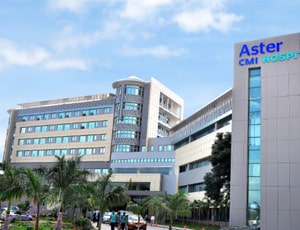
Aster CMI Hospital
Bangalore, India
Aster CMI Hospital located in Bengaluru, India is accredited by JCI, NABH. Also listed below are some of the most prominent infrastructural details:
- Around 500 bed capacity
- Primary care to Quaternary care services
- Outpatient and inpatient departments
- Day care center for small children
- Availability of Surgical suites
- Intensive Care Units
- 24-hour Emergency and Trauma Care
- Emergency Unit especially for children
- Newly launched the Lung and Heart Transplant Centre
- Video Consultation with doctors available on GraphMyHealth
- A specialised Aster Center of Excellence for Women & Children
- Latest Minimally Invasive Procedures being performed
- Safe Interventional Procedures
- Control of Infection protocols are strictly followed
- Aster Holistic Collaborative Care: Aster Palliative Care for lowering suffering if critically ill patients, Physical Medicine & Rehabilitation, Aster Wellness, Psychology, Chronic Pain Management, Nutrition & Dietetic, Podiatry Care etc.
- 11 Centers of Excellence
- An academics focus with BSc Program, MEM Program, Pediatric Fellowship Program
- A streamlined International patient care center with dedicated services and technology enabled processes
Our Services to better your experience
Opinion & Option
We submit the most accurate opinion and options from one or more countries for your review
Consult Privately
Consult with a certified specialist privately on our telemedicine platform even before you decide to travel
Logistics
We handle flights, visas, transfers, and accommodation—so you can focus on your health.
Recovery
Our In-house rehabilitation service packages to better your recovery and treatment outcome
Why Choose India for Sinusitis Treatment?
Here are some of the reasons for choosing India:
- Due to advancements in medical facilities, such as minimally invasive surgical techniques and septoplasty.
- World-class experts include highly experienced doctors, JCI, and NABH-accredited healthcare institutions.
- Compared to other countries, treatment in Indian hospitals is cost-effective.
- Indian hospitals provide international patient services, including a multilingual support system.
- Improved treatment methods and biological therapies.
Frequently Asked Questions
Yes, sinusitis can be treated effectively. The treatment approach depends on the type and severity of sinusitis. Options include from over the counter medications to surgery like septoplasty.
India has a number of experienced ENT specialists and surgeons who are well-versed in treating Sinusitis. In India, significant progress has been made in septoplasty surgery and minimally invasive techniques.
Yes, many Indian hospitals offer the following for Sinusitis treatment:
- Advanced diagnostic tools like MRI, CT scan, electromyography, and PET scan for accurate diagnoses.
- Skilled ENT physicians and therapists performing therapies.
- Comprehensive care and rehabilitation for long-term health benefit
Always consider the following factors when selecting Indian hospitals
- Hospitals that are accredited (authorised by JCI and NABH)
- Patient reviews and success rates
- Hospitals that provide seamless care to patients from abroad.
Indeed, a person with sinusitis can go about their daily life normally! With the correct care and lifestyle changes, sinusitis is usually treatable, despite the fact that it can be uncomfortable and interfere with everyday activities. Despite experiencing sinusitis, you can have a regular and healthy life by doing the following:
- Effective Treatment: You can control symptoms and avoid complications by taking drugs, nasal sprays, or other therapies as prescribed by your doctor
- Home Remedies: Using warm compresses, steam inhalation, and saline nasal irrigation on a regular basis will help reduce symptoms and maintain sinus clarity.
Untreated chronic sinusitis can have a number of long-term consequences that can lower your quality of life. The following are some possible long-term consequences:
- Chronic Inflammation: Constant sinus inflammation can result in persistent symptoms like pressure, face pain, and congestion of the nose
- Diminished Sense of Taste and Smell: Prolonged sinusitis can impair your sense of taste and smell, which can impact how much you enjoy meals and how well you can identify scents
- Sleep disturbances: Snoring and sleep apnea are two conditions that can result from difficulty breathing via the nose
- Weariness: Chronic weariness and an overall sense of being ill can result from ongoing discomfort and breathing difficulties
- Increased Infection Risk: Having chronic sinusitis might increase your vulnerability to respiratory infections, including sinus infections
- Effect on Mental Health: Persistent discomfort and symptoms may exacerbate anxiety and depressive symptoms

Reviewer

Dr. Vidit Tripathi
ENT Surgeon
24 Years of Experience
One of the finest ENT Surgeon in New Delhi, India, Dr. Vidit Tripathi, has worked with several world class multidisciplinary hospitals over the years. Dr. Vidit Tripathi has over 24+ years of experience in his field. The specialist treats and manages a wide range of conditions such as Goiter, Radiation Necrosis in Neck, Neck Injury, Perforates Eardrum View More
Last Reviewed - January 2026