Pulmonary Hypertension Treatment in India
- Top Accredited Hospitals
- Global Medical Standards
- Cutting-Edge Technology
- Proven Treatment Options
- High Success Rate
- Trusted by Millions

What is Pulmonary Hypertension?
Pulmonary Hypertension (PH) is a group of conditions in which blood pressure in the pulmonary arteries is abnormally high. This increases the workload on the right side of the heart and, if persistent, can lead to right-heart enlargement and failure.
PH is classified into five groups based on its underlying cause:
- Group 1 - Pulmonary Arterial Hypertension (PAH): Affects the pulmonary arteries and may be idiopathic, inherited, drug-related, or associated with conditions such as connective tissue disease or congenital heart disease.
- Group 2 - PH Due to Left Heart Disease: Caused by conditions such as heart failure or left-sided valve disease.
- Group 3 - PH Due to Lung Disease or Hypoxia: Associated with conditions such as COPD, interstitial lung disease, or chronic low oxygen levels.
- Group 4 - PH Due to Pulmonary Artery Obstructions: Includes chronic thromboembolic pulmonary hypertension (CTEPH).
- Group 5 - PH With Unclear or Multifactorial Causes: Includes conditions with multiple or less clearly understood mechanisms.
What is the Importance of Timely Treatment?
Early evaluation matters because Pulmonary Hypertension can progress gradually, while symptoms may initially resemble other heart or lung conditions. Persistent elevation of pulmonary artery pressure can place increasing strain on the right side of the heart and may eventually lead to right-sided heart failure.
Timely diagnosis allows clinicians to identify the underlying type of PH, assess disease severity and right-heart function, and select appropriate treatment. Severe or rapidly worsening breathlessness, chest pain, fainting, blue or grey lips, or sudden breathlessness with chest pain should receive urgent medical assessment.
What are the Common Symptoms of Pulmonary Hypertension?
- Shortness of Breath: Breathlessness may start during exercise and become more frequent as the condition progresses.
- Fatigue and Weakness: Reduced exercise capacity and impaired blood flow can cause persistent tiredness or weakness.
- Chest Discomfort or Pain: Some patients experience chest pressure or pain, particularly during exertion.
- Dizziness or Fainting: Reduced ability of the cardiovascular system to increase blood flow during activity may cause lightheadedness or syncope.
- Swelling of the Legs and Feet: Right-sided heart strain can contribute to fluid accumulation in the lower limbs.
- Abdominal or Facial Swelling: Fluid retention may sometimes cause abdominal swelling or other signs of congestion.
- Rapid or Irregular Heartbeat: Some patients may have palpitations.
- Cough or Wheezing: Coughing or wheezing may occur, particularly when PH is associated with underlying lung disease.
- Coughing Up Blood: Hemoptysis can occur in some patients and requires medical evaluation.
Causes and Risk Factors of Pulmonary Hypertension
Causes
- Pulmonary Arterial Disease: Abnormal narrowing or remodelling of the pulmonary arteries can cause Group 1 PAH.
- Left-Sided Heart Disease: Heart failure, cardiomyopathy, and left-sided valvular disease can increase pressure in the pulmonary circulation.
- Chronic Lung Disease: COPD, interstitial lung disease, emphysema, and other chronic respiratory disorders may contribute to PH.
- Chronic Hypoxia: Long-term low oxygen levels can contribute to pulmonary vascular changes.
- Chronic Blood Clots: Persistent obstruction of pulmonary arteries can cause CTEPH.
- Congenital Heart Disease: Certain congenital heart defects can increase pulmonary blood flow or pressure.
- Connective Tissue Diseases: Conditions such as systemic sclerosis and other connective tissue disorders may be associated with PAH.
- Liver and Portal Circulation Disorders: Portal hypertension and certain liver diseases can be associated with PAH.
- HIV Infection: HIV infection is associated with an increased risk of pulmonary arterial hypertension.
- Blood and Metabolic Disorders: Certain haematological, metabolic, or systemic conditions can contribute to PH.
- Genetic Factors: Some forms of PAH have an inherited component.
Risk Factors
- Family history of pulmonary hypertension
- Certain genetic disorders
- Congenital heart disease
- Connective tissue diseases
- Chronic lung disease
- Sleep-disordered breathing
- Previous or recurrent pulmonary blood clots
- Liver disease or portal hypertension
- HIV infection
- Certain medications or toxins
- Smoking
- Increasing age
- Conditions associated with chronic low oxygen levels
Latest Research and Technologies in the Treatment of Pulmonary Hypertension in India
- Modern Pulmonary Hypertension care focuses on early diagnosis, accurate classification, risk assessment, targeted treatment, and multidisciplinary management. Evaluation may include echocardiography, biomarkers, pulmonary function tests, advanced imaging, V/Q scanning, CT, and right-heart catheterisation. Treatment may use combination therapies targeting pulmonary vascular pathways. For chronic thromboembolic PH, pulmonary endarterectomy and balloon pulmonary angioplasty may be options for selected patients.
Treatment options for Pulmonary Hypertension
PDA Closure : Mechanical closure of the patent ductus arteriosus using a catheter-delivered mesh plug or surgical clip to instantly stop high-pressure blood from flooding the lungs and volume-overloading the heart.
Cost Start From 1800Explore Options
Guideline-Directed Medical Therapy (GDMT): The prognostic "four-pillar" medication regimen consisting of an ARNI/ACE inhibitor, an evidence-based beta-blocker, an SGLT2 inhibitor, and a mineralocorticoid receptor antagonist to stop ventricular remodelling.
Loop Diuretic Therapy: Targeted pharmacotherapy using medications to aggressively clear fluid retention from the lungs and tissues, providing immediate relief from breathlessness and systemic swelling.
Mechanical Circulatory Support (LVAD Implantation) : The surgical placement of an implantable mechanical heart pump to assist or completely take over the workload of a failing left ventricle in advanced disease stages.
Cost Start From 36000Explore Options
Orthotopic Heart Transplantation : The definitive, terminal surgical option where the patient's severely damaged, failing heart is completely removed and replaced with a healthy donor heart.
Cost Start From 46000Explore Options
- Clinical assessment:
- Medical History: Assessment includes breathlessness, exercise tolerance, chest pain, dizziness, fainting, swelling, previous blood clots, heart and lung diseases, connective tissue disorders, medications, family history, and relevant exposures.
- Physical Examination: Clinicians may assess oxygen saturation, heart sounds, lung sounds, neck veins, peripheral swelling, liver enlargement, blood pressure, heart rate, and other signs of right-heart strain.
- Electrocardiogram (ECG): May identify right-heart strain, rhythm abnormalities, or other cardiac findings.
- Blood Tests: Tests may assess blood counts, kidney and liver function, thyroid function, iron status, biomarkers of cardiac stress, and possible associated diseases.
- BNP or NT-proBNP: These biomarkers may help assess cardiac strain and are also useful for risk assessment and monitoring in appropriate patients.
- Pulmonary Function Tests: Spirometry, lung volumes, and diffusion capacity can help identify underlying lung disease.
- Oxygen Assessment: Pulse oximetry and, when indicated, arterial blood gas testing can evaluate oxygenation.
- Imaging Tests:
- Transthoracic Echocardiography: A key non-invasive test for assessing right-heart structure and function and estimating the probability of pulmonary hypertension.
- Transesophageal Echocardiography: May provide additional cardiac and structural information in selected patients.
- Chest X-Ray: Can help identify changes involving the heart, lungs, or pulmonary arteries and may support evaluation of other causes of symptoms.
- Ventilation/Perfusion (V/Q) Scan: Particularly useful for evaluating chronic thromboembolic disease.
- CT Pulmonary Angiography: Provides detailed images of pulmonary arteries and surrounding structures and may help identify thromboembolic or other causes.
- High-Resolution CT: May be used to evaluate interstitial lung disease, emphysema, or other lung abnormalities.
- Cardiac MRI: Provides detailed assessment of right- and left-heart structure and function and may be useful for selected patients.
- Right-Heart Catheterisation: Directly measures pulmonary pressures and other haemodynamic parameters and is an important test to confirm and characterise PH when clinically indicated.
MediRehab (a chain of Rehab centres, part of MediGence) provides comprehensive rehabilitation services designed to support Pulmonary Hypertension patients in India. These services include:
- Supervised Exercise Training: Selected stable patients may benefit from supervised, individually prescribed exercise programmes.
- Pulmonary Rehabilitation: Rehabilitation can help improve exercise capacity, physical function, and confidence in appropriate patients.
- Breathing and Energy-Conservation Techniques: Patients may learn techniques to manage breathlessness and conserve energy during daily activities.
- Gradual Activity Progression: Increase exercise intensity according to symptoms, functional capacity, oxygen levels, and specialist guidance.
- Oxygen Management: Patients requiring supplemental oxygen should use it as prescribed, particularly during activity or sleep when indicated.
- Long-Term Follow-Up: Regular assessment of symptoms, exercise capacity, right-heart function, oxygenation, and treatment response is important.
- Medication for Pulmonary Hypertension depends on its group, severity, and underlying cause. Group 1 PAH: endothelin receptor antagonists, phosphodiesterase-5 inhibitors, soluble guanylate cyclase stimulators, prostacyclin analogues, prostacyclin receptor agonists, and calcium channel blockers in selected patients. Group 2: heart-failure medicines, diuretics, and valve-directed treatments. Group 3: oxygen therapy, inhaled therapies, and medicines for the underlying lung disease. Group 4: anticoagulants, pulmonary vasodilators, and selected targeted therapies. Group 5: treatment of the underlying condition, with supportive medicines when required.
Instantly Connect with our Specialists


Hospitals for Pulmonary Hypertension in India

Ruby Hall Clinic
Pune, India
Ruby Hall Clinic located in Pune, India is accredited by NABH. Also listed below are some of the most prominent infrastructural details:
- Ruby Hall Clinic brought in Intensive Care and Coronary care units as early as in 1969.
- It was the pioneer in terms of having achieved the first successful Kidney Transplant and test tube baby in Pune and being the initiator for Cobalt Therapy to ensure Cancer treatment.
- Imaging advancement is being used in the hospital which is highly advanced known as Positron Emission Tomography.
- Ruby Hall Clinic is in the possession of two cardiac cath labs and Linear Accelerators.
- There are as many as 550 in-patient beds which is inclusive of 130 ICU beds.
- Air Ambulance services are provided by the hospital.
- There is a multi-organ transplant centre which began operations in the year 1997 and a Neuro Trauma stroke centre.
- There is also the presence of an independent Stroke Trauma Unit which is fully equipped and enabled with the right units and healthcare personnel.

Yashoda Hospital, Malakpet
Hyderabad, India
Yashoda Hospital, Malakpet located in Hyderabad, India is accredited by NABH, NABL. Also listed below are some of the most prominent infrastructural details:
- Multi-bed facility
- High-tech labs, modular operation theaters
- Advanced medical equipement
- Dedicated rooms for patients with all facilities
- State-of-art technology
- 24/7 blood bank
- State of the art Cardio-Thoracic Center with the latest CATH LAB Equipment & Modular steel operation theatre
- Neurosurgery department equipped with an operating microscope, high-speed drill & stereotaxy
- 24-hour Emergency services to take care of all kinds of trauma and other orthopedic emergencies
- Pulmonology department equipped with modern gadgets.
- One of the best PFT labs and bronchoscopy units
- Nephrology services include Renal Biopsy, AV Fistulas, AV Grafts & Permanent Catheter Insertions, Hemodialysis; Temporary Access For Dialysis; Peritoneal Dialysis
- Has a comprehensive cancer care unit following a trans-disciplinary & multi-modality approach
- State-of-the-art services of Digital X rays, Flouroscopy, Ultrasonography, OPG, Mammography, CT 64 Slices, MRI, etc.
- Airport Transfer Service
- Scheduling Of All Medical Appointment
- Processing Of Medical Second Opinion
- Provide Language Interpreter
- Special Dietary Needs / Religious Arrangement
- Coordination Of Admissions Process
- Cost Estimates For Anticipated Treatments
- Foreign Exchange service
- Billing and Finance Related Service
- Providing Information Of Patient’s Relatives Back Home
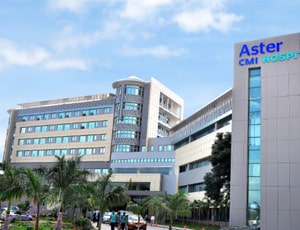
Aster CMI Hospital
Bangalore, India
Aster CMI Hospital located in Bengaluru, India is accredited by JCI, NABH. Also listed below are some of the most prominent infrastructural details:
- Around 500 bed capacity
- Primary care to Quaternary care services
- Outpatient and inpatient departments
- Day care center for small children
- Availability of Surgical suites
- Intensive Care Units
- 24-hour Emergency and Trauma Care
- Emergency Unit especially for children
- Newly launched the Lung and Heart Transplant Centre
- Video Consultation with doctors available on GraphMyHealth
- A specialised Aster Center of Excellence for Women & Children
- Latest Minimally Invasive Procedures being performed
- Safe Interventional Procedures
- Control of Infection protocols are strictly followed
- Aster Holistic Collaborative Care: Aster Palliative Care for lowering suffering if critically ill patients, Physical Medicine & Rehabilitation, Aster Wellness, Psychology, Chronic Pain Management, Nutrition & Dietetic, Podiatry Care etc.
- 11 Centers of Excellence
- An academics focus with BSc Program, MEM Program, Pediatric Fellowship Program
- A streamlined International patient care center with dedicated services and technology enabled processes
Our Services to better your experience
Opinion & Option
We submit the most accurate opinion and options from one or more countries for your review
Consult Privately
Consult with a certified specialist privately on our telemedicine platform even before you decide to travel
Logistics
We handle flights, visas, transfers, and accommodation—so you can focus on your health.
Recovery
Our In-house rehabilitation service packages to better your recovery and treatment outcome
Why Choose India for Pulmonary Hypertension Treatment?
- Multidisciplinary PH Care: Specialised centres may involve cardiologists, pulmonologists, pulmonary vascular specialists, cardiothoracic surgeons, radiologists, and rehabilitation professionals.
- Advanced Diagnostics: Major centres may provide echocardiography, right-heart catheterisation, cardiac MRI, CT imaging, V/Q scanning, pulmonary function testing, and haemodynamic assessment.
- Targeted Medical Therapy: Eligible patients may have access to medicines targeting different pathways involved in pulmonary arterial hypertension.
- CTEPH Treatment: Selected centres may provide pulmonary endarterectomy, balloon pulmonary angioplasty, and medical management for chronic thromboembolic pulmonary hypertension.
- Advanced Cardiac and Respiratory Care: Patients with complex disease may receive coordinated management of right-heart failure, arrhythmias, chronic lung disease, and other associated conditions.
- Specialised Rehabilitation: Pulmonary and cardiac rehabilitation programmes may help selected patients improve exercise capacity and functional independence.
- Advanced Disease Management: Patients with severe disease may be evaluated for advanced therapies and transplantation when clinically appropriate.
- International Patient Support: Many major Indian hospitals provide help with medical records, appointments, treatment coordination, accommodation, interpretation (where available), and follow-up arrangements.