Portal Hypertension Treatment in India
- Top Accredited Hospitals
- Global Medical Standards
- Cutting-Edge Technology
- Proven Treatment Options
- High Success Rate
- Trusted by Millions

What is Portal Hypertension?
One of the most dangerous side effects of advanced liver disease is portal hypertension. Cirrhosis, or scar tissue in the liver, causes the blood vessels that pass through it to become compressed and have less blood flow. This impacts numerous other organs in your body. Along with different issues, it may result in severe internal bleeding.
What is the Importance of Timely Treatment?
Portal hypertension must be treated early to avoid possibly fatal outcomes such as liver failure, ascites, and variceal haemorrhage. Because early management targets the underlying causes and lowers the likelihood of catastrophic consequences, it can help control symptoms, stop disease progression, and enhance quality of life.
What are the Common Symptoms of Portal Hypertension?
The following are typical signs of portal hypertension:
- Ascites (abdominal fluid accumulation)
- Spleen enlargement (splenomegaly)
- Varices (enlarged veins, often in the stomach or oesophagus)
- Blood in the vomit (from varices bleeding)
- Weakness and exhaustion
- Jaundice (eye and skin yellowing)
- A change in mental state or confusion (hepatic encephalopathy)
- Legs and ankles that swell
- Discomfort or pain in the abdomen
Causes and Risk Factors of Portal Hypertension
Causes
The portal vein, which carries blood from the gut organs to the liver, experiences high blood pressure, which leads to portal hypertension. Common causes are:
Cirrhosis: The most common cause is chronic liver disease, leading to scarring of the liver.
Hepatitis could lead to scarring and increased portal vein pressure due to chronic liver inflammation.
Hepatic fibrosis is an accumulation of scar tissue in the liver caused by various conditions, such as viral infections or alcohol abuse.
Blood clots: When clots develop in the portal vein or veins draining into it, blood flow is obstructed, increasing blood pressure.
Risk Factors
- Non-alcoholic Fatty Liver Disease (NAFLD)
- Schistosomiasis
- Heart Failure
- Obesity
- Genetic Liver Disorders
Connect with our advisor for a PRIORITY response
Portal Hypertension Prevention Tips
Here are a few prevention tips for portal hypertension:
- Avoid excessive drinking to prevent cirrhosis and liver injury.
- To prevent viral diseases, vaccinate against Hepatitis B and C.
- To reduce your risk of liver disease and fatty liver, be at a healthy weight.
- To support liver health, consume a balanced diet of fruits, vegetables, and healthy grains.
- Exercise regularly to reduce liver fat and improve overall health.
- If at risk (e.g., through alcohol or liver disease), monitor liver function with regular tests.
- To prevent hepatitis spread, avoid risky behaviour such as needle sharing.
- To prevent further progress, treat underlying liver conditions such as hepatitis or fatty liver disease.
- To reduce portal vein load, control blood pressure and treat cardiac disease.
Treatment options for Portal Hypertension
Liver Transplant: Severe portal hypertension caused by end-stage liver illness, including cirrhosis, is considered for a liver transplant. It decreases the complications induced by portal hypertension, substitutes the diseased liver, and restores blood circulation to normal.
Cost Start From USD 25000 - USD 35000Explore Options
Blood tests: To determine the levels of bilirubin, clotting factors, and liver enzymes, amongst other areas related to liver functioning.
Ultrasound: To detect signs of blockage of the portal vein, swollen spleen, and liver dysfunction.
Endoscopy: To detect inflamed veins, or varices, in the stomach or oesophagus, often present in portal hypertension.
A liver biopsy may be employed to assess liver injury and detect underlying conditions like cirrhosis.
HVPG: To diagnose portal hypertension, the pressure of the portal vein is directly measured using the Hepatic Venous Pressure Gradient (HVPG).
MediRehab (chain of Rehab centres - Part of MediGence) provides comprehensive rehabilitation services designed to support portal hypertension patients in India. These services include:
- Physicaltherapy involves gentle exercises that promote muscle strength, circulation, and overall physical functioning without overstressing the liver.
- Monitoring and Lifestyle modification: To prevent the progression of the disease, regularly monitor the liver function and follow lifestyle modification, including not consuming alcohol.
- Depending on the situation, your healthcare professional may prescribe medicine to help control your symptoms and support the treatment plan.
Instantly Connect with our Specialists


Hospitals for Portal Hypertension in India

BLK-Max Super Speciality Hospital
Delhi, India
BLK-Max Super Speciality Hospital, located in New Delhi, is the leading best-in-class healthcare institution in India, providing tertiary and quaternary care. 650 + beds including 162 critical care beds, 22 OTs with 1,500+ clinical professionals allied to health are at the hospital's disposal. JCI, NABH, and NABL accredited. The hospitals are a leader in transplants, cancer care, and robotic surgery education and implementation. Established in1959 by Dr. B.L. Kapur, the hospital combines state-of-the-art technology with patient-centric values including compassion, efficiency, and consistency.
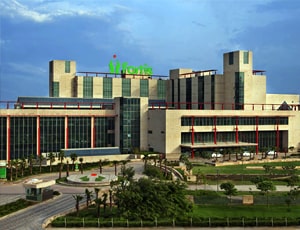
Fortis Memorial Research Institute
Gurgaon, India
Fortis Healthcare Limited stands as one of India's largest integrated healthcare providers, managing 33 hospitals across 11 states and operating more than 5,700 beds and 400 diagnostic labs. Four of our hospitals are accredited by JCI and 26 by NABH. With a workforce of over 12,500 healthcare professionals, we combine clinical excellence, a patient-focused approach, and innovation to provide high-quality, affordable, and compassionate healthcare to patients in India.

Apollo Hospital International Limited
Ahmedabad, India
Apollo Hospital International Limited located in Ahmedabad, India is accredited by JCI, NABH. Also listed below are some of the most prominent infrastructural details:
- Hospital with 234 bed capacity
- Credit for doing the autologous stem cell transplant when a patient has acute myeloid Leukemia
- Regular transplants of cell and bone marrow
- A 1.5 Tesla MRI scan is available, only healthcare organisation in Gujarat with this option
- Success percentage of 90 when critical oncology procedures are done
- Diagnostics such as Blood Tests, X-Ray, Echo and Cardiac related tests
- International Patient Care related facilities: Accommodation, Airport Transfer, Meals per choice, Interpreter, SIM, TV inside room
- Excellent line up of doctors, surgeons and healthcare professionals such as nurses, technicians
Our Services to better your experience
Opinion & Option
We submit the most accurate opinion and options from one or more countries for your review
Consult Privately
Consult with a certified specialist privately on our telemedicine platform even before you decide to travel
Logistics
We handle flights, visas, transfers, and accommodation—so you can focus on your health.
Recovery
Our In-house rehabilitation service packages to better your recovery and treatment outcome
Why Choose India for Portal Hypertension Treatment?
India is one of the best options for treating portal hypertension due to its world-class healthcare, advanced technology, and experienced doctors. With world-class hospitals providing end-to-end care, ranging from diagnosis to post-care support, the country offers more affordable therapy than most Western nations.
Frequently Asked Questions
The portal vein is crucial to the body because it supplies blood from the digestive organs, such as the pancreas, spleen, stomach, and intestines, to the liver. This blood contains nutrients absorbed through food, waste products, and toxins the liver processes. In addition to metabolising nutrients and regulating several metabolic activities, the liver cleanses and detoxifies the blood. Therefore, the portal vein is critical in maintaining healthy liver function and enhancing metabolism and digestion.
Increased pressure in the portal vein leads to swollen and enlarged veins in areas such as the stomach, rectum, or oesophagus, which are variations of portal hypertension. When liver disease or scarring (such as cirrhosis) blocks blood flow, blood attempts other paths, which leads to varices.
Liver failure can be caused by portal hypertension, especially if chronic liver disease such as cirrhosis triggers it. Gradually, the increased portal vein pressure can lead to further liver damage and impairment of liver function.
Complications such as ascites, variceal haemorrhage, and hepatic encephalopathy can arise from this. In more critical circumstances, liver failure can occur, where the liver can no longer carry out its vital functions and a liver transplant is required to maintain life.
By lowering liver strain and enhancing general health, lifestyle modifications can help manage portal hypertension.
- Avoiding alcohol to stop liver disease from becoming worse is one of the most crucial lifestyle adjustments.
- A nutritious, low-sodium diet helps promote liver health and control fluid retention.
- Regular low-impact exercise can enhance circulation and general health.
- Maintaining a healthy weight will reduce liver stress and the chance of developing fatty liver disease.
- Preventing additional liver damage by effectively controlling underlying diseases like diabetes or high blood pressure.
Since cirrhosis induces fibrosis, or scarring, in the liver, it blocks the normal flow of blood through the liver, which creates portal hypertension. The scar tissue constricts the blood vessels, particularly the portal vein, as the liver becomes increasingly damaged. Portal hypertension is caused by increased pressure in the portal vein. Severe side effects are bleeding, ascites, and further liver damage, which could be caused by the blood taking alternative paths because of the high pressure, like through varices (swollen veins).
When advanced liver disease, like cirrhosis, is the cause of portal hypertension, a liver transplant is a necessary therapy. A liver transplant can be used to replace the injured liver if its function declines to the extent that it cannot filter blood and regulate portal pressure. By doing so, portal hypertension is decreased, normal blood circulation is re-established, and related issues, such as bleeding, varices, and ascites, are prevented. In the event of severe liver failure and other treatment failure, a liver transplant is typically an option.
Author

Alvina Hasan
Alvina Hasan is a dedicated medical researcher and scientific writer with a strong foundation in pharmaceutical sciences. She holds a B.Pharm from Jamia Hamdard University and an M.Pharm in Quality Assurance from DIPSAR University.
With deep medical expertise and a strong interest in healthcare communication, she focuses on transforming complex clinical and scientific information into clear, engaging, and easy-to-understand narratives. She develops insightful healthcare articles and research-driven content designed to support both medical professionals and patients, helping bridge the gap between advanced medical knowledge and practical understanding.
Readers can explore her published research and articles here:
https://carcinogenesis.com/index.php/JOC/article/view/868
https://carcinogenesis.com/index.php/JOC/article/view/870
View MoreReviewer

Dr. Akash Khandelwal
Hematologist
9 Years of Experience
Dr. Akash Khandelwal is a distinguished Hematologist, Hemato-oncologist, and Bone Marrow Transplant (BMT) Physician with extensive training from the prestigious AIIMS New Delhi. His expertise encompasses a wide range of specialized techniques in bone marrow transplantation, including autologous and allogeneic transplants such as matched sibling donors, matched unrelated donors (MUD), and haploidentical donor transplants. Dr. Khandelwal has personally supervised and conducted over 100 bone marrow transplants. View More
Last Reviewed - January 2026