Pituitary Tumor Treatment in India
- Top Accredited Hospitals
- Global Medical Standards
- Cutting-Edge Technology
- Proven Treatment Options
- High Success Rate
- Trusted by Millions

What is Pituitary tumor?
Unusual growths that form in the pituitary gland are known as pituitary tumors. The size of this gland is comparable to that of a pea. It is situated at the base of the brain, behind the nose. The pituitary gland overproduces several hormones that regulate vital bodily processes as a result of certain of these malignancies. Others may result in insufficient production of those hormones by the pituitary gland.
What can I expect if my child has a Pituitary tumor?
Symptoms in children and adolescents may include headache. nausea vomiting, confusion, seizure, some loss of vision, excessive growth or slow growth. Many of these symptoms, including runny nose, headache, listlessness, and irritability, are typical in children. These are usually not medically concerning when they occur alone and for brief periods of time. You should speak with your paediatrician and a specialist referral may be recommended if these mild symptoms persist or recur and manifest with more odd symptoms including eyesight loss, growth abnormalities, or irregular puberty timing.
What are the Common Symptoms of Pituitary Tumor?
Pituitary tumors do not always produce symptoms. These tumors can occasionally be discovered during an imaging test that is performed for a different purpose, like an MRI or CT scan. A tumor pressing on the brain or other surrounding body components may result in pituitary tumor symptoms. Hormone imbalances might also be the source of symptoms. When a pituitary tumor produces excessive amounts of one or more hormones, hormone levels may increase. Hormone levels may also decrease if a big tumor interferes with the pituitary gland's function.
Tumor pressure symptoms: The pituitary gland, nerves, brain, and other surrounding body organs may be compressed by macroadenomas. That may result in symptoms like:
- A headache
- Issues with the eyes brought on by strain on the optic nerve, particularly double vision and side vision loss, commonly known as peripheral vision
- Facial pain, occasionally accompanied by ear or sinus pain
- Eyelid drooping
- Seizures
- Vomiting and nausea.
Causes, Risk Factors and Complications of Pituitary tumor
Causes
Pituitary tumors have no recognized cause. Hereditary conditions like multiple endocrine neoplasia I (MEN I) can cause some tumors. Similar symptoms can be caused by different brain tumors that originate in the same area of the brain (the skull base) and impact the pituitary gland. Certain hereditary disorders are also linked to pituitary tumors. Pituitary tumors are more likely to develop if you have one of these disorders, although you can still have a pituitary tumor without having one of these conditions.
Risk Factors
The majority of patients who acquire pituitary tumors do not have any risk factors for the tumors. A person's risk of pituitary tumors does not appear to be influenced by their lifestyle or environment.
Despite the fact that genetics may be involved, the majority of patients with pituitary tumors do not have a family history of the condition.
The only recognized risk factors are a few of uncommon genetic disorders that increase the likelihood of pituitary tumors and other health issues. Among these conditions are:
- MEN 1 stands for multiple endocrine neoplasia, type 1
- MEN 4 stands for multiple endocrine neoplasia, type 4
- Carney complex
- Syndrome of McCune-Albright.
Complications
Typically, pituitary tumors do not spread to other body areas. However, they can have an impact on an individual's health. Pituitary tumors could result in:
- Vision issues, such as loss of vision
- Elevated blood pressure
- Elevated blood sugar levels
- Loss of bone
- Cardiac issues
- Cognitive and memory issues
- Convulsions
A seizure could result from a pituitary tumor pressing on the medial temporal lobe, a region of the brain. A focused seizure with reduced consciousness is the term used to describe this kind of seizure.
Hormone levels that are consistently low: The hormone supply in your body may be permanently altered if you have a pituitary tumor or have one surgically removed. You might therefore require hormone replacement treatment for the remainder of your life.
Apoplexy of the pituitary: Pituitary apoplexy is an uncommon but potentially dangerous side effect of a pituitary tumor. This occurs when the tumor experiences unexpected bleeding. Among the symptoms are:
Connect with our advisor for a PRIORITY response
Latest Research and Technologies in the Treatment of Pituitary tumor in India.
Currently, pituitary tumor treatment in India is focusing on non-invasive radiation therapy where high-precision radiation beams are directed at the tumor in this non-invasive radiation therapy method, which is especially helpful for tiny adenomas or situations where surgery is not practical because of patient variables.
Minimal invasive surgery: Gaining access to the pituitary gland through the nasal passage using endoscopes and sophisticated surgical microscopes equipped with image-guided navigation systems, which enables accurate tumor removal with fewer complications and quicker recovery times.
Pituitary Tumor Prevention Tips
Certain lifestyle modifications (such maintaining a healthy weight or stopping smoking) can lower the risk of several types of cancer. However, there are no known external risk factors associated with pituitary tumors.
Treatment options for Pituitary Tumor
Radiation therapy: Pituitary cancer can be treated with high-energy radiation sources.
Stereotactic Radio Therapy (SRT): This type of radiation therapy effectively directs radiation beams at the tumor and is typically provided in a single high dose.
Cost Start From USD 5500 - USD 7500Explore Options
Intensity modulated radiotherapy (IMRT): It uses a computer to shape beams that encircle the tumor from several perspectives.
Cost Start From USD 4000 - USD 5000Explore Options
Proton beam therapy: Proton beam therapy is another type of radiation therapy that uses positively charged ions called protons to target cancer cells.
Cost Start From USD 35000 - USD 60000Explore Options
Hormonal Therapy: The goal of therapy is to restore hormone levels, pituitary gland function, avoid additional injury, and reverse or prevent the worsening of tumor pressure-related symptoms
Cost Start From USD 3500 - USD 5500Explore Options
Your doctor will probably perform a physical examination and discuss your personal and family medical history in order to identify and diagnose a pituitary tumor. The following tests may also be used to find a pituitary tumor:
- Blood examinations: If your body has too much or too little of a certain hormone, blood testing can reveal it. For certain hormones, a pituitary tumor may be diagnosed based only on blood test findings indicating an excess of the hormone.
- Urine examinations: A pituitary tumor that produces excessive amounts of the hormone ACTH can be diagnosed with the aid of a urine test. Cushing disease is brought on by an excess of ACTH, which raises cortisol levels in the body.
- MRI: A magnetic resonance imaging scan, or MRI scan, is a test that produces fine-grained images of the body's organs and tissues using computer-generated radio waves and a magnetic field.
Patients may require hormone replacement therapy after surgery. Many patients need short-term or long-term hormone replacement after surgery or radiation therapy. Hormone replacement can include thyroid hormone, adrenal steroids, testosterone, estrogen, or progesterone
Dopamine agonists for prolactinomas, pituitary tumors that overproduce the hormone prolactin. By reducing prolactin release, these drugs can cure prolactinomas and frequently cause the tumor to shrink.
Analogs of somatostatins are used to treat pituitary tumors that overproduce growth hormone. Analogs of somatostatin reduce the synthesis of growth hormone and may reduce tumor size. Pituitary tumors that generate too much thyroid hormone can also be treated with these drugs. These drugs prevent the body from experiencing the negative effects of too much growth hormone.
Instantly Connect with our Specialists


Hospitals for Pituitary Tumor in India

Fortis Hospital, Mulund
Mumbai, India
Fortis Hospital Mulund, located in Mulund West, Mumbai, is a premier healthcare facility providing excellence in multi-speciality healthcare for over 20 years. The global leader in advancing medical technology and clinical expertise, the hospital offers specialities including Cardiology, Neurosciences, Oncology, Transplants, and Orthopaedics. The hospital is well-known for being the largest transplant center in Maharashtra and offers advanced treatment options, including Transcatheter Aortic Valve Implantation (TAVI) and stereotactic precision radiotherapy for cancer. Fortis Mulund is equipped with a 24/7 Emergency Department and International Patient Unit to provide world-class patient-centric care.

Manipal Hospital, Hebbal
Bangalore, India
Manipal Hospitals, a group of Manipal Education Medical Group, is India’s leading multi-speciality network, comprising over 650 beds. Dedicated to clinical excellence, patient-centric care and ethical practices, it provides sophisticated diagnostics, surgery and home care services to both domestic and international patients, while also improving access to affordable healthcare for underprivileged communities.
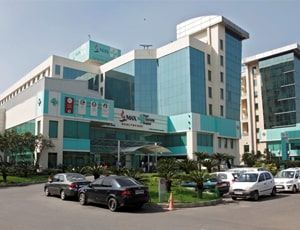
Max Super Speciality Hospital, Saket
Delhi, India
Max Smart Super Speciality Hospital, Saket, is a 250-bed tertiary care hospital awarded NABH accreditation, which provides advanced medical care in various specialities such as Cardiac Sciences, Orthopaedics, Neurology, Urology, Kidney Transplant, Paediatrics, and Obstetrics & Gynaecology. The hospital provides quality, safe, integrated, and patient-centric medical care using modular OTs, ICUs, Cath Labs, CT, MRI and Dialysis units.
Our Services to better your experience
Opinion & Option
We submit the most accurate opinion and options from one or more countries for your review
Consult Privately
Consult with a certified specialist privately on our telemedicine platform even before you decide to travel
Logistics
We handle flights, visas, transfers, and accommodation—so you can focus on your health.
Recovery
Our In-house rehabilitation service packages to better your recovery and treatment outcome
Why Choose India for Pituitary Tumor Treatment?
Here are some of the reasons for choosing India:
Due to advancements in medical facilities, such as minimally invasive surgical techniques.
- World-class experts include highly experienced doctors, JCI, and NABH-accredited healthcare institutions.
- Compared to other countries, treatment in Indian hospitals is cost-effective.
- Indian hospitals provide international patient services, including a multilingual support system.
- Improved treatment methods and biological therapies.
Frequently Asked Questions
Depending on the kind and extent of the tumor, pituitary tumors can be treated using a variety of techniques, such as surgery, medication, and radiation therapy or sometimes with combination of these. The main objective of treatment is to restore normal hormone secretion and control any neurological symptoms; for some types, such as prolactinomas, medication is frequently the initial course of treatment.
With skilled orthopaedic
surgeons, oncologists and cutting-edge medical technology, India has demonstrated significant success rates in treating Pituitary tumors. The nation's healthcare institutions offer top-notch treatment alternatives, guaranteeing successful outcomes for many patients.
Yes, many Indian hospitals offer the following for pituitary tumors treatment:
- Advanced diagnostic tools like MRI, CT scan, electromyography, and PET scan for accurate neurofibroma diagnosis.
- Skilled neurologist, oncologist and surgeons for pituitary tumors.
- Advanced radiation therapy and chemotherapy procedures.
- Comprehensive post-surgery care and rehabilitation for long-term health benefit.
Always consider the following factors when selecting Indian hospitals:
- Hospitals that are accredited (authorised by JCI and NABH).
- Patient reviews and success rates.
- Hospitals that provide seamless care to patients from abroad.
In general, Pituitary tumor treatment has much improved in India. According to the National Library of Medicine, the success rate for treating pituitary tumors in India is high. The majority of studies report a success rate of over 80%, frequently approaching 90% for total tumor removal, depending on the size and type of the adenoma and the surgical team's skill; this is in line with international standards for pituitary tumor surgery.
Many of these symptoms, including runny nose, headache, listlessness, and irritability, are typical in children. These are usually not medically concerning when they occur alone and for brief periods of time. You should speak with your paediatrician and a specialist referral may be recommended if these mild symptoms persist or recur and manifest with more odd symptoms including eyesight loss, growth abnormalities, or irregular puberty timing.
Depending on the type and size of the tumor, a pituitary tumor can have a variety of long-term effects on a patient. Depending on the hormone that the tumor affects, these effects can include hormonal imbalances that result in conditions like acromegaly (excess growth hormone), Cushing's disease (excess cortisol), headaches, vision problems due to compression of the optic chiasm, and in certain cases, complications like heart disease, diabetes, osteoporosis, and impaired fertility. Early diagnosis and treatment are essential to effectively manage these long-term effects.
Your healthcare practitioner will assist you in selecting the best course of treatment for your child if your child has a pituitary tumor. Additionally, they will suggest a course of therapy and frequent follow-up appointments. Maintaining a healthy diet, and you should be ready to address any symptoms associated with hormone imbalances.

Reviewer

Dr. Mohit Agarwal
Medical Oncologist
14 Years of Experience
One of the finest Oncologist in New Delhi, India, Dr. Mohit Agarwal has worked with several world class multidisciplinary hospitals over the years. Dr. Mohit Agarwal has over 14+ years of experience in his field. The doctor treats and manages a wide range of conditions such as Stomach Cancer, Rectal Cancer, Breast Cancer, Brain Cancer View More
Last Reviewed - January 2026