Peripheral Vascular Disease Treatment in India
- Top Accredited Hospitals
- Global Medical Standards
- Cutting-Edge Technology
- Proven Treatment Options
- High Success Rate
- Trusted by Millions

What is Peripheral Vascular Disease?
Peripheral Vascular Disease is a broad term used for conditions that affect the peripheral blood vessels, including arteries and veins. Peripheral arterial disease commonly occurs when atherosclerotic plaque narrows or blocks arteries, reducing blood flow to the limbs. Peripheral venous disease may occur when damaged or weakened veins have difficulty returning blood to the heart, which can cause swelling, heaviness, skin changes, or ulcers.
What is the Importance of Timely Treatment?
Timely evaluation helps determine whether symptoms stem from reduced arterial blood flow, venous circulation problems, blood clots, or another vascular condition. Appropriate treatment can help relieve symptoms, improve mobility, prevent wounds and tissue damage, and reduce the risk of serious complications. Sudden loss of blood flow to a limb or symptoms suggestive of a deep vein thrombosis or pulmonary embolism require urgent medical assessment.
What are the Common Symptoms of an Peripheral Vascular Disease?
- Leg Pain or Cramping: Arterial disease may cause aching or cramping during walking that improves with rest, while venous disease may cause heaviness or discomfort after prolonged standing.
- Leg Swelling: Venous circulation problems can cause swelling around the ankles, feet, or legs, especially after prolonged standing.
- Numbness or Weakness: Reduced arterial blood flow may cause numbness, weakness, or unusual sensations in an affected limb.
- Skin Colour or Temperature Changes: Poor circulation may make a limb unusually pale, bluish, red, or colder than the other side.
- Varicose Veins or Visible Veins: Damaged or weakened veins may become enlarged, twisted, or more visible beneath the skin.
- Slow-Healing Wounds: Reduced arterial blood flow or advanced venous disease can contribute to persistent ulcers or wounds that heal slowly.
Causes and Risk Factors of Peripheral Vascular Disease
Causes
- Atherosclerosis: Fatty deposits can build up inside arteries and restrict blood flow.
- Blood Clots: A clot can obstruct an artery or vein and interfere with normal circulation.
- Chronic Venous Insufficiency: Damaged or weakened valves in the veins can cause blood to pool in the lower limbs.
- Varicose Veins: Enlarged and dysfunctional veins can contribute to chronic venous symptoms.
- Vascular Injury: Trauma or previous vascular procedures may damage blood vessels.
- Inflammatory Vascular Disorders: Conditions affecting the blood-vessel walls can cause narrowing or other circulation problems.
- Congenital Vascular Abnormalities: Some people are born with structural abnormalities affecting blood vessels.
- Compression of Blood Vessels: Certain anatomical or structural conditions can interfere with normal circulation.
Risk Factors
- Smoking or tobacco exposure
- Diabetes
- High blood pressure
- High cholesterol
- Older age
- Obesity
- Physical inactivity
- Chronic kidney disease
- Previous cardiovascular disease
- Family history of vascular disease
- Previous blood clots
- Prolonged immobility or periods of limited movement
Latest Research and Technologies in the Treatment of Peripheral Vascular Disease in India
- Modern vascular care increasingly uses non-invasive vascular testing, duplex ultrasound, CT and MR angiography, catheter-based interventions, minimally invasive vascular surgery, and multidisciplinary wound and limb-care programmes. Treatment is increasingly tailored according to whether the patient has arterial disease, venous disease, or another vascular disorder. Advanced imaging and image-guided procedures can help clinicians define vascular anatomy and plan treatment, while multidisciplinary teams may coordinate vascular surgery, interventional care, wound management, rehabilitation, and cardiovascular risk reduction.
Treatment options for Peripheral Vascular Disease
Compression Therapy: This is the absolute first-line, non-surgical standard of care for chronic venous insufficiency and varicose veins to reduce venous pooling.
Radiofrequency Ablation (RFA) : This technique utilises high-frequency radiofrequency energy delivered via a specialised catheter to heat, damage, and permanently fibrose the inner vein lining.
Cost Start From 4750Explore Options
Sclerotherapy : A doctor injects a specialised liquid or foamed chemical solution (sclerosant) directly into the target vein, causing the vessel walls to swell, stick together, and clot shut.
Cost Start From 650Explore Options
Microphlebectomy: A vascular specialist makes a series of tiny, millimetre-sized skin punctures to physically pull out bulging, superficial veins piece by piece using a micro-hook.
Thrombosis Treatment: This represents the unique pharmacological (anticoagulation) and mechanical (thrombectomy) algorithms required to manage acute deep vein thrombosis (DVT) or superficial thrombophlebitis.
Wound and Ulcer Care: This is a critical multidisciplinary requirement. Using compression for venous ulcers while altering pressure management for arterial ones.
- Clinical assessment:
- Medical History: Assessment includes pain, swelling, walking limitations, skin changes, previous blood clots, smoking, diabetes, cardiovascular disease, previous vascular procedures, and relevant family history.
- Physical Examination: A doctor may assess pulses, limb temperature, skin colour, swelling, varicose veins, ulcers, capillary refill, and other signs of abnormal circulation.
- Ankle-Brachial Index (ABI): Compares ankle and arm blood pressure and is commonly used to assess suspected lower-extremity arterial disease.
- Toe-Brachial Index (TBI): May be useful when arterial calcification makes ABI results difficult to interpret.
- Venous Assessment: Clinical examination may evaluate swelling, varicose veins, skin changes, and other findings associated with chronic venous disease.
- Blood Tests: Selected tests may assess cholesterol, blood glucose, kidney function, blood counts, or clotting-related factors depending on the suspected condition.
- Imaging Tests:
- Duplex Ultrasound: Uses ultrasound to evaluate blood flow and can assess both arterial obstruction and venous disease.
- CT Angiography (CTA): Provides detailed images of arteries and can assist planning for selected vascular procedures.
- MR Angiography (MRA): Provides detailed vascular imaging without ionising radiation and may be used in selected patients.
- Venous Doppler Ultrasound: Helps identify deep vein thrombosis, venous reflux, and other abnormalities of venous circulation.
- Catheter Angiography: Provides detailed arterial imaging and may be performed when an endovascular procedure is being considered.
- Intravascular Imaging: In selected interventions, technologies such as intravascular ultrasound may help assess vessel anatomy and guide treatment.
MediRehab (a chain of Rehab centres, part of MediGence) provides comprehensive rehabilitation services designed to support Peripheral Vascular Disease patients in India. These services include:
- Structured Exercise Therapy: Walking and other structured exercise programmes can improve functional capacity in selected patients with arterial disease.
- Gradual Activity Progression: Increase physical activity according to symptoms, vascular status, treatment history, and medical advice.
- Walking Training: Structured walking programmes may help improve walking distance in patients with intermittent claudication.
- Limb Elevation: Elevating the legs may help reduce swelling in selected venous conditions.
- Compression Management: Patients prescribed compression therapy should use it as advised by their clinician and based on their underlying vascular condition.
- Long-Term Follow-Up: Regular vascular assessments can help monitor circulation, symptoms, wounds, swelling, and treatment response.
- Medicines depend on the type of peripheral vascular disease and the patient's individual risks. Antiplatelet medicines may be prescribed for selected patients with symptomatic arterial disease, while anticoagulants are used when indicated for conditions such as deep vein thrombosis or other thromboembolic disorders. Blood-pressure medicines, and diabetes treatments may help reduce cardiovascular risk. Venous disease may require medicines in selected situations, although compression and treatment of the underlying venous problem are often important components of care.
Instantly Connect with our Specialists


Hospitals for Peripheral Vascular Disease in India

Indraprastha Apollo Hospital
Delhi, India
Indraprastha Apollo Hospital is known for delivering treatment to over 200,000 patients every year; 10,000 of which are generally medical tourists. The efficient team of doctors has the record of 99.6 percent success rate. Indraprastha Apollo Hospital deals in treatment of over 50 specialities.
Let’s see some of the features of the infrastructure:
- Spread over 15 acres, the hospital has 710 beds.
- 6 beds dedicated to bone marrow transplant units with very strict infection control practices.
- 64-Slice Scan coupled with data acquisition which provides highest temporal resolution
- One of the hospitals to be using Da Vinci Robotics Surgery System
- In South Asia, the Spect-CT and Pet-CT got their first installation at Indraprastha Apollo Hospital in India
- Technologies such as PET- MR, BrainLab Navigation System, PET-CT, Portable CT Scanner, Tilting MRI, NovalisTx, Cobalt based HDR Brachytherapy, Hyperbaric Chamber, DSA Lab, Fibroscan, 3 Tesla MRI, Endosonography, 128 Slice CT scanner are all installed at the hospital.
- The Cancer Institute at Indraprastha Apollo is equipped with a highly advanced Radiation Oncology Center with ClinaciX, NovalisTx, and HDR-Brachytherapy.
- It is equipped with the largest Sleep Lab in Asia, & has one of the largest Dialysis Units in India.
- A large number of ICU beds than any other Private Hospitals in India.
- WIFI is accessible across the whole campus.

Yatharth hospital
Delhi, India
- The hospital features over 400 beds with advanced infrastructure for multi-speciality treatment.
- Much of the facility is dedicated to ICU units with the latest life-saving equipment.
- Advanced medical imaging systems include a 64-slice cardiac CT scanner, a dual-head gamma camera, a 16-slice PET-CT scanner, and a fan-beam bone density scanner (BMD).
- The radiology setup operates through a fully integrated RIS-HIS system for smooth diagnostics and reporting.
- The hospital offers high-resolution colour Doppler ultrasound systems for precise vascular and soft tissue imaging.
- The cardiology wing is equipped with a Philips FD20/10 cath lab, enhanced by modern stent-boost imaging technology.
- Cutting-edge tools, such as optical coherence tomography (OCT), intravascular ultrasound (IVUS), and fractional flow reserve (FFR), support advanced heart diagnostics.
- Facilities include rotablator technology for hardened arteries and an Ensite Velocity cardiac mapping system for complex arrhythmias.
- A fully functional hybrid endovascular suite supports combined surgical and interventional heart procedures.
- The ICU and NICU areas feature high-frequency ventilators, central pressure monitoring, and advanced bedside diagnostic tools.
- Life-support systems include intra-aortic balloon pumps, invasive blood pressure monitoring, and bedside percutaneous tracheostomy.
- Patient safety and comfort are enhanced with temperature-controlled blankets, bedside echocardiography, and mobile X-ray systems.
- Operation theatres are fitted with navigation-assisted systems for knee replacement and MEP monitoring for spine surgeries.
- Fiberoptic bronchoscopes, PCA pumps for pain control, and SSEP monitoring during neurosurgeries enhance surgical precision.
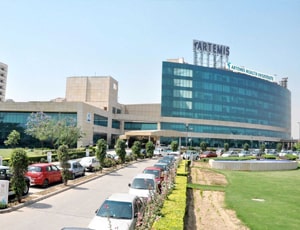
Artemis Health Institute
Gurgaon, India
Artemis Hospital, established in 2007 in Gurgaon, India, is a 750+ bed, state-of-the-art multi-speciality hospital and the first in Gurgaon accredited by JCI and NABH. A flagship of the Apollo Tyres Group, it offers advanced care across cardiology, oncology, orthopaedics, neurology, and transplant medicine, supported by modern infrastructure and 60+ world-class operating theatres. Its Centres of Excellence span critical areas like heart, cancer, neurosciences, orthopaedics, and women & child care. Guided by values of Service, Compassion, and Integrity, Artemis combines innovation, technology, and affordability, making it a trusted international healthcare destination for comprehensive and compassionate patient care.
Our Services to better your experience
Opinion & Option
We submit the most accurate opinion and options from one or more countries for your review
Consult Privately
Consult with a certified specialist privately on our telemedicine platform even before you decide to travel
Logistics
We handle flights, visas, transfers, and accommodation—so you can focus on your health.
Recovery
Our In-house rehabilitation service packages to better your recovery and treatment outcome
Why Choose India for Peripheral Vascular Disease Treatment?
- Experienced Vascular Specialists: Access to vascular surgeons, interventional radiologists, interventional cardiologists, and other specialists involved in vascular care.
- Advanced Vascular Diagnostics: Major centres may provide ABI, TBI, duplex ultrasound, CT angiography, MR angiography, and catheter angiography.
- Endovascular Treatment: Eligible patients may have access to angioplasty, stenting, atherectomy, and other minimally invasive vascular procedures.
- Vascular Surgery: Specialised centres may provide surgical bypass and other procedures for complex arterial disease.
- Venous Disease Treatment: Selected hospitals provide minimally invasive procedures for varicose veins, venous reflux, and other venous conditions.
- Multidisciplinary Vascular Care: Vascular surgeons, interventional specialists, radiologists, cardiologists, wound-care professionals, and rehabilitation specialists may coordinate complex cases.
- Advanced Wound and Limb Care: Patients with vascular ulcers or severe circulation problems may receive coordinated wound, infection, foot, and revascularisation care.
- International Patient Support: Many major Indian hospitals provide assistance with medical records, appointments, treatment coordination, accommodation, and follow-up.