Paraplegia Treatment in Thailand
- Top Accredited Hospitals
- Global Medical Standards
- Cutting-Edge Technology
- Proven Treatment Options
- High Success Rate
- Trusted by Millions

What is Paraplegia?
The paralysis condition known as paraplegia primarily affects the legs, while it can also occasionally impact the lower body and some arm functions. Injuries to the neurological system, particularly the spinal cord, are the most common cause of this, but a number of illnesses and ailments can also cause it.
What can I expect if my son has Paraplegia?
Your son might need a wheelchair for mobility and help walking because paraplegia mostly affects the legs, resulting in paralysis and loss of sensation. Common management techniques for bladder and bowel control issues include catheterization and bowel regimes. Your son may need pain medication and management strategies to deal with persistent pain, depending on the severity of the injury. Prolonged use of a wheelchair might cause pressure sores in your youngster. Your son, to handle the circumstance, could require psychological support.
What are the Common Symptoms of Paraplegia?
Symptoms of paraplegia include the following:
- Loss of mobility
- Loss or shift in the senses of touch, heat, and cold
- Loss of control over the bladder or bowels
- Excessive spasms or reflex actions
- Alterations in fertility, sexual sensitivity, and sexual function
- Damage to the spinal cord's nerve fibers can result in pain or a sharp stinging sensation
- Difficulty coughing, breathing, or removing secretions from the lungs
Causes, Risk Factors and Complications of Paraplegia.
Causes
- Collisions involving motor vehicles • Penetration injuries, particularly from stab or bullet wounds
- Falls, particularly in elderly people with diseases like osteoporosis or osteopenia that affect bone density.
Other common causes of paraplegia include:
- Cancers and other spine tumors. This can include cancer that grows on or near your spinal cord, or that begins elsewhere in your body and moves to your spine
- Syringomyelia, or cysts or fluid-filled cavities within your spinal cord
- Infections that target or compress your spinal cord
- Ischemia, or lack of blood flow, brought on by a ruptured or blocked blood vessel
- Nerve damage from diabetes
- Congenital diseases, such as myelomeningocele or spina bifida, are disorders of the spine or spinal cord that affect a person from birth
- Birth injuries or very early childhood injuries that result in diseases like cerebral palsy
- Inflammatory or autoimmune diseases such as transverse myelitis, multiple sclerosis, or Guillain-Barré syndrome
- Genetic disorders such as hereditary spastic paraplegia
Risk Factors
Participating in high-impact activities like football or wrestling; gymnastics, diving, or surfing; having a family history of a neurological disorder; or having a history of cancer
Complications
Because the nerve that gives the brain control over bladder control is destroyed, paraplegics have reduced bladder control. The health and well-being of a paraplegic are at risk due to their loss of mobility and physical exercise. It takes into account maintaining general health, fitness, and muscle tone. Injuries to the spinal cord can impact sexual function. Males may have trouble ejaculating and getting an erection. In general, women struggle with lubrication. It is not unusual to experience persistent nerve pain in the vicinity of the damage site. People with partial paraplegia are most likely to experience chronic nerve pain. Other nerve-related issues can and do happen since paraplegia is typically caused by a traumatic lesion to the spinal cord tissue and the inflammation that follows.
Connect with our advisor for a PRIORITY response
Latest Research and Technologies in the Treatment of Paraplegia in Thailalnd
Thailand has made great strides in treating paraplegia by utilizing state-of-the-art research and cutting-edge technologies. Spinal cord stimulation, stem cell therapy, and robotic exoskeletons are used in hospitals and rehabilitation facilities to improve nerve regeneration and movement. Improved motor function and quality of life are achieved by advanced physical therapy approaches, neurorehabilitation, and virtual reality-assisted training. Additional factors that improve patient outcomes include customized treatment regimens and minimally invasive surgical techniques.
Paraplegia Prevention Tips
Unfortunately, unavoidable conditions and accidents account for the majority of paraplegia occurrences. By practicing safe driving, you can lower your chance of getting into an accident. However, preventing every injury and eliminating the possibility of paraplegia is impossible.
Treatment options for Paraplegia
Spinal Fusion Surgery: Spinal fusion is the treatment option for paraplegia. Surgery to join two or more vertebrae in your spine is called spinal fusion. Our body is held upright by the interlocking column of these ring-shaped bones. Combining them can strengthen the structure of our back. Spinal fusion surgery is performed by a variety of surgeon types. Depending on patient particular demands and the underlying problem, both neurosurgeons and orthopedic surgeons can do these. Alternative therapies can occasionally be safer or more successful than surgery. However, spinal fusion might be the best option for certain individuals.
Cost Start From USD 12000 - USD 17000Explore Options
A doctor will evaluate the patient's symptoms and medical history in order to diagnose paraplegia. Inquiries concerning recent mishaps and whether a person has a family history of a certain condition may also be made. Finding the etiology of paraplegia is crucial in order to choose the best course of action.
- Medical imaging is typically used to diagnose paraplegia. These tests aid medical professionals in determining the origin of paralysis and evaluating the extent of damage. For instance, they may employ an X-ray, CT, or MRI scan
- The doctor may employ electromyography to examine nerve function. This test gauges how the body reacts when muscles are stimulated.
Paraplegics typically collaborate with a diverse team of medical professionals to help them manage any potential consequences. Physiotherapists, occupational therapists, physicians, nutritionists, and psychologists are a few examples of this. It can be difficult for a person to manage the emotional and mental changes in their life brought on by paraplegia. The transition may be even more challenging to handle if there are extra issues and symptoms, such pain. Psychologists, psychiatrists, and other support groups can help paraplegics and their loved ones deal with their sadness and distress symptoms.
Depending on the situation, your healthcare professional may prescribe medicine to help control your symptoms and support the treatment plan.
Instantly Connect with our Specialists


Hospitals for Paraplegia in Thailand
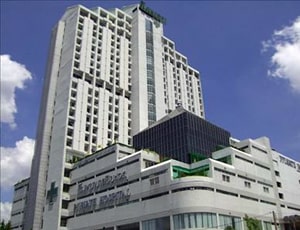
Piyavate Hospital
Bangkok, Thailand
Piyavate Hospital located in Bangkok, Thailand is accredited by JCI. Also listed below are some of the most prominent infrastructural details:
Medicine Centre: Piyavate Hospital provides advanced holistic treatment for their patients. They offer a complete range of services and physicians that specialize in various fields like the endocrine system, the nervous system, kidney function, cardiovascular care, respiratory and digestive system. They pride themselves for the familial care that they provide to their patients.
Fertility and In-Vitro Fertilization Centre: Helping the couples who walk into the Piyavate Hospital to achieve their dream of having a family. They have a medical team that specializes in male and female fertility. They offer consultation services, fertility check-up for both men and women and complete IVF services. They have advanced IVF cycle treatment facilities that offer a high rate of success.
Bone and Joint Institute: Piyavate Hospital houses one of the frontrunners in Orthopaedic health care in all of SouthEast Asia. They offer a wide range of services and surgeries in their bone and joint institute that include hand surgery, hip and knee replacement surgery, spinal cord surgery, upper extremity surgery, arthroscopic surgery and sports medicine.
Eye and Lasik Centre: Piyavate Hospital is fully equipped with the latest and most advanced technology for eye care and houses highly skilled ophthalmologists, sub-specialists and qualified nurses.
Physical Therapy and Rehabilitation Centre: One of the first hospitals to be equipped with the Hybrid Assistive Limb technology that will help a neurologically challenged patient to control the rehabilitation robot limb with a signal from their brain. The Physical Therapy and Rehabilitation Centre at Piyavate Hospital uses this system encourage patients to regain muscle memory to walk and function normally.
Amenities for Patient’s Family:
Piyavate Hospital also offers additional apartment facilities to house the kin of the patients who come to visit them from distant places. A restaurant, a flower shop and a café are a few of the other amenities provided by the hospital.
These are the most popular services offered by the Piyavate Hospital in Bangkok, Thailand. They also provide a plethora of other medical services that are listed below:
Diabetic Foot Centre
Check-up centre
Urology Centre
Heart Institute
Paediatric Centre
Obstetrics and Gynaecology Centre
Surgery Centre
Ear Nose Throat Centre
Haemodialysis Centre
Dental Centre
X-Ray Centre
Gastroenterology Centre
Cancer Centre
Neonatal Intensive Care Unit (NICU)
Emergency Services and Centre
Tele-medicine

Phyathai 2 International Hospital
Bangkok, Thailand
Phyathai 2 International Hospital located in Bangkok, Thailand is accredited by JCI. Also listed below are some of the most prominent infrastructural details:
- Fully equipped rooms are available for convenience of the patients- Gold B Room, Gold A Room, Pediatric Gold A, Platinum room, and Prestige ward
- Nearby accommodations are also available- Abloom Service Apartments, Bangkok Patio, VIB Best Western Sanam Pao, VIC3 Hotel
- Operating room
- International Patient Medical Center to assist overseas patients

Kasemrad Ramkhamhaeng Hospital
Bangkok, Thailand
Apart from in-detail treatment procedures available, Kasemrad Ramkhamhaeng Hospital located in Bangkok, Thailand has a wide variety of facilities available for International Patients. Some of the facilities which are provided by them are Accommodation, Airport Transfer, Choice of Meals, Interpreter, SIM, TV inside room. Also listed below are some of the most prominent infrastructural details:
- Initially started with 1.5 acres of land and expanded to 3.5 acres
- 139 beds, 39 Examination Rooms
- 13 Specialties Departments/Centers
- 24*7 Emergency Department
- Accommodation facilities are available- VIP rooms, Single special room, 6-bed dormitory, baby room
Our Services to better your experience
Opinion & Option
We submit the most accurate opinion and options from one or more countries for your review
Consult Privately
Consult with a certified specialist privately on our telemedicine platform even before you decide to travel
Logistics
We handle flights, visas, transfers, and accommodation—so you can focus on your health.
Recovery
Our In-house rehabilitation service packages to better your recovery and treatment outcome
Why Choose Thailand for Paraplegia Treatment?
Here are some of the reasons for choosing Thailand:
- World-class experts include highly experienced doctors, JCI, and NABH-accredited healthcare institutions.
- Compared to other countries, treatment in Thailand hospitals is cost-effective.
- Thailand hospitals provide international patient services, including a multilingual support system
- Improved treatment methods and biological therapies
Frequently Asked Questions
There is no treatment for paraplegia. However, the symptoms can be lessened or controlled to certain extent depending on which part of the spinal cord has been injured.
As there is currently no permanent cure for paraplegia, treatment plans will depend on the severity of the injury and the underlying cause, with a strong emphasis on rehabilitation and assistive technology to maximize functionality. In Thailand, paraplegia treatment primarily focuses on managing symptoms and improving quality of life through medication, physical therapy, surgery in some instances, and managing secondary complications like bladder and bowel issues.
Yes, many Thailand hospitals offer the following for paraplegia treatment:
- Advanced diagnostic tools like MRI, CT scan, electromyography, and PET scan for accurate neurofibroma diagnosis.
- Skilled neurologist, oncologist and surgeon for paraplegias.
- Advanced radiation therapy and chemotherapy procedures.
- Comprehensive post-surgery care and rehabilitation for long-term health benefits.
Always consider the following factors when selecting Thailand hospitals:
- Hospitals that are accredited (authorised by JCI).
- Patient reviews and success rates.
- Hospitals that provide seamless care to patients from abroad.
In general, Paraplegia treatment has much improved in Thailand. The survival rate for paraplegia is close to 90%, which is similar to the global average. Children with NF1 and those who are older do better. Less than 5% of people will become completely blind. However, the tumour may cause some kids to lose their peripheral vision.
If your son has reduced or no lower body sensation, severe weakness in his legs, or complete loss of mobility in his legs, he may have paraplegia. A correct diagnosis, however, requires a physician's assessment, including a physical examination and imaging tests like an MRI to look for spinal cord damage.
Loss of limb mobility due to paraplegia necessitates the use of assistive aids. It can lead to abnormalities in sexual function, bedsores, chronic discomfort, and problems controlling the bladder and intestines. It also raises the risk of mental health issues including anxiety and despair as well as osteoporosis.
Unless there is an immediate threat, only qualified specialists should transfer someone who may have suffered a spinal cord injury. Preventing bedsores, helping with everyday duties, keeping hygienic conditions, and guaranteeing movement are crucial for individuals with paraplegia. Their quality of life is enhanced by offering them emotional support and keeping a careful eye on their health.
Yes, you can see top Paraplegia treating hospitals and doctors in Thailand for a second opinion on paraplegia treatment. Numerous prestigious medical facilities consult with skilled doctors who will examine your diagnosis and suggest the best course of action.

Reviewer

Dr Sonal Gupta
Neurosurgeon
29 Years of Experience
Dr. Sonal Gupta has an experienced neurosurgeon with more than 29+ years of clinical expertise. She is currently the Director, Neuro & Spine Surgery at Fortis Hospital, Shalimar Bagh. Before joining Fortis, she has been associated with various organizations such as Maharaja Agrasen Hospital, Action Balaji Hospital, and Max Hospital. View More
Last Reviewed - January 2026