Paraplegia Treatment in India
- Top Accredited Hospitals
- Global Medical Standards
- Cutting-Edge Technology
- Proven Treatment Options
- High Success Rate
- Trusted by Millions

What is Paraplegia?
The paralysis condition known as paraplegia primarily affects the legs, while it can also occasionally impact the lower body and some arm functions. Injuries to the neurological system, particularly the spinal cord, are the most common cause of this, but a number of illnesses and ailments can also cause it.
What can I expect if my son has Paraplegia?
Your son might need a wheelchair for mobility and help walking because paraplegia mostly affects the legs, resulting in paralysis and loss of sensation. Common management techniques for bladder and bowel control issues include catheterization and bowel regimes. Your son may need pain medication and management strategies to deal with persistent pain, depending on the severity of the injury. Prolonged use of a wheelchair might cause pressure sores in your youngster. Your son, to handle the circumstance, could require psychological support.
What are the Common Symptoms of Paraplegia?
Symptoms of paraplegia include the following:
- Loss of mobility
- Loss or shift in the senses of touch, heat, and cold
- Loss of control over the bladder or bowels
- Excessive spasms or reflex actions
- Alterations in fertility, sexual sensitivity, and sexual function
- Damage to the spinal cord's nerve fibers can result in pain or a sharp stinging sensation
- Difficulty coughing, breathing, or removing secretions from the lungs
Causes, Risk Factors and Complications of Paraplegia.
CausesThe most frequent cause of paraplegia is spinal cord damage. There are numerous ways in which those injuries can occur. The most typical explanations are”
- Collisions involving motor vehicles • Penetration injuries, particularly from stab or bullet wounds
- Falls, particularly in elderly people with diseases like osteoporosis or osteopenia that affect bone density.
Other common causes of paraplegia include:
- Cancers and other spine tumors. This can include cancer that grows on or near your spinal cord, or that begins elsewhere in your body and moves to your spine
- Syringomyelia, or cysts or fluid-filled cavities within your spinal cord
- Infections that target or compress your spinal cord
- Ischemia, or lack of blood flow, brought on by a ruptured or blocked blood vessel
- Nerve damage from diabetes
- Congenital diseases, such as myelomeningocele or spina bifida, are disorders of the spine or spinal cord that affect a person from birth
- Birth injuries or very early childhood injuries that result in diseases like cerebral palsy
- Inflammatory or autoimmune diseases such as transverse myelitis, multiple sclerosis, or Guillain-Barré syndrome
- Genetic disorders such as hereditary spastic paraplegia
Risk FactorsParticipating in high-impact activities like football or wrestling; gymnastics, diving, or surfing; having a family history of a neurological disorder; or having a history of cancer
Complications
Because the nerve that gives the brain control over bladder control is destroyed, paraplegics have reduced bladder control. The health and well-being of a paraplegic are at risk due to their loss of mobility and physical exercise. It takes into account maintaining general health, fitness, and muscle tone. Injuries to the spinal cord can impact sexual function. Males may have trouble ejaculating and getting an erection. In general, women struggle with lubrication. It is not unusual to experience persistent nerve pain in the vicinity of the damage site. People with partial paraplegia are most likely to experience chronic nerve pain. Other nerve-related issues can and do happen since paraplegia is typically caused by a traumatic lesion to the spinal cord tissue and the inflammation that follows.
Connect with our advisor for a PRIORITY response
Latest Research and Technologies in the Treatment of Paraplegia in India.
In addition to axonal regeneration, remyelination, and neuronal plasticity of the damaged spinal cord, care and rehabilitation techniques for paraplegia have greatly improved in recent years. There is currently no particular and comprehensive treatment for paraplegia in humans, despite the fact that the majority of current research and therapeutic advancements have been accomplished in animal models. Because of the inherent complexity of the nervous system and the anatomical, cellular, molecular, and biochemical features of spinal cord damage, this complication has not been treated.
Paraplegia Prevention Tips
Unfortunately, unavoidable conditions and accidents account for the majority of paraplegia occurrences. By practicing safe driving, you can lower your chance of getting into an accident. However, preventing every injury and eliminating the possibility of paraplegia is impossible.
Treatment options for Paraplegia
Spinal Fusion Surgery: Spinal fusion is the treatment option for paraplegia. Surgery to join two or more vertebrae in your spine is called spinal fusion. Our body is held upright by the interlocking column of these ring-shaped bones. Combining them can strengthen the structure of our back. Spinal fusion surgery is performed by a variety of surgeon types. Depending on patient particular demands and the underlying problem, both neurosurgeons and orthopedic surgeons can do these. Alternative therapies can occasionally be safer or more successful than surgery. However, spinal fusion might be the best option for certain individuals.
Cost Start From USD 6500 - USD 9500Explore Options
A doctor will evaluate the patient's symptoms and medical history in order to diagnose paraplegia. Inquiries concerning recent mishaps and whether a person has a family history of a certain condition may also be made. Finding the etiology of paraplegia is crucial in order to choose the best course of action.
- Medical imaging is typically used to diagnose paraplegia. These tests aid medical professionals in determining the origin of paralysis and evaluating the extent of damage. For instance, they may employ an X-ray, CT, or MRI scan
- The doctor may employ electromyography to examine nerve function. This test gauges how the body reacts when muscles are stimulated.
Paraplegics typically collaborate with a diverse team of medical professionals to help them manage any potential consequences. Physiotherapists, occupational therapists, physicians, nutritionists, and psychologists are a few examples of this. It can be difficult for a person to manage the emotional and mental changes in their life brought on by paraplegia. The transition may be even more challenging to handle if there are extra issues and symptoms, such pain. Psychologists, psychiatrists, and other support groups can help paraplegics and their loved ones deal with their sadness and distress symptoms.
Treatment for paraplegia is complicated. In addition to the initial injury, a series of secondary conditions could appear soon after or later. Both the initial injury and subsequent diseases may be treated with drugs and treatments. Doctors may recommend certain drugs. For instance, using drugs that relax muscles can help with discomfort or spasms. Blood clot risk can be decreased by taking blood thinners.
Instantly Connect with our Specialists


Hospitals for Paraplegia in India

Yashoda Hospital, Malakpet
Hyderabad, India
Yashoda Hospital, Malakpet located in Hyderabad, India is accredited by NABH, NABL. Also listed below are some of the most prominent infrastructural details:
- Multi-bed facility
- High-tech labs, modular operation theaters
- Advanced medical equipement
- Dedicated rooms for patients with all facilities
- State-of-art technology
- 24/7 blood bank
- State of the art Cardio-Thoracic Center with the latest CATH LAB Equipment & Modular steel operation theatre
- Neurosurgery department equipped with an operating microscope, high-speed drill & stereotaxy
- 24-hour Emergency services to take care of all kinds of trauma and other orthopedic emergencies
- Pulmonology department equipped with modern gadgets.
- One of the best PFT labs and bronchoscopy units
- Nephrology services include Renal Biopsy, AV Fistulas, AV Grafts & Permanent Catheter Insertions, Hemodialysis; Temporary Access For Dialysis; Peritoneal Dialysis
- Has a comprehensive cancer care unit following a trans-disciplinary & multi-modality approach
- State-of-the-art services of Digital X rays, Flouroscopy, Ultrasonography, OPG, Mammography, CT 64 Slices, MRI, etc.
- Airport Transfer Service
- Scheduling Of All Medical Appointment
- Processing Of Medical Second Opinion
- Provide Language Interpreter
- Special Dietary Needs / Religious Arrangement
- Coordination Of Admissions Process
- Cost Estimates For Anticipated Treatments
- Foreign Exchange service
- Billing and Finance Related Service
- Providing Information Of Patient’s Relatives Back Home
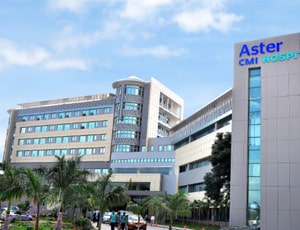
Aster CMI Hospital
Bangalore, India
Aster CMI Hospital located in Bengaluru, India is accredited by JCI, NABH. Also listed below are some of the most prominent infrastructural details:
- Around 500 bed capacity
- Primary care to Quaternary care services
- Outpatient and inpatient departments
- Day care center for small children
- Availability of Surgical suites
- Intensive Care Units
- 24-hour Emergency and Trauma Care
- Emergency Unit especially for children
- Newly launched the Lung and Heart Transplant Centre
- Video Consultation with doctors available on GraphMyHealth
- A specialised Aster Center of Excellence for Women & Children
- Latest Minimally Invasive Procedures being performed
- Safe Interventional Procedures
- Control of Infection protocols are strictly followed
- Aster Holistic Collaborative Care: Aster Palliative Care for lowering suffering if critically ill patients, Physical Medicine & Rehabilitation, Aster Wellness, Psychology, Chronic Pain Management, Nutrition & Dietetic, Podiatry Care etc.
- 11 Centers of Excellence
- An academics focus with BSc Program, MEM Program, Pediatric Fellowship Program
- A streamlined International patient care center with dedicated services and technology enabled processes

Max Super Specialty Hospital, Vaishali
Ghaziabad, India
- Max Super Speciality Hospital, Vaishali, Ghaziabad, is a leading multi-speciality hospital with 387+ beds and 37+ clinical specialities, offering advanced care in Cardiology, Neuro Sciences, Oncology, Orthopaedics, Transplants, Gastroenterology, and Reconstructive Surgery.
- Supported by 389+ doctors and 1038+ trained staff, the hospital combines state-of-the-art technology, including robotic surgery and advanced imaging systems, with compassionate, patient-centred care.
- Accredited by NABH and NABL, Max Vaishali is a trusted destination for both domestic and international patients seeking high-quality, integrated medical services.
Our Services to better your experience
Opinion & Option
We submit the most accurate opinion and options from one or more countries for your review
Consult Privately
Consult with a certified specialist privately on our telemedicine platform even before you decide to travel
Logistics
We handle flights, visas, transfers, and accommodation—so you can focus on your health.
Recovery
Our In-house rehabilitation service packages to better your recovery and treatment outcome
Why Choose India for Paraplegia Treatment?
Here are some of the reasons for choosing India:
Due to advancements in medical facilities, such as minimally invasive surgical techniques.
- World-class experts include highly experienced doctors, JCI, and NABH-accredited healthcare institutions.
- Compared to other countries, treatment in Indian hospitals is cost-effective.
- Indian hospitals provide international patient services, including a multilingual support system
- Improved treatment methods and biological therapies
Frequently Asked Questions
There is no treatment for paraplegia. However, the symptoms can be lessened or controlled to certain extent depending on which part of the spinal cord has been injured.
As there is currently no permanent cure for paraplegia, treatment plans will depend on the severity of the injury and the underlying cause, with a strong emphasis on rehabilitation and assistive technology to maximize functionality. In India, paraplegia treatment primarily focuses on managing symptoms and improving quality of life through medication, physical therapy, surgery in certain cases, and managing secondary complications like bladder and bowel issues.
Yes, many Indian hospitals offer the following for paraplegias treatment:
- Advanced diagnostic tools like MRI, CT scan, electromyography, and PET scan for accurate neurofibroma diagnosis.
- Skilled neurologist, oncologist and surgeons for paraplegias.
- Advanced radiation therapy and chemotherapy procedures.
- Comprehensive post-surgery care and rehabilitation for long-term health benefit.
Always consider the following factors when selecting Indian hospitals:
- Hospitals that are accredited (authorised by JCI and NABH).
- Patient reviews and success rates.
- Hospitals that provide seamless care to patients from abroad.
In general, Paraplegias treatment has much improved in India. The survival rate for paraplegias is close to 90%, which is similar to the global average. Children with NF1 and those who are older do better. Less than 5% of people will become completely blind. However, the tumor may cause some kids to lose their peripheral vision.
If your son has reduced or no lower body sensation, severe weakness in his legs, or complete loss of mobility in his legs, he may have paraplegia. A correct diagnosis, however, requires a physician's assessment, which includes a physical examination and imaging tests like an MRI to look for any spinal cord damage.
Loss of limb mobility, necessitating the use of wheelchairs or other assistive equipment for mobility, is the most notable long-term consequence. Frequent UTIs and the requirement for catheterization might result from issues with bladder and bowel control. Long periods of sitting or laying in one position can cause bedsores, particularly if appropriate pressure release procedures are not applied. For those with paraplegia, chronic discomfort, such as neuropathic pain and muscular spasms, can be a major problem. Damage to the nerves frequently results in changes in sexual function and sensitivity. Because paraplegia causes major lifestyle changes and challenges, depression and anxiety are common. Because paraplegics are less able to bear weight, they are more susceptible to osteoporosis.
Improper movement of a person who may have suffered a spinal cord injury might result in irreversible harm. Therefore, if someone has a suspected spinal cord injury, only qualified specialists should relocate them. This rule only applies if the person is in imminent danger if you don't move them, like in the event of a car accident where the vehicle is crushed.
For already diagnosed paraplegic patient one has to prioritize preventing bed sores by changing the parent's position frequently, keeping them clean, helping them with everyday tasks like eating, dressing, and using the restroom, making sure the catheter is properly cared for if necessary, making the home accessible, promoting wheelchair mobility, and offering emotional support while keeping a close eye on their health and seeking medical help when needed.

Reviewer

Dr Sonal Gupta
Neurosurgeon
29 Years of Experience
Dr. Sonal Gupta has an experienced neurosurgeon with more than 29+ years of clinical expertise. She is currently the Director, Neuro & Spine Surgery at Fortis Hospital, Shalimar Bagh. Before joining Fortis, she has been associated with various organizations such as Maharaja Agrasen Hospital, Action Balaji Hospital, and Max Hospital. View More
Last Reviewed - January 2026