Osteopenia Treatment in India
- Top Accredited Hospitals
- Global Medical Standards
- Cutting-Edge Technology
- Proven Treatment Options
- High Success Rate
- Trusted by Millions

What is Osteopenia?
The disease is called osteopenia if bone density is below standard. This means that bone loss occurs, but the bones are not weak enough to be susceptible to fractures or risks, as found in osteoporosis. Osteopenia can often be viewed as the early stage of decline in bone health, which may or may not lead to fractures; advanced management of this condition can increase the risk of conversion to osteoporosis.
What is the Importance of Timely Treatment?
- Decreases the risk of developing osteoporosis: Osteopenia can progress to osteoporosis if not treated in time. The prognosis is less favourable as osteoporosis is a disease wherein bones become very brittle and fragile. Osteoporosis, on the other hand, tremendously increases the odds of fractures with immense consequences, particularly among the elderly.
- Reduced Risk of Fractures: Timely treatment will ensure the maintenance of bone density, reducing the chances of fracture. The bones in an osteopenic person are already weaker than usual; hence, early osteopenia intervention would slow the bone loss process or even prevent it.
- Improves Bone Health with Lifestyle Changes: Early management of osteopenia may involve lifestyle changes, including diet modifications (increase calcium and vitamin D intake), weight-bearing exercises, and cessation of smoking or excessive alcohol consumption. Each of these changes will enhance bone health and prevent further deterioration.
- Cost-Effective Approach: Treatment of osteopenia is cost-efficient when done early, while the delayed treatment of the condition until it progresses to osteoporosis proves otherwise. Medical care for fractures, hospitalisation, and long-term care is exceedingly more costly when osteoporosis and fractures set in.
- Maintains Quality of Life: Properly managing osteopenia enhances bone strength and increases mobility. Osteopenia management thereby prevents pain, immobility, and loss of independence due to fractures, preserving the person's quality of life.
What are the Common Symptoms of Osteopenia?
- Increased Risk of Fractures
- Back Pain
- Loss of Height
- Fractures from Minor Injuries
- Weak or Brittle Nails and Hair
Causes and Risk Factors of Osteopenia
Causes
- Age-Related Bone Loss
- Hormonal Changes
- Calcium and Vitamin D Deficiency
- Medications
- Chronic Conditions
Risk Factors
- Gender
- Age
- Family History
- Sedentary Lifestyle
- Poor Diet
- Smoking and Alcohol Consumption
- Body Weight
- Other Medical Conditions
Connect with our advisor for a PRIORITY response
Latest Research and Technologies in the Treatment of Osteopenia in India
The medical treatment of Osteopenia in India adapts the newest research and technologies to meet worldwide clinical standards and healthcare capabilities.
- Enhanced Monitoring of Bone Density: Current improvements in DEXA scanning have made portable DXA devices that facilitate osteopenia detection possible, even in smaller cities in India. Periodic tests of bone density help track bone health and progress toward osteoporosis detection.
- Novel Therapeutics: New formulations are still being researched in India for treating osteopenia. These biologics prevent bone loss and stimulate new bone formation, providing better options for managing bone illness.
- Technologies for Exercise and Rehabilitation: Mobile apps and wearables track physical activity and create individualised exercise programs for bone strengthening. These technologies help patients stick to an exercise regimen for strengthening bones and attaining good overall health.
- Stem Cell- and Regenerative-based Therapies: Stem cell therapy and platelet-rich plasma (PRP) are under trial studies for the regeneration of bone tissue and for reversing loss in osteopenia. Clinical trials regarding these regenerative treatments are being conducted in India.
- Genetic Study and Person-Specific Nutrition: Research with personalised diets and genetic testing is increasingly a tailor-made treatment for osteopenia. Personalised approaches focusing on calcium, vitamin D, and lifestyle changes are expected to improve bone density and avert complications.
Osteopenia Prevention Tips
- Calcium and Vitamin D must be taken in good quantity. Calcium is necessary for bones, while calcium absorption becomes problematic in the body without Vitamin D. Dairy products, greens, and fortified foods should be included in the diet.
- Weight-Bearing Exercises: Weight-bearing exercises (from walking to jogging, hiking to resistance training) keep the bones strong by stimulating bone formation. At least 30 minutes of activity should be undertaken most days of the week.
- Avoid all tobacco and excessive Alcohol: Smoking and heavy drinking encourage bone loss. Getting rid of smoking and reducing alcohol consumption would very likely decrease the risk of osteopenia and osteoporosis.
- Weight Maintenance: The body wastes a healthy weight to support bones. Therefore, the risk of being underweight increases bone loss, while excess fat may interfere with hormonal balance. Healthy weight maintenance includes proper diet and regular exercise.
- Maintain a schedule for monitoring bone health: Keeping the bone density test ongoing, such as a DEXA scan, helps keep track of bone health for the individuals at risk. Early diagnosis permits prompt intervention and management to avert the progression to osteoporosis.
Treatment options for Osteopenia
The medical treatment for Osteopenia requires evaluating the severity, neural involvement, and patient medical condition. The following are the treatment options:
Hormone therapy : This includes estrogen-only or combined therapy with progestin, prescribed for postmenopausal osteopenia to prevent bone loss. Bioidentical hormones are an alternative option but have similar effectiveness as conventional therapies.
Cost Start From USD 3500 - USD 5500Explore Options
These are the standard diagnostic methods for diagnosing Osteopenia :
- Clinical Evaluation:
- Physical examination: A physician queries his history and performs a clinical examination in search of muscle weakness, abnormal reflexes, or even restriction of movement ranges.
- Imaging Studies:
- Dual-Energy X-ray Absorptiometry (DEXA or DXA) Scan: The DEXA scan is considered the standard for osteopenia diagnosis. It evaluates the bone mineral density (BMD) through comparison with a young adult reference (T-score). Osteopenia is defined as a T-score within the range of -1 and -2.5.
- Quantitative Computed Tomography (QCT): QCT is a substantiated imaging technique in the densitometric measurement of bone at different sites. In the case of the spine, QCT has higher specificity in its application of density assessment than DEXA. It is. However, little is utilised for such purposes due to increased costs and exposure to radiation that comes with QCT compared to DEXA scanning.
- Ultrasound Bone Densitometry: Using high-frequency sound waves at the heel or wrist, bone density is assessed. Unlike DEXA, this form is used for quicker, non-invasive screening for low bone density risk.
- Bone Turnover Markers (Blood Tests)
- Among the possible measurements that can be taken using blood samples are the different markers of bone turnover, such as CTX and osteocalcin. They measure bone formation and resorption rates but are generally not included in the standard tests employed to diagnose osteopenia.
MediRehab (a chain of Rehab centres, part of MediGence) provides comprehensive rehabilitation services designed to support patients in India. Additional services are as per the patient's requirement. These services include:
- Weight-Bearing Exercise: Weight-bearing exercises such as walking, jogging, and dancing are essential to stimulate bone formation and hardening. Together, these activities support bone density and enhance blood circulation and the overall health of the bones, especially in the lower body and spine.
- Physiotherapy (PT): A physical therapist can prescribe an individualised exercise program for a person regarding specific needs to improve strength, mobility, or balance. It can also include manual therapy for improving joint function and relieving pain in weak bones.
- Posture/Mobility Training: Correct posture and mobility exercises improve flexibility and alignment, helping reduce strain on the bones and joints. Injury-prevention techniques targeting spinal alignment and postural exercises can help avoid fractures in the spine, an area of concern in osteopenia.
Instantly Connect with our Specialists


Hospitals for Osteopenia in India

BLK-Max Super Speciality Hospital
Delhi, India
BLK-Max Super Speciality Hospital, located in New Delhi, is the leading best-in-class healthcare institution in India, providing tertiary and quaternary care. 650 + beds including 162 critical care beds, 22 OTs with 1,500+ clinical professionals allied to health are at the hospital's disposal. JCI, NABH, and NABL accredited. The hospitals are a leader in transplants, cancer care, and robotic surgery education and implementation. Established in1959 by Dr. B.L. Kapur, the hospital combines state-of-the-art technology with patient-centric values including compassion, efficiency, and consistency.
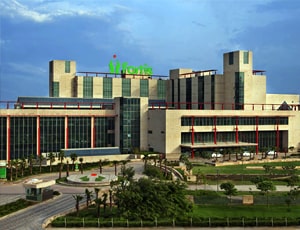
Fortis Memorial Research Institute
Gurgaon, India
Fortis Healthcare Limited stands as one of India's largest integrated healthcare providers, managing 33 hospitals across 11 states and operating more than 5,700 beds and 400 diagnostic labs. Four of our hospitals are accredited by JCI and 26 by NABH. With a workforce of over 12,500 healthcare professionals, we combine clinical excellence, a patient-focused approach, and innovation to provide high-quality, affordable, and compassionate healthcare to patients in India.

Asian Institute of Medical Sciences
Faridabad, India
Asian Institute of Medical Sciences located in Faridabad, India is accredited by NABH, NABL. Also listed below are some of the most prominent infrastructural details:
- 425 bed capacity
- Preventive and diagnostic sevices of the hospital are its strength.
- It is also well recognised for the therapeutic and rehabilitative services.
- For patients who need end process care for advanced healthcare conditions, the palliative services that the hospital provides are a boon.
- The healthcare delivery of AIMS, Delhi/NCR is focused on patient care.
- Research focused organisation
- International Patient care center is present to liason with medical travellers
- Focus on Academics, various healthcare educational programmes
Our Services to better your experience
Opinion & Option
We submit the most accurate opinion and options from one or more countries for your review
Consult Privately
Consult with a certified specialist privately on our telemedicine platform even before you decide to travel
Logistics
We handle flights, visas, transfers, and accommodation—so you can focus on your health.
Recovery
Our In-house rehabilitation service packages to better your recovery and treatment outcome
Why Choose India for Osteopenia Treatment?
- Effective Cost: The cost of medical treatment in India proves more economical than Western pricing yet remains equivalent to high-end treatment standards. The treatment path covers operative steps and follows all post-surgical phases.
- World-Class Infrastructure: The healthcare system in India operates multiple facilities accredited at the international level, which combine highly experienced orthopaedic surgeons who receive patients with complicated spine injuries, including Osteopenia.
- Advanced Technology: Indian medical centres use state-of-the-art equipment and cutting-edge procedures for diagnosis and treatment, including minimally invasive surgical methods and robotic-assisted solutions.
- Skilled Specialists: Doctors specialising in orthopaedics and neurosurgery are in high numbers throughout India because Indian medical specialists possess international recognition for their outstanding spinal treatment capabilities.
- Language Support: Indian hospitals offer multilingual support to fulfil international patient needs by assisting in numerous country languages.
Frequently Asked Questions
No, it can’t be reversed. It can be an indicator that you are more prone to getting osteoporosis. Therefore, treatment and lifestyle changes can minimise the anticipated fracture risk.
Some lifestyle modifications and exercises with diet and medicaments can help manage osteopenia such that further bone loss can be slowed, and fractures can be prevented.
People should follow a nutrition plan that contains sufficient calcium and vitamin D, get daily weight-bearing exercises, quit smoking, limit alcohol, and keep their weight healthy to prevent the disease.
Testing for bone density must be performed every one or two years for individuals at risk or diagnosed with osteopenia. Factors such as their age, family history, and how the treatments go would dictate how often tests are performed.
Increasingly in India, osteopenia is seen, especially among postmenopausal women. Some reasons are dietary deficiencies, a sedentary lifestyle, and increased life expectancy. There is a belief that a high percentage of the population, especially women above the age of 50, is at risk.
There is treatment for osteopenia in India with selective estrogen receptor modulators (SERMs). Hospitals and clinics in major cities offer dedicated services and advanced testing for bone density, such as DEXA scans.
To combat osteopenia, an active lifestyle with yoga, brisk walks, or strength training should be followed in India. Nutrition with adequate calcium and vitamin D, weight control, and no smoking or alcohol should help your bone health.
A consult with an orthopaedic specialist, rheumatologist, or endocrinologist is indicated for osteopenia. The specialists treat, diagnose, and manage other bone health conditions, including osteopenia.

Reviewer

Dr. Mohit Agarwal
Medical Oncologist
14 Years of Experience
One of the finest Oncologist in New Delhi, India, Dr. Mohit Agarwal has worked with several world class multidisciplinary hospitals over the years. Dr. Mohit Agarwal has over 14+ years of experience in his field. The doctor treats and manages a wide range of conditions such as Stomach Cancer, Rectal Cancer, Breast Cancer, Brain Cancer View More
Last Reviewed - January 2026