Olfactory Neuroblastoma Treatment in United Arab Emirates
- Top Accredited Hospitals
- Global Medical Standards
- Cutting-Edge Technology
- Proven Treatment Options
- High Success Rate
- Trusted by Millions

What is Olfactory Neuroblastoma?
A tumor that develops in the nasal cavity is called olfactory neuroblastoma, also known as esthesioneuroblastoma. The sensation of smell is produced by neurons and other tissue in the nasal cavity. This kind of tumor begins in the nasal cavity and can grow into the nearby eyes and brain. Olfactory neuroblastoma can potentially extend to other regions of the body, including the neck, lungs, and bones.
What can I expect if my parents have Olfactory Neuroblastoma?
The following warning signs and symptoms could be markers of olfactory neuroblastoma. Watery eyes, nosebleeds, congestion or stuffiness that worsens or persists, nose obstruction, postnasal drip, or nasal discharge in the throat, and eye pain, pus from the nose, numbness in the face or teeth, loose teeth, diminished smell, or changes in eyesight, • Problem opening the mouth; • Pain or pressure in the ears; • Enlarged neck lymph nodes
What are the Common Symptoms of Olfactory Neuroblastoma?
Symptoms of olfactory neuroblastoma include:
- Loss of smell perception
- Nosebleeds that happen often
- Breathing through the nose with difficulty
- As the cancer spreads, it may result in headaches, ear pain, vision loss, and eye pain
Causes, Risk Factors and Complications of Olfactory Neuroblastoma
Causes
The precise cause of olfactory neuroblastoma has not been determined by experts. Generally speaking, DNA alterations in cells cause cancer. The instructions that inform a cell what to do are encoded in its DNA. The modifications instruct the cells to rapidly produce a large number of new cells. When healthy cells would normally die, the alterations allow the cells to survive. Too many cells are produced as a result.
The cells may accumulate into a mass known as a tumor. Healthy body tissue may be invaded and destroyed by the tumor as it grows. Cells may eventually separate and disperse throughout the body.
Risk Factors
It is thought to be a major risk factor to work in areas where one is exposed to wood dust, metal dusts (nickel, cadmium), wheat, glues, formaldehyde, and other solvents. Olfactory neuroblastoma risk may also be raised by exposure to tobacco smoke.
Complications
The complications of Olfactory Neuroblastoma include:
- Blockage of the nose
- Pain and pressure in the sinuses
- Epistaxis (bleeding nose)
- Pain in the face
- Eye discomfort and enlargement
- Issues with vision
- Numbness in the face
- Excruciating headaches
- Convulsions
- Impairment of cognition
- Unbalanced hormones (SIADH)
- Spreading to other organs, or metastasis: Participation of lymph nodes, metastases to the bones and metastasis to the liver
Connect with our advisor for a PRIORITY response
Latest Research and Technologies in the Treatment of Olfactory Neuroblastoma in the United Arab Emirates
Treatment for Olfactory Neuroblastoma (ON) has evolved significantly in the UAE thanks to interdisciplinary treatments, sophisticated radiation, and minimally invasive operations. Endoscopic endonasal surgery is used in hospitals to remove tumours precisely and with few side effects. While preserving healthy tissues, intensity-modulated radiation therapy (IMRT) aids tumour targeting. Results are better when surgery, radiation, and chemotherapy are used together, particularly in more advanced instances.
Olfactory Neuroblastoma Prevention Tips
Although the precise origin of olfactory neuroblastoma is unknown, evidence points to a possible connection with chemical exposure. According to research, People exposed to dangerous chemicals and particles at work or through other activities are more likely to develop malignancies of the nasal cavity. Wood dust, wheat, glues, nickel and cadmium dust, formaldehyde, and other solvents are a few potential offenders. The development of an olfactory neuroblastoma may be influenced by tobacco smoke. Steer clear of these chemicals as much as you can to protect yourself.
Treatment options for Olfactory Neuroblastoma
Chemotherapy: Chemotherapy may be used in situations when the tumour has migrated to other body areas. The most often prescribed chemotherapeutic medications for neuroblastoma include vincristine, carboplatin, doxorubicin, cyclophosphamide, and cisplatin .Typically, chemotherapy is a systemic treatment. This implies that the medications enter the bloodstream and travel throughout the body to kill cancer cells, including ones that may have separated from the main tumour. The medications can be administered intravenously (IV) or orally. The medications may occasionally be administered safely using a specialised tool known as a central venous catheter. When chemotherapy begins, it is often implanted during surgery and kept there until the end of the course of treatment.
Cost Start From USD 800 - USD 6000Explore Options
Radiation therapy: Some olfactory neuroblastoma tumours may be treated with radiation therapy. Radiation therapy may be used as the primary treatment or to help lower the likelihood of tumour recurrence following surgery. The success rates for radiation therapy are 90–95% in stage I, 85–90% in stage II, and 75–80% in stage III. The patient is recommended to see the doctor for follow-up every three months following radiation therapy.
Olfactory neuroblastoma is diagnosed by examining the nasal cavity using various scanning techniques. These consist of MRIS, CT scans, and X-rays. A physician may perform a biopsy to obtain further information. A tissue sample is taken and examined under a microscope to ascertain the type of cancer present.
Since neuroblastoma occurs near essential structures, patients may require rehab for the following reasons.
Patients may experience changes in their sense of smell due to the tumour's proximity to the olfactory nerves, necessitating olfactory training or adaptation techniques. Dryness in the nasal passages is one of the adverse effects of radiation therapy that may require the adoption of extra management techniques. Exercises to enhance the function of the muscles of the face, control pain, and encourage the repair of soft tissues. Addressing any speech issues that can result from disrupting the surrounding structures after surgery. Activities that aid in retraining the sense of smell, if it has been severely compromised. Advice on controlling nutritional requirements in light of possible swallowing issues
The only treatment options are surgery, radiation therapy, and chemotherapy. The most often prescribed chemotherapeutic medications for neuroblastoma include vincristine, carboplatin, doxorubicin, cyclophosphamide, and cisplatin.
Instantly Connect with our Specialists


Hospitals for Olfactory Neuroblastoma in United Arab Emirates

Burjeel Hospital, Abu Dhabi
Abu Dhabi, United Arab Emirates
Burjeel Hospital, Abu Dhabi located in Abu Dhabi, United Arab Emirates is accredited by JCI. Also listed below are some of the most prominent infrastructural details:
- 209 bed capacity 14-beds in the Intensive Care Unit
- 64 Slice CT, High End MRI, Neuro-navigation Surgical Systems
- 3.0 Tesla MRI
- Neuro-physiology
- Specialized physiotherapy
- Well managed rehabilitation services
- 10 operating theatres
- Royal Suites and Presidential Suites available
- It comprises the most advanced treatment related equipment.
- It is adorned with cutting edge diagnostic equipment.
- Personal attention is given and there is an empathetic approach to healing, the hospital terms it the 'art of healing'.
- Customised services are provided to International patients.
- Centers of excellence
- Cardiology
- Pediatrics
- Ophthalmology
- Oncology
- IVF
- Gynecology & obstetrics
- Orthopedics & sports medicine
- Shoulder and upper limb unit
- Burjeel vascular centre
- Bariatric & metabolic surgery

NMC Royal Hospital, Khalifa City
Abu Dhabi, United Arab Emirates
NMC Royal Hospital, Khalifa City located in Abu Dhabi, United Arab Emirates is accredited by JCI. Also listed below are some of the most prominent infrastructural details:
- Capacity for 500 beds
- 53 Critical Care beds
- 24-hour Emergency Services
- 24-hour Ambulance Service
- OPD (Outpatient department treatment)
- An Automated Laboratory
- The Hospital has the first hybrid Operating Theatre with flex move system
- First NICU and PICU Combination set up
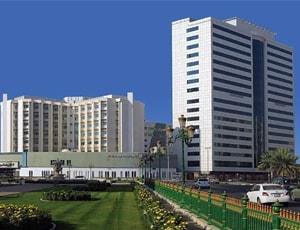
NMC Royal Hospital Sharjah
Sharjah, United Arab Emirates
NMC Royal Hospital Sharjah located in Sharjah, United Arab Emirates is accredited by JCI. Also listed below are some of the most prominent infrastructural details:
- This is a multispecialty hospital with all the latest amenities and state of the art equipment.
- It has the best of doctors, surgeons, and allied healthcare professionals who are completely dedicated to patient care.
- It comprises the below mentioned smart healthcare facilities which make getting treated at this hospital a comfortable and satisfying experience for the patients.
- High-end operation theatre
- 24*7 ambulance service which has all emergency equipment
- 24*7 emergency services
- Option of a free overnight stay for one parent for child up to 12 years of age
- International patient care center
- Special men and women health package
Our Services to better your experience
Opinion & Option
We submit the most accurate opinion and options from one or more countries for your review
Consult Privately
Consult with a certified specialist privately on our telemedicine platform even before you decide to travel
Logistics
We handle flights, visas, transfers, and accommodation—so you can focus on your health.
Recovery
Our In-house rehabilitation service packages to better your recovery and treatment outcome
Why Choose the United Arab Emirates for Olfactory Neuroblastoma Treatment?
Here are some of the reasons for choosing the UAE:
Due to advancements in medical facilities, such as minimally invasive surgical techniques.
- World-class experts include highly experienced doctors and JCI-accredited healthcare institutions.
- Compared to other countries, treatment in UAE hospitals is cost-effective.
- The UAE hospitals provide international patient services, including a multilingual support system.
- Improved treatment methods and biological therapies.
Frequently Asked Questions
Yes, a group of specialists, including radiation oncologists, neurosurgeons, and head and neck surgeons, collaborate to create a customised treatment plan for each patient. With treatment, the majority of patients with olfactory neuroblastoma recover.
In the UAE, modern radiation (IMRT), interdisciplinary care, and minimally invasive endoscopic surgery are all very efficient ways to treat olfactory neuroblastoma (ON).
Yes, many UAE hospitals offer the following for olfactory neuroblastoma treatment:
- Endoscopic endonasal procedures are used in UAE hospitals to remove tumours precisely and with few side effects.
- Skilled neurologist, oncologist and surgeons for olfactory neuroblastoma.
- Intensity-modulated radiation Therapy (IMRT) efficiently destroys malignancies while sparing healthy tissues.
- Advanced radiation therapy and chemotherapy procedures.
- Comprehensive post-surgery care and rehabilitation for long-term health benefits.
Always consider the following factors when selecting a hospital in the UAE:
- Hospitals that are accredited (authorised by JCI).
- Patient reviews and success rates.
- Hospitals that provide seamless care to patients from abroad.
In the UAE, olfactory neuroblastoma (ON) treatment is successful, particularly when early detection and cutting-edge techniques like IMRT and endoscopic surgery are used.
You need to keep an eye out for the following signs in them:
- Obstruction of the nose or difficulty breathing through it
- Bleeding noses
- Eye bulge or pain around the eyes
- A headache
- Runny nose and nasal leakage (postnasal drip)
- Congestion or stuffiness that doesn't improve or grows worse
- Watery eyes
- Vomit from the nose
- Numbness in the face or teeth
- Anosmia, or a diminished sense of smell, and loose teeth
- Vision loss or alteration
- Having two eyes
- Pressure or pain in the ears
- Having difficulty expanding your mouth
- Neck lymph node enlargement
Patients with Olfactory Neuroblastoma may experience long-term consequences such as irreversible loss of smell (anosmia), changes in vision, cognitive impairment, and the possibility of spread of the tumour to other parts of the body.
- The most likely course of treatment for your parent with neuroblastoma is a combination of surgery, radiation or chemotherapy:
- After surgery, adhere to your doctor's instructions. After surgery, you should pay particular attention to areas of skin that have been stitched or stapled
- Consult your provider as advised. To help prevent problems from this illness, follow-up visits are crucial.
- Be mindful of the symptoms. Inform your healthcare physician right away if you observe your parents exhibiting a recurrence of an olfactory neuroblastoma.
- Consult a doctor to provide postoperative rehab therapy to regain most of the function of smell and other associated organ functions.
You can see the top neuro hospitals and doctors in the UAE for a second opinion on Olfactory Neuroblastoma treatment. Numerous prestigious medical facilities consult with skilled doctors who will examine your diagnosis and suggest the best course of action. You can get support by speaking with a medical tourism facilitator at MediGence to select the best doctor and facility. It provides specialised rehabilitation programs.

Reviewer

Dr. Mohit Agarwal
Medical Oncologist
14 Years of Experience
One of the finest Oncologist in New Delhi, India, Dr. Mohit Agarwal has worked with several world class multidisciplinary hospitals over the years. Dr. Mohit Agarwal has over 14+ years of experience in his field. The doctor treats and manages a wide range of conditions such as Stomach Cancer, Rectal Cancer, Breast Cancer, Brain Cancer View More
Last Reviewed - January 2026