Non-Small Cell Lung Cancer (NSCLC) Treatment in Thailand
- Top Accredited Hospitals
- Global Medical Standards
- Cutting-Edge Technology
- Proven Treatment Options
- High Success Rate
- Trusted by Millions

What is Non-Small Cell Lung Cancer (NSCLC)?
About 85% of all instances of lung cancer are non-small cell lung cancer (NSCLC), making it the most common kind of the disease. It happens when aberrant cells proliferate in the lungs and cause tumors to grow. Compared to small cell lung cancer (SCLC), non-small cell lung cancer (NSCLC) is typically less aggressive and grows and spreads more slowly.
Type of Non-Small Cell Lung Cancer (NSCLC)
There are many types of NSCLC, including-
- Adenocarcinoma: It typically develops in the outer parts of the lungs and is the most common type of lung cancer.
- Squamous Cell Carcinoma: Usually starts in the central part of the lungs and is often associated with a smoking history.
- Large Cell Carcinoma: It can develop in any part of the lungs and is prone to grow and spread quickly
What is the Importance of Timely Treatment?
Timely treatment of Non-Small Cell Lung Cancer (NSCLC) is essential for several reasons:
- Improved Prognosis: With surgery or localised radiotherapy, early-stage NSCLC can frequently be successfully treated, increasing the chance of long-term survival. Early detection increases the likelihood of the cancer being successfully treated and having a favorable outcome.
- Prevents Spread: If treatment is not received, non-small cell lung cancer (NSCLC) can spread (metastasise) to other body areas, including the brain, liver, and bones, making treatment more difficult and decreasing the likelihood of survival.
- Treatment Effectiveness: More treatment options, such as surgical resection or targeted medicines, are available with an early diagnosis; these alternatives may become less effective as the cancer progresses.
- Minimizes Complications: The likelihood of consequences, including lung collapse, breathing problems, or fluid accumulation, which might occur as the cancer worsens, is decreased with prompt treatment.
- Better Quality of Life: Early cancer detection can improve symptom management and help people live better while undergoing treatment and recuperating.
What are the Common Symptoms of Non-Small Cell Lung Cancer (NSCLC)?
Respiratory Symptoms
- Persistent Cough
- Shortness of Breath
- Coughing Up Blood
- Wheezing
Chest Symptoms
- Chest Pain
- Hoarseness
General Symptoms
- Loss of Appetite
- Unexplained Weight Loss
- Fatigue
- Frequent Infections such as bronchitis or pneumonia
Causes and risk factors of Non-Small Cell Lung Cancer (NSCLC)?
Causes
- Genetic alterations that lead to changes in the DNA of lung cells cause the uncontrolled expression of genes and ultimately cause cancer.
- Prolonged exposure to certain chemicals and toxins may increase the risk factor of developing NSCLC cancer.
Risk Factors
- Smoking tobacco
- Environmental exposures like radon, Asbestos and air pollution, exposure of some workplace chemicals like formaldehyde, arsenic, and benzene.
- Family history of lung cancer
- Older age above 60-80 years
- Having respiratory conditions like pulmonary fibrosis.
- Previous radiation therapy for breast and chest
Connect with our advisor for a PRIORITY response
Latest Research and Technologies in the Treatment of Non-Small Cell Lung Cancer (NSCLC) in Thailand
Thailand is pioneering NSCLC treatment with targeted therapy, immunotherapy, AI-assisted diagnostics, and precision radiation , while exploring high-dose Vitamin C therapy. Leading hospitals provide advanced, affordable care.
Non-Small Cell Lung Cancer (NSCLC) Prevention Tips
There are a few things you can do to lower your risk of developing Non-Small Cell Lung Cancer (NSCLC), particularly of the bladder, even if it is not always preventable:
- Avoid smoking
- Avoid second-hand smoke
- Limit exposure to carcinogens like radon, asbestos, and arsenic.
- Maintain a healthy lifestyle by improving lifestyle modifications such as eating a well-balanced diet, exercising regularly to improve lung function, and maintaining a sleep-wake cycle to support the immune system.
- Early genetic counseling shall be considered; screening can help identify genetic mutations and guide preventive measures.
- Reduce exposure to air pollution
- Protect Yourself from Occupational Hazards
Treatment options for Non-Small Cell Lung Cancer (NSCLC)
Treatment options for NSCLC differ based on the type and stage of the disease and the patient's overall health. The following are a few current treatments:
Lobectomy: Elimination of a lung lobe. The most popular procedure for NSCLC in its early stages is this one.
Pneumonectomy: Removal of a lung in its whole. If the cancer is in an area of the lung where the entire organ needs to be removed, this procedure might be carried out.
Wedge Resection: This removes a little lung section with the tumor.
Segmentectomy: This is the Removal of a more prominent lung segment but not the entire lobe. Usually, this is applied to individuals with lung impairment or early-stage cancer.
Radiation Therapy: Treatments using high-energy rays to target cancer cells and reduce tumour size are known as radiation therapy. It may be used in combination with chemotherapy for Non-Small Cell Lung Cancer (NSCLC).
Targeted Therapy : Medication designed for particular forms of lung cancer is used in this treatment. Targeted therapy can locate and target specific cancer cells without endangering healthy cells.
Cost Start From USD 3500Explore Options
Immunotherapy : This is typically advised for late-stage lung cancer, notably Stage IV NSCLC, as it triggers your body's immune system to target and eliminate cancer cells.
Cost Start From USD 3000 - USD 13578Explore Options
Chemotherapy : It uses medications that target lung cancer. It is among the most widely used therapies for NSCLC. Chemotherapy may be prescribed by your oncologist alone or in conjunction with other treatments.
Cost Start From USD 1000 - USD 6800Explore Options
Clinical Evaluation
- Medical History and Physical Examination: Healthcare professionals assemble detailed information about symptoms, medical history and risk factors afterlooking at NSCLC symptoms.
Imaging Studies
- CT Scan
- Chest X-Ray
- MRI
- PET Scan
Biopsy
- Bronchoscopy
- Needle Biopsy
- Surgical Biopsy
Laboratory Tests
- Blood Tests
- Sputum Cytology
- Thoracentesis
MediRehab (a chain of Rehab centres, part of MediGence) provides comprehensive rehabilitation services to support patients through Teleconsulations and online therapy sessions.
- Lifestyle changes and modification: Dietary adjustments with high-fiber foods, lean proteins, and tailored meal plans help manage symptoms and ensure proper nutrition. Avoiding alcohol and managing stress through lifestyle changes improve overall health. Yoga and meditation further enhance mental well-being and stress reduction.
- Speech and Swallowing Therapy: Patients with NSCLC may have trouble speaking or swallowing if the disease affects the mouth, throat, or digestive system. Speech therapists can help patients regain clarity in their speech and enhance their swallowing function.
- Monitoring and follow-up: Schedule regular follow-up appointments with the oncologist to address complications, monitor recovery, and detect any signs of recurrence.
Depending on the circumstances, your doctor might recommend medication to help manage your symptoms and complement the course of treatment.
Instantly Connect with our Specialists


Hospitals for Non-Small Cell Lung Cancer (NSCLC) in Thailand

Bangpakok 9 International Hospital
Bangkok, Thailand
Bangpakok 9 International Hospital located in Bangkok, Thailand is accredited by JCI. Also listed below are some of the most prominent infrastructural details:
- It would be prudent to summarise the Medical Services provided at the Bangpakok 9 International Hospital (BPK 9), Bangkok, Thailand:
- Cosmetic Dentistry
- Dental Implants
- Electrocardiogram (EKG or ECG)
- Exercise Stress Test
- Health Screening
- Laser Vagina Firming
- Pediatric Physical Therapy
- Perfect Slim by Vela II
- Physical Therapy for Musculoskeletal
- Prosthodontics
- The Medical Services are also inclusive of the International Patient Services such as the ones listed here:
- Thai, English, French, Arabic, Chinese, Myanmar, Cambodia, Bangladeshi, Bahasa and Tagalog are the languages in which there are Translation services available for International Patients.
- Visa extension related assistance
- International health insurance related assistance
- Embassy and international organizations related assistance
- A variety of meals of choice for International Patients
- Email consultation services
- Transfer to either airport and/or hotels
- Prayer room
- Four different types of rooms are available such as Deluxe room, two kinds of suites, and a VIP suite.
- Hospital facilities like The Coffee shop, Food Hall, Cafe and Medical Spa.
- Complete health and safety protocols are maintained in the various Medical Centers some of whom are as follows:
- Aesthetic Center
- 24 Hour Emergency Center
- Allergy Center
- Breast Center
- bSmart Center
- Checkup Center
- Dental Center,
- Happy Long Life Center
- Medical Fitness Center
- Psychiatric Center
- Rehabilitation Center
- Sleep Disorders Center
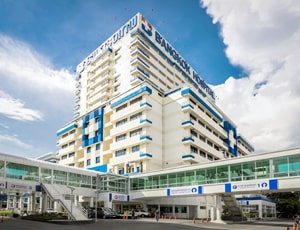
Bangkok Hospital
Bangkok, Thailand
Bangkok Hospital located in Bangkok, Thailand is accredited by JCI. Also listed below are some of the most prominent infrastructural details:
- It is recognised for the application of the newest healthcare technology.
- Blood analysis center that is not just the best in Thailand but in Asia Pacific as well.
- Biomolecule center that is the seed of healthcare equipment for Thailand and overseas.
- International affiliations and collaborations with universities and hospitals in Japan and the United States of America.
- 11 hospitals are recognised as Centers of Excellence.
- Known excellence in Trauma, Orthopedics, Cardiovascular, Neurology as well as Cancer Care.
- There is a proper streamlined patient services process followed in Bangkok Dusit Medical Services, Bangkok, Thailand.
- A well developed research center showcases the intent of the organisation to provide research based treatment opportunities to the patients.
- The group has several Medical industry partnerships as well to ensure healthcare solutions.
Our Services to better your experience
Opinion & Option
We submit the most accurate opinion and options from one or more countries for your review
Consult Privately
Consult with a certified specialist privately on our telemedicine platform even before you decide to travel
Logistics
We handle flights, visas, transfers, and accommodation—so you can focus on your health.
Recovery
Our In-house rehabilitation service packages to better your recovery and treatment outcome
Why Choose Thailand for Treatment of Non-Small Cell Lung Cancer (NSCLC)?
- World-Class Healthcare Facilities: Thailand's JCI-accredited hospitals guarantee superior safety and quality standards while offering cutting-edge oncology care.
- Highly Skilled Oncologists: Thai oncologists specialise in advanced NSCLC treatment and have received worldwide training. Multidisciplinary teams with knowledge of radiation, surgery, and palliative care guarantee all-encompassing care.
- Advanced Treatment Options: Thailand provides minimally invasive surgery, immunotherapy, targeted therapy, and precision radiotherapy such as proton therapy for advanced non-small cell lung cancer. Prominent medical facilities also take part in research studies, giving patients access to new therapies.
- Affordable Treatment: Thailand offers non-small cell lung cancer (NSCLC) treatment at a substantially lower cost than many Western nations without sacrificing care quality.
- Comprehensive Treatment Options: Thai hospitals place a high priority on patient-centred care, offering traditional therapies for symptom management, mental health assistance, and nutritional advice. Acupuncture, herbal medicine, and meditation are examples of integrative therapies that support traditional cancer treatment.
Frequently Asked Questions
Depending on the cancer stage and kind of treatment, Thailand's NSCLC treatment success rate varies, but with cutting-edge medicines and skilled care, survival rates are on par with those of the top cancer hospitals in the world.
Depending on the type of treatment, recovery from NSCLC in Thailand can take anywhere from a few weeks for less invasive treatments to several months for rigorous therapies like radiation or chemotherapy.
In Thailand, it is customary practice to get a second opinion. there are many hospitals and oncologists willing to assess cases and offer second opinions on treatment strategies. One can:
- Forward pathology reports, imaging, and medical records to the hospital for evaluation.
- Set up a consultation with the specialist you choose, either in person or via teleconference.
- For NSCLC, major hospitals frequently have a team of experts who may offer a second opinion on the optimal treatment plan..
In Thailand, routine follow-ups with oncologists, imaging tests, and medication management are all part of the post-treatment therapy for non-small cell lung cancer. To aid in their recovery, patients receive mental health care, nutritional counseling, and rehabilitation.
The patient's general health, the stage of the cancer at diagnosis, and the efficacy of the treatment all affect the prognosis. Advanced treatment options and early discovery can increase survival rates.
Yes, even after a successful course of treatment, non-small cell lung cancer (NSCLC) might return. The type of treatment received, the patient's response to the treatment, and the stage of the cancer at diagnosis all affect the chance of recurrence.
Yes, high smoking rates and environmental factors are the leading causes of non-small cell lung cancer (NSCLC), one of the most prevalent diseases in Thailand.
Yes, by presenting your medical documents and test results, you can receive a second opinion on Non- Small Cell Lung Cancer treatment in Thailand from leading experts through in-person or virtual consultations.

Reviewer

Dr. Mohit Agarwal
Medical Oncologist
14 Years of Experience
One of the finest Oncologist in New Delhi, India, Dr. Mohit Agarwal has worked with several world class multidisciplinary hospitals over the years. Dr. Mohit Agarwal has over 14+ years of experience in his field. The doctor treats and manages a wide range of conditions such as Stomach Cancer, Rectal Cancer, Breast Cancer, Brain Cancer View More
Last Reviewed - January 2026