Lymphoma Treatment in Thailand
- Top Accredited Hospitals
- Global Medical Standards
- Cutting-Edge Technology
- Proven Treatment Options
- High Success Rate
- Trusted by Millions

What is Lymphoma?
Lymphoma, a type of cancer, is related to the lymphatic system in the human body. The lymphatic system comprises lymph nodes (small, bean-shaped structures that filter lymph, which is a clear fluid carrying white blood cells), the spleen, the tonsils and the bone marrow.
What is the Importance of Timely Treatment?
- Increased Chances of Cure: Often, the early diagnosis of lymphoma-type diseases such as Hodgkin's disease is associated with a higher likelihood of achieving complete remission.
- Stopping the Spread of Disease: In many aggressive cases of non-Hodgkin lymphoma, the disease would have spread quickly without immediate treatment.
- Improvement in the Response to Treatment: Chemotherapy, radiotherapy, and immunotherapy can benefit the earlier stages of the disease.
- Preventing the Symptoms and the Conditions: Giving timely medical intervention brings out symptoms like greyness and conspicuous swellings in lymph nodes. Increased Survival and Psychological Improvement: This can dramatically improve chances of survival, even in the worst forms of lymphoma, such as immediate medical care.
What are the Common Symptoms of Lymphoma?
- Swollen Lymph Nodes
- Fatigue
- Unexplained Weight Loss
- Fever and Night Sweats
- Itchy Skin
- Pain or Fullness in the Abdomen
- Chest Pain or Difficulty Breathing
Types of Lymphoma
- Hodgkin Lymphoma (HL) mainly affects young adults and the elderly. It is characterised by Reed-Sternberg cells. It is also treatable and has a reasonable cure rate when diagnosed early, mainly in the nodes.
- Non-Hodgkin Lymphoma (NHL) does not have Reed-Sternberg cells but is very assorted, with B-cell and T-cell types. The prognosis depends on the type. Some are slow-growing, while others are aggressive. NHL is systemic, attacking different organs and lymph nodes. It varies widely depending on the subtype and stage of the disease. Some subtypes are highly treatable, while others may be more aggressive and harder to treat.
- B-cell Lymphomas: The most common type of NHL, including Diffuse Large B-cell Lymphoma (DLBCL), Follicular Lymphoma, and Burkitt Lymphoma.
- T-cell Lymphomas: Less common, affecting T-cells, such as Peripheral T-cell Lymphoma and Anaplastic Large Cell Lymphoma.
Causes and Risk Factors of Lymphoma
Causes
- Weakened Immune System
- Infections
- Family History
- Age
- Gender
- Autoimmune Diseases
- Environmental Factors
- Previous Cancer Treatments
- Obesity
Risk Factors
- Weakened Immune System
- Infections
- Family History and Genetic Factors
- Age and Gender
- Autoimmune Diseases
- Chemical Exposure
- Radiation Exposure
- Obesity
- Previous Cancer Treatments
Connect with our advisor for a PRIORITY response
Latest Research and Technologies in the Treatment of Lymphoma in Thailand
Stem cell and bone marrow transplants are offered to cases with aggressive or relapsed types, supported by experienced haematology teams. PET-CT imaging provides accurate lymphoma staging, treatment monitoring, and early detection of recurrence. Thai cancer centres also participate in international clinical trials that allow their patients to access state-of-the-art treatment and research. In the present scenario, Thailand caters to world-class lymphoma care, combining modern technology, expert specialists, and an economical treatment choice.
Lymphoma Prevention Tip:
- Maintaining a healthy immune system: Ensure you get a balanced diet, exercise or fitness, and sound sleep. Also, update your vaccines for infections like EBV-related ones, as EBV has been linked to lymphomas.
- Limit exposure to pollutants: Lessen contamination with toxic chemicals such as pesticides and benzene. Use a protective kit for any exposure to chemicals or radiation at the work premises.
- Keep Off Weight And Exercise Regularly: A healthy weight reduces the risk of lymphoma, especially non-Hodgkin lymphoma, which can be acquired with a bit of exercise.
- Avoid Infection: Avoid infection by practising hygiene and limiting exposure to diseases like the Epstein-Barr virus (EBV). Very often, treating infections would lower the risk of lymphomas.
- Conduct Health Check-Ups Regularly: Regular health check-ups can catch signs that may point towards lymphoma early on. Ensure that symptoms like swollen lymph nodes and fatigue are consulted with a physician immediately.
Treatment options for Lymphoma
The medical treatment for Lymphoma requires evaluating the patient's severity and medical condition. However, at metastasised stages, the treatment might not be very effective. The following are the treatment options:
Chemotherapy : Using drugs to kill or slow down cancer formation is popularly known as chemotherapy. Hence, chemotherapy is usually given in cycles alone or conjunction with other modalities.
Cost Start From USD 1000 - USD 6800Explore Options
Radiation Therapy: High-energy rays kill cancer cells or prevent their growth and are particularly effective for localised types of lymphoma. Radiation therapy is usually combined with chemotherapy and is a treatment option for early-stage Hodgkin lymphoma.
Immunotherapy : An immunotherapy medication stimulates the immune system to kill tumour cells or recruit the capacity of the immune system to counterattack tumour cells.
Cost Start From USD 3000 - USD 13578Explore Options
Stem Cell or Bone Marrow Transplantation : Treating lymphoma-relapsed cases occurs by replacing sick bone marrow with healthy stem cells. This can be an autologous stem cell transplant (the patient's cells) or an allogeneic transplant (from a donor).
{stem-cell-therapy}Targeted Therapy : Involves drugs targeting cancer cells while sparing the healthy ones. Some of these drugs specifically target molecules or genes that are crucial in the growth of lymphoma.
Cost Start From USD 3500Explore Options
Surgery: It is rare, but if a lymph node, in some instances, produces considerable symptoms such as pain or obstruction, it may be surgically removed to relieve symptoms. Much more common, however, are the curative effects of radiation or chemotherapy.
These are the standard diagnostic methods for diagnosing Lymphoma:
Clinical Assessment
- Physical examination: The first step involved doing an excellent physical examination by the doctor, looking out for swollen lymph nodes, spleen, or liver. He would note unexplained weight loss, fever, night sweats, etc.
Imaging Studies
- Computed Tomography: A detailed X-ray. A CT scan helps identify enlarged lymph nodes and examines whether lymphoma has spread to other organs.
- PET scan (positron emission tomography): This is usually performed with a CT scan (PET/CT) to find active lymphoma cells throughout the body. It is a staging and evaluation method for treatment.
- MRI (magnetic resonance imaging): Occasionally employed to examine lymphoma that has advanced into the brain, spinal cord, or other soft tissues.
Blood Tests
- Complete Blood Count (CBC): This can reveal abnormalities such as low red or white blood cell counts, which may indicate lymphoma or other blood-related issues.
- Lactate Dehydrogenase (LDH): Elevated levels can indicate lymphoma or tumour activity.
- Beta-2 Microglobulin: Increased levels may suggest more aggressive forms of lymphoma.
Biopsy
- Lymph Node Biopsy: The most definitive diagnostic tool. A sample of the lymph node or other tissue is removed for examination. This can be done through:
- Excisional Biopsy: Removal of an entire lymph node.
- Incisional Biopsy: Removal of a small portion of the lymph node.
- Core Needle Biopsy: A needle removes a tissue sample from the affected area.
- Bone Marrow Biopsy: If lymphoma is suspected to involve the bone marrow, a sample of bone marrow is taken for analysis.
Flow Cytometry: A lab test used to analyse the type of lymphoma cells based on their surface markers. It helps to differentiate between types of lymphoma and can guide treatment decisions.
Bone Marrow Aspiration: If lymphoma is suspected to involve the bone marrow, a sample of bone marrow fluid is collected using a needle and analysed for cancerous cells.
MediRehab (a chain of Rehab centres, part of MediGence) provides comprehensive rehabilitation services to support patients through Teleconsulations and online therapy sessions.
- Physical Therapy: It helps maximise strength, restore movement, and manage lymphedema (swelling). These exercises can be tailored to each individual's recovery from an aspect of functioning following chemotherapy or surgery.
- Occupational Therapy: Helping adjust to daily activities and conserving energy for what is essential. These include dressing up, cooking, and personal hygiene through a therapist.
- Psychological Counseling: Individual counselling or support group help may be needed to confront the life challenges of anxiety and depression, which many patients face as part of their new reality.
- Nutritional Counseling: Recommends what to eat to support recovery, assist with treatment side effects, and improve overall health. Dieticians will guide the patient on how he or she should eat at the time of and after the lymphoma treatment.
- Cognitive Rehabilitation and Pain Management: Memory and cognitive function after treatment are improved with help.
Steroids, along with radiation, may also be deployed to reduce inflammation and shrink tumours; there are also some supportive meds to manage side effects, such as nausea. Tailored treatment plans will be employed depending on the type of lymphoma and stage.
Instantly Connect with our Specialists


Hospitals for Lymphoma in Thailand
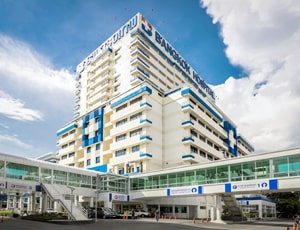
Bangkok Hospital
Bangkok, Thailand
Bangkok Hospital located in Bangkok, Thailand is accredited by JCI. Also listed below are some of the most prominent infrastructural details:
- It is recognised for the application of the newest healthcare technology.
- Blood analysis center that is not just the best in Thailand but in Asia Pacific as well.
- Biomolecule center that is the seed of healthcare equipment for Thailand and overseas.
- International affiliations and collaborations with universities and hospitals in Japan and the United States of America.
- 11 hospitals are recognised as Centers of Excellence.
- Known excellence in Trauma, Orthopedics, Cardiovascular, Neurology as well as Cancer Care.
- There is a proper streamlined patient services process followed in Bangkok Dusit Medical Services, Bangkok, Thailand.
- A well developed research center showcases the intent of the organisation to provide research based treatment opportunities to the patients.
- The group has several Medical industry partnerships as well to ensure healthcare solutions.

Vejthani Hospital
Bangkok, Thailand
Vejthani Hospital located in Bangkok, Thailand is accredited by NABH, NABL. Also listed below are some of the most prominent infrastructural details:
- It is among the topmost private hospitals functioning in Thailand.
- The bed capacity of the hospital is 263.
- There are more than three hundred thousand patients visiting the hospital every year.
- Vejthani hospital has more than 40 outpatient clinics and centers.
- International patient care center with all kinds of services: air ambulance, transfers, travel, stay, embassy liaison, patient coordinators, prayer rooms, visa coordination and translators for 20 languages.
- The special facilities are:
- International Certified Laboratory
- 10 Operating Rooms
- Radiology Section: Portable X-ray, CT-scan and C-ARM and MRI
- Neonatal Critical Care Unit
- Water-jet technique applied for liposuction
- Computer navigation and mini-invasive technique for Joint Replacement surgery

Bangpakok 9 International Hospital
Bangkok, Thailand
Bangpakok 9 International Hospital located in Bangkok, Thailand is accredited by JCI. Also listed below are some of the most prominent infrastructural details:
- It would be prudent to summarise the Medical Services provided at the Bangpakok 9 International Hospital (BPK 9), Bangkok, Thailand:
- Cosmetic Dentistry
- Dental Implants
- Electrocardiogram (EKG or ECG)
- Exercise Stress Test
- Health Screening
- Laser Vagina Firming
- Pediatric Physical Therapy
- Perfect Slim by Vela II
- Physical Therapy for Musculoskeletal
- Prosthodontics
- The Medical Services are also inclusive of the International Patient Services such as the ones listed here:
- Thai, English, French, Arabic, Chinese, Myanmar, Cambodia, Bangladeshi, Bahasa and Tagalog are the languages in which there are Translation services available for International Patients.
- Visa extension related assistance
- International health insurance related assistance
- Embassy and international organizations related assistance
- A variety of meals of choice for International Patients
- Email consultation services
- Transfer to either airport and/or hotels
- Prayer room
- Four different types of rooms are available such as Deluxe room, two kinds of suites, and a VIP suite.
- Hospital facilities like The Coffee shop, Food Hall, Cafe and Medical Spa.
- Complete health and safety protocols are maintained in the various Medical Centers some of whom are as follows:
- Aesthetic Center
- 24 Hour Emergency Center
- Allergy Center
- Breast Center
- bSmart Center
- Checkup Center
- Dental Center,
- Happy Long Life Center
- Medical Fitness Center
- Psychiatric Center
- Rehabilitation Center
- Sleep Disorders Center
Our Services to better your experience
Opinion & Option
We submit the most accurate opinion and options from one or more countries for your review
Consult Privately
Consult with a certified specialist privately on our telemedicine platform even before you decide to travel
Logistics
We handle flights, visas, transfers, and accommodation—so you can focus on your health.
Recovery
Our In-house rehabilitation service packages to better your recovery and treatment outcome
Why Choose Thailand for Lymphoma Treatment?
The following are the much-growing reasons for Thailand being frequented for Lymphoma treatment:
- World-Class Health Services at Affordable Costs: The nation is proficient in advanced medical technologies and treatments, including high-quality care at often dissimilar cost ratios of Western countries.
- Qualified Professionals: Patients will find internationally trained, renowned hepatologists, surgeons, and specialists. Medical and individualised treatment options will complement the value of the care provided by the best experts in Thailand.
- Complete Medical Services: From advanced diagnostic tools such as elastography and imaging to liver transplants, Thailand has gone the extra mile to provide patients with cutting-edge facilities for total Lymphoma treatment.
- Easy Medical Tourism: Thailand is becoming a central international hub for medical tourism. Many accredited hospitals provide excellent service to international patients, including easy accessibility, visa assistance, and organised packages.
Frequently Asked Questions
The many varieties of lymphoma, especially the cancer often referred to as Hodgkin lymphoma, are curable and treatable. The cure is possible if treatment is initiated on time. Non-Hodgkin lymphoma is also amenable to treatment, although long-term management may be necessary.
The prognosis is, indeed, dependent on type, stage, and response to treatment. Lymphoma of an earlier stage has a greater chance of being put into remission compared to lymphomas at a more advanced stage.
Yes. Aggressive forms arise, are treated, and then have chances of being relapsed or recurrent. Continuous monitoring and follow-up care are most needed in cases of relapses.
A good diet, consistent aerobic exercise, stress management, and cleanliness from infections will augment health and enhance treatment effectiveness during healing.
Lymphoma treatment in Thailand can last anywhere from weeks to months, depending on the specific type and stage of the disease. The doctors will give a detailed timetable specifying the chemotherapy cycles, the days of radiation, and the recovery period.
Yes. Genetic and molecular tests are performed routinely for personalised lymphoma treatment. They assist the treating physician in preferentially choosing the most appropriate targeted therapies for the patient according to the cancer profile.
Most hospitals have English-speaking staff and international patient departments, and translation services intervene to ensure communication is maintained throughout the patient journey.
Ideally, the best-qualified lymphoma specialist is a medical oncologist or haematologist who treats lymphoma under his or her scope of practice. Inquire about board certification, appropriate experience in lymphoma treatments, and association with reputable hospitals or cancer centres.

Reviewer

Dr. Mohit Agarwal
Medical Oncologist
14 Years of Experience
One of the finest Oncologist in New Delhi, India, Dr. Mohit Agarwal has worked with several world class multidisciplinary hospitals over the years. Dr. Mohit Agarwal has over 14+ years of experience in his field. The doctor treats and manages a wide range of conditions such as Stomach Cancer, Rectal Cancer, Breast Cancer, Brain Cancer View More
Last Reviewed - January 2026