Laryngeal Stenosis Treatment in India
- Top Accredited Hospitals
- Global Medical Standards
- Cutting-Edge Technology
- Proven Treatment Options
- High Success Rate
- Trusted by Millions

What is Laryngeal Stenosis?
Sometimes there is an issue with the air traveling from the trachea or voice box into the lungs, even though lung difficulties account for the majority of breathing problems. In this case, patients frequently breathe with a high-pitched sound known as stridor. Wheezing can sometimes be mistaken for this high-pitched breathing sound.
What is the Importance of Timely Treatment?
Timely treatment is important because laryngeal stenosis is a disorder that can quickly restrict the upper airway, which, if ignored, can cause serious breathing problems, respiratory failure, and even death. So, to preserve airway patency and avoid potentially fatal consequences, quick action is required.
What are the symptoms of Laryngeal Stenosis
- Breathlessness is one of the symptoms of laryngeal stenosis because it obstructs the airway to the lungs. Breathlessness during physical activity, or exertional dyspnea, is the most typical manifestation of laryngeal stenosis. Over time, the exertional dyspnea progressively gets worse. The patient reports that even walking causes them to feel out of breath when performing even minor tasks
- Due to vocal cord damage, these patients may experience hoarseness in their voices
- Unusual breathing noises are the additional indicators to watch out for. This high-pitched whistling sound produced during breathing is called stridor. Most of the time, this sound is confused with wheezing, which could lead to a misdiagnosis of the illness.
Causes and Risk Factors of Tethered Laryngeal Stenosis
Causes
This The following are some of the reasons of laryngeal stenosis:
- The subglottis, the narrowest part of a child's airway, might sustain damage during intubation
- The airway may narrow as a result of trauma or infection
- The lumen may narrow as a result of granulation and fibrotic tissue deposition
- The secondary infection that occurs after endotracheal intubation may cause granulation tissue to develop, which may cause scarring and arytenoid fixation
- Any growth, whether benign or malignant, has the potential to block the airway.
Risk Factors
The following are potential risk factors for laryngeal stenosis:
- Trauma: The risk is increased by a history of neck injury or prior laryngeal surgery
- Inflammatory diseases: The risk of stenosis can be raised by long-term exposure to irritants or inflammatory disorders.
Connect with our advisor for a PRIORITY response
Laryngeal Stenosis Prevention Tips
Tracheal stenosis is a problem that can be prevented by using endotracheal tubes with low-pressure cuffs, executing tracheostomies with precision, avoiding needless trauma during intubation, and exercising caution during postoperative care.
Treatment options for Laryngeal Stenosis
Endoscopic Dilatation: A balloon-like device that can be inflated at the site of stenosis is attached to an endoscope that is inserted into the airway. To remove the tissue from the restricted section of the windpipe, laser treatment may occasionally be required. Only short-term relief will be offered by this endoscopic dilatation treatment; if the condition recurs, the surgery must be repeated
Cricotracheal Resection: This open procedure involves making an incision on the front of the neck and removing any scarred tissue. The larynx's troublesome portion is rebuilt
Endoscopic Resection: Similar to endoscopic dilatation, endoscopic resection involves cutting the afflicted portion of the windpipe using a laser
Laryngectomy: When these therapies are unable to save the larynx or when the cancer has spread to the point where it would be impossible to function normally, a laryngectomy is carried out. Other forms of head and neck cancer are also treated with laryngectomies.[3] To feminize the larynx and/or voice, transgender women and other female or non-binary identified people may also undergo less invasive partial laryngectomies, such as feminization laryngoplasty and tracheal shaves. Voice restoration, oral eating, and, more recently, taste and smell rehabilitation are all included in post-laryngectomy rehabilitation. Following surgery, a person's quality of life may be impacted.[1] Vocal amputees are those who have had their larynx removed.
Cost Start From USD 2500 - USD 4500Explore Options
- A physical examination and a review of the patient's medical history are used to make the diagnosis. A number of tests will be recommended to confirm the diagnosis of subglottic stenosis if it is suspected
- Flexible Laryngoscopy: This test involves inserting a flexible tube into the throat that has a camera attached to the end. This is done to look for any growth or inflammation in the trachea and larynx
- Pulmonary Function Test: A spirometer is used to monitor breathing and the health of the lungs during a pulmonary function test
- Imaging Tests: Imaging tests, like a CT scan, could be carried out to find any structural abnormalities. Additionally, basic X-rays could occasionally be taken to evaluate the structure.
MediRehab (chain of Rehab center - part of MediGence provides comprehensive rehabilitation services designed to support arthritis patients in <India>. These services include:
- Personalized Therapy Plans: Individually tailored treatments for pain management .
- Rehabilitation Post Surgery: Voice loss is the most serious side effect of laryngectomy for patients. Because of this, voice rehabilitation has always been a crucial part of the post-total laryngectomy treatment. The issues related to the recovery of speech and swallowing following laryngeal excision are reflected in the large range of technical and surgical techniques that are available.
- Nutrition Guidance: Customized dietary plan mostly including soft food is advised.
Doctor prescribed antibiotics can be used to treat laryngeal stenosis.
Instantly Connect with our Specialists


Hospitals for Laryngeal Stenosis in India
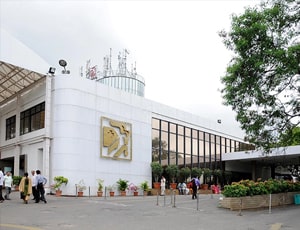
Apollo Hospitals
Hyderabad, India
Apollo Hospitals located in Hyderabad, India is accredited by JCI, NABH. Also listed below are some of the most prominent infrastructural details:
- A premier multi-specialty hospital with 477-bed capacity
- More than 50 specialties, super-specialties
- 12 Centers of Excellence
- The Institutes for Heart Diseases, Neurosciences, Cancer, Emergency, Orthopaedics, Renal Diseases, and Transplants
- Centers of Excellence are known for patient care, training and research
- Doctors with years of truly global experience in healthcare delivery

Medanta - The Medicity
Gurgaon, India
Medanta – The Medicity, Gurugram, founded by renowned cardiac surgeon Dr. Naresh Trehan, is a leading multi-super speciality hospital offering advanced yet affordable healthcare. Spread across a 43-acre campus, it houses 1,391 beds, 270 ICU beds, 40 operation theatres, and 900+ doctors across 30+ specialities. Accredited by JCI, NABH, and NABL, Medanta is designed per American Institute of Architects’ healthcare guidelines. Recognised as the Best Private Hospital in India (2020–2025) and among the World’s Top 250 Hospitals (Newsweek 2024), it excels in Cardiac Care, Cancer, Neurosciences, Gastro, Orthopaedics, and Renal Care, ensuring world-class, collaborative, and compassionate treatment.

Star Hospitals
Hyderabad, India
Star Hospitals located in Hyderabad, India is accredited by NABH, NABL. Also listed below are some of the most prominent infrastructural details:
- The bed capacity of Star Hospitals, Hyderabad, India is 130.
- The hospital has Intensive Care Units which are upgraded with the latest technologies.
- International patient care services are applied to make the process of medical travel easier for international patients.
- Centres of Excellence across disciplines such as Cardiac Sciences, Renal Sciences, Critical Care, ENT, Spine Surgery etc.
- A radiology centre which has been digitised.
- There are Centers of Excellence for prominent specialties such as cardiac care and neurosciences, there are a total of six.
Our Services to better your experience
Opinion & Option
We submit the most accurate opinion and options from one or more countries for your review
Consult Privately
Consult with a certified specialist privately on our telemedicine platform even before you decide to travel
Logistics
We handle flights, visas, transfers, and accommodation—so you can focus on your health.
Recovery
Our In-house rehabilitation service packages to better your recovery and treatment outcome
Why Choose India for Laryngeal Stenosis Treatment?
Here are some of the reasons for choosing India:
- Due to advancements in medical facilities, such as minimally invasive surgical techniques and physical therapies
- World-class experts include highly experienced doctors, JCI, and NABH-accredited healthcare institutions
- Compared to other countries, treatment in Indian hospitals is cost-effective
- Indian hospitals provide international patient services, including a multilingual support system
- Improved treatment methods and biological therapies.
Frequently Asked Questions
Yes, Laryngeal Stenosis is treatable with various treatment options available.
In India, there are several alternatives for treating laryngeal stenosis, depending on its location and severity. Treatment is often effective. Restoring voice function, respiration, and symptom relief are the goals of the treatment. Voice therapy, breathing techniques, and anti-inflammatory drugs are examples of non-surgical methods. Surgical intervention may be required in more severe cases; choices include open surgical techniques like laryngotracheal reconstruction and laryngectomy, as well as minimally invasive procedures like endoscopic dilatation and laser surgery.
Yes, many Indian hospitals offer the following for Laryngeal Stenosis treatment:
- Advanced diagnostic tools like MRI, CT scan, electromyography, and PET scan for accurate diagnoses.
- Skilled ENT physicians and therapist performing physical and voice therapy for Laryngeal Stenosis.
- Comprehensive care and rehabilitation for long-term health benefit
Always consider the following factors when selecting Indian hospitals:
- Hospitals that are accredited (authorised by JCI and NABH).
- Patient reviews and success rates.
- Hospitals that provide seamless care to patients from abroad.
Indeed, with the right care and therapy, many persons with laryngeal stenosis can lead normal lives. Numerous medical procedures and lifestyle modifications can greatly enhance the quality of life for those with laryngeal stenosis. Many people discover useful coping mechanisms to deal with breathing, voice, and mucus management difficulties, even though other people may encounter these difficulties and still lead fulfilling lives.
- Psychosocial Impact: Anxiety, depression, and a lower quality of life might result from the chronic nature of the illness and its effects on speech, breathing, and swallowing
- Breathing Problems: Patients may continue to have trouble breathing, particularly while they are exerting themselves. Reduced exercise tolerance and general levels of physical activity may result from this
- Voice Changes: The vocal cords may be impacted by laryngeal stenosis, which could result in alterations to the quality of the voice. Patients may have trouble speaking loudly, have a weak voice, or have hoarseness
- Swallowing Issues: Laryngeal stenosis can occasionally affect swallowing, increasing the risk of aspiration (food or liquid entering the airway) and causing dysphagia (difficulty swallowing).

Reviewer

Dr. Vidit Tripathi
ENT Surgeon
24 Years of Experience
One of the finest ENT Surgeon in New Delhi, India, Dr. Vidit Tripathi, has worked with several world class multidisciplinary hospitals over the years. Dr. Vidit Tripathi has over 24+ years of experience in his field. The specialist treats and manages a wide range of conditions such as Goiter, Radiation Necrosis in Neck, Neck Injury, Perforates Eardrum View More
Last Reviewed - January 2026