Keratoconus Treatment in India
- Top Accredited Hospitals
- Global Medical Standards
- Cutting-Edge Technology
- Proven Treatment Options
- High Success Rate
- Trusted by Millions

What are Keratoconus?
Keratoconus is a degenerative eye condition in which the cornea thins and swells into a cone shape. It can worsen with time and usually appears in teens or early adulthood. Although the exact cause is unknown, environmental and genetic factors lead to keratoconus.
What is the importance of timely treatment?
Keratoconus must be treated promptly to avoid complications and vision loss. Corneal cross-linking (CXL), an early intervention, can stop the progression, protect vision, and prevent the need for a corneal transplant. Severe visual impairment, corneal scarring, and a reduced quality of life can result from postponing treatment. Early consultation with an eye specialist ensures better management and long-term eye health.
What are the Common Symptoms of Keratoconus?
Common signs of Keratoconus include
- Distorted or hazy vision
- Heightened sensitivity to light and glare
- Frequent adjustments to the prescription for eyeglasses, and trouble seeing at night.
- Severe visual impairment may result from corneal scarring in more advanced instances.
Causes and Risk Factors of Keratoconus
Although the real cause of keratoconus is unknown, a mix of biochemical, environmental, and genetic variables are thought to be responsible. Oxidative stress weakens the cornea, causing it to thin and swell gradually.
Risk Factors
- Genetics: The risk is increased if there is a family history of keratoconus.
- Regular Eye Rubbing: Excessive eye rubbing might accelerate the development of corneal damage.
- Underlying Conditions: Asthma, Down syndrome, and Ehlers-Danlos syndrome are among the conditions associated with an increased risk.
- Allergies or Chronic Eye Irritation: Prolonged inflammation of the eyes can weaken the cornea.
- Hormonal Changes: There may be a hormonal component to the disease, as it frequently worsens during puberty and pregnancy.
Connect with our advisor for a PRIORITY response
Latest Research and Technologies in the Treatment of Keratoconus in India
The medical treatment of Keratoconus in India adapts the newest research and technologies to meet worldwide clinical standards and healthcare capabilities.The most recent developments in the treatment of keratoconus in India include:
- Intrastromal corneal ring segments (ICRS) to restructure the cornea, specialist contact lenses such as scleral and hybrid lenses, and corneal cross-linking (CXL) with more expedited protocols.
- AI-based early detection techniques and topography-guided laser.
Keratoconus Prevention Tips
Although there is a genetic component to keratoconus, and it is not always curable, some lifestyle modifications can slow its progression:
- Avoid rubbing your eyes as this damages the cornea and exacerbates keratoconus. If your eyes are irritated, use the prescribed antihistamine drops.
- Control Allergies and Dry Eye: To avoid eye discomfort and rubbing, alleviate dry eye and allergic reactions.
- Put on UV-protective sunglasses: Outdoor exposure to UV light can cause corneal thinning.
- Maintain a Healthy Diet: Consume vitamin D, antioxidant
Treatment options for Keratoconus
Cornea transplant: Advanced keratoconus can be surgically treated with a corneal transplant (keratoplasty). A cornea transplant is a surgical procedure that replaces a portion of the cornea with donated corneal tissue.
Cost Start From USD 3500 - USD 4500Explore Options
There are various Diagnostic tools for diagnosing Keratoconus treatment;
- Corneal Pachymetry(determines corneal thinning by measuring corneal thickness).
- Wavefront Aberrometry evaluates optical distortions brought on by abnormalities in the cornea.
- Keratometry: Determines aberrant steepening by measuring corneal curvature.
- Optical Coherence Tomography (OCT) offers high-resolution cross-sectional imaging for early identification and monitoring.
Keratoconus rehabilitation emphasises
- Lifestyle modifications, disease treatment, and vision correction to improve quality of life.
- Lifestyle changes include avoiding eye rubs, controlling allergies, and preserving eye health through a healthy diet and adequate water.
- Visual therapy examples are Low vision aids, anti-glare glasses, UV-protective lenses and assistive devices that can help control symptoms.
- Although there is no cure for keratoconus, several medications can help control symptoms, halt the condition's growth, and prevent harmful consequences. These consist of lubricating eye drops, anti-allergy medicines, and Anti-inflammatory medicines.
Instantly Connect with our Specialists


Hospitals for Keratoconus in India

nM Virani Wockhardt
Rajkot, India
A leading multispecialty hospital in Rajkot, Wockhardt Hospital is committed to providing top-notch medical care and modern treatments. With a 95% satisfaction rating, Wockhardt has successfully treated 200,000 emergency cases and more than 1.4 million OPD patients. The hospital's dedication to providing high-quality care and safety is demonstrated by its NABH and NABL accreditation. Wockhardt guarantees easily accessible, high-quality healthcare by providing a surgery 0% interest-free EMI option and a fully furnished 'ICU on Wheels' that is open 24/7. Wockhardt Hospital is a reliable option for patients looking for advanced medical care in Rajkot and beyond because of its staff of skilled specialists and outstanding reputation for excellence.

Manipal Hospital, Dwarka
Delhi, India
Manipal Hospital Dwarka is a leading multi-super speciality tertiary care hospital offering world-class, affordable, and accessible healthcare. Backed by renowned doctors, advanced technology, and global standards in clinical care, the hospital provides comprehensive preventive, diagnostic, and therapeutic services for all age groups. With 380 beds, 13 modular OTs, 118 critical care beds, and 24/7 emergency services, it combines excellence in patient care with innovations like AI, telemedicine, remote monitoring, and EMR—striving to become a fully digital, paperless hospital setting new standards in modern healthcare.
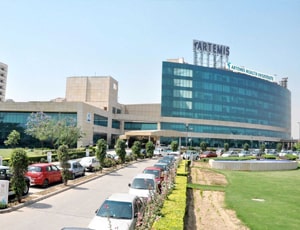
Artemis Health Institute
Gurgaon, India
Artemis Hospital, established in 2007 in Gurgaon, India, is a 750+ bed, state-of-the-art multi-speciality hospital and the first in Gurgaon accredited by JCI and NABH. A flagship of the Apollo Tyres Group, it offers advanced care across cardiology, oncology, orthopaedics, neurology, and transplant medicine, supported by modern infrastructure and 60+ world-class operating theatres. Its Centres of Excellence span critical areas like heart, cancer, neurosciences, orthopaedics, and women & child care. Guided by values of Service, Compassion, and Integrity, Artemis combines innovation, technology, and affordability, making it a trusted international healthcare destination for comprehensive and compassionate patient care.
Our Services to better your experience
Opinion & Option
We submit the most accurate opinion and options from one or more countries for your review
Consult Privately
Consult with a certified specialist privately on our telemedicine platform even before you decide to travel
Logistics
We handle flights, visas, transfers, and accommodation—so you can focus on your health.
Recovery
Our In-house rehabilitation service packages to better your recovery and treatment outcome
Why Choose India for Keratoconus Treatment?
India has emerged as a top keratoconus treatment destination thanks to its cutting-edge technology, knowledgeable professionals, and affordable solutions. Custom contact lenses greatly enhance eyesight, and corneal cross-linking (CXL) is quite efficient at halting advancement. The following are some of the reasons for choosing India.
- Advanced Technology: India provides state-of-the-art procedures such as topography-guided PRK, corneal cross-linking (CXL), and AI-based diagnostics for early identification.
- Experienced Professionals: Prominent eye hospitals employ knowledgeable ophthalmologists with expertise in treating and operating on keratoconus.
- Affordable therapy: Keratoconus therapy in India is far less expensive than in Western nations without sacrificing quality.The Eye Foundation
- Comprehensive Care: India offers keratoconus therapies, including corneal transplants and speciality contact lenses.
- Hub for Medical Tourism India is a popular travel destination because of its top-notch eye hospitals and efficient international patient services.
Frequently Asked Questions
Keratoconus can be treated, although it cannot be cured completely. Treatment goals are stabilising the cornea, improving eyesight, and decreasing development. The likelihood of successful treatment rises with early diagnosis. Treatment possibilities include intracorneal ring segments (ICRS), corneal cross-linking (CXL), glasses, specialist contact lenses, and corneal transplants in more severe cases, depending on the severity.
India has become a leading destination for keratoconus treatment due to advanced technology, skilled specialists, and cost-effective options.
Yes, many Indian hospitals offer the following for Keratoconus treatment:
- India provides excellent, reasonably priced keratoconus care with top-notch facilities and knowledgeable ophthalmologists.
- Prominent eye centres employ personalised scleral lenses, topography-guided laser treatments, AI-based diagnostics, and sophisticated corneal cross-linking (CXL).
- Advanced diagnostic tools and treatments are guaranteed by methods such as Pentacam imaging and Deep Anterior Lamellar Keratoplasty (DALK)
Always consider the following factors when selecting Indian hospitals:
- Hospitals that are accredited (authorised by JCI and NABH).
- Patient reviews and success rates.
- Hospitals that provide seamless care to patients from abroad.
In India, keratoconus treatment is highly successful, especially when using cutting-edge techniques like corneal transplants, implantable collamer lenses, and corneal collagen cross-linking (C3R). Corneal cross-linking has demonstrated success rates of more than 90% in stabilising the cornea and is frequently used to stop the progression of illness. Furthermore, with appropriate post-operative care, corneal transplants for severe cases have an 85–95% success rate.
Keratoconus impairs vision by:
- Vision distortion and blurring: When the cornea thins and swells into a cone shape, light scatters erratically, resulting in double, wavy, or blurry vision. Additionally, it causes uneven astigmatism, which standard glasses may not entirely correct.
- Increased Light Sensitivity and Glare: Driving at night and performing daily tasks might be challenging due to bright lights, halos, and glare.
- Regular Prescription Changes: As the cornea changes shape, eyesight deteriorates over time, necessitating regular adjustments to contact lenses or glasses, and in extreme situations, corneal surgery or specialist lenses.
Most hospitals in India offer the following:
- Assistance in obtaining visas.
- Airport Service to and from the hospitals.
- Multilingual experts and Best accommodations services.
- Personalised treatment plans for patients from abroad.
In India, keratoconus is relatively widespread, and it is more common in some ethnic groups, such as those of Middle Eastern, Pakistani, and Indian ancestry. If treatment is not received, it usually begins in youth or early adulthood and worsens over time.
Untreated keratoconus can result in corneal scarring, significant visual impairment, and, in rare instances, abrupt corneal swelling (hydrops), which can cause agony and abrupt blindness. Due to severe thinning and irregularities, advanced stages may necessitate corneal transplantation.
Author

Dr. Shagufta Parveen
Dr. Shagufta Parveen is a Clinical researcher and medical writer with expertise in clinical pharmacology and pharmacotherapeutics. She holds a B.Pharm and Doctor of Pharmacy (Post-Baccalaureate) degree from Teerthanker Mahaveer University, Moradabad.
During her clinical stint at BLK-Max Super Speciality Hospital and Indraprastha Apollo Hospital, she gained hands-on experience in the Clinical Pharmacology Department. Combining scientific knowledge with strong medical writing skills, Dr. Shagufta develops evidence-based healthcare content, treatment guides, and patient education resources.
Her work focuses on simplifying complex medical concepts while maintaining scientific accuracy, helping readers better understand healthcare advancements and treatment options.
In addition to her writing expertise, she is actively involved in scientific research and has contributed to peer-reviewed publications.
Her research work is accessible through the following links:
https://scholar.google.com/citations?user=lMVK1eIAAAAJ&hl=en
https://carcinogenesis.com/index.php/JOC/article/view/870
https://carcinogenesis.com/index.php/JOC/article/view/868
https://wjpsronline.com/abstract/0000000760
View MoreReviewer

Dr. Vidit Tripathi
ENT Surgeon
24 Years of Experience
One of the finest ENT Surgeon in New Delhi, India, Dr. Vidit Tripathi, has worked with several world class multidisciplinary hospitals over the years. Dr. Vidit Tripathi has over 24+ years of experience in his field. The specialist treats and manages a wide range of conditions such as Goiter, Radiation Necrosis in Neck, Neck Injury, Perforates Eardrum View More
Last Reviewed - January 2026