Germ Cell Ovarian Cancer Treatment in Thailand
- Top Accredited Hospitals
- Global Medical Standards
- Cutting-Edge Technology
- Proven Treatment Options
- High Success Rate
- Trusted by Millions

What is Germ Cell Ovarian Cancer?
Reproduction cells (germ cells) in your ovaries give birth to ovarian germ cell cancers. The ovaries and two small pelvic glands are essential for the female reproductive tract. During fertile times, they produce eggs. Someday, the germ cells in your ovaries mature and turn into eggs, or "germ"-inate. When an ovarian germ cell tumor happens, some cells mass together to form a misshapen lump.
Ovarian germ cell tumors often develop in only one ovary but occasionally occur in both.
Most ovarian germ cell tumors are benign (not cancerous) and rarely become malignant (cancerous). Malignant germ cell tumors, which have the potential to spread and harm normal tissue, are an uncommon type of ovarian cancer.
Types of Germ Cell Ovarian Cancer
These are the most common types of ovarian germ cell tumors:
Mature teratoma (Dermoid Cyst): The most common type of ovarian germ cell tumors are mature teratomas, or dermoid cysts, which are benign tumors. Most diagnosed individuals are in their teens, twenties, or thirties.
Dysgerminoma: The most common type of cancerous ovarian germ cell tumor is referred to as a dysgerminoma. Most tumors (70 percent of the diagnosis) are not believed to be aggressive (rapid-spreading) and respond well to treatment. Most individuals with diagnoses fall in their 20s or 30s.
Immature teratoma: A fast-growing malignant tumor, an immature teratoma can metastasise—spread from your ovary to other areas of your body. It is more common in people under the age of twenty.
Endodermal sinus tumors or yolk sac tumors are cancers that metastasise rapidly. They are most common in those below the age of twenty. Children who have not yet commenced their periods are affected in up to 40% of the diagnoses.
Mixed germ cell tumors: Malignant tumors referred to as mixed germ cell tumors usually include a mixture of yolk sac and dysgerminoma tumors.
What is the Importance of Timely Treatment?
Early treatment is crucial to enhance survival and preserve fertility in germ cell ovarian malignancy. Early treatment, including surgery and chemotherapy, offers a greater chance of eradicating the tumor and halting its spread. Delayed treatment can lead to metastases, issues, and reduced conceptions. Early treatment is most beneficial for remission, organ function, and quality of life.
What are the Common Symptoms of Germ Cell Ovarian Cancer?
The early detection of ovarian germ cell cancers may be challenging. Unless they are extensive, benign tumors might not show symptoms, while symptoms of malignant tumors cannot appear until the malignancy has progressed.
Some symptoms to look out out for are:
- Soreness, discomfort, or pain in the abdomen. (This could be severe and start abruptly.)
- Belly bloat, whether or not you have gained weight elsewhere.
- Alterations in bowel habits, like constipation or diarrhea.
- Modifications in your eating patterns, such as a decrease in appetite.
- Irregular vaginal bleeding
Causes and Risk Factors of Germ Cell Ovarian Cancer
Causes
- Sex cells, or germ cells, may change (mutate) and grow into ovarian germ cell tumors. Researchers continue to study the reasons behind these tumors and the chances of getting them.
- Ovarian germ cell tumors may affect anyone with ovaries, yet they are much more prevalent in those who are younger and in their reproductive years
Risk Factors
The following are germ cell ovarian cancer risk factors:
- Family history of ovarian cancer.
- Genetic conditions like Turner syndrome or Gonadal dysgenesis.
- Hereditary genetic mutations, including BRCA1 and BRCA2.
- Age: This is usually in young women and adolescents.
- Previous history of various tumours (e.g., breast, colon).
- Infertility.
Connect with our advisor for a PRIORITY response
Latest Research and Technologies in the Treatment of Germ Cell Ovarian Cancer in Thailand
Thailand has made great strides in the treatment of germ cell ovarian cancer. Comprehensive support services, such as counseling, nutrition, and rehabilitation, improve patient care, and advanced chemotherapy procedures have increased survival rates. These developments demonstrate Thailand's dedication to offering state-of-the-art, comprehensive cancer care.
Germ Cell Ovarian Cancer Prevention Tips
There is no method for preventing germ cell cancer. However, regular check-ups can enable your physician to monitor your health and assess your cancer risk.
Treatment options for Germ Cell Ovarian Cancer
Surgery: Your doctor might suggest having an oophorectomy to have either one or both of your ovaries or your fallopian tubes removed. If cancer extends beyond your fallopian tubes and ovaries, you would have a total hysterectomy done to have your cervix and uterus removed.
Chemotherapy: When you have chemotherapy, your doctor administers medicine into your veins, typically through an infusion. Chemotherapy medications destroy cancerous cells and prevent them from growing. You'll get chemo treatments for many weeks or even months.
Cost Start From USD 1000 - USD 6800Explore Options
- Imagingtests: If a doctor suspects an ovarian germ cell tumor, they often order a transvaginal ultrasound as the initial imaging study. This test allows your physician to examine your abdomen for growths.
- Your diagnosis may also necessitate a magnetic resonance imaging (MRI) or computed tomography (CT) scan. These tests will show more detail than an ultrasound.
- Blood tests: A test for serum tumor markers may be required to measure the levels of certain chemicals in your body. Ovarian germ cell cancers can be suggested by higher levels of human chorionic gonadotropin (HCG), lactate dehydrogenase (LDH), or alpha-fetoprotein (AFP).
MediRehab (a chain of Rehab centres, part of MediGence) provides comprehensive rehabilitation services to support patients through Teleconsulations and online therapy sessions.
- Physicaltherapy, using manual lymphatic drainage and specific exercises, may help control lymphedema in patients who develop swelling after surgery.
- Post-surgicalrehabilitation helps the patient regain strength, flexibility, and mobility, especially if the patient underwent an oophorectomy or hysterectomy.
Depending on the situation, your healthcare professional may prescribe medicine to help control your symptoms and support the treatment plan.
Instantly Connect with our Specialists


Hospitals for Germ Cell Ovarian Cancer in Thailand

Piyavate Hospital
Bangkok, Thailand
Piyavate Hospital located in Bangkok, Thailand is accredited by JCI. Also listed below are some of the most prominent infrastructural details:
Medicine Centre: Piyavate Hospital provides advanced holistic treatment for their patients. They offer a complete range of services and physicians that specialize in various fields like the endocrine system, the nervous system, kidney function, cardiovascular care, respiratory and digestive system. They pride themselves for the familial care that they provide to their patients.
Fertility and In-Vitro Fertilization Centre: Helping the couples who walk into the Piyavate Hospital to achieve their dream of having a family. They have a medical team that specializes in male and female fertility. They offer consultation services, fertility check-up for both men and women and complete IVF services. They have advanced IVF cycle treatment facilities that offer a high rate of success.
Bone and Joint Institute: Piyavate Hospital houses one of the frontrunners in Orthopaedic health care in all of SouthEast Asia. They offer a wide range of services and surgeries in their bone and joint institute that include hand surgery, hip and knee replacement surgery, spinal cord surgery, upper extremity surgery, arthroscopic surgery and sports medicine.
Eye and Lasik Centre: Piyavate Hospital is fully equipped with the latest and most advanced technology for eye care and houses highly skilled ophthalmologists, sub-specialists and qualified nurses.
Physical Therapy and Rehabilitation Centre: One of the first hospitals to be equipped with the Hybrid Assistive Limb technology that will help a neurologically challenged patient to control the rehabilitation robot limb with a signal from their brain. The Physical Therapy and Rehabilitation Centre at Piyavate Hospital uses this system encourage patients to regain muscle memory to walk and function normally.
Amenities for Patient’s Family:
Piyavate Hospital also offers additional apartment facilities to house the kin of the patients who come to visit them from distant places. A restaurant, a flower shop and a café are a few of the other amenities provided by the hospital.
These are the most popular services offered by the Piyavate Hospital in Bangkok, Thailand. They also provide a plethora of other medical services that are listed below:
Diabetic Foot Centre
Check-up centre
Urology Centre
Heart Institute
Paediatric Centre
Obstetrics and Gynaecology Centre
Surgery Centre
Ear Nose Throat Centre
Haemodialysis Centre
Dental Centre
X-Ray Centre
Gastroenterology Centre
Cancer Centre
Neonatal Intensive Care Unit (NICU)
Emergency Services and Centre
Tele-medicine

Phyathai 2 International Hospital
Bangkok, Thailand
Phyathai 2 International Hospital located in Bangkok, Thailand is accredited by JCI. Also listed below are some of the most prominent infrastructural details:
- Fully equipped rooms are available for convenience of the patients- Gold B Room, Gold A Room, Pediatric Gold A, Platinum room, and Prestige ward
- Nearby accommodations are also available- Abloom Service Apartments, Bangkok Patio, VIB Best Western Sanam Pao, VIC3 Hotel
- Operating room
- International Patient Medical Center to assist overseas patients
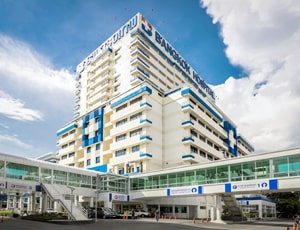
Bangkok Hospital
Bangkok, Thailand
Bangkok Hospital located in Bangkok, Thailand is accredited by JCI. Also listed below are some of the most prominent infrastructural details:
- It is recognised for the application of the newest healthcare technology.
- Blood analysis center that is not just the best in Thailand but in Asia Pacific as well.
- Biomolecule center that is the seed of healthcare equipment for Thailand and overseas.
- International affiliations and collaborations with universities and hospitals in Japan and the United States of America.
- 11 hospitals are recognised as Centers of Excellence.
- Known excellence in Trauma, Orthopedics, Cardiovascular, Neurology as well as Cancer Care.
- There is a proper streamlined patient services process followed in Bangkok Dusit Medical Services, Bangkok, Thailand.
- A well developed research center showcases the intent of the organisation to provide research based treatment opportunities to the patients.
- The group has several Medical industry partnerships as well to ensure healthcare solutions.
Our Services to better your experience
Opinion & Option
We submit the most accurate opinion and options from one or more countries for your review
Consult Privately
Consult with a certified specialist privately on our telemedicine platform even before you decide to travel
Logistics
We handle flights, visas, transfers, and accommodation—so you can focus on your health.
Recovery
Our In-house rehabilitation service packages to better your recovery and treatment outcome
Why Choose Thailand for Germ Cell Ovarian Cancer Treatment?
- World-Class Healthcare Facilities: Thailand's JCI-accredited hospitals guarantee superior safety and quality standards while offering cutting-edge oncology care.
- Highly Skilled Oncologists: Internationally qualified specialists who create individualised treatment strategies provide skilled gynecologic oncology care in Thai hospitals. A multidisciplinary team approach guarantees comprehensive and ideal patient outcomes.
- Advanced Treatment Options: Thai hospitals provide precision medicine for individualised cancer treatment, sophisticated chemotherapy treatments, and fertility-preserving procedures. Targeted therapies and genetic profiling improve patient outcomes and treatment efficacy.
- Affordable Treatment: Thailand offers SCLC treatment at a substantially lower cost than many Western nations without sacrificing care quality.
- Comprehensive Treatment Options: Comprehensive cancer care, including counselling, dietary advice, rehabilitation, and pain treatment, is offered by Thai hospitals. Herbal medicine and acupuncture are examples of integrative therapies.
Frequently Asked Questions
To determine whether a tumor is malignant or not, medical experts apply a process called staging to classify the malignancy. They use imaging methods like positron emission tomography (PET) and CT scans to assess the size and pinpoint the tumour. For the most part, cancer is easier to treat when it is in an earlier stage.
The following are the stages of malignant ovarian germ cell tumors:
Stage 1: The malignancy is confined to your ovaries alone.
Stage 2: Your fallopian tubes or uterus are part of the other pelvic tissues where cancer has spread.
Stage 3: While the cancer has not yet spread beyond your abdomen, it has invaded your lymph nodes and the peritoneum, the lining of your pelvic organs and abdominal cavity.
Stage 4 (metastatic cancer): The cancer has spread to organs and tissues beyond your abdomen, for example, your lungs, or it has grown into your liver or spleen.
No, germ cell ovarian cancer is not very common. Only 2% to 5% of all ovarian cancers are due to it. This type of cancer occurs more in women younger than 30 and predominantly in young women, often in their reproductive years. Although less prevalent than other forms of ovarian cancer, its potential impact on fertility and overall health makes it a cause for concern.
Women under 30 are more likely to get germ cell ovarian cancer, particularly if they have a family history of other ovarian cancers or have inherited syndromes like BRCA1 or BRCA2. Other risk factors are infertility, some ethnic groups, endometriosis, PCOS, and having a past germ cell cancer. It is still a very unusual type of cancer, however, and most women with these risk factors may not develop it.
Germ cell ovarian cancer cannot be entirely prevented at this point. However, a healthy lifestyle, managing risk factors, and regular checkups with the physician can facilitate early detection and a successful outcome from treatment. No specific preventive interventions for germ cell ovarian cancer are available at this time; however, genetic counseling and testing can help estimate risk and guide preventive measures for those with a family history or genetic predisposition.
In Thailand, five-year survival rates for localised instances of germ cell ovarian cancer surpass 90%, indicating that the disease has a generally excellent survival rate, mainly when discovered early. Improved results on par with international norms result from advanced treatments, including chemotherapy and targeted medicines.
Treatments for germ cell ovarian cancer, such as radiation, chemotherapy, and surgery, can alter hormone levels, resulting in irregular menstruation or infertility. However, if there is no ovarian damage, some women might continue to have regular periods.
Genetic testing might be beneficial to patients with germ-cell ovarian cancer, especially if the patient was diagnosed at a young age or if there is a family history of the illness. Testing can identify inherited mutations in the BRCA1 or BRCA2 genes, which are more commonly associated with other types of ovarian cancer but are still applicable.
Genetic testing can also help determine treatment possibilities and assess family members' risk. However, routine genetic testing for germ cell ovarian cancer is not typically performed in the absence of specific risk factors or signs.
Treatment for germ cell ovarian cancer lasts different lengths of time, from a few months for early instances to a year or longer for advanced stages. For long-term monitoring, ongoing treatments and follow-ups might be required.
In Thailand, you can locate a skilled gynecologic oncologist by looking into hospitals with specialist cancer centres accredited by JCI. To assist you in selecting the best expert, several hospitals offer teleconsultations, international patient coordinators, and online directories of doctors. Finding skilled oncologists with foreign training might also be aided by patient recommendations and medical tourism organisations.
Yes, top hospitals and specialist doctors in Thailand can provide you with a second opinion regarding the treatment of germ-cell ovarian cancer. Numerous hospitals offer telemedicine services, multidisciplinary tumour boards, and in-person consultations to assess your situation and offer professional advice on the best course of therapy.

Reviewer

Dr. Mohit Agarwal
Medical Oncologist
14 Years of Experience
One of the finest Oncologist in New Delhi, India, Dr. Mohit Agarwal has worked with several world class multidisciplinary hospitals over the years. Dr. Mohit Agarwal has over 14+ years of experience in his field. The doctor treats and manages a wide range of conditions such as Stomach Cancer, Rectal Cancer, Breast Cancer, Brain Cancer View More
Last Reviewed - January 2026