Gallbladder Polyps Treatment in Thailand
- Top Accredited Hospitals
- Global Medical Standards
- Cutting-Edge Technology
- Proven Treatment Options
- High Success Rate
- Trusted by Millions

What are Gallbladder Polyps?
Gallbladder polyps are growths or polyp-like lesions that project from the inner lining of the gallbladder. Most are benign and represent cholesterol deposits or other non-neoplastic pseudopolyps rather than true tumors. A smaller proportion are neoplastic polyps that may have malignant potential. Gallbladder polyps are often discovered incidentally during abdominal ultrasound performed for another reason.
What is the Importance of Timely Treatment?
Timely evaluation helps distinguish small, low-risk lesions that may only require observation from polyps with features associated with a higher risk of neoplasia. Management generally depends on ultrasound appearance, size, growth, symptoms, and relevant patient factors, not on the presence of a polyp alone. Some small polyps require no follow-up, while larger or higher-risk lesions may require surgical consultation and possible gallbladder removal.
What are the Common Symptoms of Gallbladder Polyps?
- Right upper abdominal discomfort or pain
- Upper abdominal fullness or discomfort after eating
- Nausea or vomiting
- Bloating or indigestion
- Symptoms resembling gallstone-related biliary pain
- Rarely, jaundice when another biliary condition is present
Causes and Risk Factors of Gallbladder Polyps
Causes
- Cholesterol accumulation within the gallbladder wall
- Inflammatory or hyperplastic changes
- Adenomatous or other neoplastic growths
- Intracholecystic papillary neoplasms and other uncommon epithelial lesions
- Gallbladder wall changes associated with chronic inflammation
- In some cases, the exact cause of a polypoid lesion cannot be determined from ultrasound alone
Risk Factors
- Increasing age, particularly in patients with other concerning features
- Primary sclerosing cholangitis (PSC)
- Sessile or broad-based polyp morphology
- Focal gallbladder wall thickening associated with the lesion
- Larger polyp size
- Documented growth during surveillance
- Certain geographic or genetic populations with higher background risk of gallbladder cancer
- Gallbladder symptoms when no other cause is identified
Latest Research and Technologies in the Treatment of Gallbladder Polyps in Thailand
- Current management focuses on assessing polyp size, morphology, associated gallbladder wall changes, growth, and patient-specific risk factors to determine whether surveillance or surgical evaluation is appropriate. Abdominal ultrasound remains the primary investigation. Contrast-enhanced ultrasound and endoscopic ultrasound may help clarify selected indeterminate findings in centres with appropriate expertise, but they are not routinely required for every patient.
Treatment options for Gallbladder Polyps
Cholecystectomy : Surgical removal of the gallbladder may be recommended for sufficiently large polyps or lesions with concerning features.
Cost Start From 4250Explore Options
- Clinical assessment:
- Medical and Symptom History: Evaluation includes abdominal pain, nausea, vomiting, jaundice, previous gallstones or gallbladder disease, weight changes, prior imaging findings, family history, relevant medical conditions, and risk factors for gallbladder malignancy.
- Physical Examination: The clinician evaluates for right upper abdominal tenderness, abdominal masses, jaundice, fever, or other findings suggesting gallbladder inflammation, biliary obstruction, or another abdominal condition.
- Polyp Characteristics: The clinician assesses size, number, location, morphology, attachment to the gallbladder wall, stalk characteristics, and adjacent wall thickening because these features influence risk stratification and follow-up.
- Assessment of Growth: Comparison with previous ultrasound examinations can determine whether a lesion has remained stable, increased in size, decreased, or disappeared.
- Assessment of Associated Conditions: Evaluation may identify gallstones, gallbladder inflammation, biliary obstruction, primary sclerosing cholangitis, or other conditions that may affect management.
- Imaging Tests:
- Abdominal Ultrasound: The primary investigation for detecting gallbladder polyps and assessing their size, morphology, and associated gallbladder abnormalities.
- Repeat Ultrasound: May be recommended when surveillance is appropriate, according to the lesion's characteristics and the selected clinical guideline.
- Contrast-Enhanced Ultrasound or Endoscopic Ultrasound: May be considered in selected cases when standard ultrasound findings are indeterminate and further characterisation could influence management.
- MRI/MRCP or CT Scan: May be used when there is concern about associated biliary disease, an indeterminate lesion, possible malignancy, or the need to assess surrounding structures.
MediRehab (a chain of Rehab centres, part of MediGence) provides comprehensive tele-rehabilitation services designed to support patients with Gallbladder Polyps in Thailand. These Services include:
- Early Mobilisation After Surgery: Patients undergoing laparoscopic cholecystectomy are generally encouraged to begin gentle movement and walking as tolerated after surgery.
- Gradual Activity Progression: Patients can usually gradually increase daily activities, based on surgical advice and individual recovery.
- Postoperative Wound and Pain Care: Patients should follow instructions regarding incision care, pain management, lifting restrictions, and signs of infection.
- Doctors may prescribe medications to manage associated conditions or symptoms, such as gallstone-related pain or inflammation, if present. Treatment decisions should focus on the underlying condition and the polyp's risk profile. Depending on the findings, management may involve observation, ultrasound surveillance, additional investigation, or surgical removal of the gallbladder.
Instantly Connect with our Specialists


Hospitals for Gallbladder Polyps in Thailand
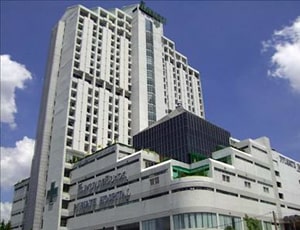
Piyavate Hospital
Bangkok, Thailand
Piyavate Hospital located in Bangkok, Thailand is accredited by JCI. Also listed below are some of the most prominent infrastructural details:
Medicine Centre: Piyavate Hospital provides advanced holistic treatment for their patients. They offer a complete range of services and physicians that specialize in various fields like the endocrine system, the nervous system, kidney function, cardiovascular care, respiratory and digestive system. They pride themselves for the familial care that they provide to their patients.
Fertility and In-Vitro Fertilization Centre: Helping the couples who walk into the Piyavate Hospital to achieve their dream of having a family. They have a medical team that specializes in male and female fertility. They offer consultation services, fertility check-up for both men and women and complete IVF services. They have advanced IVF cycle treatment facilities that offer a high rate of success.
Bone and Joint Institute: Piyavate Hospital houses one of the frontrunners in Orthopaedic health care in all of SouthEast Asia. They offer a wide range of services and surgeries in their bone and joint institute that include hand surgery, hip and knee replacement surgery, spinal cord surgery, upper extremity surgery, arthroscopic surgery and sports medicine.
Eye and Lasik Centre: Piyavate Hospital is fully equipped with the latest and most advanced technology for eye care and houses highly skilled ophthalmologists, sub-specialists and qualified nurses.
Physical Therapy and Rehabilitation Centre: One of the first hospitals to be equipped with the Hybrid Assistive Limb technology that will help a neurologically challenged patient to control the rehabilitation robot limb with a signal from their brain. The Physical Therapy and Rehabilitation Centre at Piyavate Hospital uses this system encourage patients to regain muscle memory to walk and function normally.
Amenities for Patient’s Family:
Piyavate Hospital also offers additional apartment facilities to house the kin of the patients who come to visit them from distant places. A restaurant, a flower shop and a café are a few of the other amenities provided by the hospital.
These are the most popular services offered by the Piyavate Hospital in Bangkok, Thailand. They also provide a plethora of other medical services that are listed below:
Diabetic Foot Centre
Check-up centre
Urology Centre
Heart Institute
Paediatric Centre
Obstetrics and Gynaecology Centre
Surgery Centre
Ear Nose Throat Centre
Haemodialysis Centre
Dental Centre
X-Ray Centre
Gastroenterology Centre
Cancer Centre
Neonatal Intensive Care Unit (NICU)
Emergency Services and Centre
Tele-medicine

Sikarin Hospital
Bangkok, Thailand
Apart from in-detail treatment procedures available, Sikarin Hospital located in Bangkok, Thailand has a wide variety of facilities available for International Patients. Some of the facilities which are provided by them are Airport Transfer, Choice of Meals, Interpreter, SIM, TV inside room. Also listed below are some of the most prominent infrastructural details:
- Sikarin Hospital has a 258-bed capacity.
- The hospital caters to the healthcare needs of both local and international patients.
- Dedicated and skilled, experienced healthcare professionals are the strength of the organization.
It has also received many awards and certifications and some of them are:
- APSIC CSSD Center of Excellence Award (2017-18)
- Accreditation by the Joint Commission International
- HA-Hospital/Healthcare Accreditation
- HACCP Certificate of Registration
- The Best Under a Billion Award
- ISO 14001 Environment Management System
- ISO 9001 Quality Management System
The various clinics and centers of Sikarin Hospital are as follows:
- Pediatric Institute
- Orthopedic Institute
- Dental Center
- Health Check-up Center
- Heart Disease Center
- Cerebral and Nervous System Center
- Internal Medicine Clinic
- Diagnostic Radiology Center
- Diagnostic Laboratory
- Endoscopic Surgery Center
- International Medical Center
- Emergency Medical Center
- Sikarin Beauty Center
- Eye Center
- Rehabilitation Center
- Women’s Health Center
- Ear, Nose and Throat Center
- Specialized Internal Medicine Center
- Center for Gastrointestinal and Liver Diseases
The medical technology present in Sikarin Hospital is outlined here:
- MRI (Magnetic Resonance Imaging) magnetic resonance imaging
- Hybrid Operating Room
- Endoscopic Surgery - Gastrointestinal medical technology with tiny capsules
- S.R. Laboratory
- Cardiac Catheterization Lab
- Dental Operating Microscope, an innovative endoscopic root canal treatment
- 128-Slice CT Scan
- ORTHOPANTOMOGRAPH OP 3D oral X-ray machine
- Digital Mammogram
- Optical Coherence Tomography
- INFRARED (IR) IMAGING Surgical Technology “Cure Cancer” – Direct, Accurate, Fast
- 3D endoscopic surgery technology
- Laparoscopic Surgery
- Dental Aerosol Suction Dental Intraoral Aerosol Remover
- Comprehensive Dental Center
- iTeroElement 5D

Bangpakok 9 International Hospital
Bangkok, Thailand
Bangpakok 9 International Hospital located in Bangkok, Thailand is accredited by JCI. Also listed below are some of the most prominent infrastructural details:
- It would be prudent to summarise the Medical Services provided at the Bangpakok 9 International Hospital (BPK 9), Bangkok, Thailand:
- Cosmetic Dentistry
- Dental Implants
- Electrocardiogram (EKG or ECG)
- Exercise Stress Test
- Health Screening
- Laser Vagina Firming
- Pediatric Physical Therapy
- Perfect Slim by Vela II
- Physical Therapy for Musculoskeletal
- Prosthodontics
- The Medical Services are also inclusive of the International Patient Services such as the ones listed here:
- Thai, English, French, Arabic, Chinese, Myanmar, Cambodia, Bangladeshi, Bahasa and Tagalog are the languages in which there are Translation services available for International Patients.
- Visa extension related assistance
- International health insurance related assistance
- Embassy and international organizations related assistance
- A variety of meals of choice for International Patients
- Email consultation services
- Transfer to either airport and/or hotels
- Prayer room
- Four different types of rooms are available such as Deluxe room, two kinds of suites, and a VIP suite.
- Hospital facilities like The Coffee shop, Food Hall, Cafe and Medical Spa.
- Complete health and safety protocols are maintained in the various Medical Centers some of whom are as follows:
- Aesthetic Center
- 24 Hour Emergency Center
- Allergy Center
- Breast Center
- bSmart Center
- Checkup Center
- Dental Center,
- Happy Long Life Center
- Medical Fitness Center
- Psychiatric Center
- Rehabilitation Center
- Sleep Disorders Center
Our Services to better your experience
Opinion & Option
We submit the most accurate opinion and options from one or more countries for your review
Consult Privately
Consult with a certified specialist privately on our telemedicine platform even before you decide to travel
Logistics
We handle flights, visas, transfers, and accommodation—so you can focus on your health.
Recovery
Our In-house rehabilitation service packages to better your recovery and treatment outcome
Why Choose Thailand for Gallbladder Polyps Treatment?
- Experienced Gastrointestinal and Hepatobiliary Specialists: Thai hospitals have gastroenterologists and hepatobiliary surgeons experienced in evaluating gallbladder polyps and distinguishing low-risk lesions from those requiring surgical assessment.
- Advanced Diagnostic Facilities: Many centres provide high-quality abdominal ultrasound, Doppler imaging, CT, MRI/MRCP, endoscopic ultrasound, and laboratory investigations when clinically required.
- Multidisciplinary Care: Radiologists, gastroenterologists, hepatobiliary surgeons, oncologists, and pathologists can assess complex cases when needed.
- International Patient Support: Major Thai hospitals may provide medical-record review, specialist coordination, treatment scheduling, travel assistance, accommodation support, and postoperative or surveillance follow-up for international patients.
Frequently Asked Questions
Author

Dr. Shagufta Parveen
Dr. Shagufta Parveen is a Clinical researcher and medical writer with expertise in clinical pharmacology and pharmacotherapeutics. She holds a B.Pharm and Doctor of Pharmacy (Post-Baccalaureate) degree from Teerthanker Mahaveer University, Moradabad.
During her clinical stint at BLK-Max Super Speciality Hospital and Indraprastha Apollo Hospital, she gained hands-on experience in the Clinical Pharmacology Department. Combining scientific knowledge with strong medical writing skills, Dr. Shagufta develops evidence-based healthcare content, treatment guides, and patient education resources.
Her work focuses on simplifying complex medical concepts while maintaining scientific accuracy, helping readers better understand healthcare advancements and treatment options.
In addition to her writing expertise, she is actively involved in scientific research and has contributed to peer-reviewed publications.
Her research work is accessible through the following links:
https://scholar.google.com/citations?user=lMVK1eIAAAAJ&hl=en
https://carcinogenesis.com/index.php/JOC/article/view/870
https://carcinogenesis.com/index.php/JOC/article/view/868
https://wjpsronline.com/abstract/0000000760
View MoreReviewer

Dr. Pradeep Jain
General & Laparoscopic Surgeon
33 Years of Experience
Dr. Pradeep Jain has completed his MBBS, MS - General Surgery, MCh - Surgical Gastroenterology/G.I. Surgery, and MCh - Surgical Oncology. He is a GastroIntestinal Surgeon, General Surgeon, Surgical Oncologist, Bariatric Surgeon par excellence with total experience of 36 years of which about 33+ years have been as a specialist View More
Last Reviewed - January 2026