Fuchs' Endothelial Dystrophy Treatment in Turkey
- Top Accredited Hospitals
- Global Medical Standards
- Cutting-Edge Technology
- Proven Treatment Options
- High Success Rate
- Trusted by Millions

What is Fuchs' endothelial dystrophy?
Fuchs endothelial dystrophy is a progressive eye condition that causes vision problems. It is a type of posterior corneal dystrophy that affects the innermost layer of corneal endothelial cells and Descemet’s membrane (the basement membrane). It causes loss of corneal endothelial cells, leading to fluid buildup (oedema) and small bumps called guttata that reduce visual clarity.
What is the Importance of Timely Treatment?
Timely assessment helps determine the severity of Fuchs’ endothelial dystrophy and whether treatment is needed. Mild cases may only require monitoring, while supportive treatments may help manage symptoms caused by corneal swelling. If the condition significantly affects vision, a corneal transplant may be recommended. Early evaluation also helps identify other eye conditions that may affect treatment planning and recovery.
What are the common symptoms of Fuchs' endothelial dystrophy?
Symptoms and their intensity can vary. The following describes the symptoms associated with the disease.
- Reduced corneal clarity
- Eye movement-induced pain
- Impaired vision at night or in low light
- Reduced visual acuity (decreased central vision)
- Cloudiness
- Redness and swelling
- Glare or sensitivity to light
- Blurred vision
- Vision that is worse in the morning and improves later in the day
Causes and Risk Factors of Fuchs' Endothelial Dystrophy
Causes
- TCF4 gene changes: Changes in the TCF4 gene are particularly associated with Fuchs’ endothelial dystrophy. These changes can produce abnormal RNA that interferes with normal corneal endothelial cell function.
- COL8A2 mutations: Changes in the COL8A2 gene are linked to early-onset forms of Fuchs’ endothelial dystrophy and may cause corneal changes at a younger age.
- Other genes: Changes in genes and other factors may also increase the risk of developing FED in some people.
Risk Factors
- Age: The earliest signs of Fuchs’ dystrophy may be visible in people in their 30s and 40s. But the disease usually affects vision after age 50.
- Sex: Research shows evidence that females are at higher risk than males.
- Family history: It is more common in people with a biological family history, which increases risk.
- Previous eye surgery: Procedures like cataract surgery can put extra strain on corneal cells, especially in people who are already at risk.
- Genetic factors: Certain inherited genetic changes are associated with different forms of FECD.
Latest Research and Technologies in the Treatment of Fuchs' Endothelial Dystrophy in Turkey
- Newer approaches, including DWEK (Descemetorhexis without endothelial keratoplasty) combined with ROCK inhibitors and improved DMEK (Descemet Membrane Endothelial Keratoplasty) techniques, are being studied to support corneal healing and improve surgical outcomes. Researchers are also exploring regenerative treatments, including gene therapies and gene editing.
Treatment options for Fuchs' Endothelial Dystrophy
Descemet Membrane Endothelial Keratoplasty (DMEK): This procedure replaces the damaged endothelium and Descemet's membrane with a thin layer of donor tissue. It is an established option for patients with visually significant endothelial dysfunction.
Descemet Stripping Automated Endothelial Keratoplasty (DSAEK): This procedure replaces the damaged endothelial layer with donor tissue that includes a thin layer of supporting corneal tissue. It may be appropriate depending on the patient's eye condition and the surgeon's assessment.
Cornea transplant : known as Descemet-stripping endothelial keratoplasty, or DSEK. In rare cases, you may need a complete cornea transplant, known as penetrating keratoplasty (PK).
Cost Start From 4500Explore Options
- Clinical assessment:
- Eye examination: Clinical assessment involves a comprehensive eye examination and a detailed clinical evaluation of the condition, followed by a medical eye history and physical examination
- Slit-lamp examination: Performed to look for changes in the corneal structure, particularly bumps called guttata and corneal swelling. The doctor also checks visual acuity to see how the condition affects vision.
- Imaging Tests:
- Specular microscopy: Examines the endothelial cells and assesses their number, size, and shape.
- Pachymetry: It measures the corneal thickness to track fluid accumulation
- Anterior segment Optical coherence tomography (AS-OCT): A noninvasive imaging method that uses images of the back of your eye using reflected light.
- Lubricating eye drops and preservative-free artificial tears minimise ocular surface irritation and discomfort from corneal oedema. Other medicines, including corticosteroids, may be prescribed for specific indications such as postoperative care and require monitoring by an ophthalmologist. Advanced disease causing significant visual impairment may require corneal transplantation.
Instantly Connect with our Specialists


Hospitals for Fuchs' Endothelial Dystrophy in Turkey

Memorial Antalya Hospital
Antalya, Turkey
Memorial Antalya Hospital located in Antalya, Turkey is accredited by JCI. Also listed below are some of the most prominent infrastructural details:
- 114 patients and 28 intensive care beds
- 5 Operating theatres
- Radiology Department with advanced technology
- Intensive care units
- Interventional Radiology Unit
- Chemotherapy and Art Center
- The Hospital uses advanced technologies like Hydra Facial, Cardiac MR, Heart Tomography-Coronary CT Angiography and many more
- Patient rooms and living spaces with all the 5-star hotel features

VM Medical Park Ankara
Ankara, Turkey
Apart from in-detail treatment procedures available, VM Medical Park Ankara located in Ankara, Turkey has a wide variety of facilities available for International Patients. Some of the facilities which are provided by them are Accommodation, Airport Transfer, Choice of Meals, Interpreter, TV inside room. Also listed below are some of the most prominent infrastructural details:
- Covers an area of 22,000 sqm
- Capacity of 44 beds
- 6 Operating Rooms
- 72 Outpatient Clinics
- Online doctor consultation
- Medical records transfer
- Rehabilitation
- Translation services
- Interpreter services
- Airport pickup
- Hotel booking
- Free Wi-fi
- Phone in the room
- TV in the room
- Special dietary requests accepted
- Private rooms for patients available
- Family accommodation
- Pharmacy
- Laundry
- Mobility accessible rooms

Medical Park Tokat Hospital
Tokat, Turkey
Apart from in-detail treatment procedures available, Medical Park Tokat Hospital located in Tokat, Turkey has a wide variety of facilities available for International Patients. Some of the facilities which are provided by them are Accommodation, Airport Transfer, Choice of Meals, Interpreter, SIM. Also listed below are some of the most prominent infrastructural details:
- The Hospital is carrying out its medical activities in an area of 14.000m2
- Availability of 100 inpatient beds
- 6 Operation Theatres (1 reserved for Cardiovascular surgery)
- Physical Therapy Unit with 6 cabins, 3 operating rooms, one exclusively reserved for Heart and Vessel surgeries only
- Cardiology Department
- Neurosurgery Clinics
- Ophthalmology Clinic and many other clinics/units
- Designed with comprise suite rooms and single rooms, keeping the patients comfort as a priority
Our Services to better your experience
Opinion & Option
We submit the most accurate opinion and options from one or more countries for your review
Consult Privately
Consult with a certified specialist privately on our telemedicine platform even before you decide to travel
Logistics
We handle flights, visas, transfers, and accommodation—so you can focus on your health.
Recovery
Our In-house rehabilitation service packages to better your recovery and treatment outcome
Why Choose Turkey for Fuchs' Endothelial Dystrophy Treatment?
- Specialised corneal surgeons: Major eye centres have highly experienced corneal and endothelial disorder specialists, as well as world-renowned, dedicated eye centres.
- Advanced procedures: Selected centres perform DMEK and DSAEK, which replace the damaged endothelial layer while preserving most of the patient's cornea.
- Modern diagnostic testing: Patients may have access to specular microscopy, corneal tomography, pachymetry, and anterior-segment OCT to support diagnosis and treatment planning.
- Access to newer approaches: Turkish centres are also involved in research on the latest approaches.
- Telemedicine service: Telemedicine services and AI-powered diagnostics improve access, making Turkey a leading destination for corneal transplants at a fraction of the cost without compromising quality.
Frequently Asked Questions

Reviewer
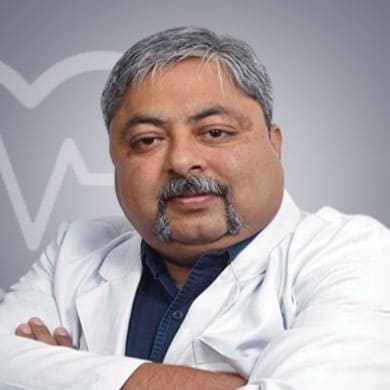
Dr. Vidit Tripathi
ENT Surgeon
24 Years of Experience
One of the finest ENT Surgeon in New Delhi, India, Dr. Vidit Tripathi, has worked with several world class multidisciplinary hospitals over the years. Dr. Vidit Tripathi has over 24+ years of experience in his field. The specialist treats and manages a wide range of conditions such as Goiter, Radiation Necrosis in Neck, Neck Injury, Perforates Eardrum View More
Last Reviewed - January 2026