Femoral Hernia Treatment in India
- Top Accredited Hospitals
- Global Medical Standards
- Cutting-Edge Technology
- Proven Treatment Options
- High Success Rate
- Trusted by Millions

What is a Femoral Hernia?
The femoral canal, situated just below the groin, is the weak area in the lower abdominal wall where a portion of the intestine or fatty tissue pushes through to cause a femoral hernia. A femorocele is another name for a femoral hernia. Women experience it more frequently than men do. Femoral hernias comprise less than 3 per cent of all hernias, while inguinal hernias comprise the majority of groin hernias.
What is the Importance of Timely Treatment?
It's essential to treat a femoral hernia as quickly as possible to prevent complications, specifically strangling, where the blood supply to the herniated tissue is severed. This can lead to severe pain, loss of tissue, and even life-threatening infections. Typically involving surgery, early treatment can improve recovery outcomes, reduce the risk of complications, and prevent the hernia from worsening.
What are the Common Symptoms of Femoral Hernia?
The following are common symptoms of a femoral hernia:
The upper thigh or groin can develop a bulge or lump, particularly when standing up, coughing, or straining.
Discomfort or pain: You feel pain or soreness in the groin when you lift, bend, or participate in some activity.
Tenderness: The lump can become tender to the touch, and some movements might aggravate the pain.
Nausea or vomiting: Pain, nausea, and vomiting can happen if the hernia becomes strangulated, which would stop the blood supply to the herniated tissue.
Colon blockage symptoms: Bloating, constipation, or difficulty passing gas are some of the symptoms that can occur when a hernia blocks the colon.
Causes and Risk Factors of Femoral Hernia
Causes
- Weak abdominal wall: Tissues can bulge through an abdominal wall, weakness or deformity.
- Increased intra-abdominal pressure: Activities that increase intra-abdominal pressure, like heavy lifting, straining at stool, or chronic coughing, can enhance the formation of hernias.
Risk Factors
There are some risk factors associated with femoral hernia, which are mentioned below:
- Age
- Pregnancy
- Obesity
- Chronic coughing or sneezing
- Constipation
Connect with our advisor for a PRIORITY response
Femoral Hernia Prevention Tips
A femoral hernia may be prevented by managing the variables that impose more stress on the abdominal wall. Here are some tips:
- Avoid obesity, as it elevates the risk of hernias and adds extra tension to the abdominal muscles.
- Frequent exercise, particularly core-strengthening exercises, can reinforce the abdominal wall and prevent weaknesses that lead to hernias.
- To prevent constipation, have a high-fibre diet and consume water to avoid straining during bowel movements.
- To decrease abdominal pressure, lift properly and bend at the knees rather than the waist.
- Chronic coughing induced by smoking increases the risk of hernias and puts more pressure on the abdomen.
- Talk to your doctor to control your cough and reduce abdominal strain if you have asthma or chronic bronchitis.
Treatment options for Femoral Hernia
Laparoscopic Hernia Repair: Femoral hernias may be repaired by laparoscopic hernia repair, a minimally invasive surgery. The surgeon employs a laparoscope, a thin tube with a camera, to direct the repair after creating several small incisions near the hernia area.
{laparoscopic-hernia-repair}- Clinical assessment:
- Physical Examination: A doctor will inspect the groin area visually and manually, looking for masses or swellings, especially while standing, coughing, or straining.
The health professional will also gently palpate the area to look for any irregularity, such as pain or swelling, that would indicate a hernia.
- Imaging Tests:
- Ultrasound: When the bulge is not easily visible, an ultrasound is often used to validate the diagnosis of a femoral hernia. The size and position of the hernia can be visualised and established through the application of ultrasonography.
- MRI or CT scan: If the hernia cannot be easily detected by ultrasound or clinical examination, a CT scan or MRI may be recommended.
- Depending on the situation, your healthcare professional may prescribe medicine to help control your symptoms and support the treatment plan.
Instantly Connect with our Specialists


Hospitals for Femoral Hernia in India

nM Virani Wockhardt
Rajkot, India
A leading multispecialty hospital in Rajkot, Wockhardt Hospital is committed to providing top-notch medical care and modern treatments. With a 95% satisfaction rating, Wockhardt has successfully treated 200,000 emergency cases and more than 1.4 million OPD patients. The hospital's dedication to providing high-quality care and safety is demonstrated by its NABH and NABL accreditation. Wockhardt guarantees easily accessible, high-quality healthcare by providing a surgery 0% interest-free EMI option and a fully furnished 'ICU on Wheels' that is open 24/7. Wockhardt Hospital is a reliable option for patients looking for advanced medical care in Rajkot and beyond because of its staff of skilled specialists and outstanding reputation for excellence.
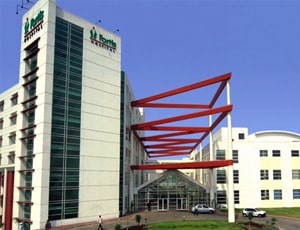
Fortis Hospital
Noida, India
Fortis Healthcare Limited is one of India’s prominent providers of integrated healthcare services, offering comprehensive medical care across multiple specialities. The company’s operations span hospitals, diagnostic centres, and day-care speciality facilities, ensuring a wide range of healthcare solutions under one umbrella. Fortis has established a strong presence across the country, managing 33 healthcare facilities, which include joint ventures and operational & management (O&M) setups, across 11 states.
The company’s hospital network comprises more than 5,700 operational beds, including O&M beds, catering to patients with varied healthcare needs. In addition to inpatient services, Fortis operates around 400 diagnostic laboratories, providing reliable and timely diagnostic support for accurate medical care. This extensive network enables Fortis to deliver high-quality healthcare services consistently and efficiently, from routine diagnostics to specialised treatments and complex procedures.

Fortis La Femme, Greater Kailash II
Delhi, India
Fortis La Femme, GK II, is a boutique multi-speciality hospital dedicated to women’s health, offering personalised and compassionate care. With 36 beds, it combines a patient-centric approach with an elegant, comfortable environment. The hospital provides a wide range of services, including Obstetrics with painless labour, Gynaecology and General Surgery using minimal access laparoscopic techniques, Fertility and IVF treatments, Neonatology with a Level III NICU, Onco Surgery for breast and gynaecological cancers, Cosmetology and Cosmetic Surgery, Endocrinology, Internal Medicine, Foetal Medicine, ENT, and Clinical Nutrition — all tailored to meet women’s unique healthcare needs.
Our Services to better your experience
Opinion & Option
We submit the most accurate opinion and options from one or more countries for your review
Consult Privately
Consult with a certified specialist privately on our telemedicine platform even before you decide to travel
Logistics
We handle flights, visas, transfers, and accommodation—so you can focus on your health.
Recovery
Our In-house rehabilitation service packages to better your recovery and treatment outcome
Why Choose India for Femoral Hernia Treatment?
India is a popular destination for femoral hernia surgery because of its world-class medical facilities, expert surgeons, and low-cost healthcare. With its advanced technology, minimal waiting time, and high success rate, India provides quality care at a much lower price than most Western nations.
Frequently Asked Questions
No, a femoral hernia will not heal by itself. Hernias do not often heal on their own without a doctor's intervention. It may worsen with time and lead to complications such as strangulation (when the blood supply to the herniated material is cut off) if it is not treated. Surgery is required to repair the hernia and prevent further issues. See a doctor for a proper diagnosis and treatment if you suspect a femoral hernia.
Yes, a femoral hernia generally needs surgery to cure it. Asymptomatic, small femoral hernias don't resolve without intervention, though they may be observed. Typically, surgery is recommended to prevent complications such as strangulation, in which the blood supply to the herniated tissue is cut off. Commonly treated open or laparoscopically, femoral hernia repair prevents serious health issues and recurrence. Always consult a medical professional to get the best treatment regimen for your condition.
Two methods are used to repair a femoral hernia:
Open surgery involves the surgeon cutting so they can push the lump back into your stomach.
Laparoscopic: The less invasive but more complex method called laparoscopy (keyhole) surgery involves making several minor cuts so the surgeon can use a range of instruments to repair the hernia.
Depending on the operation, recovery from femoral hernia surgery in India generally takes 2 to 6 weeks. The open operation might take 4 to 6 weeks, whereas the laparoscopic operation typically facilitates a quicker recovery of 2 to 3 weeks. Heavy lifting and strenuous work should be avoided during this period to facilitate complete healing.
If not treated, complications can arise with a femoral hernia. The worst of these complications is strangulation, which takes place when blood flow to the herniated tissue is cut off, and the tissue dies, causing a lot of pain and potential infection. Bloating, constipation, and vomiting could be caused by blockage of the intestine and other possible side effects.
Femoral hernias are not self-curing, so non-surgical options are generally not recommended. Operations are typically needed to avoid complications, although a small, symptomless femoral hernia might be observed.
The following lifestyle changes can help avoid a femoral hernia:
- The abdominal wall can be stabilised and prevented from weakening. Regular exercises that strengthen the abdominal wall can stabilise it and prevent its weakening
- Avoid obesity since it strains the abdominal wall and increases the risk of hernias.
- To avoid straining while passing stools, which can lead to hernias, have a high-fibre diet, drink plenty of water, and exercise regularly.
Following the operation for the femoral hernia, apply a cold compress to reduce swelling, take the pain medication as advised, and rest adequately to control the pain. Avoid strenuous activities, but move gently to prevent stiffness.
Exercise reduces the number of femoral hernias by increasing the strength of the core muscles and stabilising the overall abdominal wall. Exercises that help stabilise the abdominal region include core strength, pelvic tilts, and upright posture.
However, once a femoral hernia has formed, it cannot be cured or treated with exercise. Surgery to fix the hernia is usually required in most instances. Light exercise might be recommended after surgery to assist in rehabilitation, but until full recovery, heavy lifting and strenuous activity must be avoided.
Severe problems can occur if the bulging tissue becomes cut off from its blood supply, which may lead to strangulation. A strangulated hernia can be detected through:
- Sudden and acute pain at the site of the hernia
- The swelling area could be red or purple.
- Fever along with nausea or vomiting
- Reduction of hernia is not possible as the swelling cannot be pushed back in.
- Symptoms of bowel obstruction include constipation, bloating, or difficulty passing gas.
Strangulation may lead to tissue death and require immediate surgery, so it's essential to seek medical attention immediately if you have any of these symptoms.

Reviewer

Dr. Pradeep Jain
General & Laparoscopic Surgeon
33 Years of Experience
Dr. Pradeep Jain has completed his MBBS, MS - General Surgery, MCh - Surgical Gastroenterology/G.I. Surgery, and MCh - Surgical Oncology. He is a GastroIntestinal Surgeon, General Surgeon, Surgical Oncologist, Bariatric Surgeon par excellence with total experience of 36 years of which about 33+ years have been as a specialist View More
Last Reviewed - January 2026