Failed Back Surgery Syndrome Treatment in Thailand
- Top Accredited Hospitals
- Global Medical Standards
- Cutting-Edge Technology
- Proven Treatment Options
- High Success Rate
- Trusted by Millions

What is Failed Back Surgery Syndrome?
Failed Back Surgery Syndrome (FBSS) is defined as continuing pain or discomfort after a surgical procedure such as laminectomy, discectomy, or spine fusion. A patient undergoes surgery, but the cause of pain remains or is aggravated.
What is the Importance of Timely Treatment?
Prevent the Progression of Symptoms
Early intervention can prevent the progress of a condition, which may worsen with increased and debilitating pain and complications. A delay in treatment could turn into chronic pain and even lead to permanent nerve damage.
Enhances Treatment Outcomes
Early intervention improves the likelihood of successful outcomes. Most non-invasive strategies are thus more likely to be resolved early because they can cure a condition with physical therapy, medications, or injections.
Avoids the Need for Further Surgery
Early treatment can prevent the necessity of further, more aggressive surgeries. It may be possible to use more conservative treatments that will help alleviate pain and improve function without the need for another surgery.
Improves Quality of Life
Early intervention helps patients manage and maintain mobility, control pain, and resume daily activities, improving overall well-being and preventing long-term disability.
What are the Common Symptoms of Failed Back Surgery Syndrome?
- Persistent or Recurring Pain
- Nerve Pain
- Limited Mobility
- Weakness
- Sensory Changes
- Instability or Loss of Function
Causes and Risk Factors of Failed Back Surgery Syndrome
Causes
- Incorrect Diagnosis
- Unrecognised conditions
- Infection
- Scar Tissue Formation
- Incomplete Surgery
- Adjacent Segment Disease
- Psychological Factors
- Nerve Damage or Injury
- Spinal Instability or Deformities
- Overuse or Physical Stress
- Degenerative Changes
- Age and Health Conditions
- Unsuccessful Surgical Techniques
Risk Factors
- Age
- Weakened Immune System
- Chronic Health Conditions
- Intravenous Drug Use
- Previous Spinal Surgery or Invasive Procedures
- Poor Nutrition
- Obesity
Connect with our advisor for a PRIORITY response
Latest Research and Technologies in the Treatment of Failed Back Surgery Syndrome in Thailand
The medical treatment of Failed Back Surgery Syndrome in Thailand adapts the latest research and technologies to meet worldwide clinical standards and healthcare capabilities.
Advances in spinal cord stimulation
There remains an extensive use of implanted advanced spinal cord stimulator devices in hospitals within Thailand for patients with failed back surgery syndrome (FBSS). Newer devices promise higher precision, customisable programming, and lower pain outcomes with minimal side effects.
Regenerative medicine and stem cell therapy
Emerging research in Thai institutes investigates injecting stem cells and treating them with plasma-rich platelets to stimulate the healing process in damaged spinal tissues to diminish chronic pain.
Failed Back Surgery Syndrome Prevention Tips
- Congenital Spinal Cord Malformation risk is reducible through lifestyle modifications and preventive practices despite unalterable risk variables such as age and gender.
- Opt for a spine surgeon who is both qualified and experienced in minimally invasive and advanced spine procedures.
- Try conservative treatment with physiotherapy, pain management, or injections before resorting to surgery.
- It is essential to follow every piece of advice, including restrictions on activity, rehabilitation exercises, and medications to encourage recovery.
- Maintain a healthy weight, refrain from smoking, and do regular back-strengthening exercises to lessen the stress on the spine and possible complications.
Treatment options for Failed Back Surgery Syndrome
The medical treatment for Failed Back Surgery Syndrome requires evaluating the fracture severity, neural involvement, and patient medical condition. The following are the treatment options:
Radiofrequency Ablation (RFA): They heat and deactivate the nerves that transmit pain signals.
Neurostimulation: The implantation of a spinal cord stimulator into a patient delivers electrical pulses to the spinal cord. Patients suffering from FBSS receive this therapy to prevent pain signals and, as a result, help heal chronic pain.
ADR: In some scenarios, artificial spinal discs replace the damaged spinal discs within the spinal column.
Spinal Fusion: It remains an option for persistent or recurrent pain after prior back surgery. Spinal fusion can be an option when more conservative treatments, like physical therapy, medicines, or injections, do not help to relieve the symptoms.
Cost Start From USD 12000 - USD 17000Explore Options
These are the standard diagnostic methods for diagnosing Failed Back Surgery Syndrome :
Clinical Evaluation
- History and Symptoms: During the assessment, the physician needs information about the previous surgical procedure and symptoms of back pain, numbness, and weakness to determine spinal cord involvement.
- Physical Examination: Physical check-ups examine spinal nerves and nerve compression and evaluate the spine tenderness levels.
Imaging Studies
- Magnetic Resonance Imaging: MRI is the best modality for diagnosing Failed Back Surgery Syndrome. It takes high-resolution spine images and gives information about early signs of infection, such as disc degeneration and/or abscesses, and changes in the vertebral endplates.
- Computed Tomography (CT) Scan: CT scan is the other way used in case MRI is unavailable or contraindicated; it provides detailed images of the vertebrae and disc spaces.
- X-rays: The most specific sensitivity in early detection is not very high; it can rule out fractures and other abnormalities in the spine and show late findings of narrowed disk spaces or vertebral destruction.
- CT Myelography: This method injects a contrast dye into the spinal canal and is most often used when MRI cannot be employed. It helps find compression of nerves, scar tissue, and hardware failures.
Electrodiagnostic Studies
- Nerve conduction studies: The nerve conduction study (NCS) measures the electrical activity in the nerves. It indicates any nerve damage or irritation that might explain the ongoing pain.
- Electromyography (EMG): EMG tests muscle response to nerve stimulation and can detect abnormal muscle activity related to nerve injury, neuropathy, or radiculopathy.
- Somatosensory Evoked Potentials (SSEP): Measures the electrical response of the spinal cord and brain as a result of stimulation from sensory nerves. SSEP assists in evaluating the function of the spinal cord and the conduction of nerves.
MediRehab (a chain of Rehab centres, part of MediGence) provides comprehensive rehabilitation services to support patients through Teleconsulations and online therapy sessions.
Physiotherapy
It aims to strengthen the muscles of the spine core and enhance the flexibility of body movements. Proper postures and mechanical body movements are taught, which could reduce strain and pain in the spine. It may also feature aquatic therapy and manual techniques.
Pain management
Includes medications, epidural steroid injections, nerve blocks, and TENS for pain control, which, in turn, would enable rehabilitation exercises.
Psychological Support
Cognitive-behavioural therapy (CBT) and psychological counselling for addressing emotional factors such as anxiety and depression help not only in managing pain through unmindfulness but also in coping with chronicity.
Multidisciplinary
The Rehabilitation Department consists of experts such as physical therapists, pain management experts, and occupational therapists and, therefore, recognises a holistic treatment plan that is entirely individual.
Instantly Connect with our Specialists


Hospitals for Failed Back Surgery Syndrome in Thailand

Krabi Nakharin International Hospital
Krabi, Thailand
Krabi Nakharin International Hospital located in Krabi, Thailand is accredited by JCI. Also listed below are some of the most prominent infrastructural details:
- Capacity of Imported electronically adjustable 100 beds
- Housing Facility in VIP Rooms, Deluxe Rooms, Superior Rooms, 2-Beds room, 9-Beds room
- All rooms are fully equipped with Smart TV, Refrigerator with soft drinks, Wi-fi, sofacumbed, personal nurse call system, telephone for local & international calls, Microwave,
- Main meals and snacks are also included
- Medical Technology includes- 64-slice CT scan, MRI, Fluoroscopy Examination, Digital Mammogram, Computed Radiography and 4D-Ultrasound
- 14 Treatment Centers and Clinics
- 24*7 Intensive Care Unit (ICU)
- Outpatient Department (OPD)
- Emergency Department
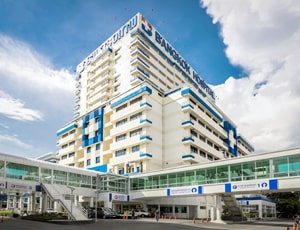
Bangkok Hospital
Bangkok, Thailand
Bangkok Hospital located in Bangkok, Thailand is accredited by JCI. Also listed below are some of the most prominent infrastructural details:
- It is recognised for the application of the newest healthcare technology.
- Blood analysis center that is not just the best in Thailand but in Asia Pacific as well.
- Biomolecule center that is the seed of healthcare equipment for Thailand and overseas.
- International affiliations and collaborations with universities and hospitals in Japan and the United States of America.
- 11 hospitals are recognised as Centers of Excellence.
- Known excellence in Trauma, Orthopedics, Cardiovascular, Neurology as well as Cancer Care.
- There is a proper streamlined patient services process followed in Bangkok Dusit Medical Services, Bangkok, Thailand.
- A well developed research center showcases the intent of the organisation to provide research based treatment opportunities to the patients.
- The group has several Medical industry partnerships as well to ensure healthcare solutions.

Vejthani Hospital
Bangkok, Thailand
Vejthani Hospital located in Bangkok, Thailand is accredited by NABH, NABL. Also listed below are some of the most prominent infrastructural details:
- It is among the topmost private hospitals functioning in Thailand.
- The bed capacity of the hospital is 263.
- There are more than three hundred thousand patients visiting the hospital every year.
- Vejthani hospital has more than 40 outpatient clinics and centers.
- International patient care center with all kinds of services: air ambulance, transfers, travel, stay, embassy liaison, patient coordinators, prayer rooms, visa coordination and translators for 20 languages.
- The special facilities are:
- International Certified Laboratory
- 10 Operating Rooms
- Radiology Section: Portable X-ray, CT-scan and C-ARM and MRI
- Neonatal Critical Care Unit
- Water-jet technique applied for liposuction
- Computer navigation and mini-invasive technique for Joint Replacement surgery
Our Services to better your experience
Opinion & Option
We submit the most accurate opinion and options from one or more countries for your review
Consult Privately
Consult with a certified specialist privately on our telemedicine platform even before you decide to travel
Logistics
We handle flights, visas, transfers, and accommodation—so you can focus on your health.
Recovery
Our In-house rehabilitation service packages to better your recovery and treatment outcome
Why Choose Thailand for Failed Back Surgery Syndrome Treatment?
Effective Cost
The cost of medical treatment in Thailand proves more economical than Western pricing yet remains equivalent to high-end treatment standards. The treatment path covers operative steps and follows all post-surgical phases.
World-Class Infrastructure
The healthcare system in Thailand operates multiple facilities accredited at the international level, which combine highly experienced orthopaedic surgeons who receive patients with complicated spine injuries, including Failed Back Surgery Syndrome.
Advanced Technology
The diagnosis and treatment in Thai medical centres benefit from state-of-the-art equipment and cutting-edge procedures, including minimally invasive surgical methods and robotic-assisted solutions.
Skilled Specialists
Doctors specialising in orthopaedics and neurosurgery are in high numbers throughout Thailand because Thai medical specialists possess international recognition for their outstanding spinal treatment capabilities.
Language Support
Thai hospitals offer multilingual support to fulfil international patient needs by assisting in numerous country languages.
Frequently Asked Questions
FBSS can result from incorrect surgical technique, new disc herniation, epidural fibrosis (scar tissue), degeneration of adjacent segments or continued irritation of the nerve roots after the intervention.
Research estimates suggest that between 20% and 40% continue to experience pain after any type of back surgery, although this may vary based on the type of surgery and patient factors.
Treatment comprises physical therapy, pain management (medications, injections), psychological support (CBT), and, in some cases, further surgical intervention or spinal cord stimulation for chronic pain alleviation.
Symptoms that may accompany surgery consist of chronic back pain, leg-related pain, numbness or tingling sensations, weakness, and limited movement. These symptoms may go on or worsen after intervention.
Treatment success depends on the causes and treatment methods; spinal cord stimulation efficacy is 50-70% for appropriate candidates.
They have care teams comprising spine surgeons, pain specialists, physiotherapists, psychologists, and rehabilitation experts for holistic treatment.
No, surgery is rarely the first option. Most treatments for FBSS typically include conservative therapies like physical therapy, medications, and injections. If a surgical reason causes the pain, reoperation is the best option.
Yes, some medications give pain relief, such as NSAIDs, acetaminophen, muscle relaxants, and opioids (for severe pain); antidepressants and anticonvulsants can also assist in their roles.
The recovery phase varies from patient to patient. Some patients progress with appropriate therapies over months, while others may need long-term pain relief, management, and rehabilitation.
Yes, it is well-recognized that depression, anxiety, or stress can magnify the perception of pain and may adversely affect recovery. Management of these, for instance, through cognitive behavioural therapy, can assist.
While there is no single cure-all for everyone, most patients with FBSS manage to get most of their pain significantly decreased and have much better function from the combination of treatment methods, which generally involve physical therapy and medications as well as lifestyle alterations.
Author

Alvina Hasan
Alvina Hasan is a dedicated medical researcher and scientific writer with a strong foundation in pharmaceutical sciences. She holds a B.Pharm from Jamia Hamdard University and an M.Pharm in Quality Assurance from DIPSAR University.
With deep medical expertise and a strong interest in healthcare communication, she focuses on transforming complex clinical and scientific information into clear, engaging, and easy-to-understand narratives. She develops insightful healthcare articles and research-driven content designed to support both medical professionals and patients, helping bridge the gap between advanced medical knowledge and practical understanding.
Readers can explore her published research and articles here:
https://carcinogenesis.com/index.php/JOC/article/view/868
https://carcinogenesis.com/index.php/JOC/article/view/870
View MoreReviewer

Dr Sonal Gupta
Neurosurgeon
29 Years of Experience
Dr. Sonal Gupta has an experienced neurosurgeon with more than 29+ years of clinical expertise. She is currently the Director, Neuro & Spine Surgery at Fortis Hospital, Shalimar Bagh. Before joining Fortis, she has been associated with various organizations such as Maharaja Agrasen Hospital, Action Balaji Hospital, and Max Hospital. View More
Last Reviewed - January 2026