Compression and Wedge Spinal Fractures Treatment in Thailand
- Top Accredited Hospitals
- Global Medical Standards
- Cutting-Edge Technology
- Proven Treatment Options
- High Success Rate
- Trusted by Millions

What are Compression and Wedge Spinal Fractures?
The main characteristic of a compression fracture is the complete collapse or crush of one of the spinal vertebrae, often triggered by forceful pressure. The affected vertebra becomes shorter when one or more sections lose height, creating either deformity or pain symptoms. These fractures most frequently occur in the thoracic or lumbar spine part of the backbone.
A wedge fracture is a particular compression fracture leading to a wedge-shaped vertebral structure because of the front part's loss of height. Wedge fractures tend to occur most frequently among patients who have osteoporosis, together with individuals experiencing traumatic injuries.
What is the Importance of Timely Treatment?
The prompt delivery of pain management is crucial for dealing with the intense pain. The pain gradually intensifies with time when treatment is not received, which leads to severe chronic pain that becomes difficult to manage.
- It reduces the chance of developing new vertebral fractures or abnormal spinal curvature, such as kyphosis (hunched back), which could emerge from not treating fractures.
- Spinal stability relies on early fracture treatment so patients avoid developing disability or mobility problems.
- Spinal cord injuries and infections, together with complications, are less likely to happen when treatment begins immediately, particularly when osteoporosis or tumours cause the fracture.
- Quick medical attention results in superior total recovery by achieving better physical and mental restoration. Spinal cord manipulation is a treatment that boosts patients' quality of life by cutting down pain while accelerating recovery and lowering surgical requirements.
What are the Common Symptoms of Compression and Wedge Spinal Fractures?
- Severe, sudden pain
- Chronic pain
- Pain worsens with movement
- Localised tenderness
- Pain with palpation
- Shortened stature
- Postural changes
- Difficulty moving
- Stiffness
- Tingling or numbness
- Weakness
- Loss of reflexes
- Instability
- Reluctance to move Spinal Deformity (in long-term cases)
- Kyphosis
- Radiating pain
- Discomfort while lying down
Causes and Risk Factors of Compression and Wedge Spinal Fractures
Causes
- Osteoporosis
- Trauma or Injury
- Tumors or Cancer
- Spinal Infections
- Degenerative Disc Disease
- Genetic Factors
- Excessive Weight
- Steroid Use
- Inactivity or Sedentary Lifestyle
Risk Factors
- Age
- Gender
- Previous Fractures
- Low Bone Density
- Smoking
- Poor Diet
- Chronic Medical Conditions
- Sedentary Lifestyle
- Alcohol Consumption
- Certain Medications
Connect with our advisor for a PRIORITY response
Latest Research and Technologies in the Treatment of Compression and Wedge Spinal Fractures in Thailand
Treating Compression and Wedge Spinal Fractures in Thailand adapts the latest research and technologies to meet worldwide clinical standards and healthcare capabilities.
Curative Vertebroplasty and Kyphoplasty
Such services are now found at leading hospitals in Thailand for procedures like vertebroplasty and balloon kyphoplasty. Such minimally invasive techniques that stabilise a fractured vertebra or relieve pain and then add to the spinal height would also help recover faster.
Improved Imaging and AI Diagnosis
Hospitals in Thailand have integrated artificial intelligence-orientated imaging (MRI and CT scans) and convolutional neural networks for more accurate detection of fractures and the severity classification of comprehensive surgical planning.
3D Navigation and Robotic-Assisted Surgery
High-precision surgery, reduced complications, and improved outcomes in treating complex wedge/compression fractures are aided by using advanced 3D navigation systems and robotic-assisted spinal surgeries like Mazor X.
Osteoporosis Treatment
Scientists usually stress treatment for osteoporosis to take care of all fractures. By bisphosphonates and sequential therapy, improvement in bone density can occur to minimise compression fractures later on.
Compression and Wedge Spinal Fractures Prevention Tips
The risk of Compression and Wedge Spinal Fractures is reducible through lifestyle modifications and preventive practices despite unalterable risk variables such as age and gender.
Pain management
It should be delivered promptly, as it deals with the intense pain of compression or wedge fractures. The pain develops gradually with time if treatment is not received, hence leading to severe chronic pain that is hard to control.
Strengthen Bones
Ensure adequate calcium and vitamin D intake and consider bone-strengthening medications if needed.
Stay Active
Include weight-bearing exercises, strength training, and flexibility exercises to support bone strength and reduce fall risk.
Prevent Falls
Reduce fall risk by eliminating hazards around your home and, when necessary, using assistive devices such as canes or walkers.
Maintain a Healthy Lifestyle
Be physically fit, avoid smoking, and limit alcohol consumption to prevent fractures while protecting your bone health.
Treatment options for Compression and Wedge Spinal Fractures
The medical treatment for Compression and Wedge Spinal Fractures requires evaluating the fracture severity, neural involvement, and patient medical condition. The treatment:
Vertebroplasty: Bone cement is injected into the fractured vertebra to stabilise the vertebra and relieve pain.
Kyphoplasty is similar to vertebroplasty but involves inflating a balloon to restore vertebral height before the cement is injected.
Cost Start From USD 6000 - USD 10000Explore Options
Spinal Fusion : For severe conditions, spinal fusion might occur where adjacent vertebrae must be fused to stabilise the spine.
Cost Start From USD 12000 - USD 17000Explore Options
Open Surgery: This open surgery is generally applied in rarer and more complicated situations. Bone fragments must be removed, or a badly damaged vertebra needs repair.
Spinal Decompression: Spinal decompression relieves compression pressure on the spinal cord and nerves when this nerve compression results from the fracture.
These are the standard diagnostic methods for diagnosing Compression and Wedge Spinal Fractures:
Clinical Evaluation
- History and Symptoms: During the assessment, the physician needs to complete information about the injury and evaluate symptoms of back pain, numbness, and weakness to determine spinal cord involvement.
- Physical Examination: Physical check-ups examine spinal nerve and nerve compression and evaluate the spine tenderness levels.
Imaging Studies
- X-rays (Radiographs): These tests provide vital information about vertebral bone fractures, displacement of bones, and difficulties with spinal position.
- CT Scan (Computed Tomography): The technique displays original bone structures in a three-dimensional format to calculate the extent of vertebrae compression and fracture.
- MRI (Magnetic Resonance Imaging): This method shows providers detailed pictures of soft tissues to investigate compression or swelling.
- Electromyography (EMG): Electromyography enables medical staff to detect injuries to nerves and evaluate compression conditions because it measures muscle and nerve electrical activity.
- Bone Density Test: A DEXA scan measures bone mineral density and can be used to diagnose osteoporosis, which is a significant risk factor for compression fractures.
- Bone Scintigraphy (Bone Scan): This is a special type of imaging test that can detect fractures, especially when other types of imaging are inconclusive, such as early-stage or stress fractures.
MediRehab (a chain of Rehab centres, part of MediGence) provides comprehensive rehabilitation services to support patients through Teleconsulations and online therapy sessions.
Physical Therapy (PT)
Injury plus exercise includes strengthening and stretching to improve muscle support in the back and core. Training on posture lessens stress on the spine upon recovery.
Occupational Therapy (OT)
The OT is to modify daily activities to reduce the stress on the spine. Education on ergonomics promotes appropriate movement and work practices.
Bracing and Support
Spinal bracing improves the stabilisation of the spine. This will gradually reduce pain during recovery. Assistive devices such as walkers or canes assist in safe mobilisation.
Pain Management
Heat, cold therapy, TENS, and massage facilitate the pain and muscle tension. These all speed up recovery and make the patient comfortable.
Patient Education
Patients are guided through safe techniques for lifting land lifestyle modifications. Diet and smoking cessation with appropriate exercise result in healthy spines in the long run.
An individual with Compression and Wedge Spinal Fractures requires medication therapy, including analgesics. Supplements with calcium and vitamin D help healing processes through medical support.
Instantly Connect with our Specialists


Hospitals for Compression and Wedge Spinal Fractures in Thailand

Krabi Nakharin International Hospital
Krabi, Thailand
Krabi Nakharin International Hospital located in Krabi, Thailand is accredited by JCI. Also listed below are some of the most prominent infrastructural details:
- Capacity of Imported electronically adjustable 100 beds
- Housing Facility in VIP Rooms, Deluxe Rooms, Superior Rooms, 2-Beds room, 9-Beds room
- All rooms are fully equipped with Smart TV, Refrigerator with soft drinks, Wi-fi, sofacumbed, personal nurse call system, telephone for local & international calls, Microwave,
- Main meals and snacks are also included
- Medical Technology includes- 64-slice CT scan, MRI, Fluoroscopy Examination, Digital Mammogram, Computed Radiography and 4D-Ultrasound
- 14 Treatment Centers and Clinics
- 24*7 Intensive Care Unit (ICU)
- Outpatient Department (OPD)
- Emergency Department
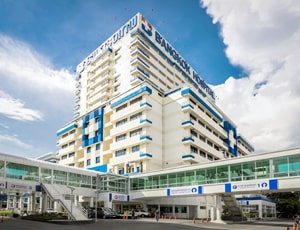
Bangkok Hospital
Bangkok, Thailand
Bangkok Hospital located in Bangkok, Thailand is accredited by JCI. Also listed below are some of the most prominent infrastructural details:
- It is recognised for the application of the newest healthcare technology.
- Blood analysis center that is not just the best in Thailand but in Asia Pacific as well.
- Biomolecule center that is the seed of healthcare equipment for Thailand and overseas.
- International affiliations and collaborations with universities and hospitals in Japan and the United States of America.
- 11 hospitals are recognised as Centers of Excellence.
- Known excellence in Trauma, Orthopedics, Cardiovascular, Neurology as well as Cancer Care.
- There is a proper streamlined patient services process followed in Bangkok Dusit Medical Services, Bangkok, Thailand.
- A well developed research center showcases the intent of the organisation to provide research based treatment opportunities to the patients.
- The group has several Medical industry partnerships as well to ensure healthcare solutions.

Sikarin Hospital
Bangkok, Thailand
Apart from in-detail treatment procedures available, Sikarin Hospital located in Bangkok, Thailand has a wide variety of facilities available for International Patients. Some of the facilities which are provided by them are Airport Transfer, Choice of Meals, Interpreter, SIM, TV inside room. Also listed below are some of the most prominent infrastructural details:
- Sikarin Hospital has a 258-bed capacity.
- The hospital caters to the healthcare needs of both local and international patients.
- Dedicated and skilled, experienced healthcare professionals are the strength of the organization.
It has also received many awards and certifications and some of them are:
- APSIC CSSD Center of Excellence Award (2017-18)
- Accreditation by the Joint Commission International
- HA-Hospital/Healthcare Accreditation
- HACCP Certificate of Registration
- The Best Under a Billion Award
- ISO 14001 Environment Management System
- ISO 9001 Quality Management System
The various clinics and centers of Sikarin Hospital are as follows:
- Pediatric Institute
- Orthopedic Institute
- Dental Center
- Health Check-up Center
- Heart Disease Center
- Cerebral and Nervous System Center
- Internal Medicine Clinic
- Diagnostic Radiology Center
- Diagnostic Laboratory
- Endoscopic Surgery Center
- International Medical Center
- Emergency Medical Center
- Sikarin Beauty Center
- Eye Center
- Rehabilitation Center
- Women’s Health Center
- Ear, Nose and Throat Center
- Specialized Internal Medicine Center
- Center for Gastrointestinal and Liver Diseases
The medical technology present in Sikarin Hospital is outlined here:
- MRI (Magnetic Resonance Imaging) magnetic resonance imaging
- Hybrid Operating Room
- Endoscopic Surgery - Gastrointestinal medical technology with tiny capsules
- S.R. Laboratory
- Cardiac Catheterization Lab
- Dental Operating Microscope, an innovative endoscopic root canal treatment
- 128-Slice CT Scan
- ORTHOPANTOMOGRAPH OP 3D oral X-ray machine
- Digital Mammogram
- Optical Coherence Tomography
- INFRARED (IR) IMAGING Surgical Technology “Cure Cancer” – Direct, Accurate, Fast
- 3D endoscopic surgery technology
- Laparoscopic Surgery
- Dental Aerosol Suction Dental Intraoral Aerosol Remover
- Comprehensive Dental Center
- iTeroElement 5D
Our Services to better your experience
Opinion & Option
We submit the most accurate opinion and options from one or more countries for your review
Consult Privately
Consult with a certified specialist privately on our telemedicine platform even before you decide to travel
Logistics
We handle flights, visas, transfers, and accommodation—so you can focus on your health.
Recovery
Our In-house rehabilitation service packages to better your recovery and treatment outcome
Why Choose Thailand for Compression and Wedge Spinal Fractures Treatment?
Several advantages exist in choosing Thailand for compression and wedge spinal fracture treatment.
Effective Cost
The cost of medical treatment in Thailand proves more economical than Western pricing yet remains equivalent to high-end treatment standards. The treatment path covers operative steps and follows all post-surgical phases.
World-Class Infrastructure
The healthcare system in Thailand operates multiple facilities accredited at the international level, which combine highly experienced orthopaedic surgeons who receive patients with complicated spine injuries, including Compression and Wedge Spinal Fractures.
Advanced Technology
The diagnosis and treatment in Thaicmedical centres benefit from state-of-the-art equipment and cutting-edge procedures, including minimally invasive surgical methods and robotic-assisted solutions.
Skilled Specialists
Doctors specialising in orthopaedics and neurosurgery are in high numbers throughout Thailand as Thai medical specialists possess international recognition for their outstanding spinal treatment capabilities.
Language Support
Thai hospitals offer multilingual support to fulfil international patient needs by assisting in numerous country languages.
Frequently Asked Questions
Treatment commonly involves pain medications, bracing, physical therapy, and minimally invasive surgeries such as vertebroplasty or kyphoplasty. Severe compression fractures may necessitate surgery in the form of spinal fusion.
Most compression fractures heal with conservative treatment such as pain management, rest, bracing, and physical therapy. Surgery is typically reserved for severe fractures or when conservative measures fail.
Both procedures include the instillation of bone cement into a fractured vertebra for stabilisation. Kyphoplasty has added a balloon procedure to raise vertebral height before the instillation of cement, perhaps aiding in the correction of deformity; vertebroplasty injects cement directly.
Advanced hospitals in Thailand report 85% to 95% for effective pain relief and mobility improvement after minimally invasive procedures such as vertebroplasty or kyphoplasty.
Yes, the orthopaedic specialists in Thailand commonly include the evaluation and treatment of osteoporosis to prevent future fractures and maintain bone health.
Recovery is variable depending on fracture severity, treatment, and overall health. Conservative care takes weeks to months, whereas more serious interventions require an extended period of recovery (several months).
Yes, physical therapy is essential for strengthening back muscles, improving posture, and restoring mobility. It helps prevent future injuries and enhances overall spinal health.
Not all fractures can be prevented, but the risk factors can be reduced by improving bone health, engaging in weight-bearing exercises, maintaining a healthy weight, and avoiding smoking and excessive alcohol.
Surgery will be advised in the case that the fracture is severe, accompanied by an increased amount of pain or if there is a pinching of nerves. Minimally invasive interventions like vertebroplasty or kyphoplasty are usually applied; however, some problems are more complex and require spinal fusion.
Long-term complications may include chronic pain, spinal deformities such as kyphosis and even nerve damage. Once addressed accordingly through proper treatment and rehabilitation, these risks are mitigated.
Patients usually return to light activities after discharge with a doctor's clearance. During recovery from these injuries, certain activities, including high-impact activities, should be avoided, and exercises to ensure the spine's health should be emphasised.

Reviewer

Dr Sonal Gupta
Neurosurgeon
29 Years of Experience
Dr. Sonal Gupta has an experienced neurosurgeon with more than 29+ years of clinical expertise. She is currently the Director, Neuro & Spine Surgery at Fortis Hospital, Shalimar Bagh. Before joining Fortis, she has been associated with various organizations such as Maharaja Agrasen Hospital, Action Balaji Hospital, and Max Hospital. View More
Last Reviewed - January 2026