Chronic myeloid leukemia (CML) Treatment in Thailand
- Top Accredited Hospitals
- Global Medical Standards
- Cutting-Edge Technology
- Proven Treatment Options
- High Success Rate
- Trusted by Millions

What is Chronic myeloid leukaemia (CML)?
Chronic myelogenous leukaemia (CML) is an uncommon bone marrow malignancy. Bone marrow is the spongy substance found inside bones that produces blood cells. CML increases the quantity of white blood cells in the bloodstream.
The term chronic in chronic myelogenous leukaemia refers to cancer that progresses more slowly than severe kinds of leukaemia. The term myelogenous relates to the cells affected by this malignancy.
Chronic myelogenous leukaemia is also known as chronic myeloid or chronic granulocytic leukaemia. It mainly affects older adults and is infrequently seen in children, but it can happen at any age.
Advances in treatment have improved the prognosis for persons with chronic myelogenous leukaemia.
What is the Importance of Timely Treatment?
- Chronic Myeloid Leukemia (CML) must be treated as soon as possible to improve patient outcomes and manage the disease efficiently.
- Early treatment can keep the disease from developing to the more aggressive blastic phase, which is more challenging to treat. Early therapy increases long-term survival rates and lowers the chance of complications, relapses, or progression to acute leukaemia, which has inferior outcomes.
- Furthermore, timely therapy aids in the control of symptoms such as fatigue, weight loss, and pain, allowing patients to maintain a higher quality of life. Therefore, early and consistent therapy of CML is essential for better disease control, increased survival, and improved overall health.
What are the Common Symptoms of Chronic myeloid leukaemia (CML)?
Chronic myelogenous leukaemia is generally asymptomatic. A blood test may identify it. Symptoms may include:
- Bone discomfort
- Bleeding easily
- Feeling satisfied after consuming a tiny quantity of food
- Fatigue
- Fever
- You can lose weight without trying
- Loss of appetite
- Pain or fullness beneath the ribcage on the left side
- Excessive sweating when asleep
- Blurry vision is produced by bleeding in the rear of the eye
Stages of Chronic myeloid leukaemia (CML)
- Chronic CML: The term chronic usually refers to a long-term condition. In CML, the phrase refers to the proportion of immature white blood cells (blasts) in your bone marrow and blood. In chronic CML, blasts account for approximately 10% of your blood and bone marrow cells.
- Accelerated CML: Blasts account for 10% to 19% of cells in your blood or bone marrow during the Accelerated CML phase.
- Blast (Blast Crisis) CML: Blast can be life-threatening. In blast CML, testing shows that blasts account for 20% or more of your bone marrow or blood cells.
- Resistant CML: This refers to CML that recurs or does not respond to treatment.
Causes, Risk Factors and Complications of Chronic myeloid leukaemia (CML)
Causes
Chronic myelogenous leukaemia occurs when something changes the bone marrow cells.
A new chromosome develops.
- In persons with chronic myelogenous leukaemia, the chromosomes in blood cells swap parts. A portion of chromosome 9 swaps positions with a section of chromosome 22. This results in a tiny chromosome 22 and an extremely long chromosome 9.
- The extra-short chromosome 22 is known as the Philadelphia chromosome. 90% of chronic myelogenous leukaemia patients have the Philadelphia chromosome in their blood cells.
The Philadelphia chromosome generates a new gene.
- The Philadelphia chromosome combines chromosomes 9 and 22 to form a new gene known as BCR-ABL. The BCR-ABL gene tells the blood cells to produce too much of a tyrosine kinase protein. Tyrosine kinase promotes cancer by allowing some blood cells to proliferate uncontrollably.
The new gene allows for too many unhealthy blood cells
- Tyrosine kinase in chronic myelogenous leukaemia promotes the growth of excessive white blood cells. The Philadelphia chromosome is present in most, if not all, of these cells. The defective white blood cells do not develop and perish as they should.
- The defective white blood cells accumulate in large numbers. They deplete healthy blood cells and harm the bone marrow.
Risk Factors
The following factors enhance the risk of chronic myelogenous leukaemia:
- Older age: CML is more prevalent in older persons than children and teenagers.
- Being Male: Men have a slightly higher risk of acquiring CML than women.
- Radiation exposure: Radiation therapy for specific forms of cancer has been associated with CML.
Complications
Individuals with CML may develop:
- Anaemia: This disorder develops when you do not have enough red blood cells.
- Splenomegaly (enlarged spleen)
Connect with our advisor for a PRIORITY response
Latest Research and Technologies in the Treatment of Chronic Myeloid Leukaemia (CML) in Thailand
- In Thailand, targeted treatments such as tyrosine kinase inhibitors (TKIs) have transformed the treatment of Chronic Myeloid Leukemia (CML).
- The research aims to enhance drug resistance management, generate second and third-generation TKIs, and study novel immunotherapies.
- Furthermore, stem cell transplants and genetic testing are increasingly employed for tailored therapy techniques, resulting in better outcomes for CML patients.
Chronic myeloid leukemia (CML) Prevention Tips
Some prevention tips for Chronic Myeloid Leukemia (CML):
- Avoid radiation exposure
- Minimise chemical exposure
- Maintain a healthy lifestyle
- Quit smoking as Smoking increases the risk of various cancers, including CML.
- Regular health check-ups
These tips support overall health but cannot specifically prevent CML.
Treatment options for Chronic myeloid leukemia (CML)
Targeted therapy: Targeted therapy focuses on specific molecules in cancer cells, such as the tyrosine kinase protein in chronic myelogenous leukaemia.
Cost Start From USD 3500Explore Options
Bone marrow transplant: A bone marrow transplant heals chronic myelogenous leukaemia, although it is only recommended for patients who have not received previous treatments due to the dangers and problems involved. High-dose chemotherapy destroys blood-forming cells, while donor blood stem cells replace damaged ones.
Cost Start From USD 50000 - USD 80000Explore Options
Chemotherapy: Chemotherapy employs potent medications to attack cancer cells. Chemotherapy medicines are occasionally coupled with targeted therapy to treat aggressive, chronic myelogenous leukaemia.
Cost Start From USD 1000 - USD 6800Explore Options
The following tests and procedures diagnose Chronic myeloid leukaemia (CML):
- Complete blood count (CBC): A complete blood count (CBC) may be performed to determine whether there are too many white or too few red blood cells.
- Bone marrow aspiration or biopsy: Providers collect small amounts of fluid or tissue for genetic testing. A medical pathologist will run tests to determine the genetic makeup of aberrant cells.
- Computed tomography (CT) scan: Providers utilise a computed tomography (CT) scan to assess whether CML impacts other sections of your body.
- Ultrasound: Your provider may use this test to check whether your spleen is more prominent than usual. CML symptoms include an enlarged spleen.
- Physical Therapy: Physical therapy enhances strength, mobility, and total physical function during and after treatment. Physical therapy can help CML patients recover and maintain their activity levels.
- Cognitive Rehabilitation: Some CML patients may have "chemo brain," including memory or attention difficulties. Cognitive therapy can help to improve mental function and concentration.
- Occupational Therapy: Occupational therapy assists patients in regaining daily and work-related skills. Occupational therapists can help with changes to the home or work environment to accommodate fatigue or physical restrictions.
- Dietary Management: Eating a well-balanced diet can help you retain strength, control prescription side effects, and improve overall health.
MediGence can assist and guide you in selecting the best physician and medical facility for your care.
Depending on the circumstances, your doctor may prescribe medication to assist you in managing your symptoms and support your treatment plan.
Treatment regimens are adapted to the patient's specific cancer stage and location.
Instantly Connect with our Specialists


Hospitals for Chronic myeloid leukemia (CML) in Thailand

Piyavate Hospital
Bangkok, Thailand
Piyavate Hospital located in Bangkok, Thailand is accredited by JCI. Also listed below are some of the most prominent infrastructural details:
Medicine Centre: Piyavate Hospital provides advanced holistic treatment for their patients. They offer a complete range of services and physicians that specialize in various fields like the endocrine system, the nervous system, kidney function, cardiovascular care, respiratory and digestive system. They pride themselves for the familial care that they provide to their patients.
Fertility and In-Vitro Fertilization Centre: Helping the couples who walk into the Piyavate Hospital to achieve their dream of having a family. They have a medical team that specializes in male and female fertility. They offer consultation services, fertility check-up for both men and women and complete IVF services. They have advanced IVF cycle treatment facilities that offer a high rate of success.
Bone and Joint Institute: Piyavate Hospital houses one of the frontrunners in Orthopaedic health care in all of SouthEast Asia. They offer a wide range of services and surgeries in their bone and joint institute that include hand surgery, hip and knee replacement surgery, spinal cord surgery, upper extremity surgery, arthroscopic surgery and sports medicine.
Eye and Lasik Centre: Piyavate Hospital is fully equipped with the latest and most advanced technology for eye care and houses highly skilled ophthalmologists, sub-specialists and qualified nurses.
Physical Therapy and Rehabilitation Centre: One of the first hospitals to be equipped with the Hybrid Assistive Limb technology that will help a neurologically challenged patient to control the rehabilitation robot limb with a signal from their brain. The Physical Therapy and Rehabilitation Centre at Piyavate Hospital uses this system encourage patients to regain muscle memory to walk and function normally.
Amenities for Patient’s Family:
Piyavate Hospital also offers additional apartment facilities to house the kin of the patients who come to visit them from distant places. A restaurant, a flower shop and a café are a few of the other amenities provided by the hospital.
These are the most popular services offered by the Piyavate Hospital in Bangkok, Thailand. They also provide a plethora of other medical services that are listed below:
Diabetic Foot Centre
Check-up centre
Urology Centre
Heart Institute
Paediatric Centre
Obstetrics and Gynaecology Centre
Surgery Centre
Ear Nose Throat Centre
Haemodialysis Centre
Dental Centre
X-Ray Centre
Gastroenterology Centre
Cancer Centre
Neonatal Intensive Care Unit (NICU)
Emergency Services and Centre
Tele-medicine

Phyathai 2 International Hospital
Bangkok, Thailand
Phyathai 2 International Hospital located in Bangkok, Thailand is accredited by JCI. Also listed below are some of the most prominent infrastructural details:
- Fully equipped rooms are available for convenience of the patients- Gold B Room, Gold A Room, Pediatric Gold A, Platinum room, and Prestige ward
- Nearby accommodations are also available- Abloom Service Apartments, Bangkok Patio, VIB Best Western Sanam Pao, VIC3 Hotel
- Operating room
- International Patient Medical Center to assist overseas patients
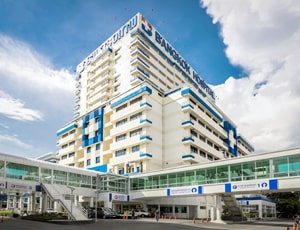
Bangkok Hospital
Bangkok, Thailand
Bangkok Hospital located in Bangkok, Thailand is accredited by JCI. Also listed below are some of the most prominent infrastructural details:
- It is recognised for the application of the newest healthcare technology.
- Blood analysis center that is not just the best in Thailand but in Asia Pacific as well.
- Biomolecule center that is the seed of healthcare equipment for Thailand and overseas.
- International affiliations and collaborations with universities and hospitals in Japan and the United States of America.
- 11 hospitals are recognised as Centers of Excellence.
- Known excellence in Trauma, Orthopedics, Cardiovascular, Neurology as well as Cancer Care.
- There is a proper streamlined patient services process followed in Bangkok Dusit Medical Services, Bangkok, Thailand.
- A well developed research center showcases the intent of the organisation to provide research based treatment opportunities to the patients.
- The group has several Medical industry partnerships as well to ensure healthcare solutions.
Our Services to better your experience
Opinion & Option
We submit the most accurate opinion and options from one or more countries for your review
Consult Privately
Consult with a certified specialist privately on our telemedicine platform even before you decide to travel
Logistics
We handle flights, visas, transfers, and accommodation—so you can focus on your health.
Recovery
Our In-house rehabilitation service packages to better your recovery and treatment outcome
Why Choose Thailand for Chronic Myeloid Leukemia (CML) Treatment?
Here are some of the reasons for choosing Thailand:
- Expert Oncology Care: Thailand has highly skilled oncologists and specialist CML treatment centres that use modern targeted treatments and stem cell transplants.
- Advanced Treatment Options: Treatments include the most recent tyrosine kinase inhibitors (TKIs), genetic testing, and stem cell transplantation to provide individualised therapy.
- Affordable and high-quality care: Thailand offers cost-effective therapy without sacrificing quality, making it an appealing destination for overseas patients.
- Accredited Facilities: Thai hospitals are JCI accredited, which ensures high-quality medical care.
- Seamless International Services: Thai healthcare facilities provide multilingual support and personalised care to international patients.
Frequently Asked Questions
Chronic Myeloid Leukemia (CML) is often treated successfully in Thailand, particularly with targeted medicines such as tyrosine kinase inhibitors (TKIs).
Patients who get early diagnosis and adequate therapy can achieve considerable remission and long-term illness control, with survival rates improving because to new treatment options and well-trained medical staff.
Although recurrence is uncommon, it can occur, particularly if the disease is not properly controlled or the patient grows resistant to treatment. Regular monitoring and treatment changes can manage relapsed CML.
Side effects differ depending on the specific tyrosine kinase inhibitors (TKIs), but may include:
- Stomach ache.
- Fatigue.
- Diarrhea.
- Muscle cramping.
- Edema.
- Pleural effusion (fluid collection around the lungs).
- Pancreatitis.
- Damage to your liver.
- Low white blood cell and platelet levels.
Yes, Thailand has several specialist treatment clinics for Chronic Myeloid Leukemia (CML). These centers have modern diagnostic techniques and offer targeted therapy such as tyrosine kinase inhibitors (TKIs), as well as specialist oncologists and hematologists. These hospitals offer comprehensive care to CML patients, including individualised treatment plans and access to clinical studies.
Yes, it can. CML patients may be more likely to develop other types of cancer (second malignancies). A recent study found that approximately 30% of persons with chronic myeloid leukaemia got second malignancies, including:
- Small intestine cancer
- Thyroid cancer
- Stomach cancer
- Lung cancer
- Prostate cancer
Chronic myeloid leukaemia (CML) has a low regional frequency in Thailand. It is an uncommon kind of leukaemia worldwide, and there is no evidence that it is more prevalent in any particular region of Thailand.
However, diagnosis and treatment access may differ depending on the availability of healthcare infrastructure and specialist centres in urban and rural locations.
In Thailand, stem cell transplants (also known as bone marrow transplants) are used to treat Chronic Myeloid Leukemia (CML) in patients who do not react to tyrosine kinase inhibitors (TKIs) or have severe stages of the disease.
This treatment may give a cure, particularly for patients with high-risk or drug-resistant CML. Thailand's advanced healthcare system facilitates stem cell transplantation through specialist clinics for the best results.

Reviewer

Dr. Mohit Agarwal
Medical Oncologist
14 Years of Experience
One of the finest Oncologist in New Delhi, India, Dr. Mohit Agarwal has worked with several world class multidisciplinary hospitals over the years. Dr. Mohit Agarwal has over 14+ years of experience in his field. The doctor treats and manages a wide range of conditions such as Stomach Cancer, Rectal Cancer, Breast Cancer, Brain Cancer View More
Last Reviewed - January 2026