Chronic Coronary Syndrome Treatment in Thailand
- Top Accredited Hospitals
- Global Medical Standards
- Cutting-Edge Technology
- Proven Treatment Options
- High Success Rate
- Trusted by Millions

What is a Chronic Coronary Syndrome?
Chronic Coronary Syndrome refers to long-term coronary artery disease in which blood flow to the heart muscle is reduced, usually because of atherosclerotic narrowing of the coronary arteries. Symptoms may occur during physical activity or emotional stress and improve with rest, although some people may have few or no symptoms. The condition can change over time, so regular cardiovascular assessment and risk-factor management are important.
What is the Importance of Timely Treatment?
Timely treatment can help control chest discomfort and other symptoms, improve cardiovascular function when necessary, reduce the risk of heart attack and heart failure, and slow the progression of coronary artery disease. Regular assessment also helps determine whether lifestyle changes, medicines, or coronary revascularisation may be appropriate.
What are the Common Symptoms of Chronic Coronary Syndrome?
- Chest Discomfort: Pressure, tightness, heaviness, or squeezing in the chest, often occurring during physical activity or emotional stress.
- Shortness of Breath: Breathlessness may develop during exertion when the heart cannot receive enough oxygen-rich blood.
- Fatigue: Some people experience unusual tiredness or reduced ability to perform routine physical activities.
- Pain in Other Areas: Discomfort may spread to the arm, shoulder, neck, jaw, back, or upper abdomen.
- Reduced Exercise Tolerance: Activities that were previously comfortable may cause tiredness, breathlessness, or chest discomfort.
- Palpitations or Dizziness: Some patients may feel their heartbeat, lightheadedness, or weakness.
Causes and Risk Factors of Chronic Coronary Syndrome
Causes
- Coronary Atherosclerosis: Plaque buildup may narrow coronary arteries and reduce blood supply to the heart muscle.
- Coronary Artery Spasm: Temporary tightening of a coronary artery can reduce blood flow.
- Coronary Microvascular Dysfunction: Abnormal function of small coronary blood vessels may contribute to chest pain or myocardial ischaemia, even without major obstructive coronary disease.
- Other Coronary Abnormalities: Less common coronary conditions can also affect blood flow.
Risk Factors
- Increasing age
- High blood pressure
- High LDL cholesterol
- Diabetes
- Smoking or tobacco exposure
- Overweight or obesity
- Physical inactivity
- Unhealthy diet
- Family history of premature coronary artery disease
- Chronic kidney disease
Latest Research and Technologies in the Treatment of Chronic Coronary Syndrome in Thailand
- Advances in chronic coronary syndrome management include improved coronary imaging, physiological assessment of coronary narrowing, and more targeted evaluation of patients with persistent chest pain despite no major obstructive coronary disease. Invasive physiological assessment and coronary function testing may also help guide treatment in appropriate patients. Research continues to focus on coronary microvascular dysfunction, vasospastic angina, and ischaemia with non-obstructive coronary arteries (INOCA).
Treatment options for Chronic Coronary Syndrome
Angioplasty (PCI) : PCI in Chronic Coronary Syndrome is an excellent option for maximising symptom relief and quality of life when optimal medical therapy fails to control angina.
Coronary Artery Bypass Grafting (CABG) : Surgical revascularisation is used for complex, multivessel, or left main anatomy to improve long-term survival.
Cost Start From 18000Explore Options
- Clinical assessment:
- Medical History: Assessment of chest discomfort, symptom pattern, exercise tolerance, cardiovascular risk factors, previous cardiac events and medications.
- Physical Examination: Evaluation of blood pressure, heart rate and relevant cardiovascular findings.
- Electrocardiogram (ECG): Assesses heart rhythm and may identify evidence of ischaemia or previous myocardial injury.
- Blood Tests: Lipid profile, glucose, HbA1c and kidney function. Cardiac troponin is used when an acute coronary event is suspected.
- IVUS: Provides detailed images from inside the coronary artery during selected interventions.
- OCT: Provides high-resolution images of coronary plaque and stents during selected procedures.
- FFR/iFR: Physiological measurements can help determine whether a coronary narrowing significantly affects blood flow.
- Imaging Tests:
- CT Coronary Angiography: Provides detailed images of coronary anatomy and atherosclerotic plaque.
- Coronary Angiography: An invasive test used to define coronary narrowing and guide revascularisation when indicated.
- Echocardiography: Evaluates heart structure, pumping function, and regional wall motion.
- Stress Echocardiography: Assesses heart function during exercise or pharmacological stress and may identify areas affected by reduced blood flow.
- Cardiac MRI: Provides detailed information about cardiac structure, function, myocardial viability, and scarring in selected patients.
- Nuclear Cardiac Imaging: May assess myocardial perfusion and identify areas with reduced blood flow.
MediRehab (a chain of Rehab centres, part of MediGence) provides comprehensive tele-rehabilitation services to support patients with Chronic Coronary Syndrome in Thailand. These services include:
- Cardiac Rehabilitation: Structured programmes can support cardiovascular fitness, symptom management, and long-term recovery.
- Gradual Physical Activity: Increase activity according to symptoms, heart function, and medical advice.
- Medicines for Chronic Coronary Syndrome may include statins or other lipid-lowering therapies, beta-blockers, nitrates, calcium-channel blockers, other anti-anginal medicines, antiplatelet medicines, blood-pressure medicines, and diabetes medications, depending on the patient's condition. Treatment is individualised based on symptoms, coronary anatomy, cardiovascular risk, heart function, and prior cardiac events or procedures.
Instantly Connect with our Specialists


Hospitals for Chronic Coronary Syndrome in Thailand
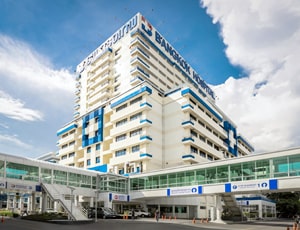
Bangkok Hospital
Bangkok, Thailand
Bangkok Hospital located in Bangkok, Thailand is accredited by JCI. Also listed below are some of the most prominent infrastructural details:
- It is recognised for the application of the newest healthcare technology.
- Blood analysis center that is not just the best in Thailand but in Asia Pacific as well.
- Biomolecule center that is the seed of healthcare equipment for Thailand and overseas.
- International affiliations and collaborations with universities and hospitals in Japan and the United States of America.
- 11 hospitals are recognised as Centers of Excellence.
- Known excellence in Trauma, Orthopedics, Cardiovascular, Neurology as well as Cancer Care.
- There is a proper streamlined patient services process followed in Bangkok Dusit Medical Services, Bangkok, Thailand.
- A well developed research center showcases the intent of the organisation to provide research based treatment opportunities to the patients.
- The group has several Medical industry partnerships as well to ensure healthcare solutions.

Sikarin Hospital
Bangkok, Thailand
Apart from in-detail treatment procedures available, Sikarin Hospital located in Bangkok, Thailand has a wide variety of facilities available for International Patients. Some of the facilities which are provided by them are Airport Transfer, Choice of Meals, Interpreter, SIM, TV inside room. Also listed below are some of the most prominent infrastructural details:
- Sikarin Hospital has a 258-bed capacity.
- The hospital caters to the healthcare needs of both local and international patients.
- Dedicated and skilled, experienced healthcare professionals are the strength of the organization.
It has also received many awards and certifications and some of them are:
- APSIC CSSD Center of Excellence Award (2017-18)
- Accreditation by the Joint Commission International
- HA-Hospital/Healthcare Accreditation
- HACCP Certificate of Registration
- The Best Under a Billion Award
- ISO 14001 Environment Management System
- ISO 9001 Quality Management System
The various clinics and centers of Sikarin Hospital are as follows:
- Pediatric Institute
- Orthopedic Institute
- Dental Center
- Health Check-up Center
- Heart Disease Center
- Cerebral and Nervous System Center
- Internal Medicine Clinic
- Diagnostic Radiology Center
- Diagnostic Laboratory
- Endoscopic Surgery Center
- International Medical Center
- Emergency Medical Center
- Sikarin Beauty Center
- Eye Center
- Rehabilitation Center
- Women’s Health Center
- Ear, Nose and Throat Center
- Specialized Internal Medicine Center
- Center for Gastrointestinal and Liver Diseases
The medical technology present in Sikarin Hospital is outlined here:
- MRI (Magnetic Resonance Imaging) magnetic resonance imaging
- Hybrid Operating Room
- Endoscopic Surgery - Gastrointestinal medical technology with tiny capsules
- S.R. Laboratory
- Cardiac Catheterization Lab
- Dental Operating Microscope, an innovative endoscopic root canal treatment
- 128-Slice CT Scan
- ORTHOPANTOMOGRAPH OP 3D oral X-ray machine
- Digital Mammogram
- Optical Coherence Tomography
- INFRARED (IR) IMAGING Surgical Technology “Cure Cancer” – Direct, Accurate, Fast
- 3D endoscopic surgery technology
- Laparoscopic Surgery
- Dental Aerosol Suction Dental Intraoral Aerosol Remover
- Comprehensive Dental Center
- iTeroElement 5D

Yanhee International Hospital
Bangkok, Thailand
Yanhee International Hospital located in Bangkok, Thailand is accredited by JCI. Also listed below are some of the most prominent infrastructural details:
- The hospital is located in 10 stories and 4 connected buildings.
- International patient care is provided with accommodation, flight booking, airport transfer, choice of meals available.
- There is a Cosmetic and Beauty Center and a 24/7 Dental Center in the hospital.
- Some of the important healthcare specialties are Cardiac Sciences, ENT, Gastroenterology, General Surgery, Gynecology, Neurology, and Orthopedics etc.
- The healthcare delivery by the Yanhee International Hospital stands strong with:
- 155 Physicians
- 183 Medical Specialists
- 2000 nurses and other healthcare personnel
Our Services to better your experience
Opinion & Option
We submit the most accurate opinion and options from one or more countries for your review
Consult Privately
Consult with a certified specialist privately on our telemedicine platform even before you decide to travel
Logistics
We handle flights, visas, transfers, and accommodation—so you can focus on your health.
Recovery
Our In-house rehabilitation service packages to better your recovery and treatment outcome
Why Choose Thailand for Chronic Coronary Syndrome Treatment?
- Experienced Cardiology Specialists: Access to cardiologists, interventional cardiologists, and cardiac surgeons experienced in managing coronary artery disease.
- Advanced Cardiac Diagnostics: Major cardiac centres may offer ECG, stress testing, echocardiography, CT coronary angiography, cardiac MRI, and coronary angiography.
- Modern Interventional Cardiology: Eligible patients may have access to angioplasty, contemporary drug-eluting stents, IVUS, OCT, and physiological coronary assessment.
- Comprehensive Heart Care: Cardiology, cardiac surgery, critical care, rehabilitation, nutrition, and other specialists can collaborate for complex cases.
- International Patient Support: Many major Thai hospitals assist international patients with appointments, treatment coordination, accommodation, and follow-up.
Frequently Asked Questions

Reviewer

Dr. Nityanand Tripathi
Interventional Cardiologist
29 Years of Experience
With a rich experience of more than 29 years, Dr. Nityanand has gained a vast spectrum of skills and expertise in performing all types of complex cardiac procedures. He is an expert in clinical & interventional cardiology and electrophysiology. He studied his medicine (MBBS) and MD from the Institute of Medical Sciences of Banaras Hindu University, Varanasi, and later completed his DM in Cardiology from the prestigious King George Medical University, Lucknow. View More
Last Reviewed - January 2026