Bullous Keratopathy Treatment in Turkey
- Top Accredited Hospitals
- Global Medical Standards
- Cutting-Edge Technology
- Proven Treatment Options
- High Success Rate
- Trusted by Millions

What is Bullous Keratotherapy?
A corneal condition known as bullous keratopathy is typified by corneal swelling (edema) and blisters filled with fluid (bullae). It happens when the cornea's endothelial cells, which remove extra fluid to preserve corneal clarity, are harmed or malfunction. This causes fluid to build up in the cornea, which impairs vision and causes pain and discomfort.
What are the Common Symptoms of Bullous Keratopathy?
- Cloudy or blurry vision brought on by corneal edema.
- Discomfort or soreness in the eyes that frequently gets worse under bright light.
- A feeling of grit in the eye or a foreign body.
- Heightened light sensitivity (photophobia).
- Eyes that are watery (too much crying).
- Formation of blisters on the cornea called bullae, which are packed with fluid and can potentially burst, causing excruciating agony.
Causes and Risk Factors of Bullous Keratopathy
Causes
- Fuchs' Endothelial Dystrophy is a degenerative disorder that weakens the endothelial cells in the cornea.
- Complications of Eye Surgery: Endothelial cell damage can result during intraocular lens implantation, corneal transplants, or cataract surgery.
- Eye Trauma or Injury: Endothelial cell dysfunction may be brought on by direct corneal injury.
- Extended Eye Inflammation: Corneal health may be impacted by chronic uveitis or other inflammatory diseases.
Risk Factors
- Due to the expected loss of endothelium cells, aging is more prevalent in older persons.
- Prior Eye Surgery: Individuals with several eye surgeries are more vulnerable.
- Underlying Eye Diseases: Bullous keratopathy is more likely to occur in people with glaucoma, corneal dystrophies, or infections.
- Extended Use of Contact Lenses: Inappropriate contact lens use can lead to ocular stress and injury.
Connect with our advisor for a PRIORITY response
Latest Research and Technologies in the Treatment of Bullous Keratopathy in Turkey
Bullous keratopathy treatment in Turkey has advanced significantly, with methods such as Descemet Membrane Endothelial Keratoplasty (DMEK) enhancing recovery times and visual results. For severe cases, researchers are also looking into intrastromal amniotic membrane transplantation as a means of symptom relief. Although phototherapeutic keratectomy (PTK) is becoming more popular, Turkey is still assessing whether to use it. Furthermore, the efficacy of novel therapies such anterior stromal puncture (ASP) and corneal collagen cross-linking (CXL) in treating corneal edema is being investigated.
Treatment options for Bullous Keratopathy
Cornea Transplant: Bullous keratopathy is commonly treated with a corneal transplant (keratoplasty). The degree of endothelial degradation impacts the possibility of a corneal transplant.
Cost Start From USD 6464 - USD 8000Explore Options
Comprehensive eye examinations are performed to determine Corneal thickness, endothelial cell activity, and disease severity by using:
- Slit-Lamp Biomicroscopy, Corneal Pachymetry
- Optical Coherence Tomography (OCT)
- Specular Microscopy
As such, there is no rehabilitation. Although rehabilitation therapy does not yet exist, myopia can be improved by following these guidelines:
- Lifestyle Modifications: Engaging in outdoor activities, limiting screen time, and adhering to the 20-20-20 rule promote eye health.
- Vision therapy: Eye exercises and strategies to enhance concentration and lessen strain
It is being researched to encourage endothelial cell regeneration, while hypertonic saline eye drops or ointments aid in reducing corneal edema. Additionally, anti-inflammatory drugs and painkillers may be administered to treat discomfort.
Instantly Connect with our Specialists


Hospitals for Bullous Keratopathy in Turkey

Medical Park Ordu Hospital
Ordu, Turkey
Apart from in-detail treatment procedures available, Medical Park Ordu Hospital located in Ordu, Turkey has a wide variety of facilities available for International Patients. Some of the facilities which are provided by them are Accommodation, Airport Transfer, Choice of Meals, Interpreter, SIM, TV inside room. Also listed below are some of the most prominent infrastructural details:
- A total inpatient bed availability of 206 beds including 38 patient observation
- 47 Intensive Care Beds
- 19 beds in General Intensive Care Unit
- 10 in Coronary Intensive Care Unit
- 6 in Cardiovascular Intensive Care Unit
- 12 in Neonatal Intensive Care Unit
- Medical Oncology Unit
- Cardiovascular Unit
- Sleep Laboratory
- Emergency ward- comprises a CPR room, a first response room, a wound dressing room, a short stay unit, and private observation rooms that protects privacy
- Observation Rooms
- 6 full-fledged operating theaters, including 1 reserved for Cardiovascular Surgery operations
- Every room is furnished with every detail to provide a comfortable stay for patients, such as nurse call system, computer access system, and controllable patient bed in each room
- Suite rooms that are specially designed for patients with infectious diseases and ensure the required isolation, are put at the disposal of patients in the hospital's inpatient ward

VM Medical Park Bursa Hospital
Bursa, Turkey
Apart from in-detail treatment procedures available, VM Medical Park Bursa Hospital located in Bursa, Turkey has a wide variety of facilities available for International Patients. Some of the facilities which are provided by them are Accommodation, Airport Transfer, Choice of Meals, Interpreter, TV inside room. Also listed below are some of the most prominent infrastructural details:
- Covers an area of 55,000 sqm
- Capacity of 270 beds
- 10 Operating rooms
- 83 intensive care beds
- Helipad for Emergency Transfers

Medical Park Goztepe Hospital
Istanbul, Turkey
Medical Park Goztepe Hospital located in Istanbul, Turkey is accredited by JCI. Also listed below are some of the most prominent infrastructural details:
- Capacity of 293 beds
- 9 Operating theatres
- 64 intensive care beds
- Emergency Department
- Chemotherapy Unit
- Well-equipped rooms, designed to maximize exposure to day light and service approach is based on boutique hotel business
- Cafeteria/Restaurant
- Technology Advancement- 64-slice Computerized Tomography, high level Magnetic Resonance Imaging (MRI) scanner, Tomography scanner, Digital Mammography, Digital X-ray scanner, Ultrasound and Color Doppler, Digital and Peripheral Angiography and 4D Ultrasound device
Our Services to better your experience
Opinion & Option
We submit the most accurate opinion and options from one or more countries for your review
Consult Privately
Consult with a certified specialist privately on our telemedicine platform even before you decide to travel
Logistics
We handle flights, visas, transfers, and accommodation—so you can focus on your health.
Recovery
Our In-house rehabilitation service packages to better your recovery and treatment outcome
Why Choose Turkey for Bullous Keratopathy
Highly qualified ophthalmologists are skilled professionals with training in cutting-edge corneal procedures, including Keratoprosthesis, DMEK, and DSAEK.
- Modern Technology: Top eye hospitals offer cutting-edge laser treatments, AI-assisted diagnostics, and high-resolution imaging.
- Cost-effective Treatment: Excellent care at a fraction of the price of Western nations.
- High Success Rates: Corneal transplant operations in Turkey have a high success rate, guaranteeing better vision and a quicker recovery.
- Access to Advanced Treatments: Bioengineered corneas, regenerative therapies, and innovative drugs are all available.
- World-Class Eye Care Facilities: Hospitals with international accreditation that provide complete eye care with individualised treatment programs.
- Medical Tourism Facilities: The advantages of medical tourism include hassle-free immigration assistance, reasonably priced lodging, and smooth medical care for individuals from abroad.
Frequently Asked Questions
Bullous Keratopathy does not always require surgery because mild instances can be treated with bandage contact lenses, hypertonic saline drops, and pain and swelling-relieving drugs. However, surgical treatments such as DMEK, DSAEK, or keratoprosthesis can be required to restore vision and alleviate discomfort in extreme situations.
In Turkey, bullous keratopathy is rather common, especially in older individuals and those who have had corneal surgery or cataract surgery in the past. It is a major contributor to corneal edema and frequently necessitates cutting-edge procedures like corneal transplants or endothelial keratoplasty.
A thorough examination of bullous keratopathy is necessary to determine the extent of endothelial cell destruction and corneal edema. To identify the optimum course of treatment and avoid consequences like vision loss or corneal scarring, it uses sophisticated diagnostic techniques like slit-lamp examination, specular microscopy, optical coherence tomography (OCT), and pachymetry.
Untreated Bullous Keratopathy can result in recurring blisters, corneal scarring, severe vision impairment, chronic pain, and possibly corneal ulceration or infection. A whole corneal transplant (PKP) may be necessary to restore eyesight.
To ensure a seamless experience for patients from abroad, most hospitals in Turkey offer the following:
- Assistance in obtaining visas.
- Airport Service to and from the hospitals.
- Multilingual experts and Best accommodations services.
- Personalised treatment plans for patients from abroad.
- Travel planning, language translators, and reasonably priced lodging.
Yes, Turkish hospitals have state-of-the-art equipment for treating Bullous Keratopathy, including as femtosecond laser-assisted surgeries, corneal transplants, and endothelial keratoplasty.
Bullous Keratopathy treatment in Turkey has a high success rate; 85–95% of corneal transplant surgeries, such as DMEK and DSAEK, are successful.
Yes, Turkey is home to highly qualified ophthalmologists and corneal specialists who have received training and experience abroad in the most recent surgical and non-surgical techniques for treating Bullous Keratopathy.
Although recovery times vary by treatment, most patients show noticeable improvement 4–6 weeks following DMEK or DSAEK. With the proper post-operative care, a full recovery, including the best possible visual clarity, could take three to six months.
Yes, Turkey's healthcare system accepts patients from abroad and provides excellent Bullos Keratopathy treatments at many clinics and hospitals.
Yes, many Turkish hospitals offer in-person and online consultations to foreign patients who want a second opinion.

Reviewer
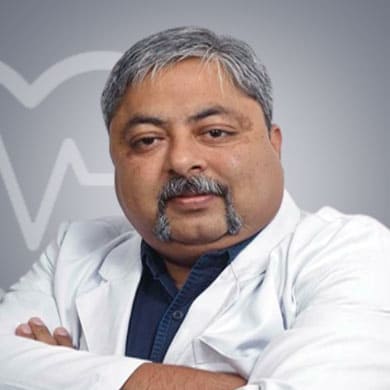
Dr. Vidit Tripathi
ENT Surgeon
24 Years of Experience
One of the finest ENT Surgeon in New Delhi, India, Dr. Vidit Tripathi, has worked with several world class multidisciplinary hospitals over the years. Dr. Vidit Tripathi has over 24+ years of experience in his field. The specialist treats and manages a wide range of conditions such as Goiter, Radiation Necrosis in Neck, Neck Injury, Perforates Eardrum View More
Last Reviewed - January 2026