Broken ankle Treatment in India
- Top Accredited Hospitals
- Global Medical Standards
- Cutting-Edge Technology
- Proven Treatment Options
- High Success Rate
- Trusted by Millions

What is a Broken Ankle?
A broken ankle, also called an ankle fracture, is a condition in which one or more of the ankle joints' bones may break. This ailment usually results from a fall, twist, or direct contact and causes discomfort, swelling, and the foot's incapability to bear weight. The severity of an ankle fracture can vary, ranging from a single bone split to several fractures that may make the ankle unstable.
What is the Importance of Timely Treatment?
Timely treatment of a broken ankle helps in the following:
- It keeps the bone from moving, preventing the fracture from worsening.
- Prevent further damage to tendons and ligaments.
- It helps reduce inflammation and promotes quicker healing.
- Uses medication and immobility to relieve pain.
- Ensures Proper Bone Healing and prevents abnormalities and misalignment (malunion).
- Encourages healthy bone healing for maximum efficiency.
- It reduces the chance of Chronic Problems and lowers the risk of chronic pain and arthritis.
- Lowers the chance of immobility-induced blood clots (DVT).
What are the Common Symptoms of a Broken ankle?
Following are the signs and symptoms of a Broken ankle:
- Extreme pain, particularly while bearing weight on the foot
- Bruising and swelling in the ankle area
- Deformity (in extreme conditions)
- Walking difficulties or inability
- Warmth and tenderness surrounding the affected area
Causes and Risk Factors of Broken Ankle
Causes
- It can result from significant pressure on the ankle by tripping, slipping, or falling from a height.
- Ankle twisting or rolling
- Fractures can result from abrupt twisting actions, mainly when playing sports or walking unevenly.
- Over time, minor bone fractures may result from repetitive strain from sports like dancing, running, or mountaineering.
Risk Factors
Certain factors that increase the chances of an ankle break are as follows:
- Osteoporosis ( weak bones): Fractures from mild falls or injuries are more likely to occur in those with low bone density.
- Activities with a High Impact: Ankle fractures are more common among athletes and people who participate in strenuous physical activity.
- Age: Due to weakening bones and balance problems, older persons are more vulnerable.
- Improper Footwear: Ankle problems can be exacerbated by wearing high heels, poorly fitted shoes, or insufficient athletic apparel.
- Overweight: Ankle strain is increased by excess body weight, increasing the risk of fractures.
- Past Ankle Injuries: The risk of re-injury increases if you have a history of ankle sprains or fractures.
Connect with our advisor for a PRIORITY response
Latest Research and Technologies in the Treatment of Broken Ankles in India
In India, contemporary research and technology have made several breakthroughs in treating broken ankles possible. The latest developments include:
- Ankle Rehabilitation Devices: Indian researchers have developed ankle rehabilitation tools to speed up recovery after fractures.
- Minimally Invasive Surgery for the Ankle: Ankle arthroscopy is becoming increasingly common as a treatment for ligament injury, arthritis, and fractures. Tiny incisions are made with this minimally invasive surgery, which shortens recovery time and minimises problems.
- Modern Surgical Techniques
- Surgery for Ankle Fusion: This technique, which is very successful for severe fractures and arthritis, entails joining shattered bones with metal plates and screws.
- Ankle replacement surgery: This procedure gives you more mobility and lowers your chance of developing arthritis in the future by replacing the damaged ankle joint with an artificial implant.
Broken Ankle Prevention Tips
To help prevent or effectively manage a broken ankle if you already have it, the following is the advice to be considered:
- Wear proper shoes: Choose footwear with non-slip soles and adequate arch support.
- Strengthen Your Legs and Ankles: To increase strength and stability, do exercises like ankle rotations, calf raises, and balance training. Exercises like yoga and pilates help you become more flexible and avoid falls.
- Maintain Bone Health: For strong bones, eat a diet high in calcium and vitamin D. If you have osteoporosis or a calcium deficiency, consider taking supplements.
- Use precaution on uneven surfaces: Be careful on loose rugs, uneven pathways, and slick surfaces. When climbing stairs, use handrails.
- Use supportive braces if necessary: Use ankle braces or taping for additional support if you have weak ankles or a history of injury.
Treatment options for Broken ankle
Open Reduction and Internal Fixation (ORIF): To treat severe ankle fractures, a surgical method known as Open Reduction and Internal Fixation (ORIF) is performed to realign the bones (open reduction) and stabilise them with metal implants such as screws or plates (internal fixation). It becomes essential for the misplaced, unstable, or complex fractures. After 6–12 weeks of minimal weight bearing, physical treatment is administered to regain strength and range of motion. Despite its effectiveness, infection, discomfort of the implant, and nerve damage are possible side effects. Depending on the severity of the damage, it may take three to six months to heal fully.
Cost Start From USD 2500 - USD 6000Explore Options
Ankle Arthroscopy: An ankle arthroscopy is a minimally invasive technique for evaluating and treating fractures and other ailments inside the ankle joint. It aids in fracture alignment, loose fragment removal, and assessment of cartilage damage. Although recovery times vary, physical therapy usually follows weeks of not bearing any weight..
Physical Examination
- Examine the deformities, discomfort, bruising, and swelling.
- Verify your range of motion and weight-bearing capacity.
Imaging tests
- X-ray: Initial imaging to verify the location and extent of a fracture.
- CT scan: This offers fine-grained bone pictures for intricate fractures.
- MRI: MRI evaluates damage to cartilage, ligaments, and soft tissues.
- X-rays: Sometimes, soft tissue injuries or invisible fractures on X-rays are treated with ultrasound.
MediRehab (chain of Rehab centres - Part of MediGence) provides comprehensive rehabilitation services to support Broken ankle patients in India. These services include:
Initial Healing Phase for 0–6 weeks
- Bracing or casting: This preserves the ankle while the bones recover.
- Non-weight Bearing: To prevent straining the ankle, use a wheelchair, walker, or crutches.
Early Rehab for 6–8 weeks, if approved by the Physician
- Exercises for Range of Motion: To avoid stiffness, make gentle motions.
- Light exercises to sustain muscle strength are known as isometric strengthening.
Increasing Mobility & Strength for 8–12 weeks
- Restoring strength, balance, and flexibility is the primary goal of physical therapy.
- Partial Weight-Bearing: Use a brace or walking boot to gradually increase the ankle's pressure.
Complete Recuperation and resume activities for 3–6 months
- Strength training: Ankle stability workouts using resistance.
- Proprioception Training: Exercises to maintain balance to avoid re-injury.
- During the healing process, medications such as NSAIDs and painkillers help control pain and inflammation and avoid problems.
Instantly Connect with our Specialists


Hospitals for Broken ankle in India
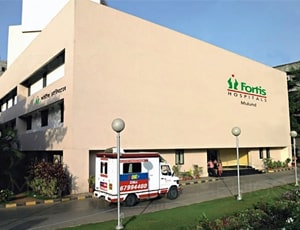
Fortis Hospital, Mulund
Mumbai, India
Fortis Hospital Mulund, located in Mulund West, Mumbai, is a premier healthcare facility providing excellence in multi-speciality healthcare for over 20 years. The global leader in advancing medical technology and clinical expertise, the hospital offers specialities including Cardiology, Neurosciences, Oncology, Transplants, and Orthopaedics. The hospital is well-known for being the largest transplant center in Maharashtra and offers advanced treatment options, including Transcatheter Aortic Valve Implantation (TAVI) and stereotactic precision radiotherapy for cancer. Fortis Mulund is equipped with a 24/7 Emergency Department and International Patient Unit to provide world-class patient-centric care.
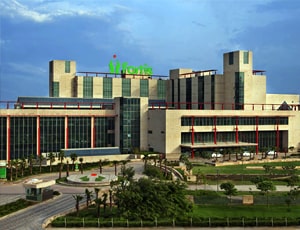
Fortis Memorial Research Institute
Gurgaon, India
Fortis Healthcare Limited stands as one of India's largest integrated healthcare providers, managing 33 hospitals across 11 states and operating more than 5,700 beds and 400 diagnostic labs. Four of our hospitals are accredited by JCI and 26 by NABH. With a workforce of over 12,500 healthcare professionals, we combine clinical excellence, a patient-focused approach, and innovation to provide high-quality, affordable, and compassionate healthcare to patients in India.
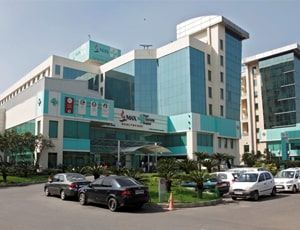
Max Super Speciality Hospital, Saket
Delhi, India
Max Smart Super Speciality Hospital, Saket, is a 250-bed tertiary care hospital awarded NABH accreditation, which provides advanced medical care in various specialities such as Cardiac Sciences, Orthopaedics, Neurology, Urology, Kidney Transplant, Paediatrics, and Obstetrics & Gynaecology. The hospital provides quality, safe, integrated, and patient-centric medical care using modular OTs, ICUs, Cath Labs, CT, MRI and Dialysis units.
Our Services to better your experience
Opinion & Option
We submit the most accurate opinion and options from one or more countries for your review
Consult Privately
Consult with a certified specialist privately on our telemedicine platform even before you decide to travel
Logistics
We handle flights, visas, transfers, and accommodation—so you can focus on your health.
Recovery
Our In-house rehabilitation service packages to better your recovery and treatment outcome
Why Choose India for Broken Ankle Treatment?
India is a good option for treating broken ankles because of its excellent hospitals, knowledgeable orthopaedic surgeons, and reasonably priced modern medical equipment. Robot-assisted operations, 3D-printed casts, and minimally invasive surgery are available treatments. Numerous hospitals provide medical tourism services, guaranteeing foreign patients a seamless experience with top-notch care at less expensive costs than in Western nations.
Frequently Asked Questions
No, a broken ankle does not always require surgery. Casting, bracing, and rest can help heal minor fractures or stable breaks. Plates, screws, or rods are utilised for appropriate alignment, although surgery is required for severe fractures, misplaced bones, or ligament injury. A doctor determines the best course of action based on X-rays and the extent of the injury.
Depending on the severity, recovery from broken ankle treatment might take six weeks to six months. With a cast, minor fractures heal in 6–8 weeks, while complete healing from surgery takes 3–6 months. Physical therapy helps restore strength, mobility, and balance, and it takes six to twelve months to resume sports or other strenuous activities.
A broken ankle can temporarily impair daily life, making driving, walking, and engaging in physical activities more challenging. For mobility, you might require a wheelchair, a walker, or crutches. Routine chores may become difficult due to pain, oedema, and stiffness, but proper care and rehabilitation can eventually restore normal function.
The Risk depends on the type of treatment and the severity of the injury. Joint stiffness and poor bone healing (malunion) are complications of non-surgical therapy. Infection, blood clots, nerve injury, and implant failure are among the risk factors associated with surgery. An incomplete recovery might lead to persistent discomfort or long-term problems like arthritis.
Many Indian hospitals provide medical tourism services, such as visa assistance, airport transportation, language interpreters, and reasonably priced treatment plans. World-class orthopaedic care is more affordable at prestigious hospitals like Apollo, Fortis, Medanta, and AIIMS. Additionally, international patients benefit from excellent post-surgery care and rehabilitation.
A large number of Indian institutions offer medical tourism services to foreigners. In addition to providing top-notch medical care at reasonable costs, they also help with visas, housing, language support, and post-treatment care.
Modern equipment is available in Indian hospitals to diagnose and heal broken ankles. They provide digital X-rays, CT scans, MRIs, and ultrasounds for thorough diagnosis. For challenging fractures, treatments include robotic-assisted surgeries, minimally invasive surgery, 3D-printed casts, and sophisticated implants. World-class orthopaedic care is offered by prestigious hospitals like AIIMS, Apollo, Fortis, and Medanta, which also provide the most advanced rehabilitation facilities, including computerised gait training, cryotherapy, and hydrotherapy.
Our facility, MediRehab, is part of the renowned medical organisation MediGence. It offers complete treatment services for Broken ankles. Physical therapy is a key part of treatment. It increases flexibility, reduces pressure on the affected discs, and strengthens the muscles surrounding the spine.
Our therapists use exercises to relieve pain, improve posture, and stabilise the spine. They also teach proper body movements to avoid further strain. These exercises are crucial to non-surgical treatment and improving mobility and overall well-being.
MediGence can assist you at every step and help you find the best physician and medical facility for your care.

Reviewer

Dr. Puneet Mishra
Orthopaedic Surgeon
25 Years of Experience
Known among his patients for treating with compassion and personal care, Dr. Puneet Mishra is one of the best orthopedic surgeons in New Delhi. Dr. Puneet completed his MBBS from Maulana Azad Medical College in 1996 and from the same college he completed his MS (orthopedics) in 2000. With almost 25+ years of surgical experience under him, Dr. Pankaj takes pride in working with some of the finest medical institutions of the world such as University Hospital, Bern, Maulana Azad Medical College, New Delhi, Endoklinik, Germany, and Professor and Consultant orthopedician at Guru Teg Bahadur Hospital, New Delhi. View More
Last Reviewed - January 2026