Ankle Valgus Deformity Treatment in India
- Top Accredited Hospitals
- Global Medical Standards
- Cutting-Edge Technology
- Proven Treatment Options
- High Success Rate
- Trusted by Millions

What is Ankle Valgus Deformity?
An ankle valgus deformity is a misalignment of the ankle joint that results in the foot turning outward. This problem frequently causes the foot to tilt outward while the ankle leans inside toward the opposite ankle. It may be congenital (present at birth) or develop later in life as a result of trauma, conditions, or poor posture.
What makes Timely Treatment Important?
Addressing ankle valgus as soon as possible is essential to prevent mobility issues, chronic discomfort, and developing deformity. Prompt action lowers the risk of arthritis and other problems, improves stability, and realigns joints. In some instances, non-surgical options like bracing and physiotherapy can be effective and reduce the need for invasive procedures. Promptly seeking medical attention improves long-term joint health and overall quality of life.
What are the Common Symptoms of Ankle Valgus Deformity?
Symptoms of Ankle Valgus deformity include the following:
- Pain: Discomfort in the hindfoot, particularly when bearing weight.
- Callus Formation: The formation of a pressure point or callus closer to the foot arch.
- Prominent Malleolus: The medial malleolus is larger and more prominent.
- Instability: Poor ankle alignment makes it difficult to walk or wear shoes.
- Limited Range of Motion: The subtalar joint has movement to a specific degree.
Causes and Risk Factors of Ankle Valgus Deformity
Causes
Several underlying conditions may lead to ankle valgus deformity, such as:
- Joint misalignment is a result of degenerative changes in arthritis.
- Ligament Injuries- An instability resulting from weak or injured ligaments
- Recurrent Ankle sprain: Frequent sprain leads to joint pain.
- Neurological disorder
- Weakened Muscles
Risk Factors
- Obesity affects the ankle's ability to recover from surgery by increasing mechanical stress.
- Poor bone repair and an elevated risk of fractures are caused by osteoporosis.
- Diabetes or peripheral vascular disease: These conditions hinder healing, raise the risk of infection, and have adverse effects.
- Age(The elderly heal more slowly and are prone to experience problems).
- Smoking delays bone healing and elevates the risk of infection.
Connect with our advisor for a PRIORITY response
Latest Research and Technologies in the Treatment of Ankle Valgus Deformity in India
Advanced therapies for ankle valgus deformity in India include assisted growth surgery, minimally invasive osteotomies for realignment, and 3D-printed personalised orthotics. AI-based gait analysis and robotic-assisted surgery are increasing accuracy and recuperation. Stem cell treatment and platelet-rich plasma (PRP) therapy are also investigated for cartilage regeneration and ligaments.
Treatment options for Ankle Valgus Deformity
Osteotomy: includes cutting and realigning the tibia or fibula. Supra malleolar osteotomy, the most popular kind, helps reestablish equilibrium and prevent joint deterioration. The cost of an Osteotomy varies from city to city and depends on the type of osteotomy, hospital location, etc.
Cost Start From USD 3500 - USD 4500Explore Options
These are the standard diagnostic methods for diagnosing Ankle Ligament Deformity:
Clinical assessment:
- Physical Examination:Observing signs of inflammation around the ankle.
- Range of Motion Tests: Evaluating limitations in ankle movement.
- Stability Tests:
- Anterior Drawer Test: To assess the anterior talofibular ligament (ATFL).
Imaging Tests:
- X-Rays Identifies joint damage and bone spurs, which are also used to assess ligament laxity.
- MRI Scans provide detailed images of soft tissues and cartilage.
MediRehab (chain of Rehab centres - part of MediGence provides comprehensive rehabilitation services designed to support patients suffering from ankle valgus deformity in India. These services include:
Rehabilitation for Ankle Valgus Deformity generally focuses on improving strength, stability, and alignment. Mobility can be improved with advanced therapies, including joint mobilisation and manual therapy. Post-surgical rehab requires gradual weight-bearing and strengthening exercises.
Instantly Connect with our Specialists


Hospitals for Ankle Valgus Deformity in India

Indraprastha Apollo Hospital
Delhi, India
Indraprastha Apollo Hospital is known for delivering treatment to over 200,000 patients every year; 10,000 of which are generally medical tourists. The efficient team of doctors has the record of 99.6 percent success rate. Indraprastha Apollo Hospital deals in treatment of over 50 specialities.
Let’s see some of the features of the infrastructure:
- Spread over 15 acres, the hospital has 710 beds.
- 6 beds dedicated to bone marrow transplant units with very strict infection control practices.
- 64-Slice Scan coupled with data acquisition which provides highest temporal resolution
- One of the hospitals to be using Da Vinci Robotics Surgery System
- In South Asia, the Spect-CT and Pet-CT got their first installation at Indraprastha Apollo Hospital in India
- Technologies such as PET- MR, BrainLab Navigation System, PET-CT, Portable CT Scanner, Tilting MRI, NovalisTx, Cobalt based HDR Brachytherapy, Hyperbaric Chamber, DSA Lab, Fibroscan, 3 Tesla MRI, Endosonography, 128 Slice CT scanner are all installed at the hospital.
- The Cancer Institute at Indraprastha Apollo is equipped with a highly advanced Radiation Oncology Center with ClinaciX, NovalisTx, and HDR-Brachytherapy.
- It is equipped with the largest Sleep Lab in Asia, & has one of the largest Dialysis Units in India.
- A large number of ICU beds than any other Private Hospitals in India.
- WIFI is accessible across the whole campus.

VPS Lakeshore Hospital
Kochi, India
VPS Lakeshore Hospital located in Kochi, India is accredited by NABH. Also listed below are some of the most prominent infrastructural details:
- Advanced hi-tech healthcare facility
- Innovative diagnostic & therapeutic medical technologies
- Diagnostic endoscopy of nose, esophagoscopy, Laryngoscopy, Bronchoscopy
- Cardiac department- Coronary Artery Bypass Grafting, Total Arterial Coronary Revascularization, Heart Valve Repairs and
- Replacements, Surgery for Heart Failure, Intracardiac Repair of Congenital Anomalies of the Heart, Surgery for Atrial Fibrillation
- Neurosurgery department: Keyhole Surgery for disc & other spine disorders, such as Spine Tumors, Navigation-guided, and Endoscopic Brain Tumor Surgery, Minimally invasive Brain Surgery, Advanced Head Injury Management with the ICP Monitoring
- State-of-the-art-hemodialysis Units
- Kidney Transplantation is done with Laparoscopic Donor Nephrectomy
- 24 hour rapid TAT team equipped with four specialists have increased survival and decreased patient morbidity
- Joint preservation techniques include autologous chondrocyte implantation
- Cutting edge operation theaters & world-class transplant ICUs
- Urology department: 3D Laparoscopy, Minimally Invasive Surgery, Ureteroscopy, RIRS, Endourology: PCNL
- Objective swallowing evaluation services such as functional endoscopic evaluation of Swallowing & Video Fluoroscopic Swallow

Apollo Multispecialty Hospitals
Kolkata, India
Apollo Multispecialty Hospitals located in Kolkata, India is accredited by JCI, NABH. Also listed below are some of the most prominent infrastructural details:
- International patient Center
- Focus on research and innovation
- Different amenities: Transport, Security, Travel Desk, Places of Worship, Telecommunication Service, Special Nurse, Food & Dietary Services
- Several kinds of rooms: General ward, Semi Private Rooms, Private Rooms, Deluxe, Super Deluxe, Suite, Maharaja Suite, HDU, Gastro ICU, Emergency, Neonatal ICU, Level 1, Level 2 & Level 3
- Health Insurance coverage available
- Here is a comprehensive list of the various kinds of key medical procedures performed through the latest technology.
- Arthroscopy
- Bone Marrow Transplant
- Cosmetic Surgery
- Da Vinci Robotic Surgical System
- Fractional Flow Reserve (FFR)
- Hand Microsurgery
- Hip Arthroscopy
- Minimally Invasive Cardiac Surgery
- Minimally Invasive Subvastus Total Knee Replacement
- Oral & Maxillofacial Surgery
- 128 Slice PET CT
- Bioresorbable Vascular Scaffold (BVS)
- ECMO
- OCT Technique - Optical Coherence Tomography
- Single Port Endoscopic technique of Carpal Tunnel Release (ECTR)
Our Services to better your experience
Opinion & Option
We submit the most accurate opinion and options from one or more countries for your review
Consult Privately
Consult with a certified specialist privately on our telemedicine platform even before you decide to travel
Logistics
We handle flights, visas, transfers, and accommodation—so you can focus on your health.
Recovery
Our In-house rehabilitation service packages to better your recovery and treatment outcome
What makes India the best choice for Ankle Valgus Deformity Treatment
The following are the advantages of choosing India as the destination for Ankle Valgus Deformity Treatment:
- Orthopaedic surgeons in India are the best, with vast experience treating ankle valgus deformities.
- Many doctors are internationally trained and use advanced surgical techniques.
- Affordable Treatment Costs: Indian hospitals provide medical procedures that are significantly more cost-effective than in Western countries.
- Indian hospitals have cutting-edge technology and are accredited with JCI and NABH to ensure a high standard of care.
- The healthcare system in India operates multiple facilities accredited at the international level, which combine highly experienced orthopaedic surgeons who receive patients with complicated spine injuries, including Ankle Valgus deformities.
Frequently Asked Questions
Yes, it is more common in people with flat feet, neuromuscular disorders, previous ankle injuries, or congenital diseases. Due to Increased joint stress, people who are athletes, fat, or have poor foot biomechanics are also more vulnerable.
Most hospitals in India offer the following:
- Assistance in obtaining visas.
- Airport Service to and from the hospitals.
- Multilingual experts and Best accommodations services.
- Personalised treatment plans for patients from abroad.
Yes, many Indian hospitals provide the following:
- Facilities for arthroscopic surgery for ankle ligament tear repair.
- Digital X-rays and MRI for accurate diagnoses.
- Robot-assisted rehabilitation services for fast recovery.
- Before choosing hospitals in India, always look for the following:
- Hospitals with accreditation (JCI, NABH approved).
- Skilled orthopaedic surgeons specialised in sports injuries
- Success rates and patient reviews.
- Hospitals that assist patients from overseas for a seamless experience.
If ankle valgus deformity is left untreated, it can result in lifelong complications, such as progressive joint misalignment, chronic pain, instability, and arthritis. Over time, it may lead to secondary deformities in the knees, hips, or spine due to altered biomechanics. These long-term problems can be avoided with early intervention.
Yes, ankle valgus deformity may affect the quality of life by causing chronic pain, reduced mobility, balance issues, and joint degeneration. It may lead to postural changes, impacting the knees, hips, and back. Limited physical activity can also affect daily life. Symptoms can be managed with early therapy, orthotics, and lifestyle modifications.
In India, ankle valgus deformity is frequent, particularly in adults with arthritis or severe injuries and children with congenital disorders. People who have flatfoot, cerebral palsy, or genetic diseases frequently exhibit it. Untreated injuries, obesity, and inadequate footwear can exacerbate the problem. Effective treatment is aided by early diagnosis and remedial actions such as bracing, physical therapy, or surgery.
Untreated ankle valgus deformity can lead to chronic pain, joint instability, recurrent sprains, and progressive arthritis. It may also result in misalignment of knee, hip, and back, worsening posture and mobility. Over time, severe cases may result in permanent deformities and disability.

Reviewer
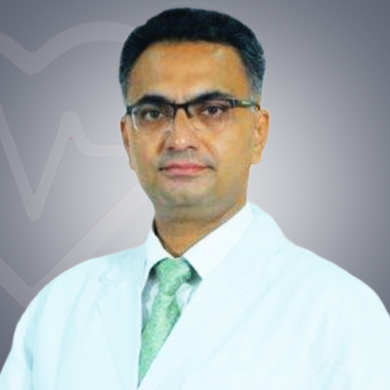
Dr. Puneet Mishra
Orthopaedic Surgeon
25 Years of Experience
Known among his patients for treating with compassion and personal care, Dr. Puneet Mishra is one of the best orthopedic surgeons in New Delhi. Dr. Puneet completed his MBBS from Maulana Azad Medical College in 1996 and from the same college he completed his MS (orthopedics) in 2000. With almost 25+ years of surgical experience under him, Dr. Pankaj takes pride in working with some of the finest medical institutions of the world such as University Hospital, Bern, Maulana Azad Medical College, New Delhi, Endoklinik, Germany, and Professor and Consultant orthopedician at Guru Teg Bahadur Hospital, New Delhi. View More
Last Reviewed - January 2026