Acute Flaccid Myelitis (AFM) Treatment in India
- Top Accredited Hospitals
- Global Medical Standards
- Cutting-Edge Technology
- Proven Treatment Options
- High Success Rate
- Trusted by Millions

What is Acute Flaccid Myelitis?
Acute flaccid myelitis (AFM) is a rare but dangerous spinal cord illness. It can result in loss of reflexes, muscular tone loss, and abrupt weakness in the arms or legs. Young children are primarily affected by the illness.
What is the Importance of Timely Treatment?
Timely treatment is important because Acute Flaccid Myelitis frequently affects the muscles in upper limbs and can also impair the muscles involved in breathing. This uncommon neurological disorder weakens muscles and reflexes. Because of this, it's important to seek medical care as soon as possible if you or your child develop symptoms.
What are the symptoms of Acute Flaccid Myelitis
The following are the most typical indications of acute flaccid myelitis:
- Abrupt weakness in the arms or legs
- Abrupt loss of muscular tone
- Absence of reflexes suddenly
Other symptoms and indicators that could be present include:
- Eyelid drooping or trouble moving the eyes
- Weakness or droop of the face
- Speech slurred or swallowing difficulties
- Discomfort in the back, neck, arms, or legs
Symptoms that are uncommon could include:
- Feeling numb or tingly
- Not being able to urinate
- Respiratory failure is one of the severe symptoms, which is caused by weakening of the breathing muscles. Blood pressure instability and potentially fatal variations in body temperature are also conceivable.
Causes and Risk Factors of Tethered Acute Flaccid Myelitis
Causes
An infection with an enterovirus is one possible cause of acute flaccid myelitis. Enteroviruses can cause fever and respiratory ailments, particularly in children. Most folks get well. The cause of acute flaccid myelitis in some enterovirus-infected individuals remains unknown. Between August and November, a number of viruses, including enteroviruses, are prevalent in the US. Outbreaks of acute flaccid myelitis typically happen at this time. Acute flaccid myelitis symptoms can resemble those of polio, a viral illness. However, poliovirus has not been linked to any occurrences of acute flaccid myelitis in the US.
Risk Factors
Young children are primarily affected by acute flaccid myelitis. Acute flaccid myelitis can produce muscle paralysis that lasts for months or even years.
Connect with our advisor for a PRIORITY response
Acute Flaccid Myelitis Prevention Tips
Acute flaccid myelitis cannot be prevented in any particular way. Acute flaccid myelitis risk can be decreased, nevertheless, by avoiding a viral infection. To help prevent you or your kid from contracting or spreading a viral infection, follow these steps:
- Use soap and water to wash your hands frequently
- Do not touch your face with dirty hands
- Steer clear of intimate contact with sick people
- Surfaces that are touched often should be cleaned and disinfected
- Use a tissue or the upper sleeve of your shirt to cover coughs and sneezes
- Keep youngsters who are ill at home.
Treatment options for Acute Flaccid Myelitis (AFM)
Plasmapheresis: Plasma exchange therapy may be necessary for patients who do not react to intravenous steroids. This entails taking out the straw-colored fluid (plasma) that contains blood cells and substituting it with other fluids. Although the exact mechanism of action of this therapy is unknown, it is possible that plasma exchange eliminates inflammatory antibodies.
Cost Start From USD 600 - USD 1500Explore Options
Steroids administered intravenously: Steroids will most likely be administered to you over a few days via a vein in your arm. Steroids aid in lowering spinal column inflammation.
Based on your responses to inquiries regarding your symptoms, medical history, a clinical evaluation of nerve function, and test results, a physician will make the diagnosis of transverse myelitis. These tests, which can rule out other conditions and reveal spinal cord inflammation, include the following:
MRI: A magnetic field and radio waves are used in magnetic resonance imaging (MRI) to produce three-dimensional images of soft tissues. Spinal cord inflammation and other possible causes of the symptoms, such as abnormalities affecting the spinal cord or blood vessels, might be seen on magnetic resonance imaging (MRI).
Spinal Tap: A tiny amount of cerebrospinal fluid (CSF), the fluid that surrounds your brain and spinal cord, is extracted with a needle during a lumbar puncture, also known as a spinal tap. Cerebrospinal fluid (CSF) may include abnormally high levels of white blood cells or immune system proteins that signify inflammation in certain transverse myelitis patients. Additionally, spinal fluid can be examined for specific malignancies or viral infections.
Blood Test: A test for antibodies linked to neuromyelitis optica, a disorder in which inflammation affects both your spinal cord and the nerve in your eye, may be part of blood tests. Individuals who have a positive antibody test are more likely to have repeated transverse myelitis attacks and need to be treated to avoid more episodes. Additional blood tests can rule out other possible causes of symptoms or detect infections that could be a factor in transverse myelitis.
MediRehab (chain of Rehab center) - part of MediGence provides comprehensive rehabilitation services designed to support arthritis patients in India. These services include:
Physical Therapy: This enhances coordination and strength. You can learn how to use any necessary assistance devices, including braces, canes, or a wheelchair, from your physical therapist.
Occupational Therapy: This aids individuals with transverse myelitis in learning new techniques for carrying out daily tasks including cleaning, cooking, and taking a shower.
Psychoanalysis: Anxiety, sadness, sexual dysfunction, and other emotional or behavioral problems resulting from managing transverse myelitis can be treated by a psychotherapist using talk therapy.
- Depending on the situation, your healthcare professional may prescribe medicine to help control your symptoms and support the treatment plan.
Instantly Connect with our Specialists


Hospitals for Acute Flaccid Myelitis (AFM) in India

Manipal Hospital, Dwarka
Delhi, India
Manipal Hospital Dwarka is a leading multi-super speciality tertiary care hospital offering world-class, affordable, and accessible healthcare. Backed by renowned doctors, advanced technology, and global standards in clinical care, the hospital provides comprehensive preventive, diagnostic, and therapeutic services for all age groups. With 380 beds, 13 modular OTs, 118 critical care beds, and 24/7 emergency services, it combines excellence in patient care with innovations like AI, telemedicine, remote monitoring, and EMR—striving to become a fully digital, paperless hospital setting new standards in modern healthcare.
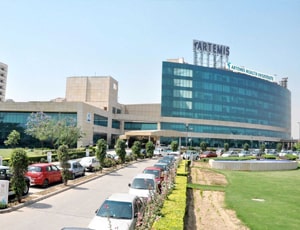
Artemis Health Institute
Gurgaon, India
Artemis Hospital, established in 2007 in Gurgaon, India, is a 750+ bed, state-of-the-art multi-speciality hospital and the first in Gurgaon accredited by JCI and NABH. A flagship of the Apollo Tyres Group, it offers advanced care across cardiology, oncology, orthopaedics, neurology, and transplant medicine, supported by modern infrastructure and 60+ world-class operating theatres. Its Centres of Excellence span critical areas like heart, cancer, neurosciences, orthopaedics, and women & child care. Guided by values of Service, Compassion, and Integrity, Artemis combines innovation, technology, and affordability, making it a trusted international healthcare destination for comprehensive and compassionate patient care.

Max Super Speciality Hospital, Patparganj
Delhi, India
Max Super Speciality Hospital, Patparganj, a 400+ bed NABH-accredited facility under Balaji Medical and Diagnostic Research Centre, offers world-class care across 33+ specialties, including Cardiac Sciences, Oncology, Neurosciences, Orthopaedics, Obstetrics & Gynaecology, and Kidney Transplant. With 116 ICU beds, 14 HDU beds, 11 modular OTs, and an NABL-accredited Max Lab, the hospital ensures advanced, quality-driven care. Staffed by 510+ expert doctors and 770+ nurses, it’s India’s first AACI-accredited super speciality hospital and North & West India’s first QAI-accredited Advanced Brain Stroke Centre. Max Patparganj is a regional leader in complex surgeries, blending cutting-edge technology with compassionate, patient-centric healthcare.
Our Services to better your experience
Opinion & Option
We submit the most accurate opinion and options from one or more countries for your review
Consult Privately
Consult with a certified specialist privately on our telemedicine platform even before you decide to travel
Logistics
We handle flights, visas, transfers, and accommodation—so you can focus on your health.
Recovery
Our In-house rehabilitation service packages to better your recovery and treatment outcome
Why Choose India for Acute Flaccid Myelitis Treatment?
Here are some of the reasons for choosing India:
- Due to advancements in medical facilities, such as minimally invasive surgical techniques and plasmapheresis procedures.
- World-class experts include highly experienced doctors, JCI, and NABH-accredited healthcare institutions.
- Compared to other countries, treatment in Indian hospitals is cost-effective.
- Indian hospitals provide international patient services, including a multilingual support system.
- Improved treatment methods and biological therapies.
Frequently Asked Questions
AFM has no particular treatment, and its long-term effects are unknown. While some patients fully recover, others experience symptoms and muscle weakness for almost a year. Certain treatments can aid in symptom relief and promote healing.
In India, there is currently no known treatment for acute flaccid myelitis (AFM). The main goal of treatment is to manage symptoms through supportive care, which includes occupational therapy and physical therapy to help with muscle weakness and, depending on the situation, sometimes medications like corticosteroids. The effectiveness of treatment is largely dependent on how severe the initial symptoms were and how well the patient responds to rehabilitation; most patients still experience some residual weakness after treatment.
Yes, many Indian hospitals offer the following for Acute Flaccid Myelitis treatment:
- Advanced diagnostic tools like MRI, CT scan, electromyography, and PET scan for accurate diagnoses.
- Skilled neurologist and therapist performing physical and occupational therapy for Acute Flaccid Myelitis.
- Comprehensive care and rehabilitation for long-term health benefit
Always consider the following factors when selecting Indian hospitals:
- Hospitals that are accredited (authorised by JCI and NABH).
- Patient reviews and success rates.
- Hospitals that provide seamless care to patients from abroad.
Long term effects may lead to permanent paralysis. In rare instances, patients may also experience tingling or numbness. The most severe symptoms of AFM include the need for mechanical ventilation due to respiratory failure. severe neurological side effects that could be fatal, include fluctuations in body temperature and unstable blood pressure.

Reviewer

Dr. Akash Khandelwal
Hematologist
9 Years of Experience
Dr. Akash Khandelwal is a distinguished Hematologist, Hemato-oncologist, and Bone Marrow Transplant (BMT) Physician with extensive training from the prestigious AIIMS New Delhi. His expertise encompasses a wide range of specialized techniques in bone marrow transplantation, including autologous and allogeneic transplants such as matched sibling donors, matched unrelated donors (MUD), and haploidentical donor transplants. Dr. Khandelwal has personally supervised and conducted over 100 bone marrow transplants. View More
Last Reviewed - January 2026