Your Notifications
All done, no notifications

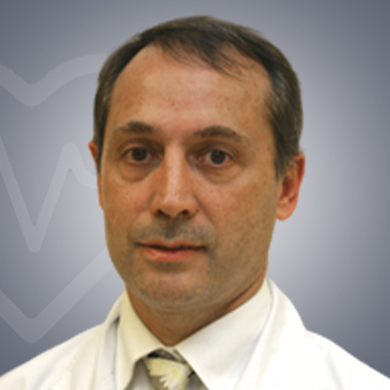
Dr. Joan Carles Galceran

Radiation oncologist

, Barcelona, Spain

34 Years of experience


Dr. Joan Carles Galceran is a specialized Medical Oncologist in Spain. And one of the most sought after medical specialists in Barcelona, Spain. The doctor has over 25 Years of experience and is associated with Centro Medico Teknon.

Association and Memberships Dr. Joan Carles Galceran is part of:

  • Member of the American Association of Clinical Oncology (ASCO)
  • European Association for Medical Oncology (ESMO).
  • Spanish Society of Medical Oncology (SEOM).

Certifications :

  • He completed his studies by obtaining the European Certificate in Medical Oncology in Vienna in November 1996.

Qualifications :

  • Dr. Joan Carles Galceran graduated in Medicine and Surgery at the University of Barcelona in 1987.
  • Ph.D., with cum laude, in 1992 from the Autonomous University of Barcelona.

Hospital Address :

Centro M

What is the medical expertise of Dr Joan Carles Galceran?

  • With over 25 years of experience, Dr Joan Carles Galceran is a leading oncologist specializing in sarcoma, kidney cancer, bladder cancer, and prostate cancer treatment. His expertise includes immunotherapy and chemotherapy.
  • Dr Carles is associated with noteworthy organizations such as the European Society for Medical Oncology(ESMO), the Spanish Society of Head and Neck Tumors(CTT), the Spanish Sarcoma Research Group(GEIS), the American Society of Clinical Oncology(ASCO) and the Spanish Association of Medical Oncology(SEOM). He is the Secretary and Co-founder of the Spanish Oncology Genitourinary Group(SOGUG).
  • In 1996, he obtained the European Certificate in Medical Oncology in Vienna.
  • Dr Carles has more than 70 peer-reviewed papers to his credit. Some of his publications include:
    1. Carles J, Alonso-Gordoa T, Mellado B, Méndez-Vidal MJ, et al. Radium-223 for patients with metastatic castration-resistant prostate cancer with asymptomatic bone metastases progressing on first-line abiraterone acetate or enzalutamide: A single-arm phase II trial. Eur J Cancer. 2022 Sep;173:317-326.
    2. Suarez C, Marmolejo D, Valdivia A, Morales-Barrera R, Gonzalez M, Mateo J, Semidey ME, Lorente D, Trilla E, Carles J. Update in collecting duct carcinoma: Current aspects of the clinical and molecular characterization of an orphan disease. Front Oncol. 2022 Oct 4;12:970199.
    3. Agarwal N, Azad A, Carles J, et al. A phase III, randomized, open-label study (CONTACT-02) of cabozantinib plus atezolizumab versus second novel hormone therapy in patients with metastatic castration-resistant prostate cancer. Future Oncol. 2022 Mar;18(10):1185-1198.
View Profile

Frequently Asked Questions

How can I choose a Spanish specialist in prostate cancer?

Clinical oncologists and urologists typically treat prostate cancer. Seek out experts with radiation therapy or robotic surgery experience who are registered with the Spanish Medical Association (TMA). Verify whether they participate in multidisciplinary cancer care teams (MDTs).

Which hospitals in Spain are renowned for treating prostate cancer?

Among the top facilities that provide radiation therapy, robotic surgery, and sophisticated imaging. Many participate in research trials and are located at designated cancer centres.

What are Spain's options for treating prostate cancer?

Radiation therapy (external beam or brachytherapy), hormone therapy, chemotherapy, radical prostatectomy, and active surveillance are possible forms of treatment. Cancer stage, grade, age, and patient preference all influence available options. In Spanish hospitals, robotically assisted prostatectomy is becoming more and more common. Targeted or immunotherapy may be used for advanced stages of cancer. Every treatment is administered according to the guidelines.

How long does it take to recover from treatment for prostate cancer?

Depending on the type of treatment, recovery can take anywhere from four to six weeks for surgery and a few weeks for radiation side effects. After two to three months, most men gradually return to their regular activities. Following surgery, pelvic floor therapy is frequently required. Over time, hormone therapy may result in mood swings, hot flashes, or exhaustion. Hospitals offer programs to support recovery.

In Spain, is it possible for me to obtain a second opinion regarding prostate cancer?

Yes, patients can request a second opinion. You can request a referral to another specialist or cancer centre from your general practitioner or consultant. Prostate cancer consultants are frequently available at large hospitals. Private consultations provide international expertise and faster access. Before beginning irreversible treatments, a second opinion is advised.

Does Spain offer teleconsultations for prostate cancer?

Indeed, all private hospitals and a large number of trusts now provide phone or video consultations. When talking about test results, follow-ups, or second opinions, these are helpful. Private systems and platforms ensure secure access. Patients who live outside of large cities can benefit most from teleconsults. Procedures and physical examinations are still done in person.

Can patients from other countries receive treatment for prostate cancer in Spain?

Yes, a large number of prestigious Spanish hospitals have dedicated international offices that take in patients from around the world. Diagnostics, surgery, radiotherapy, and follow-up are among the services offered. Before departing, patients from other countries can schedule teleconsultations. MediGence provides:

  • Seamless access to consultations, admissions, and diagnostics
  • End-to-end help with travel, accommodation, and visa coordination
  • Post-discharge support with telemedicine and medication export guidance
Is hormone treatment for prostate cancer a common practice in Spain?

Indeed, advanced or intermediate-to-high-risk prostate cancer is treated with androgen deprivation therapy (ADT). In cases of metastatic disease, it is frequently used either alone or in conjunction with radiation. Fatigue, mood swings, and decreased libido are some of the side effects. Injections are typically administered every one to six months as part of treatment. Throughout treatment, Spanish physicians closely monitor cardiovascular risks and bone health to ensure optimal outcomes.

In Spain, is it possible to maintain fertility before prostate cancer treatment?

Men can choose to bank their sperm before hormone therapy, radiation, or surgery. Facilities provide this service. Treatments for prostate cancer may permanently reduce fertility. You can ask your general practitioner or oncologist for a referral.

In Spain, how should I get ready for a consultation about prostate cancer?

Bring imaging tests, a list of symptoms, prescription drugs, and any questions you may have. Prepare to talk about family history, sexual history, and urine. Inquire about the diagnosis, available treatments, adverse effects, and results. Usually, consultations run between twenty and forty-five minutes. Making decisions is also aided by having a companion or taking notes.