Browse verified doctors or let our care team help you find the doctor best suited to your condition, treatment goals, and budget.

Choosing Mount Elizabeth Novena Hospital for Congenital Limb Defects Surgery gives patients access to experienced pediatric orthopedic surgeons, advanced imaging technology, and multidisciplinary rehabilitation services. Established in 2012, the JCI hospital in Novena, Singapore has 313 beds and provides specialised orthopedic care.
Congenital Limb Defects Surgery may be recommended when a limb abnormality significantly affects a child's mobility, balance, growth, or ability to perform daily activities. Depending on the nature of the defect, treatment may involve reconstructive surgery, correction of bone or joint deformities, limb lengthening, or soft-tissue reconstruction. Doctors generally perform a detailed physical assessment and imaging before surgery to develop an individualised treatment plan. Physiotherapy and rehabilitation help support functional recovery.
Mount Elizabeth Hospital provides specialised Congenital Limb Defects Surgery with a focus on individualised treatment, surgical precision, and long-term functional development. Established in 1979, the JCI hospital is located in Singapore, Singapore and operates 345 beds with modern pediatric orthopedic infrastructure.
Congenital Limb Defects Surgery aims to improve limb alignment, stability, length, and function while supporting the child's development and mobility. Depending on the specific congenital condition, treatment may include bone reconstruction, limb lengthening, joint stabilisation, deformity correction, tendon procedures, or other reconstructive surgery. Comprehensive evaluation, including physical examination and imaging, helps determine the appropriate surgical approach. Long-term follow-up and rehabilitation may be required to monitor growth and maintain functional outcomes.
Choosing Gleneagles Hospital for Congenital Limb Defects Surgery gives patients access to experienced pediatric orthopedic surgeons, advanced imaging technology, and multidisciplinary rehabilitation services. Established in 1959, the JCI hospital in Singapore, Singapore has 258 beds and provides specialised orthopedic care.
Congenital Limb Defects Surgery may be recommended when a limb abnormality significantly affects a child's mobility, balance, growth, or ability to perform daily activities. Depending on the nature of the defect, treatment may involve reconstructive surgery, correction of bone or joint deformities, limb lengthening, or soft-tissue reconstruction. Doctors generally perform a detailed physical assessment and imaging before surgery to develop an individualised treatment plan. Physiotherapy and rehabilitation help support functional recovery.
Parkway East Hospital is a trusted healthcare provider for Congenital Limb Defects Surgery, offering specialized pediatric orthopedic care supported by experienced surgeons and modern medical infrastructure. Established in 1942, the JCI hospital is situated in Singapore, Singapore and has 143 beds.
Congenital Limb Defects can affect the development, alignment, length, or function of a child's limbs and may vary considerably in severity. Surgical treatment is planned according to the specific defect, the child's age, growth potential, and functional needs. Depending on the condition, procedures may include limb reconstruction, deformity correction, bone lengthening, tendon or joint surgery, and other reconstructive approaches. Preoperative imaging and regular follow-up help guide treatment as the child grows.
Thomson Medical Centre is a trusted healthcare provider for Congenital Limb Defects Surgery, offering specialized pediatric orthopedic care supported by experienced surgeons and modern medical infrastructure. Established in 1979, the hospital is situated in Singapore, Singapore and has 190 beds.
Congenital Limb Defects can affect the development, alignment, length, or function of a child's limbs and may vary considerably in severity. Surgical treatment is planned according to the specific defect, the child's age, growth potential, and functional needs. Depending on the condition, procedures may include limb reconstruction, deformity correction, bone lengthening, tendon or joint surgery, and other reconstructive approaches. Preoperative imaging and regular follow-up help guide treatment as the child grows.

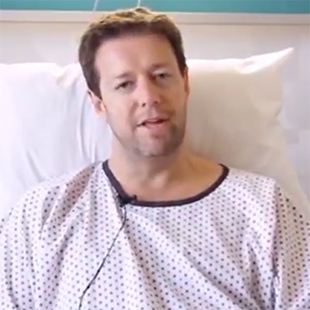
Kevin Stewart from Scotland could barely walk straight due to a Slip Disc. He faced many discomforts for the past 2 years and eventually had…

Mr. Muhammed Dumia was suffering from painful left Knee and was in considerable pain for the last 2 months. He eventually underwent Knee Replacement Surgery…