4 Hospitals
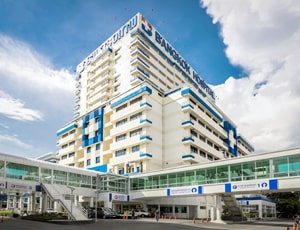
- The Best Hospital in Thailand Award (2020): This award recognizes Bangkok Dusit Medical Services (BDMS) as the best hospital in Thailand, based on patient satisfaction, clinical care, and advanced medical technology.
- The Joint Commission International Accreditation (2019): This accreditation recognizes BDMS's high standards of patient care, safety, and quality management.
- The Best Hospital Group in Thailand Award (2018): This award acknowledges BDMS as the top hospital group in Thailand, based on patient satisfaction, clinical care, and advanced medical technology.
- The Best Cardiac Services Hospital in Asia Award (2017): This award recognizes BDMS's Bangkok Heart Hospital as the top cardiac services hospital in Asia, based on patient satisfaction, clinical care, and advanced medical technology.
- The Best International Hospital in Thailand Award (2016): This award acknowledges BDMS's exceptional care and facilities for international patients, making it a top medical tourism destination in Thailand.
- Accreditation

Please Enquire

- Best Hospital in Thailand for Medical Tourism in 2020 - Awarded by the Global Health and Travel Awards for the hospital's focus on providing international patients with world-class medical treatments and personalized care.
- Excellence in Patient Care in 2019 - Awarded by Frost & Sullivan for the hospital's patient-centric approach and use of advanced medical technology to deliver quality care.
- Best Hospital in Bangkok in 2018 - Awarded by the Thailand Medical Tourism Association for the hospital's excellent medical services and facilities.
- Best Hospital in Thailand for Women's Health in 2017 - Awarded by the Global Health and Travel Awards for the hospital's specialized services and facilities for women's health.
- Excellence in Healthcare Service Delivery in 2016 - Awarded by the Bangkok Hospital Association for the hospital's exceptional healthcare services and commitment to patient satisfaction.
- Accreditation

- Best Hospital in Bangkok in 2020 - Awarded by Global Health & Travel Awards for the hospital's excellence in patient care, technology, and facilities.
- Excellence in Patient Service Award in 2019 - Awarded by Healthcare Asia for the hospital's exceptional patient service, commitment to quality care, and innovative medical services.
- Hospital Accreditation in 2018 - Received accreditation from the Healthcare Accreditation Institute (HAI) for the hospital's high standards in patient safety, quality care, and medical services.
- Best Medical Tourism Hospital in 2017 - Awarded by the Thailand Tourism Awards for the hospital's focus on providing international patients with world-class medical treatments and personalized care.
- Outstanding Medical Institution in 2016 - Awarded by the Association of Southeast Asian Nations (ASEAN) for the hospital's exceptional contribution to the healthcare industry in the region.
- Accreditation


- Best Private Hospital in Thailand, 2020 - Phyathai 2 International Hospital was named the Best Private Hospital in Thailand at the Global Health and Travel Awards in 2020.
- Best Hospital for Medical Tourism in Asia, 2019 - Phyathai 2 International Hospital was named the Best Hospital for Medical Tourism in Asia at the Asia Pacific Healthcare and Medical Tourism Awards in 2019.
- Best Hospital in Thailand, 2018 - Phyathai 2 International Hospital was named the Best Hospital in Thailand at the Global Health and Travel Awards in 2018.
- Best Hospital in Bangkok, 2017 - Phyathai 2 International Hospital was named the Best Hospital in Bangkok at the Global Health and Travel Awards in 2017
- Accreditation
Ask your healthcare adviser for the best multiple options and choose the one that meets your expectations
Request for an Expert Opinion

Outcomes of VP Shunt
| Speciality | Neurology |
| Procedure | VP Shunt |
| Success Rate | 70-90% |
| Recovery Time | 2-3 months |
| Treatment Time | 1-2 hours |
| Chances of Recurrence | 10-20% |
What is a VP Shunt, and how does it work?
A VP Shunt, also known as a ventriculoperitoneal shunt, is a surgical procedure used to treat hydrocephalus. It is a condition where there is an abnormal accumulation of cerebrospinal fluid (CSF) in the brain, leading to increased pressure. The procedure is performed under general anesthesia and takes about 90 minutes. The surgeon drains the excess fluid in the brain by creating a hole in the skull and using a thin, flexible tube (catheter). Tiny pumps may be attached to the cavity to drain the fluid. The pumps can be regulated to extract extra fluid as it increases above a certain range, which is then dumped in the peritoneal cavity.
What medical conditions can be treated through VP Shunt?
The VP shunt procedure is exclusively used in cases of hydrocephalus. There are two types of Hydrocephalus; Congenital Hydrocephalus, which is present at birth due to abnormal brain development, and Acquired Hydrocephalus, which is caused by infections, tumors, or head injuries leading to CSF buildup.
What is the recovery process after a VP Shunt?
The recovery after a VP shunt procedure may take three to four days. Most patients are discharged from the hospital within seven days after the procedure. During the hospital stay, blood pressure, the proper working of the shunt, and the heart rate of the patient are consistently monitored. The doctor prescribes preventative antibiotics to avoid any infections. Patients may experience mild discomfort and headaches during the recovery period. Regular follow-up appointments are scheduled to monitor the shunt's function and ensure that the hydrocephalus is well-controlled. In some cases, physical therapy may be required to help with motor and developmental issues associated with the condition.
Frequently Asked Questions
There are several factors for ranking the hospitals on the basis of the procedure. In Bangkok, hospitals that do VP Shunts are ranked according to the mentioned factors- Infrastructure, Procedure Availability, Procedure Popularity, Technology, Affordability, Experienced Specialists, Quality of Resources, and Success Rate
With MediGence, you can avail quality healthcare along with convenience and cost-savings. All of this is made possible by the exceptional services we offer you, which make your healthcare experience comfortable, hassle-free, and budget-friendly. Just a few of our unmatched caregiving services & benefits are Accommodation or hotel stays, Airport transfers, Care Packages for Recuperation, 24/7 help, Online Consultation, Dedicated Case Manager, and Customized Treatment Packages with an ensured 30% savings. Many more benefits are available with MediGence your treatment abroad.
Yes, you can avail a video consultation with the specialist before travelling to Bangkok. When one of our patient advisors contacts you about your inquiry, you can demand an online consultation with the specialist. They will check the doctor's availability for the consultation. Once confirmed, you will be sent a payment link to book your online consultation.
People from around the world are increasingly choosing to travel to Bangkok for VP Shunt due to its modern infrastructure and high success rate. VP Shunt is the best option when it comes to Bangkok for a variety of reasons including:
- Cost-effective treatment options
- Modern healthcare technologies
- Accredited hospitals
- Data privacy and transparency
- Experienced and certified experts
The length of recovery after treatment is determined by the patient's overall health as well as the criticality of the treatment. The length of the patient's recovery is also greatly influenced by other variables, such as their continued participation in rehabilitation sessions and postoperative care appointments. To speed up recovery, it is advised that the patient maintain regular contact with their surgeon for a few months after surgery.