5 Hospitals
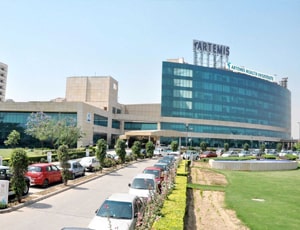
- First Position in CII National HR Circle Competition (Stream: Innovative Leadership during Crisis) – 2020
Awarded by: Confederation of Indian Industry (CII)
- Kayakalp Award for Excellence in Promoting Cleanliness, Hygiene & Infection Control – 2019
Awarded by: Quality Council of India, in association with the Ministry of Health & Family Welfare
- FICCI Healthcare Excellence Award for Service Excellence – 2018
Awarded by: Federation of Indian Chambers of Commerce & Industry (FICCI)
- Indian Excellence Award – Best Super Specialty Hospital in Delhi-NCR – 2017
Awarded by: Indian Excellence Awards
- Asia Pacific Hand Hygiene Excellence Award – 2010
Awarded by: World Health Organization (WHO)
- Accreditation


Please Enquire

- Best Private Hospital in India (2020–2025): Medanta has been ranked as the best private hospital in India for six consecutive years by Newsweek's World's Best Hospitals rankings.
- Top 150 Global Hospitals (2025): The hospital was featured among the top 150 hospitals worldwide in the 2025 edition of Newsweek's World's Best Hospitals survey.
- Top 250 Global Hospitals (2024): Medanta was listed among the top 250 hospitals globally in the 2024 rankings.
- Best Hospital for Medical Tourism (2020): Awarded by the India Healthcare Awards for its excellence in medical tourism services.
- Best Multi-Speciality Hospital in India (2021): Recognized by the Times Health Survey for its comprehensive multi-specialty services.
- Accreditation

- Max Hospital Gurugram has been recognised for its excellence in healthcare and community service. At the Financial Express Awards 2022 (North Region), the hospital received three prestigious awards.
- It was honoured for Best CSR Practice, acknowledging its outstanding initiatives in corporate social responsibility and community welfare.
- The hospital also won the Best Hospital COVID Management award for its effective strategies and dedication to managing COVID-19 care safely and efficiently.
- Additionally, Max Hospital Gurugram received the Best Hospital Patient Care award, highlighting its commitment to providing compassionate and patient-focused healthcare services.
- Accreditation


- Best Multi-Speciality Hospital in Gurugram: Times Health Awards 2021
- Best Hospital in Patient Safety and Quality Care: Business Today Healthcare Awards 2020
- Best Hospital in North India: CNBC TV18 India Healthcare Awards 2020
- Best Hospital in Haryana: Global Healthcare Excellence Awards 2020
- Excellence in Patient Experience: Frost & Sullivan India Healthcare Excellence Awards 2019
- Accreditation


- India IVF Award for Excellence in Fertility Services (2020) - Recognised for high-quality fertility treatment outcomes (earned when the hospital was known as W Pratiksha Hospital).
- Best Emerging Multispeciality Hospital in Delhi NCR (2021) -Acknowledged by the Times Health Survey for overall clinical performance and patient care.
- Healthcare Leadership Awards 2022 - Excellence in Women & Child Healthcare - Celebrating superior maternity and child health services.
- Economic Times Healthcare Awards 2023 - India’s Most Trusted Hospital Brand - Recognition for trust and reputation in healthcare delivery.
- Accreditation
Ask your healthcare adviser for the best multiple options and choose the one that meets your expectations
Request for an Expert Opinion

Outcomes of Epilepsy Treatment
| Speciality | Neurology |
| Procedure | Epilepsy Treatment |
| Success Rate | Varies by condition |
| Recovery Time | Varies by condition |
| Treatment Time | Varies by condition |
| Chances of Recurrence | Varies by condition |
What is an Epilepsy Treatment, and how does it work?
Epilepsy, also known as seizure disease, is a chronic medical condition that occurs due to abnormal signals in the brain produced by damaged brain cells. This uncontrolled activity can lead to changes in the state of awareness, muscle twitches and jerks, emotions, sensations, and behavior. The available surgical options include surgical resection, which involves removing abnormal brain tissue, disconnection of fiber bundles connecting different brain areas, and stereotactic radiosurgery, which targets and destroys abnormal brain tissue. Additionally, neuromodulation devices can be implanted to deliver electrical impulses to the brain, gradually reducing seizures.
What medical conditions can be treated through Epilepsy Treatment?
Epilepsy treatment is primarily used to manage and control seizures in individuals diagnosed with epilepsy. It can help reduce the frequency and severity of seizures, improve a person's quality of life, and reduce the risk of injury during a seizure.
What is the recovery process after an Epilepsy Treatment?
The recovery period following epilepsy treatment varies according to the type of treatment used. Patients taking medications may need to adhere to a specific dosage regimen and attend regular check-ups with their healthcare provider to monitor their response to the medication and adjust the dosage as needed. In the case of surgical interventions, the recovery process may include a hospital stay, post-operative care, and follow-up appointments to assess the procedure's success and the patient's overall condition. The recovery may take 3-6 weeks.
Frequently Asked Questions
The ranking of hospitals according to the procedure is based on a number of elements. In Gurgaon, Hospitals for Epilepsy Treatment are ranked on the basis of the following factors- Popularity for the procedure, Infrastructure, Availability of the Procedure, Experienced doctors, Technology used, Cost, Facilities provided, Success Rate
MediGence provides you with a combination of cost-savings, convenience, and quality healthcare. While travelling for treatment abroad, MediGence makes sure that your healthcare journey should be smooth and hassle-free. Just a few of our unmatched caregiving services & benefits are Accommodation or hotel stays, Airport transfers, Care Packages for Recuperation, 24/7 help, Online Consultation, Dedicated Case Manager, and Customized Treatment Packages with an ensured 30% savings. Furthermore, we have alot more other benefits for you to recieve top-notch medical care.
Yes, you can avail a video consultation with the specialist before travelling to Gurgaon. You can place your request to our patient advisors for scheduling your online consultation with the specialist. They will check the doctor's availability, send the payment link to you, and finalize your appointment.
People from around the world are increasingly choosing to travel to Gurgaon for Epilepsy Treatment due to its modern infrastructure and high success rate. Other factors that contribute to Gurgaon being the best choice for Epilepsy Treatment include:
- Skilled and Qualified specialists
- Affordable treatment plans
- Transparency and data privacy
- Internationally recognised hospitals
- Modern healthcare technologies
The time of recovery after treatment depends on the patient’s overall health as well as the criticality of the treatment. The patient should make sure to take all rehabilitation sessions and follow postoperative care protocols, among other things, to reduce their recovery time. Following surgery, patients must return for follow-up appointments to ensure proper healing and hasten the healing process.