Browse verified doctors or let our care team help you find the doctor best suited to your condition, treatment goals, and budget.
Choosing Mount Elizabeth Novena Hospital for Cervical Decompression gives patients access to specialist-led spine surgery, advanced diagnostic technology, and coordinated postoperative care. Established in 2012, the JCI accredited hospital is located in Novena, Singapore and operates 313 beds with modern spinal treatment infrastructure.
Cervical Decompression is used to address pressure affecting the spinal cord or nerve roots in the cervical region. Patients may be evaluated for surgery when symptoms persist despite appropriate non-surgical treatment or when significant neurological compression is identified. During the procedure, the surgeon removes or modifies structures responsible for narrowing, such as a herniated disc, bone growth, or part of the vertebral arch. The surgical approach depends on the affected level, underlying condition, and overall spinal stability.
At Mount Elizabeth Hospital, Cervical Decompression is performed using modern spinal surgical techniques and individualized treatment planning. Established in 1979, the JCI accredited hospital in Singapore, Singapore has 345 beds and provides comprehensive neurosurgical and spine care.
Cervical Decompression may be recommended when pressure within the cervical spine causes persistent neck pain, arm symptoms, numbness, weakness, or signs of spinal cord dysfunction. The procedure aims to create additional space around compressed neural structures. Depending on the patient's condition, the surgeon may remove a damaged disc, part of a vertebra, or thickened tissue contributing to the compression. Imaging studies such as MRI or CT help determine the affected spinal levels and guide surgical planning.
Gleneagles Hospital offers dedicated Cervical Decompression with experienced spine specialists, advanced imaging support, and modern operating facilities. Established in 1959, the JCI accredited hospital is situated in Singapore, Singapore and has 258 beds supporting comprehensive spinal care.
Cervical Decompression aims to reduce pressure on nerves or the spinal cord caused by narrowing or structural abnormalities in the cervical spine. Surgical approaches may include procedures such as cervical discectomy, laminectomy, or other decompressive techniques depending on the source of compression. In some cases, decompression may be combined with spinal fusion to provide stability. Postoperative physiotherapy and gradual activity progression can support recovery and functional improvement.
Parkway East Hospital offers dedicated Cervical Decompression with experienced spine specialists, advanced imaging support, and modern operating facilities. Established in 1942, the JCI accredited hospital is situated in Singapore, Singapore and has 143 beds supporting comprehensive spinal care.
Cervical Decompression aims to reduce pressure on nerves or the spinal cord caused by narrowing or structural abnormalities in the cervical spine. Surgical approaches may include procedures such as cervical discectomy, laminectomy, or other decompressive techniques depending on the source of compression. In some cases, decompression may be combined with spinal fusion to provide stability. Postoperative physiotherapy and gradual activity progression can support recovery and functional improvement.
At Thomson Medical Centre, Cervical Decompression is performed using modern spinal surgical techniques and individualized treatment planning. Established in 1979, the accredited hospital in Singapore, Singapore has 190 beds and provides comprehensive neurosurgical and spine care.
Cervical Decompression may be recommended when pressure within the cervical spine causes persistent neck pain, arm symptoms, numbness, weakness, or signs of spinal cord dysfunction. The procedure aims to create additional space around compressed neural structures. Depending on the patient's condition, the surgeon may remove a damaged disc, part of a vertebra, or thickened tissue contributing to the compression. Imaging studies such as MRI or CT help determine the affected spinal levels and guide surgical planning.

Ms Patience from Uganda travelled to India for cosmetic surgery in May 2017. She got her treatment done in Asian Institute of Medical Sciences in…

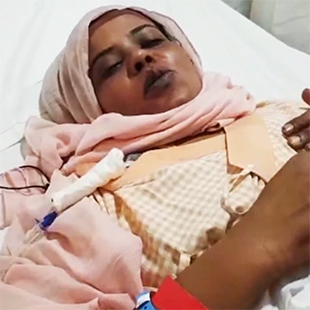
Lobna (from Sudan) was diagnosed with meningioma, a form of non-cancerous brain tumor. Her family members decided to take her to one of the most…