2 Hospitals
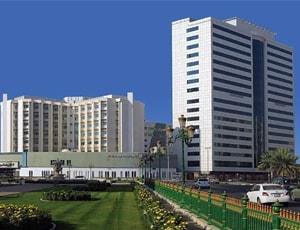
NMC Royal Hospital Sharjah is renowned for its excellent cardiac care center. For acute care, the NMC Royal Hospital Sharjah has 137 beds (including 9 ICU and 12 NICU beds). The hospital has almost 170 doctors. All patients are given state-of-the-art healthcare at the facility. The facility provides Critical Care in Cardiology and Emergency Medicine. The hospital has state-of-the-art technology, and its medical staff is familiar with the top international healthcare standards.
NMC Healthcare has made groundbreaking contributions to cardiology and cardiac surgery during the past 20 years. Surgeons are renowned throughout the world for their innovative methods, which they created and honed during routine cardiac operations. Adult heart care services including electrophysiology, device treatments, and care for coronary, structural, and peripheral vascular illnesses are offered by the ultramodern 24-hour cardiac unit. Critical care units are overseen and administered round-the-clock. Excellent cardiac rehab is offered at the hospital, and it is dependent on the post-operative care provided to cardiac patients who have had procedures like atrial septal repair. Dr. Adel Abushi, Dr. Adel Y. Al Eryani, and Dr. Ahmed Mohammed Al Kamali are some of the cardiac specialists at NMC Royal Hospital Sharjah.
Best doctors for Cardiac Valve Replacement at NMC Royal Hospital Sharjah:
- Dr. Rafik Abu Samra, Specialist Cardio Thoracic Surgeon, 20 Years of Experience
- Accreditation

Please Enquire

At Zulekha Hospital, aortic and mitral valve problems can be identified in both children and adults. A whooshing sound (heart murmur) emanating from a patient's heart is the most common indication that they may require an atrial septal repair or a mitral septal repair. An echocardiogram, chest X-ray, electrocardiogram (ECG or EKG), cardiac magnetic resonance imaging (MRI), and computed tomography can all be used to detect an atrial septal defect (CT). The Cardiology Department at Zulekha Hospital employs medical technology that can perform both invasive and non-invasive tests.
In addition to standard diagnostic invasive operations such as Angiography and Catheterization investigations, including Coronary and Peripheral Angioplasty with Stenting, the department offers Balloon Valvuloplasty for all Valvular Lesions. PDA device and coil closure, as well as ASD device closure, are available for patients of all ages. The hospital provides minimally invasive heart surgery, which involves accessing the heart through small incisions made between your ribs on the right side of your chest rather than through your breastbone, as in open-heart surgery. Dr. Jayachandran Thejus and Dr. Krupal Reddy are some of the cardiac surgeons at Zulekha Hospital.
Best doctors for Cardiac Valve Replacement at Zulekha Hospital Sharjah:
- Dr. Mohamed Ahmed Helmy, Consultant Cardiac Surgeon, 25 Years of Experience
- Dr. Hasan Al Shaiah, Specialist Cardio thoracic Surgeon, 16 Years of Experience
- Accreditation

Ask your healthcare adviser for the best multiple options and choose the one that meets your expectations
Request for an Expert Opinion

Outcomes of Cardiac Valve Replacement
| Speciality | Cardiac Sciences |
| Procedure | Cardiac Valve Replacement |
| Success Rate | 95-98% |
| Recovery Time | 3 to 4 weeks |
| Treatment Time | 2 to 4 hours |
| Chances of Recurrence | 2-5% |
What is a Cardiac Valve replacement, and how does it work?
Cardiac valve replacement is a procedure performed to replace damaged or weakened valves with a biological or mechanical valve. It is a recommended procedure when the valves are not properly developed in a child or weaken over time in adults. The surgery helps restore normal blood flow and improve heart function, enhancing the patient's quality of life and reducing symptoms associated with valve dysfunction. The choice of valve material depends on factors such as age, lifestyle, and the specific condition of the patient, and is determined in consultation with the cardiac surgeon and medical team.
What medical conditions can be treated through Cardiac Valve Replacement?
A heart valve replacement is most commonly recommended when valve repair is ruled out by cardiac specialists. The replacement is most commonly performed to treat people suffering from aortic valve disease (mostly aortic stenosis- i.e., narrowing of the aortic vessels). Some of the other common conditions that may require a heart valve replacement include:
- Stenosis of the Mitral, pulmonary, or tricuspid valves (narrowing).
- Prolapse of the Mitral valve.
- Aortic, mitral, or tricuspid regurgitation
- Congenital heart valve disease.
What is the recovery process after a Cardiac Valve Replacement?
The recovery period for heart valve replacement typically spans one to two months, although individuals who undergo minimally invasive procedures may have a faster recovery. During the initial three weeks of recovery, one may experience fatigue. Driving should be avoided for several weeks following the operation. Additionally, it is advised not to lift anything weighing more than 10 pounds for approximately six to eight weeks post-surgery. Each individual's recovery journey may vary. Your doctor may advise you on the right practices post-surgery.
Frequently Asked Questions
The ranking of hospitals according to the procedure is based on a number of elements. In Sharjah, Hospitals for Cardiac Valve Replacement are ranked on the basis of the following factors- Availability of the Procedure, Popularity of the procedure & hospital, Infrastructure, Pricing structure, Experienced Medical Professionals, Technology Employed, Facilities Available for the Patients & Visitors, Success Rate of the Hospital.
MediGence offers you a blend of convenience, quality healthcare, and cost-savings. With us, you can receive top-notch medical treatment while saving money and making your journey hassle-free with some unmatched benefits & services. These caregiving services are airport transfers, accommodation, 24/7 assistance, Online consultation, Assigned Patient Coordinator, and Prebundled treatment packages with upto a 30% discount. To help you receive top-notch medical treatment, we also provide a number of additional benefits.
Yes. MediGence gives you the privilege of scheduling an online consultation with a specialist in Sharjah. To schedule the consultation, please get in touch with our patient advisory team. They will get in touch with the doctor to check his/her availability. After receiving confirmation, the appointment will be scheduled and you will receive a payment link to book your session.
Sharjah is becoming a prime destination for many people across the world for Cardiac Valve Replacement because of high success rates and modern infrastructure. Many other factors make Sharjah the preferred choice for Cardiac Valve Replacement. These include:
- Skilled and Qualified specialists
- Affordable treatment plans
- Transparency and data privacy
- Internationally recognised hospitals
- Modern healthcare technologies
The severity of the treatment and the patient's general health both influence how long recovery takes after treatment. Other factors, such as the patient's continued participation in rehabilitation sessions and postoperative care appointments, have a significant impact on the length of their recovery. Patient must keep in touch with their surgeon for a few months after surgery in order to speed up recovery.