1 Hospitals
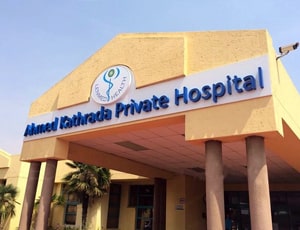
- Best Private Hospital in South Africa, 2020 - Ahmed Kathrada Private Hospital in Johannesburg was named the Best Private Hospital in South Africa in 2020 by the International Healthcare Commission.
- Best Hospital for Cardiology, 2019 - Ahmed Kathrada Private Hospital in Johannesburg was named the Best Hospital for Cardiology in 2019 by the South African Medical Association.
- Best Hospital for Orthopedics, 2019 - Ahmed Kathrada Private Hospital in Johannesburg was named the Best Hospital for Orthopedics in 2019 by the South African Medical Association.
- Best Hospital for Neurology, 2019 - Ahmed Kathrada Private Hospital in Johannesburg was named the Best Hospital for Neurology in 2019 by the South African Medical Association.
- Best Hospital for Pulmonology, 2019 - Ahmed Kathrada Private Hospital in Johannesburg was named the Best Hospital for Pulmonology in 2019 by the South African Medical Association.
- Accreditation


Ask your healthcare adviser for the best multiple options and choose the one that meets your expectations
Request for an Expert Opinion

Outcomes of Angiography (Including Non-Ionic Contrast)
| Speciality | Cardiac Sciences |
| Procedure | Angiography (Including Non-Ionic Contrast) |
| Success Rate | 90% |
| Recovery Time | few hours |
| Treatment Time | 30 mins - 1 hour |
| Chances of Recurrence | Moderate |
What is Angiography (Including Non-Ionic Contrast), and how does it work?
Angiography is an interventional procedure performed by skilled interventional cardiologists. The procedure is done to check the health of your blood vessels and how blood flows through them. During this procedure, the patient is usually given a local anesthetic to numb the area (groin or wrist). A small cut is made, and a catheter- a thin, long tube- is inserted into the artery to examine the blood vessels and blood flow. In most cases, a dye is injected into the blood vessels to better visualize them. A series of X-rays are taken and studied. After the procedure, the doctors cover the area with bandages and stitches. Patients are usually discharged on the same day of the procedure.
What medical conditions can be treated through Angiography (Including Non-Ionic Contrast)?
Angiography, including non-ionic contrast, is a valuable diagnostic tool used to identify various problems affecting the blood vessels. This may include diagnosing conditions such as atherosclerosis, a narrowing of the arteries that increases the risk of stroke or heart attack. Furthermore, angiography can detect brain aneurysms and assess peripheral arterial disease, which affects the blood supply to leg muscles, potentially preventing life-threatening complications. Angina, a chest pain caused by decreased blood flow to the heart muscles, blood clots, and pulmonary embolisms, which affect the artery supply to the lungs, are some of the other conditions that can be diagnosed using angiography. Angiography also aids in the detection of blockages in the blood supply to vital organs such as the kidneys. Angiography may also be used to aid in treatment planning for some of these conditions.
What is the recovery process after an Angiography (Including Non-Ionic Contrast)?
Angiography is an outpatient procedure. The patient is usually discharged on the same day of the procedure. There might be some bleeding and discomfort immediately after a catheter is removed. Your doctor may advise you to rest for a few days. You might also increase your water intake for a few days after the procedure to flush out any contrast agents from your body. Heavy lifting and strenuous activities must be avoided for a few days after the procedure. Soreness and bruising are common after the procedure for a few days. It gets better after 2-3 days.
Frequently Asked Questions
It's a fact that while ranking a hospital, certain factors need to be considered. In Johannesburg, hospitals that do Angiography (Including Non-Ionic Contrast)s are ranked according to the mentioned factors- Popularity for the procedure, Infrastructure, Availability of the Procedure, Experienced doctors, Technology used, Cost, Facilities provided, Success Rate
MediGence puts forth a lot of effort to make your medical travel of the finest quality, convenient, and affordable for you. With us, you can receive top-notch medical treatment while saving money and making your journey hassle-free with some unmatched benefits & services. Some of the top caregiving services available include Hotel stays, Dedicated Case Coordinator, Recovery packages, Online Consultation, round-the-clock assistance, and customized packages with discounts of up to a 30%. Other than these, there are multiple value-added services you can avail with MediGence
Yes. MediGence gives you the privilege of scheduling an online consultation with a specialist in Johannesburg. While talking to one of our experts, you can request a video consultation appointment. They will finalize your appointment after confirming the doctor's availability and sending the payment link.
Angiography (Including Non-Ionic Contrast) in Johannesburg is trusted by many people across the world due to the high rate of successful outcomes and world-class hospital infrastructure. Many other factors make Johannesburg the preferred choice for Angiography (Including Non-Ionic Contrast). These include:
- Cost-effective treatment options
- Experienced and certified experts
- Accredited hospitals
- Modern healthcare technologies
- Data privacy and transparency
Recovery times for various procedures vary depending on the patient's health and the complexity of the treatment. Other factors like continuously taking rehab sessions and enrolling in postoperative care sessions also greatly impact the recovery time of the patient. Following surgery, patients must return for follow-up appointments to ensure proper healing and to expedite the healing process.