6 Hospitals
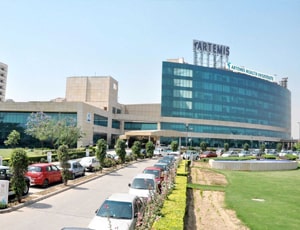
- First Position in CII National HR Circle Competition (Stream: Innovative Leadership during Crisis) – 2020
Awarded by: Confederation of Indian Industry (CII)
- Kayakalp Award for Excellence in Promoting Cleanliness, Hygiene & Infection Control – 2019
Awarded by: Quality Council of India, in association with the Ministry of Health & Family Welfare
- FICCI Healthcare Excellence Award for Service Excellence – 2018
Awarded by: Federation of Indian Chambers of Commerce & Industry (FICCI)
- Indian Excellence Award – Best Super Specialty Hospital in Delhi-NCR – 2017
Awarded by: Indian Excellence Awards
- Asia Pacific Hand Hygiene Excellence Award – 2010
Awarded by: World Health Organization (WHO)
- Accreditation


Please Enquire

- Best Private Hospital in India (2020–2025): Medanta has been ranked as the best private hospital in India for six consecutive years by Newsweek's World's Best Hospitals rankings.
- Top 150 Global Hospitals (2025): The hospital was featured among the top 150 hospitals worldwide in the 2025 edition of Newsweek's World's Best Hospitals survey.
- Top 250 Global Hospitals (2024): Medanta was listed among the top 250 hospitals globally in the 2024 rankings.
- Best Hospital for Medical Tourism (2020): Awarded by the India Healthcare Awards for its excellence in medical tourism services.
- Best Multi-Speciality Hospital in India (2021): Recognized by the Times Health Survey for its comprehensive multi-specialty services.
- Accreditation

- Max Hospital Gurugram has been recognised for its excellence in healthcare and community service. At the Financial Express Awards 2022 (North Region), the hospital received three prestigious awards.
- It was honoured for Best CSR Practice, acknowledging its outstanding initiatives in corporate social responsibility and community welfare.
- The hospital also won the Best Hospital COVID Management award for its effective strategies and dedication to managing COVID-19 care safely and efficiently.
- Additionally, Max Hospital Gurugram received the Best Hospital Patient Care award, highlighting its commitment to providing compassionate and patient-focused healthcare services.
- Accreditation


- Best Hospital for Neurology, 2017 - VPS Rockland Hospital in Gurgaon was named the Best Hospital for Neurology in 2017 by the Times Health Survey.
- Best Hospital for Gastroenterology, 2017 - VPS Rockland Hospital in Gurgaon was named the Best Hospital for Gastroenterology in 2017 by the Times Health Survey.
- Best Hospital for Diabetes and Endocrinology, 2018 - VPS Rockland Hospital in Gurgaon was named the Best Hospital for Diabetes and Endocrinology in 2018 by the Times Health Survey.
- Best Hospital for Critical Care, 2018 - VPS Rockland Hospital in Gurgaon was named the Best Hospital for Critical Care in 2018 by the Times Health Survey.
- Best Hospital for Childcare, 2018 - VPS Rockland Hospital in Gurgaon was named the Best Hospital for Childcare in 2018 by the Times Health Survey.
- Accreditation


- Best Multi-Speciality Hospital in Gurugram: Times Health Awards 2021
- Best Hospital in Patient Safety and Quality Care: Business Today Healthcare Awards 2020
- Best Hospital in North India: CNBC TV18 India Healthcare Awards 2020
- Best Hospital in Haryana: Global Healthcare Excellence Awards 2020
- Excellence in Patient Experience: Frost & Sullivan India Healthcare Excellence Awards 2019
- Accreditation
Please Enquire

- India IVF Award for Excellence in Fertility Services (2020) - Recognised for high-quality fertility treatment outcomes (earned when the hospital was known as W Pratiksha Hospital).
- Best Emerging Multispeciality Hospital in Delhi NCR (2021) -Acknowledged by the Times Health Survey for overall clinical performance and patient care.
- Healthcare Leadership Awards 2022 - Excellence in Women & Child Healthcare - Celebrating superior maternity and child health services.
- Economic Times Healthcare Awards 2023 - India’s Most Trusted Hospital Brand - Recognition for trust and reputation in healthcare delivery.
- Accreditation
Ask your healthcare adviser for the best multiple options and choose the one that meets your expectations
Request for an Expert Opinion

Outcomes of Angiography (Including Non-Ionic Contrast)
| Speciality | Cardiac Sciences |
| Procedure | Angiography (Including Non-Ionic Contrast) |
| Success Rate | 90% |
| Recovery Time | few hours |
| Treatment Time | 30 mins - 1 hour |
| Chances of Recurrence | Moderate |
What is Angiography (Including Non-Ionic Contrast), and how does it work?
Angiography is an interventional procedure performed by skilled interventional cardiologists. The procedure is done to check the health of your blood vessels and how blood flows through them. During this procedure, the patient is usually given a local anesthetic to numb the area (groin or wrist). A small cut is made, and a catheter- a thin, long tube- is inserted into the artery to examine the blood vessels and blood flow. In most cases, a dye is injected into the blood vessels to better visualize them. A series of X-rays are taken and studied. After the procedure, the doctors cover the area with bandages and stitches. Patients are usually discharged on the same day of the procedure.
What medical conditions can be treated through Angiography (Including Non-Ionic Contrast)?
Angiography, including non-ionic contrast, is a valuable diagnostic tool used to identify various problems affecting the blood vessels. This may include diagnosing conditions such as atherosclerosis, a narrowing of the arteries that increases the risk of stroke or heart attack. Furthermore, angiography can detect brain aneurysms and assess peripheral arterial disease, which affects the blood supply to leg muscles, potentially preventing life-threatening complications. Angina, a chest pain caused by decreased blood flow to the heart muscles, blood clots, and pulmonary embolisms, which affect the artery supply to the lungs, are some of the other conditions that can be diagnosed using angiography. Angiography also aids in the detection of blockages in the blood supply to vital organs such as the kidneys. Angiography may also be used to aid in treatment planning for some of these conditions.
What is the recovery process after an Angiography (Including Non-Ionic Contrast)?
Angiography is an outpatient procedure. The patient is usually discharged on the same day of the procedure. There might be some bleeding and discomfort immediately after a catheter is removed. Your doctor may advise you to rest for a few days. You might also increase your water intake for a few days after the procedure to flush out any contrast agents from your body. Heavy lifting and strenuous activities must be avoided for a few days after the procedure. Soreness and bruising are common after the procedure for a few days. It gets better after 2-3 days.
Frequently Asked Questions
Hospitals for any type of procedure can be ranked on several deciding aspects. The following factors are used to rank hospitals in Gurgaon that perform Angiography (Including Non-Ionic Contrast)s- Popularity of the procedure, Infrastructure, Availability of the treatment, Skilled Medical Professionals, Technology employed, Cost, Facilities Offered, and Success Rate.
MediGence works incredibly diligently to ensure that you get the best possible medical travel experience that is also accessible and reasonable. We provide a set of unmatched services to assist you in your medical journey to different countries in the world. Just a few of our unmatched caregiving services & benefits are Accommodation or hotel stays, Airport transfers, Care Packages for Recuperation, 24/7 help, Online Consultation, Dedicated Case Manager, and Customized Treatment Packages with an ensured 30% savings. There are many more advantages for you besides the aforementioned services.
Yes. You can avail a video consultation with a specialist before you plan your medical travel. To schedule the consultation, please get in touch with our patient advisory team. Our expert will cross-check with the specialist about his/her availability and send you a payment link for the confirmation of the appointment.
People from around the world are increasingly choosing to travel to Gurgaon for Angiography (Including Non-Ionic Contrast) due to its modern infrastructure and high success rate. When it comes to Gurgaon, many factors contribute to make Angiography (Including Non-Ionic Contrast) the ideal choice. This includes:
- Budget-friendly treatment options
- Board- certified specialists
- Internationally Accredited hospitals
- Modern healthcare technologies
- Data privacy and transparency
The severity of the treatment and the patient's general health both influence how long recovery takes after treatment. The patient should make sure to take all rehabilitation sessions and follow postoperative care protocols, among other things, to reduce their recovery time. Following surgery, patients must return for follow-up appointments to ensure proper healing and hasten the healing process.